14-05-2026
US President Donald Trump has arrived in Beijing for a high-stakes two-day summit with Chinese President Xi Jinping, with trade, the war in Iran, and Taiwan dominating the agenda. The article frames the visit as a major test of US-China relations at a time when Beijing is more assertive than during Trump’s 2017 visit and when Trump faces scrutiny over his Middle East military campaign. Trump was greeted with unusual ceremony by Chinese Vice-President Han Zheng, alongside a large welcoming display intended to signal respect from Beijing. The summit comes amid worsening trade ties: bilateral trade has fallen sharply since 2022, tariff tensions have escalated, and both countries are seeking leverage—Washington wants China to buy more US agricultural goods and reduce the trade deficit, while Beijing wants tariff relief and to protect its access to technology and rare earth supply chains. Iran is another central issue, with China dependent on Iranian oil and both countries affected by disruptions linked to the conflict and the Strait of Hormuz. Taiwan also looms large, as the Trump administration’s mixed signals on defense commitments prompt bipartisan US senators to urge Trump to reaffirm support for the island and remind Xi of a major approved arms sale. The article concludes by outlining the summit’s formal schedule and emphasizing that the outcomes could shape superpower relations for years.
Entities: Donald Trump, Xi Jinping, Beijing, China, United States • Tone: analytical • Sentiment: neutral • Intent: inform
14-05-2026
Donald Trump’s visit to Beijing for two days of talks with Xi Jinping comes at a sensitive moment in US-China relations, with trade, tariffs, Taiwan, technology, and Iran all expected to dominate the agenda. The article explains that this is Trump’s first trip to China as president since his 2017 visit, and that the summit had originally been planned for March before being postponed after US and Israeli strikes on Iran. Trump said he wants Xi to open China’s economy more to major US tech companies and expects to discuss Iran, while Xi is likely to press for an end to US arms sales to Taiwan and for an extension of the October trade truce that slowed tariff escalation.
The trip also has a strong business and technology dimension, with Trump accompanied by senior executives from major firms including Nvidia, Apple, Tesla/SpaceX, BlackRock, Meta, Visa, JPMorgan, Boeing, and Cargill. Nvidia CEO Jensen Huang’s presence is highlighted because advanced AI chips are central to the US-China rivalry. The article notes that tariffs remain unresolved, with Trump likely to push China to buy more US goods such as soybeans and aircraft parts, while Beijing wants the US to drop a new trade probe. Beyond trade, Taiwan is expected to be a major topic, and both sides may also discuss Iran and the broader strategic rivalry over artificial intelligence. The piece frames the summit as an important test of superpower relations and a possible step toward either stability or renewed friction.
Entities: Donald Trump, Xi Jinping, Beijing, China, United States • Tone: analytical • Sentiment: neutral • Intent: inform
14-05-2026
President Trump’s visit to China is being accompanied by an unusually large group of high-profile U.S. business executives, including Tesla and SpaceX CEO Elon Musk, Nvidia CEO Jensen Huang, Apple CEO Tim Cook, Blackstone CEO Stephen Schwarzman, and others. The article emphasizes that the combined wealth of these executives is near $1 trillion and that their companies have major interests in the Chinese market, making the trip especially significant amid ongoing U.S.-China tensions over trade, artificial intelligence, and broader geopolitical issues including the Iran war. Musk and Huang were confirmed to have traveled with Trump aboard Air Force One, while additional executives were listed as part of the delegation or expected to attend in Beijing. Trump framed the trip as an opportunity to push China to “open up” and allow these business leaders to expand their influence and operations in the country. The piece situates the delegation within larger strategic and commercial stakes, highlighting how major American corporations are seeking to preserve or strengthen access to China despite years of disputes between the two powers.
Entities: Donald Trump, Elon Musk, Jensen Huang, Tim Cook, Stephen Schwarzman • Tone: analytical • Sentiment: neutral • Intent: inform
14-05-2026
President Trump arrived in Beijing for a high-stakes meeting with Chinese President Xi Jinping, framing the visit as a consequential moment in his presidency amid the war with Iran and uncertainty about the U.S. economy. Upon landing, he received a formal airport welcome from Chinese officials, including Vice President Han Zheng and Foreign Affairs Minister Ma Zhaoxu, with a ceremonial red-carpet greeting and a public display of flags. Trump emphasized the importance of U.S.-China relations, saying the two countries are the world’s superpowers and that there are major advantages to the nations getting along.
The article highlights that Trump traveled with a large delegation of business leaders and prominent figures, including Elon Musk, Nvidia CEO Jensen Huang, Apple CEO Tim Cook (expected), director Brett Ratner, and members of the Trump family. Trump said he planned to push Xi to open China further to American business. At the same time, he downplayed the role of the Iran conflict and U.S. consumer finances in his decision-making, insisting his main focus was preventing Iran from obtaining a nuclear weapon.
The article also includes analysis from former Trump national security adviser Matt Pottinger, who characterized the meeting as an effort to sustain a limited détente rather than build a cooperative relationship. Pottinger said the talks would likely center on unresolved tensions involving tariffs, rare earths, Taiwan, artificial intelligence, and Iran. He suggested the mere fact that the meeting was taking place was the main outcome. Overall, the article presents the visit as a diplomatic encounter loaded with strategic, economic, and geopolitical implications.
Entities: Donald Trump, Xi Jinping, Beijing, China, United States • Tone: analytical • Sentiment: neutral • Intent: inform
14-05-2026
President Trump met with Chinese President Xi Jinping in Beijing for a high-stakes summit focused on stabilizing the U.S.-China relationship after a prolonged period of trade tensions, while also navigating broader geopolitical concerns involving Taiwan and the U.S. conflict with Iran. The meeting began with a formal welcome ceremony at the Great Hall of the People and was followed by roughly two hours and 15 minutes of closed-door talks and a visit to the Temple of Heaven. Both leaders publicly emphasized cooperation: Xi said a stable bilateral relationship is good for the world and that the two countries should be partners rather than rivals, while Trump described Xi as a friend and a great leader and said the U.S. wanted a strong business relationship with China.
Despite the cordial public display, Taiwan remained the most sensitive issue. A Chinese foreign ministry readout said Xi warned that if the Taiwan question is not handled properly, the relationship could face clashes and even conflicts. The article notes that Beijing considers Taiwan a core issue, while Washington continues to support Taiwan militarily but avoids a clear commitment to intervene in a war. Trade was another central topic, with both sides seeking stability after last year’s tariff war, in which duties on each other's goods rose above 100% before being scaled back. Rare earth exports, semiconductors, student visas, fentanyl precursor chemicals, soybean imports, and market access for U.S. firms were all part of the broader negotiation landscape. The presence of major U.S. executives such as Elon Musk, Jensen Huang, and Tim Cook underscored the economic stakes.
The article also places the summit against the backdrop of the U.S.-Iran conflict, which could affect oil markets and complicate U.S. strategic focus. Secretary of State Marco Rubio suggested China could play a more active role regarding Iran, especially given its role as a major buyer of Iranian oil. Overall, the article portrays the meeting as an effort to manage multiple flashpoints without allowing them to derail the relationship.
Entities: Donald Trump, Xi Jinping, Beijing, Taiwan, U.S.-China relations • Tone: analytical • Sentiment: neutral • Intent: inform
14-05-2026
The article explains why Taiwan is a major flashpoint in U.S.-China relations as President Trump meets with Chinese President Xi Jinping in Beijing. It argues that Taiwan is the single most important issue for Xi, who regards reunification with Taiwan as central to his agenda and even possible by force. The piece contrasts Taiwan’s identity with China’s: Taiwan is a self-governing democracy with a capitalist economy, strong civil liberties, and broad public resistance to reunification under Beijing’s terms. It notes that fewer than 10% of Taiwanese favor reunification, and fear of Chinese control is increasing.
The article also describes Taiwan’s strategic importance to the United States and the world. It is presented as the only place where open conflict between U.S. and Chinese forces could realistically occur, and China’s frequent military exercises around the island underscore the risk. Taiwan’s role in the global economy is emphasized through its dominance in advanced semiconductor production, which is essential for artificial intelligence and defense supply chains. The report highlights long-standing U.S. policy of supporting Taiwan with arms while stopping short of formal diplomatic recognition.
A central concern in the article is whether Trump might alter that support. His willingness to discuss arms sales to Taiwan with Xi raises fears in Taipei that he could trade away U.S. backing in exchange for trade or other concessions. Despite these worries, Taiwan’s deputy foreign minister expresses confidence that the U.S. remains a reliable partner. The overall article frames Taiwan as a strategically vital and politically fragile issue that could shape the broader U.S.-China relationship.
Entities: Taiwan, China, Xi Jinping, Donald Trump, U.S. • Tone: analytical • Sentiment: neutral • Intent: inform
14-05-2026
Asia-Pacific markets traded mixed as investors awaited a highly watched meeting in Beijing between U.S. President Donald Trump and Chinese President Xi Jinping, a summit seen as important for clues on tariffs, export controls, and the broader direction of U.S.-China trade relations. Trump arrived in Beijing with prominent U.S. business leaders, including Tesla CEO Elon Musk and Nvidia CEO Jensen Huang, underscoring the market significance of the trip. Regional equity performance was uneven: Japan’s Nikkei 225 and South Korea’s Kospi posted gains, Hong Kong’s Hang Seng rose sharply, while Australia’s ASX 200 slipped. Samsung shares hit a record high despite looming labor tensions, after a threatened strike involving more than 41,000 workers raised concerns for South Korea’s economy, exports, and markets.
Goldman Sachs said it expected the Trump-Xi talks to stay narrowly focused on trade issues rather than produce a sweeping reset in bilateral relations. The bank highlighted tariffs, rare earth restrictions, and semiconductor export controls as key topics, while suggesting China might increase purchases of U.S. farm goods, energy, and aircraft in exchange for avoiding additional tariff hikes. Goldman remained constructive on Chinese assets, arguing that an undervalued yuan and export competitiveness could support Chinese equities, particularly mainland A-shares. U.S. futures were modestly higher ahead of the meeting, while Wall Street had just closed at record highs, with the S&P 500 and Nasdaq boosted by enthusiasm for technology stocks despite another hot inflation reading.
Entities: Donald Trump, Xi Jinping, Beijing, Asia-Pacific markets, Japan Nikkei 225 • Tone: analytical • Sentiment: neutral • Intent: inform
14-05-2026
CNBC’s Daily Open newsletter centers on the first day of high-profile talks in Beijing between U.S. President Donald Trump and Chinese President Xi Jinping, describing the meeting as a notably optimistic opening to an otherwise tense relationship. Xi emphasized that the two nations should be “partners, not rivals,” while Trump said the relationship would be “better than ever before.” The article frames the encounter as especially significant because it comes amid unresolved issues including trade, tariffs, Iran, and Taiwan, and it references Xi’s warning against the so-called “Thucydides Trap,” the idea that rivalry between a rising power and an established one can lead to war. The piece also notes that the bilateral meeting lasted longer than expected and that the visit included symbolic pageantry such as a military-band welcome and a stop at the Temple of Heaven.
Beyond the U.S.-China summit, the newsletter briefly surveys several other market and political developments. In the U.K., Prime Minister Keir Starmer is facing renewed pressure as speculation grows that Health Secretary Wes Streeting may resign and mount a leadership challenge, adding stress to a week already marked by volatility in British gilt markets. In markets, European stocks are expected to open higher despite mixed trading in Asia-Pacific equities, while oil prices are rising due to warnings from the International Energy Agency about volatility and OPEC’s lowered demand outlook. The corporate news highlights a strong after-hours jump in Cisco shares after the company issued upbeat guidance driven by AI orders, as well as AI chipmaker Cerebras pricing its IPO above expectations and raising $5.55 billion. Overall, the article blends geopolitical analysis, market commentary, and corporate updates in a concise newsletter format.
Entities: Donald Trump, Xi Jinping, Beijing, China, United States • Tone: analytical • Sentiment: neutral • Intent: inform
14-05-2026
President Donald Trump arrived in Beijing for a high-stakes summit with Chinese President Xi Jinping, setting up discussions expected to focus on trade, regional security, Taiwan, Iran, and artificial intelligence. The article frames the visit as a major diplomatic moment between the world’s two largest economies, but one with modest expectations for concrete results because of deep structural competition and mutual distrust. Trump was welcomed with a formal ceremony at the Great Hall of the People, including a military honor guard, flags, and public pageantry designed to signal the importance of the visit. The trip also featured a notable U.S. delegation that included senior officials and several prominent business leaders such as Elon Musk, Jensen Huang, and Tim Cook, underscoring the economic and technological stakes of the meetings. The article notes that Treasury Secretary Scott Bessent and Chinese Vice Premier He Lifeng had already held lengthy preparatory talks in Seoul focused on trade and economic issues, which Beijing described in positive terms. The summit is presented as a carefully choreographed event, with Trump and Xi scheduled to hold a bilateral tea and working lunch before Trump returns to Washington. Overall, the piece emphasizes the symbolism, security, and geopolitical significance of the visit more than any immediate policy breakthrough.
Entities: Donald Trump, Xi Jinping, Beijing, China, Taiwan • Tone: analytical • Sentiment: neutral • Intent: inform
14-05-2026
U.S. President Donald Trump and Chinese President Xi Jinping opened a two-day summit in Beijing that centered on the most consequential issues in the bilateral relationship: trade, tariffs, security, Taiwan, Iran and artificial intelligence. The meeting was framed as high-stakes because it comes after years of escalating tensions, export controls, and tariff disputes between the world’s two largest economies. In their opening remarks, Trump tried to project optimism, saying the relationship would be “better than ever before,” while Xi emphasized the broader historical significance of the talks by invoking the “Thucydides Trap,” a concept describing the tendency for conflict between a rising and an established power. Xi also singled out Taiwan as the most important issue in U.S.-China relations and warned that mishandling it could push ties into “a dangerous” place.
The article portrays the summit as an important but uncertain diplomatic moment. Experts quoted by CNBC said expectations for a grand bargain are low, but the meeting could help formalize or extend the existing trade truce and clarify where the two governments stand on commerce and security. The summit also reflects how much has changed since Trump last visited China as president in 2017: China is now more confident, having pushed back against U.S. tariffs and restrictions, while Washington remains focused on strategic competition, especially around technology and Taiwan. The presence of major U.S. business leaders, including Tesla’s Elon Musk, Apple’s Tim Cook and Nvidia’s Jensen Huang, underscores the economic stakes and the possibility that business deals may help ease tensions. The article suggests that, while no major breakthrough is expected immediately, the symbolism and agenda of the summit could shape U.S.-China relations for the rest of the year and beyond.
Entities: Donald Trump, Xi Jinping, Beijing, China, United States • Tone: analytical • Sentiment: neutral • Intent: inform
14-05-2026
CNN Business argues that President Donald Trump enters his meeting with Chinese leader Xi Jinping with apparent economic strengths—solid U.S. growth, low unemployment, resilient consumer spending, and relative insulation from energy shocks—but with surprisingly weak political leverage because American voters are angry about inflation, high gas prices, and years of financial strain. The article says Trump’s low approval ratings and fear of backlash in the upcoming midterms limit how aggressively he can pressure China, especially on tariffs, rare earth minerals, and purchases of U.S. goods. By contrast, Xi can afford to take a longer-term approach because China’s political system is less vulnerable to immediate voter sentiment, even though China faces its own problems, including weak consumer confidence, youth unemployment, and the lingering effects of the housing collapse and deflation. The piece emphasizes that both leaders are operating under domestic pressure, but Trump’s dependence on public opinion gives Xi an advantage in negotiations. It also notes that China has developed a stronger set of countermeasures, including restrictions on rare earth exports and anti-sanctions rules, giving Beijing confidence if talks fail. Overall, the article frames the summit as a contest shaped less by headline economic data than by politics, public mood, and each leader’s domestic constraints.
Entities: Donald Trump, Xi Jinping, China, United States, Iran • Tone: analytical • Sentiment: neutral • Intent: analyze
14-05-2026
This CNN video segment examines how US-China relations have evolved over roughly three decades, using a high-stakes summit in Beijing between President Donald Trump and Chinese leader Xi Jinping as the immediate backdrop. The piece centers on CNN senior international correspondent Steven Jiang, who reflects on how the relationship has shifted from one that was once more cooperative and development-focused to one defined increasingly by rivalry, competition, and strategic distrust. The article frames the summit as significant not only for bilateral trade and diplomacy, but also for its wider global consequences, given that the United States and China remain the world’s two largest economies.
The broader page content places this story among a series of other CNN video headlines about international conflict, politics, and security. Still, the featured item focuses on the changing agenda in US-China ties: instead of the relatively open-ended engagement that characterized earlier decades, the relationship now appears dominated by issues such as trade competition, geopolitical power balancing, and pressure on both leaders to project strength. The summit in Beijing is presented as a moment of intense scrutiny, with implications for markets, alliances, and global order.
Overall, the piece is less a conventional narrative article than a short explanatory news video package. Its main purpose is to provide historical context and expert commentary on the transformation of a crucial bilateral relationship at a moment when Trump and Xi are meeting under unusually high stakes.
Entities: US-China relations, Donald Trump, Xi Jinping, Beijing, CNN • Tone: analytical • Sentiment: neutral • Intent: analyze
14-05-2026
The article is a short CNN video item reporting the opening of high-stakes talks in Beijing between U.S. President Donald Trump and Chinese leader Xi Jinping. The central image is Trump arriving to be greeted by Xi and by children waving U.S. flags, signaling a carefully staged diplomatic welcome. Although the clip itself is brief and the text offers little substantive detail about the substance of the meeting, the framing emphasizes the significance of the encounter and the political symbolism surrounding Trump’s visit to China. The piece situates the moment within a broader context of U.S.-China tensions and global attention to the leaders’ interactions, but it does not provide policy outcomes, negotiation details, or quotes from either side. Most of the page content is clutter from other CNN video promotions, making the Trump-Xi meeting the only real subject of the article. Overall, the article functions as a visual news update highlighting a major diplomatic meeting and the optics of the reception rather than analyzing the talks themselves.
Entities: Donald Trump, Xi Jinping, Beijing, China, United States • Tone: neutral • Sentiment: neutral • Intent: inform
14-05-2026
Chinese President Xi Jinping opened a high-stakes summit in Beijing by striking a cautiously cooperative tone on trade while issuing a pointed warning to U.S. President Donald Trump over Taiwan. Xi told Trump that China would further open its markets to U.S. and global trade, and he encouraged the two powers to act as partners rather than rivals. However, he made clear that the Taiwan issue remains the most sensitive flashpoint in bilateral relations, warning that mishandling it could lead the two countries into conflict and into a dangerously perilous relationship.
Trump arrived in China with overtly warm praise for Xi, calling him a great leader and friend, and predicting a strong future for both countries. The summit was framed by ceremony and symbolism at the Great Hall of the People, but the substance of the meeting centered on unresolved trade, geopolitical, and security disputes. The article notes that the two countries spent much of 2025 locked in a trade war and at odds over global issues.
Taiwan, Iran, tariffs, rare earth exports, and artificial intelligence rivalry are all listed as major agenda items. Trump said he would discuss U.S. arms sales to Taiwan, while also seeking a one-year extension of the tariff truce reached at a previous meeting in South Korea. Xi separately told American business leaders, including figures from Nvidia and Tesla, that China would open wider to foreign companies, signaling an interest in economic engagement even amid strategic competition. The article suggests that while business deals may emerge, the overall summit is shadowed by deep strategic mistrust and the risk of renewed confrontation.
Entities: Xi Jinping, Donald Trump, Beijing, China, United States • Tone: analytical • Sentiment: neutral • Intent: inform
14-05-2026
The article compares President Donald Trump’s 2026 state visit to Beijing with his 2017 trip, focusing on the ceremonial welcome he received from Chinese President Xi Jinping. According to diplomacy expert Isabelle Vladoiu, the protocol, pageantry, and structure of the welcome were largely unchanged from Trump’s first China visit, but the atmosphere felt noticeably warmer and more conversational. Vladoiu argues that the difference was less about the formal ceremony and more about the personal chemistry between the two leaders, noting that Xi appeared to spend more time engaging directly with Trump, including speaking with him while walking, pausing on the stairs, and pointing out aspects of the ceremony.
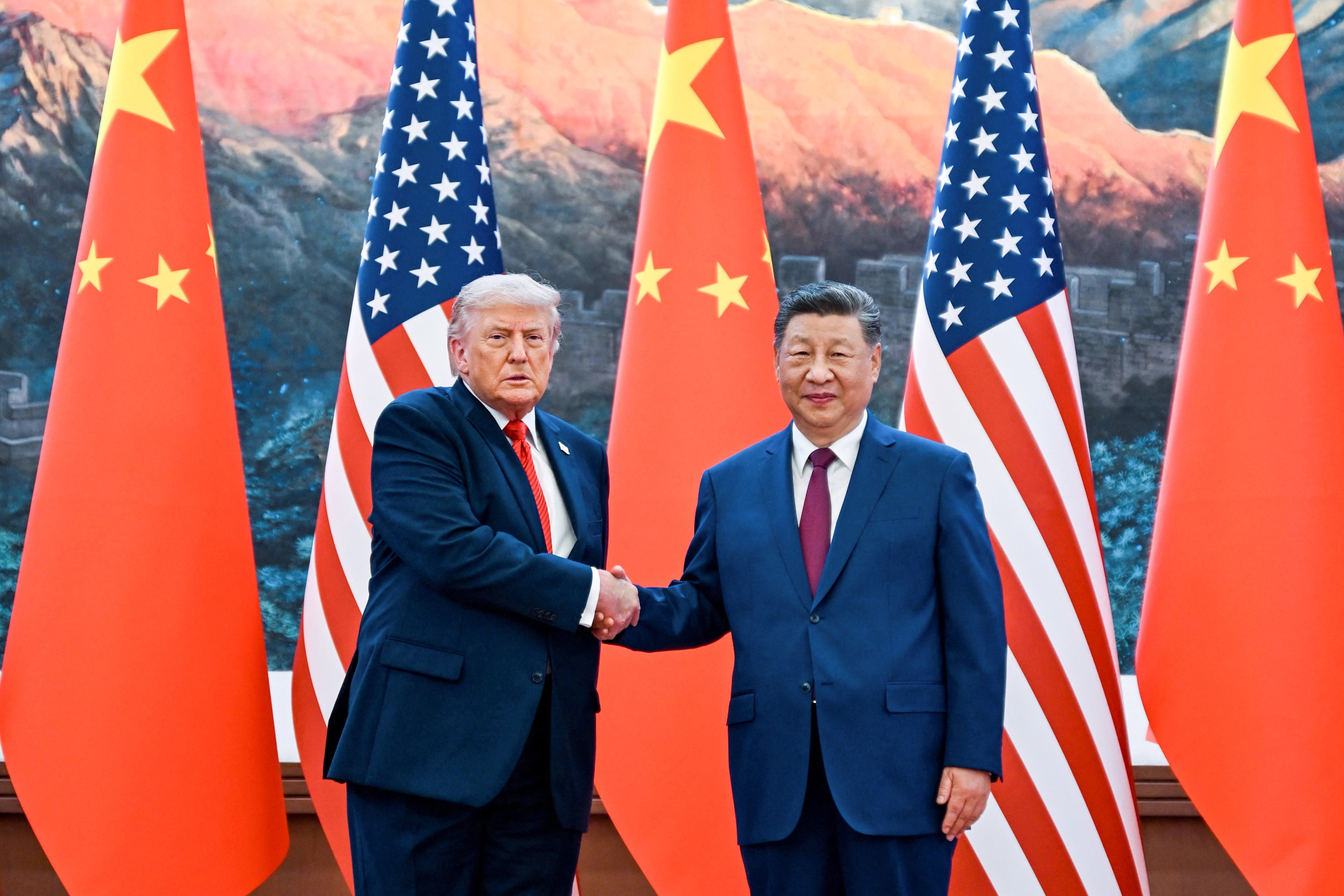
The article outlines the context of Trump’s visit, noting that his 2017 trip centered on trade imbalances and North Korea, while the 2026 summit was intended to cover trade relations, fentanyl exports, the US conflict with Iran, and Taiwan. It describes the welcome at the Great Hall of the People, the military parade, the national anthems, and the long handshake between the two leaders. The piece also highlights symbolic details such as Trump switching from a blue tie to his signature red tie and Xi wearing a violet-purple tie, which the expert interprets as reflecting ceremonial and political symbolism. The article concludes by noting that the bilateral meeting lasted two hours and 15 minutes, after which Trump and Xi visited the Temple of Heaven and were expected to meet again at a state dinner that evening.
Entities: Donald Trump, Xi Jinping, Beijing, Great Hall of the People, Temple of Heaven • Tone: analytical • Sentiment: neutral • Intent: analyze
14-05-2026
President Trump met Chinese President Xi Jinping in Beijing for a high-profile summit marked by elaborate ceremony, carefully staged symbolism, and renewed attention to U.S.-China relations. The article describes the leaders’ handshake outside the Great Hall of the People, a red-carpet welcome, troop review, and honors by the Chinese military, presenting the event as Trump’s first meeting in China since 2017 and their seventh face-to-face overall. It emphasizes the noticeably warmer and more conversational tone between the two leaders compared with Trump’s prior China visit, according to an etiquette expert cited in the story.
The summit is framed as both ceremonial and substantive. Trump said he was honored to meet Xi and to be his friend, and he stressed that he brought top business leaders with him to encourage China to open further to American business. The article notes that Trump traveled with executives such as Elon Musk, Tim Cook, and Jensen Huang, and that he intended to press Xi on trade, business access, artificial intelligence, nuclear weapons, human rights, and the detention of figures including Jimmy Lai and Pastor Ezra Jin. The piece also highlights broader geopolitical tensions that form the backdrop to the meeting, including Trump-era tariffs, Chinese restrictions on rare earth exports, U.S. restrictions on advanced chip sales, and the ongoing dispute over Taiwan.
In addition, the article notes Trump’s interest in China’s role regarding Iran, with Marco Rubio saying Beijing should encourage Tehran to pull back from destabilizing actions in the Persian Gulf. Although the article repeatedly underscores tensions between the two powers, it also presents the summit as an opportunity for improved relations and a potential trade framework, while ending on the expectation of a state banquet later in the evening after bilateral talks.
Entities: Donald Trump, Xi Jinping, Beijing, Great Hall of the People, Tiananmen Square • Tone: analytical • Sentiment: neutral • Intent: inform
14-05-2026
President Donald Trump began a high-profile bilateral meeting with Chinese President Xi Jinping in Beijing by praising the elaborate welcome ceremony staged in his honor. The article describes a ceremonial arrival at the Great Hall of the People near Tiananmen Square, where rows of schoolchildren waved U.S. and Chinese flags, cheered, and held flowers as Trump and Xi walked the red carpet. Trump singled out the children as the most memorable part of the reception, saying he was particularly impressed by them. The two leaders exchanged a warm handshake, greeted members of the U.S. delegation including White House aide Stephen Miller and Lara Trump, and then took part in a military-style honor guard review accompanied by the U.S. and Chinese national anthems. The summit marked the seventh in-person meeting between Trump and Xi since 2017 and was set to continue with roughly two hours of bilateral talks. The piece frames the encounter as the opening of a significant effort by the world’s two largest powers to manage and reduce ongoing tensions in their relationship.
Entities: Donald Trump, Xi Jinping, Beijing, Great Hall of the People, Tiananmen Square • Tone: analytical • Sentiment: neutral • Intent: inform
14-05-2026
The article reports on a high-stakes meeting in Beijing between Chinese President Xi Jinping and U.S. President Donald Trump, framing Xi’s opening remarks as a pointed warning about the possibility of future conflict between China and the United States. Xi invoked the “Thucydides trap,” a concept describing the risk of war when a rising power challenges an established one, and said the world is at a “new crossroads.” He asked whether the two countries could overcome that trap, cooperate on global challenges, and build a more stable future. The article notes that Xi has used the phrase since at least 2014 in relation to U.S.-China tensions.
Trump, speaking after Xi, did not directly respond to the war-related framing but struck a more optimistic note, saying the relationship between China and the U.S. would be “better than ever before” and describing the summit as potentially the biggest ever. The two delegations reportedly met for about two hours in the Great Hall of the People.
The piece also includes a differing interpretation from Sky News Asia correspondent Helen-Ann Smith, who argued Xi’s remarks were not necessarily threatening but instead suggested China believes the U.S. should not fear its rise. Separately, Secretary of State Marco Rubio is quoted emphasizing that China’s rise cannot come at America’s expense. He said the Trump administration was not trying to constrain China, but would not allow Beijing to gain power and influence by undermining the United States. Overall, the article centers on the strategic rivalry between the two powers, the symbolism of Xi’s remarks, and the broader tension between confrontation and cooperation in the U.S.-China relationship.
Entities: Xi Jinping, Donald Trump, United States, China, Beijing • Tone: analytical • Sentiment: neutral • Intent: inform
14-05-2026
The article examines how U.S.-China relations are deteriorating not only at the level of geopolitics and trade, but also in the softer realm of people-to-people exchange. As President Trump and Xi Jinping prepare to meet in Beijing, the piece contrasts their summit with earlier eras when presidential visits were marked by symbolic gestures of friendship, such as George W. Bush biking with China’s national team and Xi receiving a football jersey from American schoolchildren. Those moments reflected deeper ties among students, artists, scientists, and ordinary citizens that have since eroded.
The story describes a steep decline in student exchange: American enrollment in China has fallen dramatically, and Chinese enrollment in U.S. universities is also slipping amid visa concerns, political hostility, and mutual suspicion. Cultural exchange has weakened as well, with American performers facing canceled bookings in China and scientific cooperation becoming more difficult because of national-security concerns in both countries. Institutions like the Philadelphia Orchestra, which once symbolized cultural openness, now say that new exchange efforts would be very hard to arrange in the current climate.
Despite the bleak backdrop, the article notes some signs of possible improvement. Public attitudes toward China in the United States are becoming somewhat more favorable, especially among younger Americans influenced by social media, while China has relaxed visa rules for many foreign tourists and extended symbolic invitations such as a ping pong diplomacy anniversary event. Still, the article concludes that enthusiasm for the United States among Chinese applicants is waning, driven more by economic necessity than admiration, suggesting that the broader relationship remains strained and fragile.
Entities: Donald Trump, Xi Jinping, George W. Bush, China, United States • Tone: analytical • Sentiment: negative • Intent: analyze
14-05-2026
The article argues that Chinese leader Xi Jinping enters his upcoming summit with President Trump from a position of strength, not weakness, because China can use its influence over Iran and the broader Middle East as leverage while also pursuing its central strategic objective: gaining U.S. softness on Taiwan. Although Washington has been pressing Beijing to reduce support for Tehran and to help end the Iran war, Chinese officials and analysts suggest Beijing can offer limited cooperation—such as helping keep the Strait of Hormuz open or encouraging Iranian negotiations—without becoming militarily entangled. In return, Xi hopes Trump will ease pressure on Taiwan, including slowing or reducing arms sales or avoiding statements supporting Taiwanese independence.
The piece emphasizes that China’s goals are less about immediate concessions than about redefining the U.S.-China relationship so Beijing is treated as an equal to Washington. Xi seeks international validation as a peer leader to Trump and wants stability that preserves the trade truce and avoids new tariffs, sanctions, or export controls. At the same time, the article notes that the Iran war has reinforced Chinese perceptions of U.S. military strain and exposed vulnerabilities that may embolden Beijing on Taiwan. Still, China has its own economic reasons to want the conflict contained, including energy-price pressures and the risk of recession. Overall, the article presents the summit as a test of whether both sides can manage competition through temporary bargains, even as deep strategic rivalries over Taiwan, technology, sanctions, Iran, and Russia remain unresolved.
Entities: Xi Jinping, Donald Trump, Iran, Taiwan, Beijing • Tone: analytical • Sentiment: neutral • Intent: analyze
14-05-2026
China’s leader Xi Jinping warned President Trump at the start of their summit in Beijing that mishandling Taiwan could create a dangerous clash between the two countries, underscoring the issue’s status as a Beijing red line. The meeting, the first U.S. presidential visit to China in nearly a decade, was staged with elaborate pageantry and mutual praise, but it was also framed by major unresolved disputes over Taiwan, trade, technology, tariffs, and Iran. Xi emphasized cooperation while signaling that Taiwan remained the most sensitive issue in the bilateral relationship, including China’s desire for the United States to curb arms sales to the island. Trump, meanwhile, highlighted his personal rapport with Xi and said the talks would focus on trade and investment, though analysts doubted a major breakthrough was likely. The article also notes that U.S. business leaders accompanied Trump, that Chinese customs approved some U.S. beef export licenses, and that Trump may seek Xi’s help pressuring Iran amid the war involving the U.S. and Israel. A second section describes the symbolic Beijing landmarks chosen for Trump’s visit, including the Great Hall of the People and the Temple of Heaven, and explains how Chinese officials use such sites to project historical continuity, political legitimacy, and state power.
Entities: Xi Jinping, Donald Trump, Taiwan, Beijing, Great Hall of the People • Tone: analytical • Sentiment: neutral • Intent: inform
14-05-2026
The article describes the unusual public fascination in China with Donald Trump’s arrival in Beijing aboard Air Force One for a China-US summit. Before Trump even landed, hundreds of people, including professional photographers and ordinary residents, gathered near Beijing Capital International Airport to photograph and film the aircraft, one of the most recognizable symbols of the U.S. presidency. The plane’s appearance quickly spread across Chinese social media, where users shared videos, photos, and live commentary. Aviation enthusiasts offered technical observations and even dubbed Air Force One “a flying White House,” while others tracked the aircraft’s route from Washington, including its refuelling stop in Alaska. The article also notes speculation online about the possible presence of the US E-4B Nightwatch, the so-called “doomsday plane,” which can accompany the president for security purposes. Another viral moment came from a video showing a Chinese officer standing motionless as the presidential plane taxied past him on the Beijing runway. That clip drew praise both in China and internationally, with the posting reporter highlighting how the officer did not visibly react despite the loud engines. Overall, the piece emphasizes the spectacle, symbolism, and social-media-driven excitement surrounding the arrival of the U.S. president’s aircraft in China, framing Air Force One as both a diplomatic and cultural object of fascination.
Entities: Donald Trump, Xi-Trump summit, Air Force One, Beijing, Beijing Capital International Airport • Tone: analytical • Sentiment: neutral • Intent: inform
14-05-2026
The article reports on a high-profile China-US summit in Beijing during US President Donald Trump’s state visit, emphasizing both its symbolic significance and its limits. Chinese academic Li Cheng describes the meeting as “extremely important” because it may slow the deterioration of bilateral ties, but he argues that a summit alone cannot resolve the deeper structural problems that have made relations fraught for years. The piece frames the meeting as the first full-day engagement of Trump’s state visit, the first visit by an American leader to Beijing since 2017, and notes that Xi Jinping used the occasion to urge the two countries to become “partners, not rivals.” Xi also invoked the “Thucydides Trap,” warning against great-power conflict and calling on both countries to accept responsibility for managing the relationship.
The article suggests that while the summit is being treated in Beijing as an important diplomatic event, expectations should remain restrained. The meeting between Xi and Trump lasted two hours at the Great Hall of the People, and the article indicates that additional meetings are expected later in the year. Beijing is presenting 2026 as a major year for US-China relations, but the article’s central message is that even remarkable summit diplomacy may not be enough to transform the underlying dynamics of rivalry, competition, and uncertainty between the two powers.
Entities: China-US summit, US-China relations, Li Cheng, Donald Trump, Xi Jinping • Tone: analytical • Sentiment: neutral • Intent: inform
14-05-2026
US Secretary of State Marco Rubio said the United States wants China to take a more active role in easing the Iran crisis, framing the conflict as a potential threat not only to the Middle East but also to Asia because of the region’s dependence on energy shipping lanes. His remarks came as President Donald Trump traveled to Beijing for a closely watched summit with Chinese leader Xi Jinping, where the Iran war is expected to be a major topic. Rubio said Washington hopes to persuade Beijing to help pressure Iran to back away from its current actions in the Persian Gulf. Trump, meanwhile, said he planned a long conversation with Xi about the war and predicted positive outcomes, but he also downplayed the need for China’s help, insisting the US could win the conflict “peacefully or otherwise.” The article places the Iran war within the broader context of US-China diplomacy and suggests the issue may become a significant test of cooperation between the two powers.
Entities: Marco Rubio, Donald Trump, Xi Jinping, China, Beijing • Tone: analytical • Sentiment: neutral • Intent: inform
14-05-2026
The article reports on the opening moments of the Xi-Trump summit in Beijing, focusing on the highly choreographed welcome ceremony at the Great Hall of the People and the diplomatic signals it was intended to send. Chinese President Xi Jinping and U.S. President Donald Trump began their closed-door talks after a formal reception that included a military display, a 21-gun salute, and performances of both national anthems by a Chinese military band. The article emphasizes how Beijing used pageantry to underscore the importance it places on the visit and to suggest a desire for warmer relations with Washington.
One of the most notable details highlighted is Trump’s positive reaction to the Chinese schoolchildren who greeted the leaders, with Trump praising them in his opening remarks. This personal touch is framed as part of the broader atmosphere of symbolism and careful messaging surrounding the summit. The article also notes the symbolic significance of the reception itself, implying that China is intentionally signaling respect and importance to the United States through an elaborate public display.
The piece then briefly describes the delegations’ introductions, with Trump and Xi taking turns meeting members of the Chinese and American teams, shaking hands, and exchanging brief comments. Overall, the article is a concise first-day summit update that combines diplomatic observation, ceremonial detail, and early indications of the tone of the meeting, rather than substantive policy outcomes.
Entities: Xi Jinping, Donald Trump, Beijing, Great Hall of the People, China • Tone: analytical • Sentiment: neutral • Intent: inform
14-05-2026
The article examines the significance of Donald Trump’s visit to Beijing for talks with Xi Jinping, framing the meeting as a pivotal test of US-China relations at a moment of heightened global and bilateral strain. Rather than expecting a dramatic breakthrough, observers believe both sides are likely to prioritize stability and practical, limited outcomes. The talks come amid a fragile trade truce, ongoing strategic rivalry, and the disruptive backdrop of the US-Iran war, which is affecting global energy supplies and economic confidence. According to White House officials, Trump aims to “rebalance” the relationship by emphasizing “reciprocity and fairness” and restoring American economic independence. The agenda is expected to include trade, artificial intelligence, Iran, Taiwan, and broader security concerns. For Washington, the visit offers an opportunity to push Beijing on long-standing grievances such as tariffs, export controls, and Taiwan. For Beijing, the summit is a test of whether the US can avoid further escalation and whether Trump’s direct engagement with Xi can slow or reverse a worsening trajectory in the relationship. Overall, the article suggests that the meeting’s importance lies less in dramatic agreements than in whether it can prevent the relationship from deteriorating further.
Entities: Donald Trump, Xi Jinping, Beijing, China, United States • Tone: analytical • Sentiment: neutral • Intent: analyze
14-05-2026
A large delegation of 17 American business executives joined US President Donald Trump on his state visit to Beijing, highlighting that the group is the wealthiest such delegation ever to visit China, with a combined personal net worth of more than US$1.07 trillion. The article frames the trip as evidence that major US corporate leaders still see strong commercial opportunities in China despite worsening US-China tensions and ongoing trade and technology restrictions. Elon Musk, whose net worth is estimated at US$827 billion, is the most prominent figure in the delegation and reportedly seeks approval to launch robotaxis in China and expand sales of AI-related robots. Nvidia CEO Jensen Huang was added to the group at the last minute, reflecting the importance of semiconductor and AI interests in the relationship. Huang’s presence is notable because Nvidia has had to navigate US export controls that restrict sales of its most advanced chips to Chinese customers, although some H200 GPUs can still be sold under a surcharge arrangement. Overall, the article emphasizes the intersection of geopolitics and business: while official ties remain strained, leading American executives are still pursuing access to China’s large and lucrative market.
Entities: Donald Trump, Beijing, China, United States, Elon Musk • Tone: analytical • Sentiment: neutral • Intent: inform
14-05-2026
The article is a live update on a high-stakes summit between US President Donald Trump and Chinese President Xi Jinping in China, framed as a potentially pivotal moment for the future of US-China relations. It opens with the latest development that Xi has urged “extreme caution” from Washington regarding Taiwan, underscoring how sensitive the issue remains despite broader discussions aimed at stabilizing ties. The article says the two leaders are expected to cover a wide range of contentious topics over the two-day visit, including the war in Iran, trade, technology, and Taiwan. It emphasizes that this is Trump’s first visit to China since 2017 and that the timing of the meeting is shaped by major global uncertainty, especially the conflict in the Middle East and the resulting energy shock affecting Asia. The report suggests the stakes are particularly high for Trump, who is looking for trade concessions and Chinese support for ending the Iran war that he can present to American voters ahead of November’s midterm elections. Overall, the article presents the summit as a consequential test of bilateral diplomacy that could influence the trajectory of rivalry between the world’s two largest powers and set the tone for future engagement between Xi and Trump.
Entities: Xi Jinping, Donald Trump, Taiwan, Iran war, trade • Tone: analytical • Sentiment: neutral • Intent: inform
14-05-2026
The article examines widespread American anxiety that US President Donald Trump may concede too much to Chinese President Xi Jinping during their Beijing meetings on May 14-15, especially if Trump prioritises a visibly warm relationship over strategic leverage. Drawing on commentary from former White House and policy experts, the piece argues that Beijing is well positioned to trade symbolic warmth for substantive gains, particularly on issues such as Taiwan, technology restrictions, and broader US alignment in Asia. Analysts cited in the article say Trump’s personal, deal-oriented approach could weaken traditional alliance management, because previous administrations used China diplomacy to reassure allies and coordinate regional deterrence. The article also highlights China’s improved confidence: it has resisted US tariffs, leveraged its rare earths dominance, become more technologically self-sufficient, and is increasingly willing to push back against US pressure. At the same time, some US strategists fear Trump’s own policy moves — including a softer stance on China in strategy documents and openness to Chinese investment and advanced AI access — could lock the US into a disadvantageous relationship. Overall, the article portrays the summit as a high-stakes moment in which optics, symbolism, and personal diplomacy may matter as much as substantive policy outcomes, with many Americans fearing China will come away having secured the better deal.
Entities: Donald Trump, Xi Jinping, China, United States, Beijing • Tone: analytical • Sentiment: negative • Intent: analyze
14-05-2026
The article reports on the unusually high-profile entourage accompanying US President Donald Trump on a trip to China for a summit with Chinese leader Xi Jinping. Alongside top US cabinet officials such as Secretary of State Marco Rubio, Defence Secretary Pete Hegseth and Treasury Secretary Scott Bessent, the delegation includes prominent business leaders from major American companies and members of Trump’s family, notably Eric Trump and Lara Trump. The article highlights the diplomatic significance of the visit, noting that Hegseth is the first sitting US defence secretary to visit China since 2018 and that Rubio is traveling despite China’s sanctions against him over human rights remarks. It also emphasizes the business dimension of the trip, with executives from Apple, BlackRock, Boeing, Cargill, Citi, Goldman Sachs, Nvidia, Tesla and other firms reportedly present. The presence of Elon Musk is noted as a sign that relations with Trump may have improved compared with the previous year. Another notable passenger is filmmaker Brett Ratner, whose inclusion underscores the broader mix of political, commercial and personal figures in Trump’s orbit. The article frames the delegation as part of a potentially consequential summit that could affect the next phase of US-China relations, with discussions expected to focus on trade, investment, and other geopolitical issues including the war in Iran.
Entities: Donald Trump, Xi Jinping, Marco Rubio, Pete Hegseth, Scott Bessent • Tone: neutral • Sentiment: neutral • Intent: inform
14-05-2026
Chinese President Xi Jinping and US President Donald Trump opened a high-stakes summit in Beijing with unusually warm public remarks, signaling a conciliatory tone despite deep ongoing tensions between the two powers. Xi urged the United States and China to be “partners, not rivals,” argued that the two countries have more common interests than differences, and said a stable bilateral relationship would benefit the world. Trump reciprocated by praising his “fantastic relationship” with Xi, calling it an honor to be his friend, and saying the two leaders have always managed to resolve problems quickly. The summit is expected to cover major flashpoints including trade, technology, cross-strait relations, the Iran war, and broader geopolitical rivalry. The article notes that the leaders last met in October 2025, when they agreed to pause a bruising trade war for one year after China threatened rare earth export restrictions in response to high US tariffs. The question now is whether that trade truce will be extended. The visit also has significant political and economic symbolism: Trump traveled with a large delegation of executives and business leaders, while Chinese and US officials held last-minute preparatory talks before the summit. Although the public tone was cordial and both leaders appeared relaxed during the ceremonial welcome, the article underscores that major disputes remain unresolved and that the outcome of the Beijing meetings could shape future China-US relations.
Entities: Xi Jinping, Donald Trump, Beijing, Great Hall of the People, China • Tone: analytical • Sentiment: neutral • Intent: inform
14-05-2026
Donald Trump’s visit to Beijing is portrayed as taking place in a markedly changed China compared with his last state visit in 2017. The article argues that Trump no longer carries the novelty he once did for Chinese observers; instead, he is now viewed with greater scepticism, amid rising Chinese nationalism and a sense that the United States is in relative decline. In everyday conversations, some Beijing residents express confidence that China has grown stronger and that US leaders, regardless of rhetoric, must ultimately accommodate China’s rise. Others still see value in Trump’s visit as a chance to ease tensions between the two powers.
The report also emphasizes the tight security surrounding the visit. Major sites in Beijing, including the Temple of Heaven, were closed ahead of Trump’s planned tour, and the welcoming ceremony at the Great Hall of the People was carefully staged with flags, salutes, military presence, and children performing a ceremonial greeting. Xi Jinping’s reception of Trump is framed as highly symbolic, with historical echoes of Henry Kissinger’s 1971 visit that helped open the door to formal diplomatic relations between the US and China.
Overall, the article presents the summit as occurring against a backdrop of mutual suspicion, domestic political symbolism, and strategic uncertainty, especially over Taiwan and broader US-China rivalry. Chinese public reaction appears mixed but largely cautious, with many people expecting little lasting change from Trump’s unpredictable style.
Entities: Donald Trump, Xi Jinping, Beijing, China, United States • Tone: analytical • Sentiment: neutral • Intent: inform
14-05-2026
The article is a live report on Donald Trump’s summit in Beijing with Chinese leader Xi Jinping, focusing on the geopolitical and economic stakes of the meeting. The central theme is cautious optimism mixed with sharp tensions: Xi warned that mishandling the Taiwan issue could push the US and China into conflict, while both leaders publicly emphasized stability and better relations. The talks also covered the wars in the Middle East and Ukraine, as well as North Korea, reflecting the broader global implications of the US-China relationship.
Trade and economic issues are another major focus. Trump is seeking progress on Chinese purchases of US agricultural goods and passenger planes, while China appears to be offering limited goodwill gestures, including renewing export licences for hundreds of US beef plants. Xi also told US business executives that China would “open wider” to foreign companies, suggesting a desire to project openness even amid strategic rivalry. The article notes that few major breakthroughs are expected, but both governments want to avoid escalating tensions after prior tariff disputes and to preserve stability in the relationship. The live updates also situate the summit within a wider context of market attention, business lobbying, and the Iran war, which looms over the talks as a major test of whether Beijing will play any constructive role.
Entities: Donald Trump, Xi Jinping, Taiwan, Beijing, Great Hall of the People • Tone: analytical • Sentiment: neutral • Intent: inform
14-05-2026
President Donald Trump and Chinese President Xi Jinping opened a two-day summit in Beijing with unusually cordial public messaging, emphasizing cooperation and trade rather than conflict. The article describes the opening atmosphere as carefully choreographed: Trump was greeted by schoolchildren waving flags and soldiers marching in formation, reinforcing the symbolism of state hospitality and the high stakes of the encounter. At the start of the meetings, both leaders projected confidence and restraint, offering friendly remarks and signaling a desire to deepen trade ties despite the broader backdrop of rivalry between the United States and China.
The article frames the summit as a pivotal moment in the relationship between the two powers, with trade negotiations and strategic competition both in play. By noting Xi’s readiness to host an “unpredictable” Trump and referencing related coverage about China’s leverage in trade talks, the piece suggests that the talks could shape not only bilateral economic ties but also the wider geopolitical balance. The article itself, however, is a brief opening dispatch and does not yet report substantive policy outcomes from the meetings; instead, it focuses on the tone, setting, and significance of the summit’s opening session.
Entities: Donald Trump, Xi Jinping, Beijing, China, United States • Tone: analytical • Sentiment: neutral • Intent: inform
14-05-2026
The article frames President Donald Trump’s arrival in Beijing as a stark contrast between two national visions: Trump’s criticism of Washington as dirty, decaying, and in need of monumental rebuilding, and Beijing’s carefully curated image as a futuristic capital designed to signal China’s economic and technological ambitions. The piece uses the Xi-Trump summit as a lens to show how Beijing has become a stage for China’s rise, highlighting infrastructure, modernization, and the country’s effort to dominate the industries of the future.
Rather than focusing only on the diplomatic meeting itself, the article emphasizes symbolism and political theater. Beijing is presented as a “living showcase” of China’s goals, suggesting that the city’s development is meant to project confidence, power, and long-term strategic planning. The story implicitly contrasts this with the condition of the U.S. capital under Trump’s rhetoric, where he invokes grand rebuilding projects and derogatory language about Washington.
The article also places the summit in a broader geopolitical context, suggesting that China’s physical and technological modernization is not merely domestic development but part of a larger contest for global influence. By connecting the visit to China’s push into future industries, the piece underscores how Beijing is positioning itself as both a political capital and an emblem of national ambition. Overall, the article presents the summit as a visual and ideological showcase of China’s aspirations, while highlighting the rhetorical and infrastructural decline Trump associates with Washington.
Entities: Donald Trump, Xi Jinping, Washington, Beijing, China • Tone: analytical • Sentiment: neutral • Intent: analyze