14-05-2026
The Senate once again rejected a Democratic effort to limit President Donald Trump’s war powers over Iran, marking the seventh failed attempt to advance such a resolution. The vote fell 49-50, but it showed a slight shift in Republican support: Sen. Lisa Murkowski joined Sens. Rand Paul and Susan Collins in backing the measure, making her the first Republican besides Paul to support moving it forward. Sen. John Fetterman was the only Democrat to oppose. The resolution, led by Sen. Jeff Merkley and backed by Sen. Tim Kaine, sought to require Congress’s explicit authorization before U.S. forces could continue hostilities against Iran. Democrats argued that the War Powers Resolution’s 60-day limit on unauthorized military action still applied despite the administration’s claim that the clock stopped after a ceasefire and that hostilities had ended. Republicans, including Foreign Relations Committee Chairman Jim Risch and Majority Leader John Thune, sided with the White House’s interpretation and said the military operations had been terminated. Murkowski said she changed her position after receiving no further clarity from the administration and because she believed Congress needed to discuss its responsibilities under the War Powers Resolution. The vote reflects growing tension within the GOP over executive war powers, Trump’s approach to Iran, and concerns among some lawmakers about public skepticism, economic fallout, and gasoline prices.
Entities: Senate, Donald Trump, Iran, War Powers Resolution, Jeff Merkley • Tone: analytical • Sentiment: neutral • Intent: inform
14-05-2026
A proposed Trump Tower project on Australia’s Gold Coast has been scrapped, with the developer, Altus Property Group CEO David Young, saying the Trump brand had become too “toxic” in Australia amid the Iran war and wider political context. The article describes how the project, a planned 91-story, $1.1 billion Trump International Hotel and Tower in Surfer’s Paradise, had been promoted earlier in the year through AI-generated marketing images posted by Eric Trump and shared by Young. But within months, the deal collapsed amid mutual blame between Young and the Trump Organization. Young said the decision was a business matter and that Altus would continue the development without Trump branding, rejecting claims that his company had failed to meet obligations. The Trump Organization, meanwhile, accused Altus of making excuses and failing on financial commitments. Gold Coast Mayor Tom Tate said the project never reached a filed development application and suggested the breakdown was mainly about profit margins. The article also notes local opposition, including a petition signed by at least 140,000 residents who objected to the Trump brand, and mentions that Young had previously declared bankruptcy twice, according to Australian broadcaster ABC. The piece ends by noting Eric Trump’s continued use of AI-generated renderings to promote another Trump Tower project, this time in Tbilisi, Georgia.
Entities: Donald Trump, Eric Trump, David Young, Altus Property Group, Trump Organization • Tone: analytical • Sentiment: negative • Intent: inform
14-05-2026
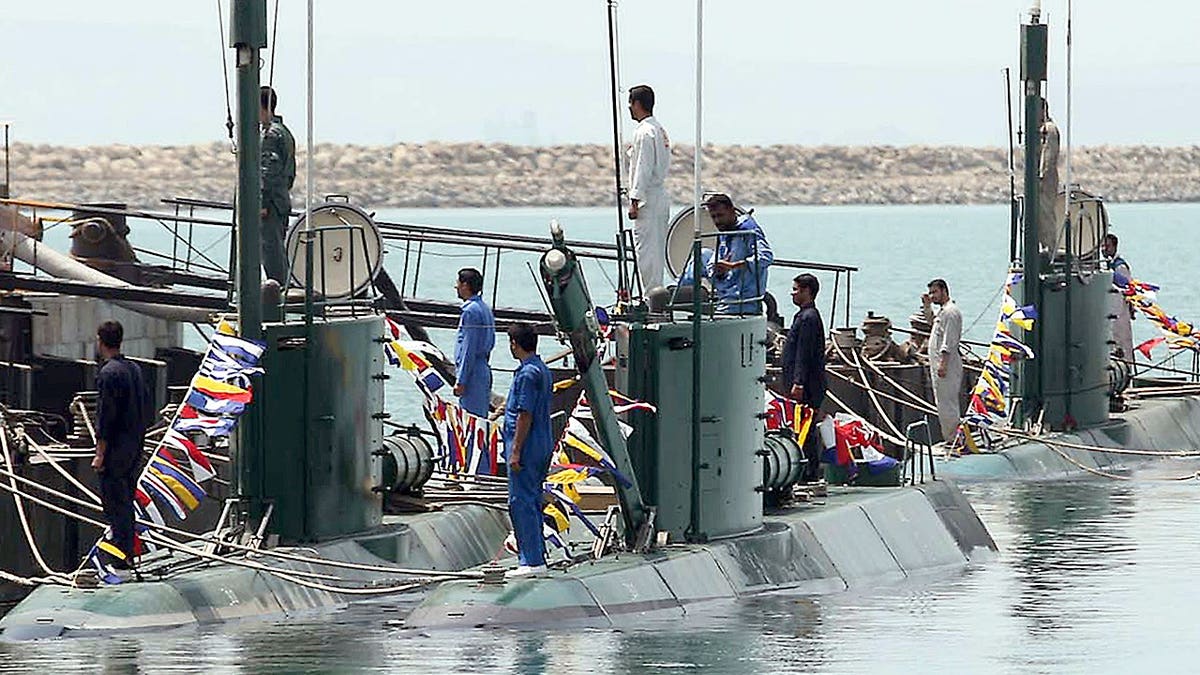
The article reports that Iran has said it deployed small Ghadir-class submarines in the Strait of Hormuz, describing them as an “invisible guardian” of the critical waterway amid stalled or rejected peace efforts with the United States. Defense analyst Tom Shugart, a retired U.S. Navy submarine warfare officer, argues that while the mini-subs could pose some danger in shallow waters and might threaten merchant shipping through mines or limited attacks, they are not a major strategic threat to U.S. Navy warships or submarines. Shugart says the vessels’ lack of air-independent propulsion, limited endurance, and need to snorkel to recharge batteries make them easier to detect and destroy than Iran suggests.
The piece places the deployment in the broader context of heightened U.S.-Iran tension and a blockade-like disruption in the Strait of Hormuz, where commercial shipping has been heavily constrained. It notes Iranian efforts to expand its asserted control over the strait, as well as reports of continued military activity and attacks on stranded vessels. The article also references U.S. naval power, including the deployment of an Ohio-class ballistic missile submarine, to underscore the American deterrent posture. Overall, the article frames Iran’s submarine move as more symbolic and tactically limited than truly game-changing, while still emphasizing the danger to commercial shipping and the volatility of the region.
Entities: Iran, Strait of Hormuz, Ghadir-class mini-subs, Tom Shugart, U.S. Navy • Tone: analytical • Sentiment: neutral • Intent: analyze
14-05-2026
The article reports that the apparent collapse of U.S.-Iran negotiations has raised concerns that senior figures in Iran’s leadership could flee the country if the regime’s stability deteriorates further. Fox News cites Middle East expert Saeid Golkar, who says top officials might seek refuge in Russia in a manner similar to Bashar al-Assad’s inner circle after Syria’s collapse, while lower-ranking figures could head to Iraq or Afghanistan, where the IRGC has operational ties. The piece places these fears in the context of intensified pressure on Tehran, including U.S. military strikes, economic strain, and uncertainty over succession after the reported death of Ayatollah Ali Khamenei and the unclear status of his son and successor, Mojtaba Khamenei. The article also references Israeli Prime Minister Benjamin Netanyahu’s view that a collapse of the Iranian regime could unravel the broader network of Iranian-backed terrorist proxies, including Hezbollah. Golkar argues that while the regime’s ideology frames departure during crisis as desertion, the leadership structure was designed to survive decapitation and may still allow for escape and continuity through foreign support. Overall, the article frames Iran’s leadership as increasingly vulnerable, with Russia presented as the most likely refuge for the most senior insiders if the political and military situation worsens.
Entities: Iran, Russia, Syria, Bashar al-Assad, Saeid Golkar • Tone: analytical • Sentiment: negative • Intent: inform
14-05-2026
The article describes a growing split among retired U.S. military commanders and national security experts over whether the United States should resume military operations against Iran or continue pursuing diplomacy. The debate comes as President Donald Trump says the Iran ceasefire is on “massive life support” and dismisses Tehran’s latest proposal as unacceptable. Supporters of renewed force, including retired Vice Adm. Mark Fox, argue that Iran is unlikely to make meaningful concessions and that the U.S. should be prepared to restore military pressure, including securing maritime traffic through the Strait of Hormuz. They contend Iran is weakened and that failing to act now could allow it to rebuild its missile and nuclear capabilities and continue threatening global shipping.
Others, including retired Lt. Gen. H.R. McMaster, believe Iran’s leadership and the Islamic Revolutionary Guard Corps are not likely to agree to the kinds of concessions Trump wants, but the article presents broader concern that military action may not produce a decisive result and could drag the U.S. into another prolonged Middle East conflict. The piece frames the issue as a strategic fork: whether more force can compel Iran to give up its nuclear and missile ambitions, or whether renewed strikes would simply deepen the conflict without resolving the underlying threat. It also highlights the larger geopolitical stakes, especially the security of the Strait of Hormuz, one of the world’s most important energy corridors, and the risk that Iran could use negotiations to buy time while preserving leverage.
Entities: Donald Trump, H.R. McMaster, Mark Fox, Islamic Revolutionary Guard Corps (IRGC), U.S. Central Command (CENTCOM) • Tone: analytical • Sentiment: neutral • Intent: inform
14-05-2026
Oil prices rose on Thursday as markets reacted to growing expectations of supply disruption and price volatility stemming from the Iran war and tensions around the Strait of Hormuz. Brent crude futures for July climbed 0.34% to $105.99 a barrel, while U.S. West Texas Intermediate for June gained 0.43% to $101.45. The article says the International Energy Agency warned that more than ten weeks into the Middle East conflict, supply losses from the Strait of Hormuz are drawing down global oil inventories at a record pace, with more than 14 million barrels per day of supply cut and total losses from Gulf producers exceeding a billion barrels. The IEA also said greater volatility is likely as peak summer demand approaches.
At the same time, OPEC lowered its forecast for 2026 oil demand growth to about 1.2 million barrels per day from 1.4 million previously, reflecting a softer outlook. OPEC also reported that production fell by 1.7 million barrels per day in April and has declined more than 30%, or 9.7 million barrels per day, since the conflict began in late February. The article notes that OPEC’s latest update is likely the last to include data from the United Arab Emirates, which left the cartel on May 1.
Market participants are also watching broader geopolitical developments, including a meeting between U.S. President Donald Trump and Chinese President Xi Jinping. Analysts and former U.S. Commerce Secretary Carlos Gutierrez suggest China has a strong interest in ending the conflict because it is the largest customer for oil flowing through the Hormuz Strait. Overall, the piece frames oil markets as highly sensitive to Middle East conflict, supply disruptions, and diplomatic developments.
Entities: Brent crude, West Texas Intermediate (WTI), International Energy Agency (IEA), OPEC, Strait of Hormuz • Tone: analytical • Sentiment: neutral • Intent: inform
14-05-2026
Iran’s foreign minister Abbas Araghchi is expected to use the Brics foreign ministers’ meeting in New Delhi to seek diplomatic backing for Tehran amid escalating tensions with the United States and a fragile ceasefire with Israel and the US. The article frames the gathering as a test of India’s balancing act: as Brics chair and host, India must manage sharply divergent views within the expanded bloc, which now includes Iran and the United Arab Emirates, both affected by regional conflict dynamics. The meeting also includes Russian Foreign Minister Sergey Lavrov, underscoring the geopolitical weight of the event.
According to political-science professor Uday Chandra, Araghchi’s likely goals are threefold: to obtain support against US military pressure, push for a stronger anti-American Brics statement on the war, and reassure India and other members that Iran remains open to diplomacy. However, the article notes that Brics failed to agree on a unified position during a prior officials’ meeting in Delhi, suggesting limited appetite for a confrontational stance. India is expected instead to emphasize de-escalation, maritime security, and protections for Indian shipping, especially given concern over Gulf routes and the Strait of Hormuz. The broader implication is that while Iran may seek to internationalize its conflict with the US through Brics, India is likely to keep the forum focused on practical security issues rather than anti-American rhetoric.
Entities: Iran, Abbas Araghchi, United States, Israel, Brics • Tone: analytical • Sentiment: neutral • Intent: inform