13-04-2026
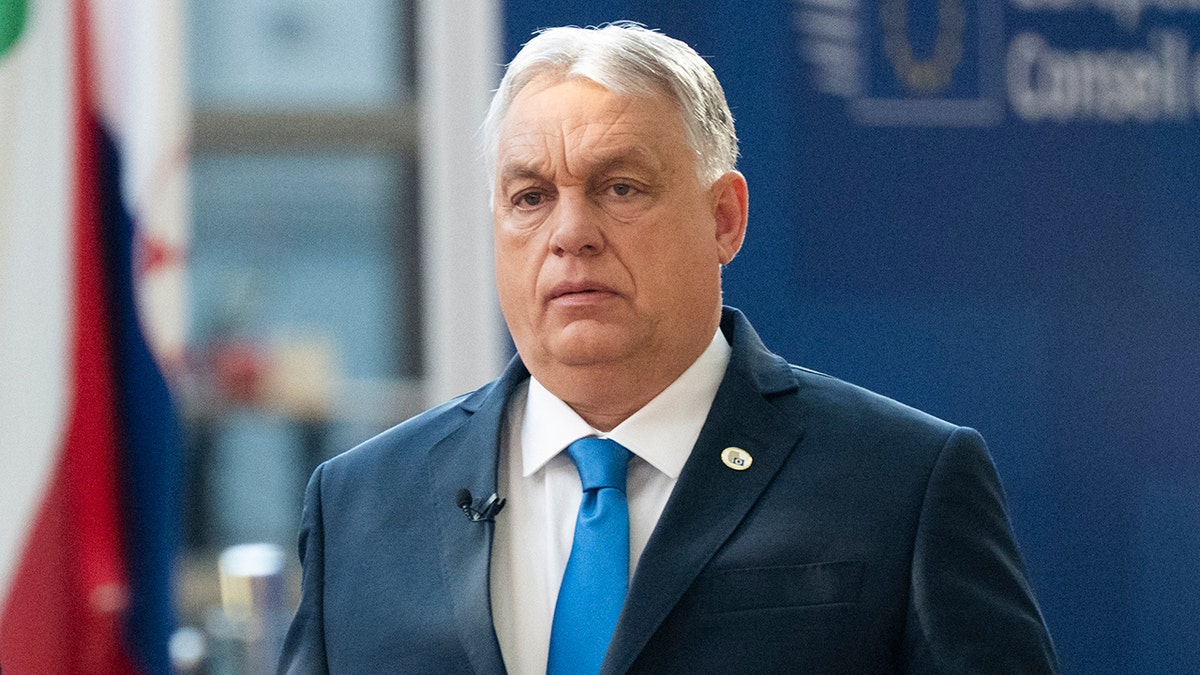
Viktor Orbán's 16-year tenure as the leader of Hungary has come to an end following a landslide election victory by Péter Magyar and his Tisza party. Preliminary results indicate that the Tisza party is on track to secure 138 seats, granting Magyar the constitutional majority required to reverse many of Orbán's systemic reforms. The election saw a record turnout of 79.5%, signaling a widespread public desire to end the 'electoral autocracy' and the endemic corruption and cronyism associated with the Orbán era.
Péter Magyar, a former party insider, campaigned on a platform of restoring judicial independence, tackling corruption, and reforming the health and education sectors. He specifically aims to dismantle the 'NER' patronage system that enriched party loyalists. Beyond domestic policy, Magyar's victory signals a major geopolitical shift for Hungary. While Orbán maintained close ties with Vladimir Putin and Donald Trump—often clashing with the European Union and Ukraine—Magyar intends to distance Hungary from Russia and foster more cordial relations with the EU and Ukraine.
Following the results, Orbán conceded defeat, describing the outcome as 'clear and painful.' Magyar has already pledged to visit Warsaw and Brussels to repair diplomatic ties and unlock billions of euros in frozen EU funds. The victory is being celebrated in Budapest as a historic 'miracle,' with supporters likening the event to the Hungarian revolutions of 1848 and 1956. Orbán remains the leader of the Fidesz party in a caretaker role as the country prepares for a transition of power.
Entities: Péter Magyar, Viktor Orbán, Tisza party, Fidesz, European Union (EU) • Tone: urgent • Sentiment: positive • Intent: inform
13-04-2026
The article discusses the political downfall of Viktor Orbán, who has led Hungary for the past 16 years through a self-described 'experiment' in 'illiberal democracy' or 'national conservatism.' The author characterizes Orbán's tenure as one of contradictions: he positioned himself as an anti-globalist and a champion of national sovereignty while actively courting foreign investment from Germany, China, and South Korea, and remaining passive toward Russian aggression in Ukraine. Despite his efforts to boost fertility rates and restrict immigration, the article notes that these policies largely failed or were applied inconsistently to serve economic needs.
Orbán's governance style was 'majoritarian,' utilizing a two-thirds parliamentary majority to rewrite the constitution and reshape the judiciary, electoral systems, and the economy to favor his party. However, this era of constant conflict and radicalization eventually exhausted the Hungarian electorate. The article highlights the landslide victory of Péter Magyar, a former ally of Orbán, who successfully campaigned on a platform of inclusivity and a desire for 'peace and quiet.' Magyar's victory is framed as a rejection of Orbán's societal experiments and a response to growing economic inequality, where the rich grew wealthier while the middle class shrank. The piece concludes with Magyar's promise to transition Hungary back into a 'normal country' with a distinct voice, signaling a definitive end to the Orbán era.
Entities: Viktor Orbán, Péter Magyar, Hungary, European Union (Brussels bureaucrats), Russia • Tone: analytical • Sentiment: negative • Intent: inform
13-04-2026
In a historic political shift, Hungarian Prime Minister Viktor Orbán has conceded defeat in the national election, ending his 16-year tenure in power. The victory goes to opposition leader Peter Magyar and his pro-European conservative TISZA party, who secured a large majority in parliament. With 77% of the vote counted, Magyar's party held over 53% support compared to 38% for Orbán's Fidesz party. Orbán, a long-time ally of Donald Trump and the longest-serving leader in the EU, described the result as 'painful' but congratulated his successor.
The election is being hailed as a triumph for democracy and European values. For years, Orbán's government faced accusations from the EU and independent watchdogs of undermining the rule of law and democratic institutions, with Transparency International ranking Hungary as the most corrupt country in the EU. Voters cited Orbán's pro-Russia stance and anti-EU rhetoric as primary motivations for seeking change, expressing a desire for Hungary to reintegrate fully with European norms.
International reaction has been overwhelmingly positive. European leaders, including European Commission President Ursula von der Leyen, French President Emmanuel Macron, and British Prime Minister Keir Starmer, congratulated Magyar, viewing the result as a sign that Hungary is reclaiming its 'European path.' The transition marks a significant geopolitical pivot for Hungary, moving away from the illiberal governance and strategic alignment with Russia and the Trump administration that characterized the Orbán era.
Entities: Viktor Orbán, Peter Magyar, Budapest, Hungary, European Union • Tone: positive • Sentiment: positive • Intent: inform
13-04-2026
The article analyzes the historic electoral defeat of Hungarian Prime Minister Viktor Orbán, marking the first change in government in Hungary since 2010. After 16 years of rule by the illiberal Fidesz party, Orbán was defeated by Péter Magyar and the Tisza party. The victory is described by some supporters as a 'regime change' akin to the collapse of the Soviet Union, signaling a potential shift away from authoritarianism.
The author argues that Orbán's loss provides critical lessons on the limitations of populism. First, the article highlights the contradiction of 'internationalizing nationalism'; Orbán's reliance on overt support from U.S. figures like Donald Trump and JD Vance backfired, as voters found it ironic for a nationalist leader to rely on foreign powers to maintain sovereignty. Second, the piece suggests that populism's reliance on creating 'enemies' (such as George Soros, the EU, and Ukraine) eventually reaches a point of diminishing returns when not backed by a strong domestic record in healthcare or the economy.
Finally, the article notes a strategic lesson for those opposing populists: the Hungarian electorate rallied behind Péter Magyar—a conservative former Fidesz insider—despite some liberal voters' reservations. By prioritizing the removal of Orbán over ideological purity, the opposition achieved a decisive victory. The article concludes by questioning whether Hungary can successfully transition from a model of illiberalism to one of democratic change.
Entities: Viktor Orbán, Péter Magyar, Donald Trump, JD Vance, Tisza party • Tone: analytical • Sentiment: positive • Intent: analyze
13-04-2026
Hungarian Prime Minister Viktor Orbán has conceded defeat in the country's parliamentary elections, describing the outcome as both 'clear' and 'painful.' This marks a significant political turning point for Hungary, as Orbán has maintained leadership of the nation for over a decade. The victory belongs to opposition leader Péter Magyar and his Tisza party, who are projected to achieve a landslide win.
According to partial vote counts with approximately 53% of the ballots processed, the Tisza party is on track to secure a two-thirds parliamentary supermajority. This level of control would grant Magyar significant legislative power to reshape the country's governance. Magyar confirmed the concession via social media, stating that Orbán had phoned him directly to acknowledge the defeat. The election saw record-breaking voter turnout, signaling a strong desire for change among the Hungarian electorate and ending one of the most stable periods of conservative rule in the region.
Entities: Viktor Orbán, Péter Magyar, Tisza party, Hungary, Parliamentary election • Tone: neutral • Sentiment: neutral • Intent: inform
13-04-2026
Hungary is holding a high-stakes election in April 2026 that presents the most significant electoral threat to Prime Minister Viktor Orbán since 2010. Current polling indicates that Péter Magyar and his Tisza party are leading with 50% of the vote, while Orbán’s Fidesz party trails at 39%. The election is characterized by a clash between Orbán's long-standing nationalist leadership and a rising opposition led by Magyar, a former Fidesz insider.
Orbán has received significant support from the U.S. administration, including a visit from Vice President JD Vance and public endorsements from President Donald Trump. Vance emphasized the importance of a pro-U.S. partner in Europe, while Trump offered economic support to strengthen Hungary's economy under Orbán's continued leadership. Orbán's tenure has been marked by economic growth but is currently challenged by high inflation and negative business sentiment.
Internationally, Orbán remains a polarizing figure due to his strained relationship with the European Union. His policies—including a hardline stance against migrants, support for Israel, and a complex relationship with Russia regarding the war in Ukraine—have led to EU financial sanctions. Analysts suggest that a victory for the opposition could lead the EU to unlock frozen funds, which represent approximately 7% of Hungary's GDP. The election serves as a critical juncture for Hungary's domestic governance and its strategic alignment with both the U.S. and the EU.
Entities: Viktor Orbán, Péter Magyar, JD Vance, Donald Trump, Hungary • Tone: analytical • Sentiment: neutral • Intent: inform
13-04-2026
In a historic political shift, Hungarian voters have ousted Prime Minister Viktor Orban after 16 years of rule, electing pro-European challenger Peter Magyar and his Tisza party in a landslide victory. Magyar secured a supermajority in parliament, winning 138 of the 199 seats with 53.6% of the vote, a result bolstered by a record-breaking voter turnout of nearly 80%. Orban, a polarizing figure known for his authoritarian policies and close ties to Vladimir Putin and Donald Trump, conceded defeat, describing the result as 'painful.'
Peter Magyar, a former Orban loyalist who broke away in 2024, campaigned on a platform of combating corruption and improving essential public services like healthcare and transport. His victory is expected to fundamentally reshape Hungary's relationship with the European Union and NATO, as Magyar has pledged to rebuild ties that were severely strained under Orban's tenure. Orban had frequently used his veto power to obstruct EU decisions, most notably blocking critical aid to Ukraine, and was accused of acting on behalf of Russian interests within the bloc.
The election is viewed as a significant blow to global far-right and nationalist populist movements, which had looked to Orban as a blueprint for leveraging state power to undermine democratic institutions. In Budapest, the victory was met with jubilant celebrations, including chants of 'Russians go home!', signaling a public desire to pivot away from Moscow and reintegrate Hungary into the democratic fold of Europe.
Entities: Viktor Orban, Peter Magyar, Tisza party, Fidesz, European Union (EU) • Tone: analytical • Sentiment: positive • Intent: inform
13-04-2026
Peter Magyar, a former insider of the Fidesz party, has achieved a historic political victory, leading his Tisza party to a crushing win in Hungary's elections and ending 16 years of rule by Viktor Orban. A 45-year-old lawyer and former diplomat, Magyar rose to prominence in 2024 following a government scandal involving a presidential pardon. His rapid ascent is attributed to his deep knowledge of the Fidesz system, which allows him to convincingly argue that the current administration is 'rotten from within.'
Magyar has pledged to dismantle Orban's political system 'brick by brick,' focusing on cracking down on corruption, improving public services, and repairing Hungary's strained relationships with the European Union and NATO. While he aims to unfreeze EU funds and distance Hungary from Russia, he maintains some conservative stances, including strict anti-immigration views and opposition to sending arms to Ukraine. Despite his ties to the former regime—including a marriage to former justice minister Judit Varga—supporters view him as a courageous leader and the most viable alternative to Orban. European leaders have welcomed the result, viewing it as a significant break from the hostile diplomatic approach of the previous administration.
Entities: Peter Magyar, Viktor Orban, Tisza Party, Fidesz, Hungary • Tone: analytical • Sentiment: positive • Intent: inform