13-03-2026
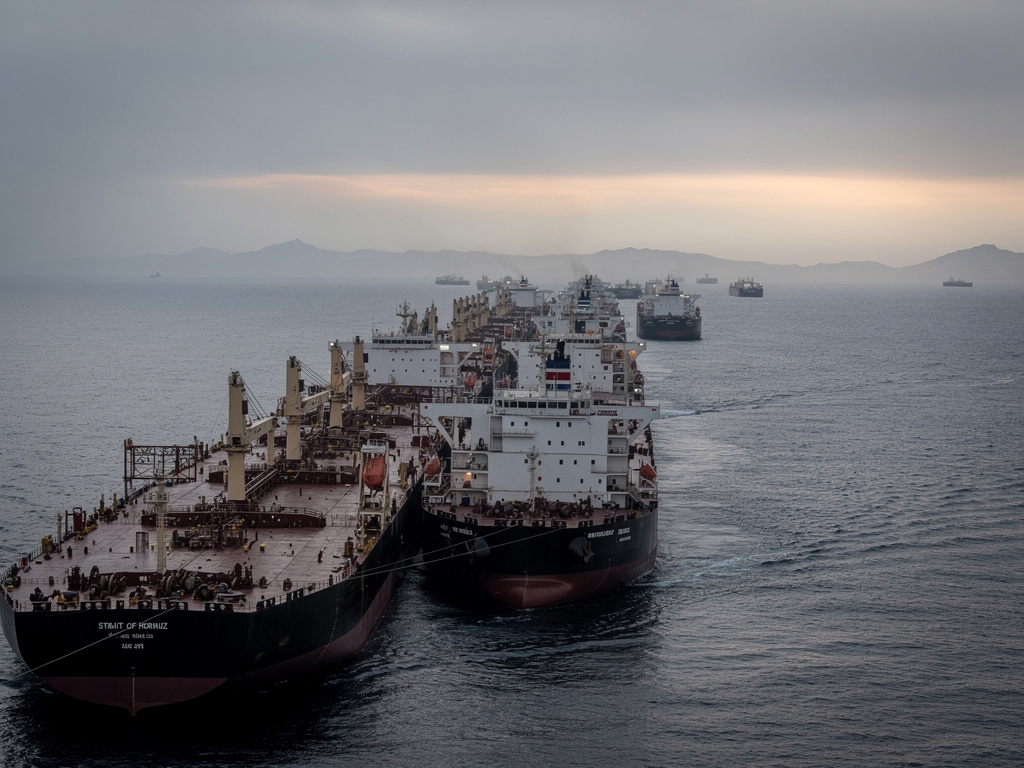
The article discusses the impact of the Strait of Hormuz closure by Iran on the global economy, particularly on oil prices, and how President Donald Trump's potential withdrawal from the conflict may be influenced by the upcoming midterm elections and rising inflation concerns. The article suggests that Trump's actions are driven by the costs of war and the pressure from voters weary of inflation. The closure of the Strait of Hormuz has blocked 15% of global oil supply, causing oil prices to peak at $120 a barrel before crashing to $80 after Trump's declaration that his campaign against Iran would be over soon.
Entities: Donald Trump, Iran, Strait of Hormuz, United States, The Economist • Tone: analytical • Sentiment: neutral • Intent: inform
13-03-2026
The article discusses the limited options available to Donald Trump to mitigate the rising oil prices amidst the Middle Eastern crisis triggered by the war between America, Israel, and Iran. Despite the International Energy Agency (IEA) releasing 400m barrels of crude from their emergency reserves, the global benchmark Brent crude rose by nearly 10% to $100 per barrel. The article highlights the ineffectiveness of the IEA's move in calming the oil markets, which are being shaken by the ongoing conflict.
Entities: Donald Trump, International Energy Agency (IEA), America, Israel, Iran • Tone: analytical • Sentiment: negative • Intent: inform
13-03-2026
The article discusses how the latest regional conflict in the Middle East, referred to as the third Gulf war, is reshaping the region. It highlights the profound impact of previous Gulf wars on the region and the world. The current conflict involves Iran, Israel, and the Gulf states, and is likely to have significant and lasting effects on these entities. The article notes that the war has already caused a major energy supply shock and is affecting various countries and economies differently. It also touches on the roles of other actors, such as the United States, and the potential implications for regional and global politics.
Entities: Iran, Israel, Gulf states, United States, Middle East • Tone: analytical • Sentiment: neutral • Intent: inform
13-03-2026
The article discusses the impact of the recent Iranian strikes on Qatar's liquefied natural gas (LNG) production and export facilities, which has led to a global shortage and price surge. QatarEnergy, which produces a fifth of the world's LNG, has declared force majeure on its contracts due to the inability to extract, process, and ship LNG because of the blocked Strait of Hormuz. This has caused customers worldwide to scramble for alternative supplies, highlighting the vulnerability of the global LNG market to disruptions in the Gulf region.
Entities: Saad al-Kaabi, Qatar, QatarEnergy, Iran, Strait of Hormuz • Tone: urgent • Sentiment: negative • Intent: inform
13-03-2026
The article discusses the severe but uneven damage to the world economy caused by the Iran war, which has resulted in the biggest energy supply shock in history. The conflict has initiated a profound crisis, and its impact will be felt unevenly across different regions and economies. The article highlights the vulnerability of the global economy to shocks in the Gulf region, particularly in the Strait of Hormuz. It also touches on the potential consequences for various countries and industries, including the impact on Bahrain's economy and the implications for the Middle East region.
Entities: Iran, Middle East, Strait of Hormuz, Gulf, Israel • Tone: analytical • Sentiment: negative • Intent: inform
13-03-2026
The outbreak of war in Iran has sent shockwaves through global financial markets, causing energy costs to skyrocket and investors to reassess their expectations of inflation worldwide. The uncertainty and threat of higher interest rates are negatively impacting stocks and government bonds. The situation is reminiscent of the invasion of Ukraine, with investors struggling to predict the outcome. The article discusses the potential consequences of the conflict on global markets, including the impact on central banks' monetary policies and the economies of Asia.
Entities: Iran, Ukraine, Asia, Gulf, central banks • Tone: analytical • Sentiment: negative • Intent: inform
13-03-2026
The ongoing American-Israeli war with Iran has severely impacted global energy supplies, causing a significant increase in oil and natural gas prices. The conflict has halted seaborne oil exports from major Gulf producers, leading to a 40% surge in Brent crude prices. The effects are being felt globally, with American motorists paying higher petrol prices and European natural gas prices rising by 92%. The energy shock is reverberating across financial markets, causing concerns among investors. The article highlights the scarcity of alternatives to Gulf supplies and the challenges in mitigating the crisis.
Entities: Iran, America, Israel, Gulf, Brent crude • Tone: analytical • Sentiment: negative • Intent: inform
13-03-2026
The International Energy Agency (IEA) has announced a record release of 400 million barrels of strategic oil reserves to ease supply disruptions caused by the Middle East conflict. The UK is among 32 countries contributing to the sixth emergency oil release, with the UK government contributing 13.5 million barrels. However, the move had little impact on oil prices, with Brent crude trading at $90.63 after the announcement. The IEA's emergency stocks will be made available to the market over a timeframe determined by each member country's national circumstances. The conflict in the Gulf region has significantly reduced oil output and deliveries, with exports currently less than 10% of pre-conflict levels.
Entities: International Energy Agency (IEA), UK, G7, Middle East, Gulf region • Tone: neutral • Sentiment: negative • Intent: inform