11-10-2026
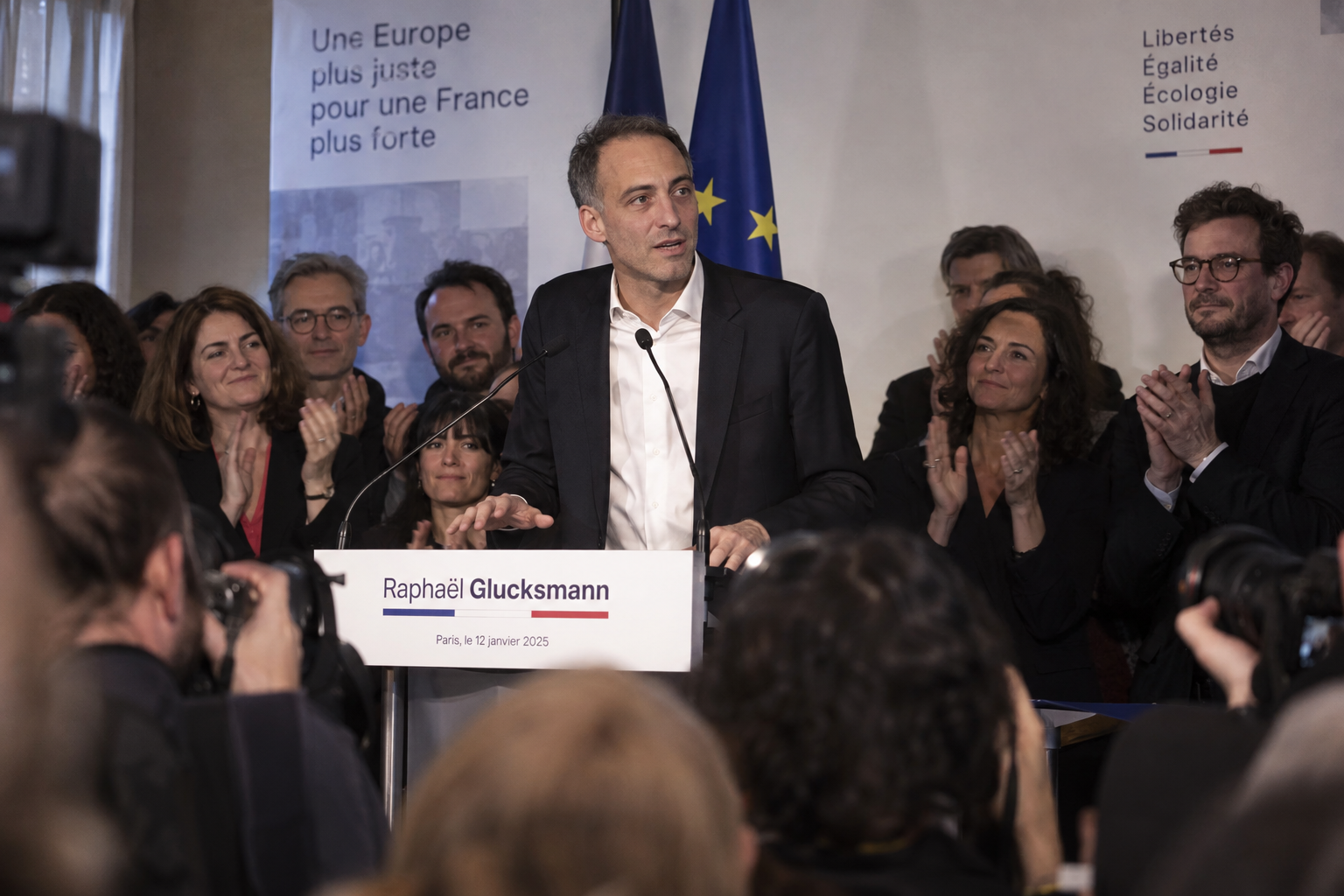
Raphaël Glucksmann, leader of the Place publique party and a French member of the European Parliament, won the first round of the French social-democratic primary to choose a candidate for the 2027 presidential election. He received 66.17% of the vote among 120,787 voters, a decisive lead over Socialist Party leader Olivier Faure, who took 14%. Former presidential candidate Ségolène Royal finished third with less than 8%, while Jérôme Guedj and Emmanuel Maurel each received close to 6%. Glucksmann said the result showed that a values-based left could unite and win, and framed his goal as defeating Macronism, stopping the far right and improving people’s lives. Turnout reached 86%, a level that organizers and observers had identified as important to the primary’s credibility and momentum. Voting was disrupted by a cyberattack that slowed the process, prompting organizers to extend the primary, which began Friday morning, until 6 p.m. Sunday. Political journalist Rachel Garrat-Valcarcel had said turnout of at least 80% would be needed for the event to be considered successful. The article places the result within a wider and divided political landscape. Marine Le Pen represents the far right and Jean-Luc Mélenchon the radical left; Mélenchon was not invited to participate but remained a prominent presence in televised debates. The debates addressed possible cooperation with La France insoumise in legislative elections and disagreements over whether to support its candidate in a presidential runoff if the centre-left does not reach it.
Entities: Raphaël Glucksmann, Place publique, Olivier Faure, Socialist Party, Ségolène Royal • Tone: analytical • Sentiment: neutral • Intent: inform
11-10-2026
The France 24 Spotlight profile concerns Raphaël Glucksmann’s bid to become the French centre-left’s candidate in the upcoming presidential election. Glucksmann won the party primary with 66% of the vote, in a contest that drew around 140,000 participants. The result placed him well ahead of the other named contenders: party leader Olivier Faure, who received 14%, and Ségolène Royal, a former environment minister and 2007 presidential candidate, who received 7%.
The primary victory gives Glucksmann the centre-left’s nomination, but the article’s brief account emphasizes that winning the selection is only the first challenge. He must now build wider support for the centre-left in a political landscape where the far right remains a significant force. Marine Le Pen is identified as its leading figure. The item therefore presents the result both as a decisive internal victory and as the beginning of a broader electoral test, without detailing Glucksmann’s policies, campaign strategy, or the reactions of his rivals. The article is a short introduction to a video profile rather than a full account of the candidates or the election campaign.
Entities: Raphaël Glucksmann, France, France 24, Olivier Faure, Ségolène Royal • Tone: analytical • Sentiment: neutral • Intent: inform
11-10-2026
Raphaël Glucksmann won the French centre-left presidential primary on October 11, 2026, securing 66.13% of the vote in the first round. The 46-year-old European lawmaker leads the Place Publique movement and will represent the centre-left in France’s 2027 presidential election. His victory positions him as an alternative on the left to Jean-Luc Mélenchon, leader of the hard-left France Unbowed party. Glucksmann said his candidacy offered a break both with President Emmanuel Macron’s political approach and with Mélenchon’s dominance of the left, and argued that he could defeat the far right.
The primary drew more than 120,000 voters, a turnout considerably below the 2.8 million who participated in the Socialists’ 2011 primary, won by François Hollande, who later became president. Glucksmann’s mainstream-left list won 14% of French seats in the 2024 European Parliament election. He opposes an alliance with Mélenchon, while Socialist Party leader Olivier Faure has been open to cooperation with France Unbowed; Faure received 14.5% in the primary. The result is therefore a setback for Faure and highlights divisions within the French left.
Glucksmann now faces the challenge of uniting a fractured left as the 2027 campaign is increasingly shaped by the far right. Opinion polls suggest he could reach the presidential election’s May run-off, but indicate that he would lose to current frontrunner Marine Le Pen. Though critical of some of Macron’s pro-business policies, Glucksmann supports a similar pro-European and pro-Ukraine direction and presents himself as a defender of liberal democracy. In his post-vote remarks, he called for unity against what he described as Trumpists, coup plotters, xenophobes and demagogues.
Entities: Raphaël Glucksmann, France, 2027 French presidential election, Place Publique, French centre-left primary • Tone: analytical • Sentiment: neutral • Intent: inform