10-09-2026
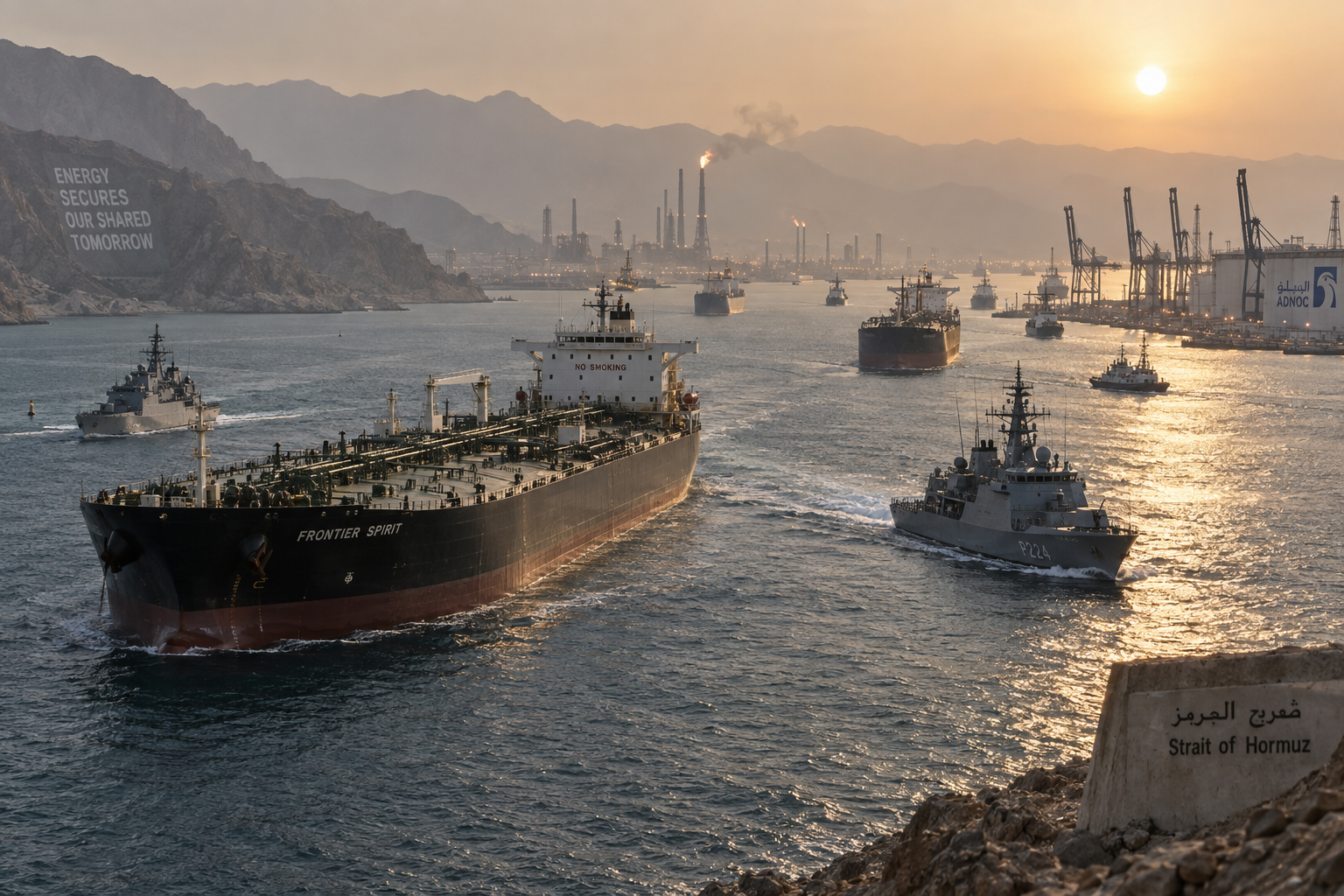
Oil prices rose Thursday as the seven-month U.S.-Iran conflict intensified and concerns grew that attacks on shipping could cause more severe supply disruptions. Brent crude for November delivery increased 0.62% to $101.84 per barrel, while U.S. West Texas Intermediate for October gained 1.01% to $96.06. The market move followed a U.S. military operation on Tuesday in which five Iranian crude oil tankers were destroyed after Iran allegedly attempted to attack an American warship. U.S. Central Command said the warship evaded the attack and that no U.S. personnel were injured.
Goldman Sachs warned that continued attacks on shipping could push oil prices above $120 per barrel. Daan Struyven, the firm’s co-head of global commodities research, said the escalation is increasing the risk of a major price surge. The Strait of Hormuz, a critical route for global energy shipments, is central to the supply concerns, with numerous merchant vessels reportedly remaining at anchor near Bandar Abbas, Iran.
The article also reports that senior advisers to President Donald Trump have privately discussed the possibility that the conflict could continue through the remainder of his term, according to The Wall Street Journal. Analysts said a further reduction in oil transit volumes, a broader regional escalation, or attacks on energy infrastructure could tighten the physical market and extend oil’s upward price movement. Market analyst David Morrison noted that WTI has recovered its earlier decline from June and July, while Brent is trading well above its early-June levels. Overall, the article presents the conflict as both a geopolitical crisis and a growing threat to global oil supplies and prices.
Entities: U.S.-Iran conflict, Oil supply disruptions, Strait of Hormuz, Bandar Abbas, Iran, Brent crude • Tone: urgent • Sentiment: negative • Intent: inform
10-09-2026
The article reports a sharp escalation in the U.S.-Iran conflict, with fighting spreading across the region and creating new pressure on global energy markets. Brent crude rose above $100 per barrel, its highest level since late May, after renewed attacks connected to the Strait of Hormuz. Goldman Sachs warned that prices could exceed $120 per barrel, while the U.S. Energy Information Administration projected that traffic through the waterway would remain constrained through the end of 2026. The agency estimated that an average of 5.7 million barrels of oil per day could remain shut in, with prewar export levels not returning until the second quarter of 2027.
Iranian strikes on Jordan reportedly damaged several U.S. aircraft at Muwaffaq Salti Air Base. Sources said approximately eight F-15s sustained light damage and were returned to service, while an A-10 Thunderbolt lost a wing. Jordan said it intercepted 18 Iranian missiles, and no U.S. deaths were reported. U.S. forces used more than 30 Patriot missiles to defend against the attack, raising concerns about declining missile stockpiles.
The conflict also expanded through Iran-backed regional groups. Yemen’s Houthi movement launched missiles and drones at three cities in southwestern Saudi Arabia for a second consecutive day. Saudi Arabia reported dozens of injuries and temporary shutdowns at oil facilities after earlier attacks, while the Houthis claimed that Saudi forces responded with more than 30 strikes in Yemen. Secretary of State Marco Rubio described the Houthis as Iranian proxies, a characterization rejected by Iran.
President Trump predicted that the war would end immediately after the U.S. midterm elections, alleging that Iran was trying to influence the vote. He said the United States was not currently seeking negotiations and intended to continue economic pressure. Iran also rejected a U.N. nuclear watchdog resolution referring it to the Security Council, calling the measure politically motivated and ineffective.
Entities: Iran-U.S. war, Donald Trump, Iranian Revolutionary Guard Corps, Marco Rubio, Jordan • Tone: urgent • Sentiment: negative • Intent: inform
10-09-2026
Brent crude rose above $100 a barrel after renewed attacks on shipping near the Strait of Hormuz, increasing concern about fuel costs, inflation and economic growth in Europe. The article uses Eurostat data to examine which European countries import the largest volumes of oil and which are most vulnerable to a price shock. The European Union imported 471.3 million tonnes of crude oil in 2024 but produced only 15.5 million tonnes domestically, leaving it 96.6% dependent on oil imports. The United States, Kazakhstan and Norway were the largest suppliers, while Libya, Saudi Arabia, Nigeria and Iraq also contributed significant volumes.
The Netherlands was the largest importer by volume, bringing in 138.3 million tonnes in 2024, followed by Germany, Spain, France, Italy and Belgium. However, the Dutch figures are inflated by Rotterdam’s role as a major refining and re-export hub. Germany is described as the more significant domestic importer because of its large industrial economy, transport network and refining sector. Germany, France, Italy and Spain together accounted for almost 58% of EU oil and petroleum-products consumption.
The article argues that import volumes alone do not measure exposure. Relative vulnerability is greater in smaller economies, including Malta, Bulgaria, Croatia, Hungary, Belgium, Luxembourg and Cyprus, whose net energy-import deficits represent a comparatively large share of GDP. Malta had the largest deficit at 5.4% of GDP. Southern European and tourism-dependent economies are particularly exposed because transport, aviation and tourism consume substantial amounts of oil. Spain, Portugal and Ireland rely almost entirely on imported oil, while Malta and Cyprus also have very high import dependency. Rising fuel prices could increase airline, accommodation, retail and supply-chain costs. Denmark is the least oil-import dependent European country, benefiting from domestic production, while the Netherlands’ low relative exposure reflects its re-export role.
Entities: Piero Cingari, Euronews, Eurostat, European Union, Strait of Hormuz • Tone: analytical • Sentiment: negative • Intent: analyze