09-05-2026
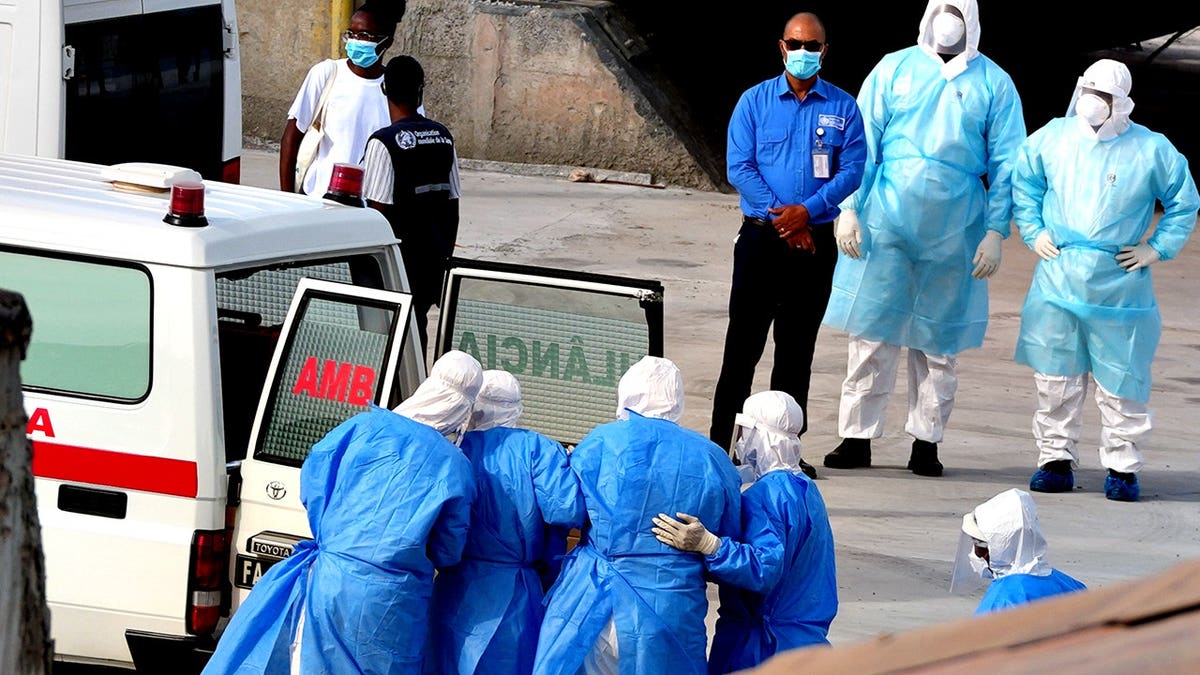
As the cruise ship MV Hondius approaches Tenerife after a hantavirus outbreak on board, the island is caught between public-health caution, political controversy, and local anger. The Spanish government, working with the World Health Organization, has agreed that the passengers should disembark in Tenerife this weekend, after the ship traveled from Cape Verde where three people were evacuated due to illness. The decision has triggered protests among dock workers and some residents, who argue that they have not been given enough information or protection and fear the arrival could pose a health risk.
Outside the Canary Islands’ parliament in Santa Cruz, union members and protesters demanded clearer safety measures, better communication, and assurances that local workers and residents will not be exposed. Some have even threatened to block the ship’s arrival if demands are not met. The article also highlights broader island frustrations, including the ongoing issue of migration to the Canary Islands, which some residents see as part of a pattern of the central government ignoring local concerns. Others, however, express a more measured or resigned view, saying that while the situation is unwelcome, authorities appear to have put safeguards in place.
According to the government’s plan, the ship will not dock directly but will anchor offshore, with passengers ferried to the industrial port of Granadilla, away from residential areas, before being repatriated or quarantined. Officials insist there will be no contact with local residents. The article captures the contrast between fear and reassurance: some islanders remain angry at what they view as high-handed decision-making, while others say that with more information and strict controls, they are calmer and willing to trust the public-health response.
Entities: MV Hondius, Tenerife, Canary Islands, Spain, World Health Organization (WHO) • Tone: analytical • Sentiment: negative • Intent: inform
09-05-2026
Health officials in the United States and at least 11 other countries are monitoring passengers and crew from the cruise ship MV Hondius after the World Health Organization confirmed that the outbreak aboard the vessel involves the Andes strain of hantavirus, a rare version that can spread from person to person. The ship, which was sailing off the west coast of Africa and later departed Cape Verde, has been linked to multiple suspected and confirmed cases, including three deaths: a Dutch couple and a German woman. The husband in the Dutch couple died on board before hantavirus was suspected; his wife later became ill while traveling and died in South Africa. A British man evacuated from the ship tested positive, and several others, including passengers who disembarked in Saint Helena and travelers who later flew internationally, are under observation across countries such as Canada, the U.S., the U.K., Switzerland, Germany, and the Netherlands.
Officials in several U.S. states, including Georgia, Texas, Virginia, Arizona, and California, say they are monitoring people who had been on the ship, though none currently show symptoms. The CDC has been coordinating with international partners, and Arizona health officials said a passenger in their state will be monitored for 42 days. Despite the unusual and alarming nature of the outbreak, health experts stress that the risk to the general public remains low and that hantavirus does not spread as easily as flu or COVID-19. The Canary Islands have expressed opposition to the ship docking there, while the ship’s operator and global health officials continue tracing contacts and coordinating care. Argentina, where the Andes strain originated, has offered technical assistance and resources to affected health systems.
Entities: MV Hondius, hantavirus, Andes strain, World Health Organization (WHO), Centers for Disease Control and Prevention (CDC) • Tone: analytical • Sentiment: neutral • Intent: inform
09-05-2026
The article reports that the U.S. government is organizing a repatriation flight to bring 17 Americans home from the cruise ship MV Hondius, which is at the center of a hantavirus outbreak. The evacuation is being coordinated by the U.S. Centers for Disease Control and Prevention, the Department of Health and Human Services, the State Department, Spanish officials, and the University of Nebraska Medical Center, whose biocontainment unit will receive the returning passengers in Omaha. Health authorities say the Americans will undergo exposure-risk assessments and monitoring, and that the plane is expected to land at Offutt Air Force Base.
The Hondius, carrying 147 people, is currently near the Canary Islands after being denied permission to dock in Tenerife. Spanish officials described a carefully controlled disembarkation process in which passengers would be removed in small groups, kept isolated from civilian personnel, and transported directly to the airport by boat and bus. The article explains that no one on board showed symptoms on Friday, though medical teams and aircraft remain on standby if that changes.
The outbreak has led to nine confirmed or suspected cases and three deaths, including a Dutch couple and another woman who died aboard the ship. Health officials note that the Andes strain is the only hantavirus strain known to spread from person to person, but they stress that the virus does not transmit easily and that the broader public risk is low. The World Health Organization and several countries are also monitoring individuals who left the ship earlier. Overall, the piece emphasizes the international public-health response, quarantine planning, and efforts to prevent further spread without suggesting an imminent pandemic.
Entities: Hantavirus, MV Hondius, U.S. Centers for Disease Control and Prevention (CDC), Department of Health and Human Services, U.S. State Department • Tone: analytical • Sentiment: neutral • Intent: inform
09-05-2026
Health officials are tracking a hantavirus outbreak tied to the Dutch-flagged cruise ship M/V Hondius, with nine confirmed or suspected cases and three deaths so far. The outbreak involves the Andes virus, a hantavirus strain that is unusual because it can spread from person to person through prolonged close contact. The article explains that the first believed case was a 70-year-old Dutch man who died aboard the ship after developing symptoms in early April, followed by his wife, who later tested positive for Andes virus after falling ill and dying in South Africa. Other confirmed cases include a British passenger hospitalized in South Africa, a Swiss man who tested positive after leaving the ship in Saint Helena, and two evacuees flown to the Netherlands. Another German passenger died aboard the ship, and a British national on Tristan da Cunha is a suspected case.
Because passengers and crew disembarked in several countries, the World Health Organization and national health agencies are conducting contact tracing and monitoring in at least 12 countries, including the United States. The article notes that no one currently on the ship has symptoms, but the lengthy incubation period means more cases could emerge. Public health agencies in several U.S. states and elsewhere are monitoring travelers and contacts, while some exposed individuals have tested negative or are self-isolating. The piece serves as an update on the outbreak, explaining what hantavirus is, how this particular strain spreads, and how authorities are responding internationally.
Entities: Hantavirus, Andes virus, M/V Hondius, Oceanwide Expeditions, World Health Organization (WHO) • Tone: analytical • Sentiment: negative • Intent: inform
09-05-2026
Hantavirus infections in Argentina have nearly doubled over the past year, with the country recording 101 confirmed cases and 32 deaths since the current season began in June 2025. The rise is especially notable because it includes the highest infection count since 2018 and one of the deadliest seasons in recent years, while also excluding a separate outbreak tied to the cruise ship MV Hondius, whose source remains under investigation. Health officials are racing to determine whether a Dutch couple who died after traveling through parts of Argentina, Chile, and Uruguay may have been exposed before boarding the ship in Ushuaia.
The article explains that experts and Argentine health officials attribute the increase to a combination of climate change, habitat destruction, forest fires, expanding human settlement into rural areas, and changing weather patterns. These factors are believed to be helping rodents that carry hantavirus spread into new areas and increasing human contact with them. Historically, the disease has been associated with Patagonia and other rural or peri-urban regions, but this season many cases have appeared in central Argentina, especially Buenos Aires province. Authorities are sending teams to Ushuaia to trap and analyze rodents, while local epidemiologists dispute suggestions that the couple contracted the virus in Tierra del Fuego, saying the timeline does not support that conclusion.
Entities: Hantavirus, Argentina, MV Hondius, Ushuaia, Tierra del Fuego • Tone: analytical • Sentiment: negative • Intent: inform
09-05-2026
Argentine investigators believe they may have identified the origin of a hantavirus outbreak aboard the Dutch-flagged cruise ship MV Hondius that has killed three passengers and sickened several others. Their leading theory is that a Dutch couple may have been exposed to rodents while visiting a landfill during a bird-watching tour in Ushuaia, Argentina, before boarding the ship. Authorities say the virus likely entered the vessel through that exposure, though they note that human-to-human transmission of hantavirus is uncommon but possible.
The outbreak has prompted an international public health response, with contact tracing underway across Europe and Africa as passengers have disembarked in multiple locations. Testing in Switzerland, South Africa, and Senegal confirmed the outbreak involves the Andes strain of hantavirus, which is primarily associated with Argentina and Chile and can spread through close contact in rare cases. Swiss officials reported that one returning passenger developed symptoms and tested positive, while the World Health Organization said three suspected cases were evacuated from the ship and transported to the Netherlands for treatment.
Despite the serious nature of the outbreak, WHO Director-General Tedros Adhanom Ghebreyesus said the overall public health risk remains low. The article highlights the concern that the virus may have spread aboard the cruise ship after passengers were exposed before embarkation, and it underscores the challenge of tracing and containing a rare infectious disease across multiple countries and travel routes.
Entities: Argentina, Ushuaia, Tierra del Fuego province, landfill, Dutch couple • Tone: analytical • Sentiment: negative • Intent: inform