09-05-2026
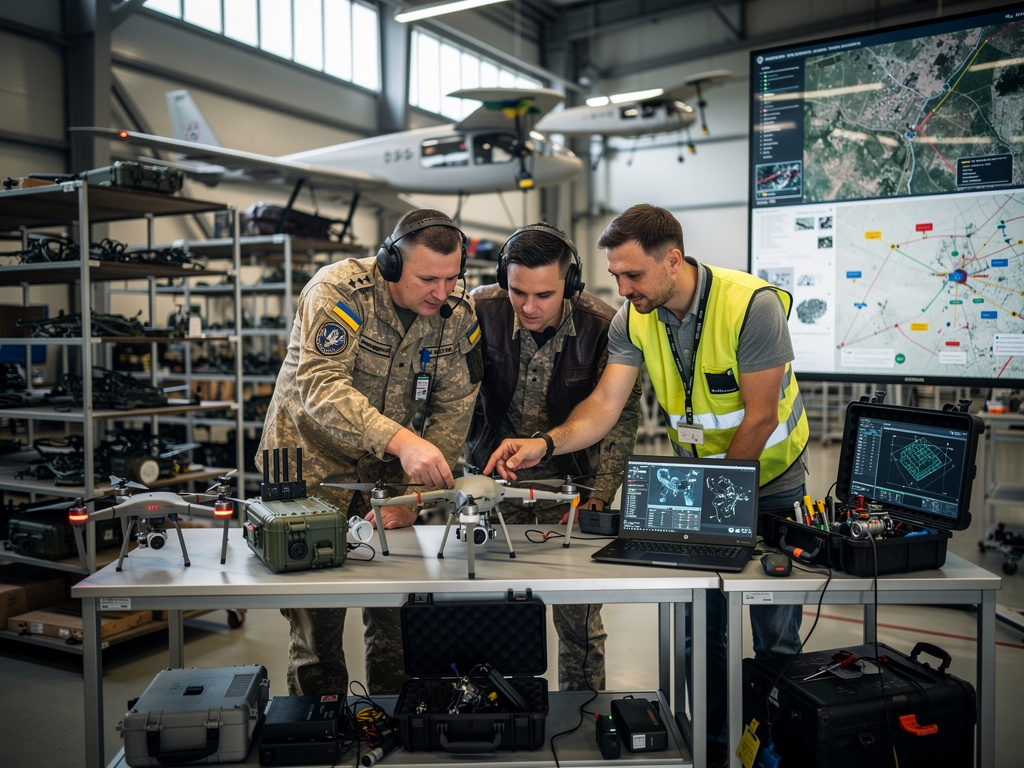
The article argues that Europe’s defence startups face structural disadvantages that make it harder for them to scale than their American counterparts, even though demand for military technology is rising rapidly. The central example is unmanned systems, especially military drones, which have become increasingly important in modern warfare as seen in conflicts involving Iran, Russia, and Ukraine. While European firms such as Germany’s Quantum Systems and Helsing are developing promising technologies, the continent lacks the industrial capacity, unified procurement system, and customer responsiveness needed to turn innovation into mass production.
A key theme is that Europe’s defence market is fragmented across national borders, with different procurement rules, budgets, and military priorities. That fragmentation makes it difficult for startups to secure large, predictable orders, which are often essential for scaling production and improving products. The article suggests that Europe’s armed forces may understand the strategic importance of unmanned systems, but they remain hesitant and slow to buy at the speed required by wartime conditions.
The piece contrasts Europe’s cautious acquisition culture with the faster, cheaper innovation cycle visible in Ukraine, where wartime pressure has accelerated the development of new weapons. The broader implication is that if Europe does not build a more integrated and responsive defence ecosystem, it could enter future conflicts underprepared despite having capable startups and growing technological know-how.
Entities: Europe, America, Sven Kruck, Quantum Systems, Germany • Tone: analytical • Sentiment: negative • Intent: analyze
09-05-2026
The article argues that war remains the most powerful driver of military innovation, and uses Ukraine as the clearest current example. In Kyiv, defense firms are developing weapons and countermeasures faster and more cheaply than many Western competitors because battlefield conditions force rapid adaptation. The opening example, the Ratel H, is a crude-looking but effective unmanned or semi-autonomous vehicle designed to defeat enemy drones by detecting threats overhead and firing a net to bring them down. The article contrasts this practical, fast-moving innovation ecosystem with the slower, more expensive procurement systems common in Western defense industries.
The broader point is that combat creates immediate feedback loops: weapons are tested against real threats, failures are visible at once, and companies can iterate quickly. Ukraine’s wartime environment has therefore become a kind of laboratory for defense technology, producing novel systems at a pace that peacetime bureaucracies and fragmented markets often struggle to match. The article suggests that the pressures of survival, rather than abstract planning or long development cycles, are what push firms to build cheaper, simpler, and more adaptable tools.
At the same time, the framing implies a warning for Western militaries and defense firms: if they want to keep up with future threats, they may need to learn from Ukraine’s wartime innovation model. The article positions Ukraine not just as a battlefield, but as a proving ground for the next generation of military technology.
Entities: Ukraine, Kyiv, Ratel H, enemy drone, defence firms • Tone: analytical • Sentiment: neutral • Intent: inform
09-05-2026
The article argues that Europe’s security depends on Ukraine and that excluding Ukraine from deeper European integration would be more dangerous than admitting it, despite the risks of enlargement. It opens with the backdrop of growing alarm among European leaders, especially Poland’s Donald Tusk, who warns that Russia could attack Europe’s eastern flank within months and urges Europe to strengthen its defences within NATO and the EU. The central claim is that Europe can no longer assume American protection is reliable, so it must build a stronger, more autonomous defence posture.
Against that strategic context, the piece frames Ukraine not as a burden but as an essential asset. Ukraine is portrayed as a country already living through war and therefore a source of hard-earned military lessons, urgency, and innovation. The argument is that Ukrainian defence firms can develop weapons faster and cheaper than many Western counterparts because wartime necessity forces rapid adaptation. That makes Ukraine valuable not only as a future EU member, but as a contributor to Europe’s broader security and rearmament.
The article’s underlying message is a warning: hesitation about bringing Ukraine into the EU may create greater long-term danger by leaving Europe weaker, more divided, and less prepared for Russian aggression. In this view, EU enlargement is not merely a political or economic question but part of a wider continental defence strategy. Ukraine’s membership, though risky in the short term, is presented as a strategic necessity if Europe wants to deter Russia and reduce its dependence on an uncertain United States.
Entities: Europe, Ukraine, Russia, European Union (EU), NATO • Tone: analytical • Sentiment: neutral • Intent: analyze