08-05-2026
Oil prices climbed sharply after fresh military exchanges between the United States and Iran in the Strait of Hormuz, a critical chokepoint for global energy shipments. The global Brent benchmark briefly rose nearly 3% to about $103 a barrel before easing back to around $100, reflecting trader concerns that the ceasefire between the two countries remains fragile. The US said it carried out self-defence strikes after what it described as unprovoked Iranian attacks on departing American ships, while Iran accused Washington of violating the ceasefire and said it had responded against US naval vessels near the strait.
The article emphasizes how the conflict has rattled energy markets and raised fears of disruption to one of the world’s most important shipping lanes, through which more than a fifth of global oil and gas typically passes. Prices had already been elevated since the broader conflict began, with oil trading around $70 a barrel before hostilities. President Donald Trump insisted the ceasefire was still in place and said negotiations with Tehran were continuing, while also warning Iran against acquiring nuclear weapons. Iranian state media later said the situation had returned to normal, though market participants remained wary.
The piece also notes broader economic fallout beyond crude oil. Jet fuel prices have jumped by about half, increasing costs for airlines such as British Airways parent IAG, which said its fuel bill could reach €9 billion this year, about €2 billion more than last year. Shares in IAG fell in early London trading, underscoring investor concern that even if diplomacy continues, the conflict could keep pressuring transport and energy costs until tensions are fully resolved.
Entities: Strait of Hormuz, United States, Iran, Brent oil benchmark, Donald Trump • Tone: analytical • Sentiment: negative • Intent: inform
08-05-2026
The article reports a renewed military exchange between Iran and the United States in the Strait of Hormuz, even as President Donald Trump insists a ceasefire remains in effect. According to the US, Iran launched missiles, drones, and small boats at three American warships in what Central Command described as an unprovoked attack. Iran, however, denied initiating aggression and instead accused the US of striking an Iranian oil tanker, another vessel near the strait, and several coastal areas through aerial attacks. Both sides claimed retaliatory action and framed the other as responsible for violating the ceasefire.
The episode underscores how fragile the truce remains. The United Arab Emirates also said its air defenses were engaging an Iranian missile and drone attack, and Iranian state media reported explosions in the Strait of Hormuz and Tehran. Trump responded on Truth Social that the US had destroyed multiple threats and inflicted significant damage, while warning that any future noncompliance with a peace deal would be met with even greater force. An Israeli source told the BBC that Israel had no role in the latest incident.
The article also places the clash in the context of ongoing diplomatic efforts. The US and Iran are reportedly discussing a possible 14-point memorandum of understanding that could lead to broader nuclear negotiations, with Pakistan acting as a mediator. Yet Iranian officials and parliamentarians remain skeptical, with some dismissing the proposal as a mere wish list and warning of a harsh response if the US does not meet Iran’s conditions. Overall, the article presents a volatile situation in which military escalation and tentative diplomacy are unfolding at the same time.
Entities: Donald Trump, Iran, United States, Strait of Hormuz, US Central Command (Centcom) • Tone: urgent • Sentiment: negative • Intent: inform
08-05-2026
President Trump announced a temporary pause in “Project Freedom,” the U.S. mission to help commercial ships transit the Strait of Hormuz, saying the move was intended to give U.S.-Iran negotiations a chance to produce a final agreement. He said the decision was made at Pakistan’s request, as Pakistan has been helping mediate between the two sides. Despite the pause, the U.S. blockade of Iranian ports remains in place.
The article explains that Project Freedom had been launched only days earlier after Iran moved to assert control over the strategic waterway, through which a significant share of global oil shipments normally pass. The U.S. military had already begun escorting ships, redirecting traffic to a mine-cleared route farther from Iran’s coast, and contacting commercial shippers stranded in the Persian Gulf. The situation quickly escalated, with Iran warning ships that they would be targeted without its permission and reports of Iranian attacks on U.S. naval vessels and non-U.S. commercial ships.
Trump and senior U.S. officials insisted the ceasefire with Iran was still intact and framed Project Freedom as a defensive measure. Iran, however, condemned the initiative, warning that it could undermine peace talks and describing it as a path toward deadlock rather than resolution. The article closes by noting that talks remain uncertain and that broader disputes, including Iran’s nuclear program and the U.S. blockade, continue to complicate efforts at de-escalation.
Entities: Donald Trump, Pakistan, Iran, United States, Project Freedom • Tone: urgent • Sentiment: negative • Intent: inform
08-05-2026
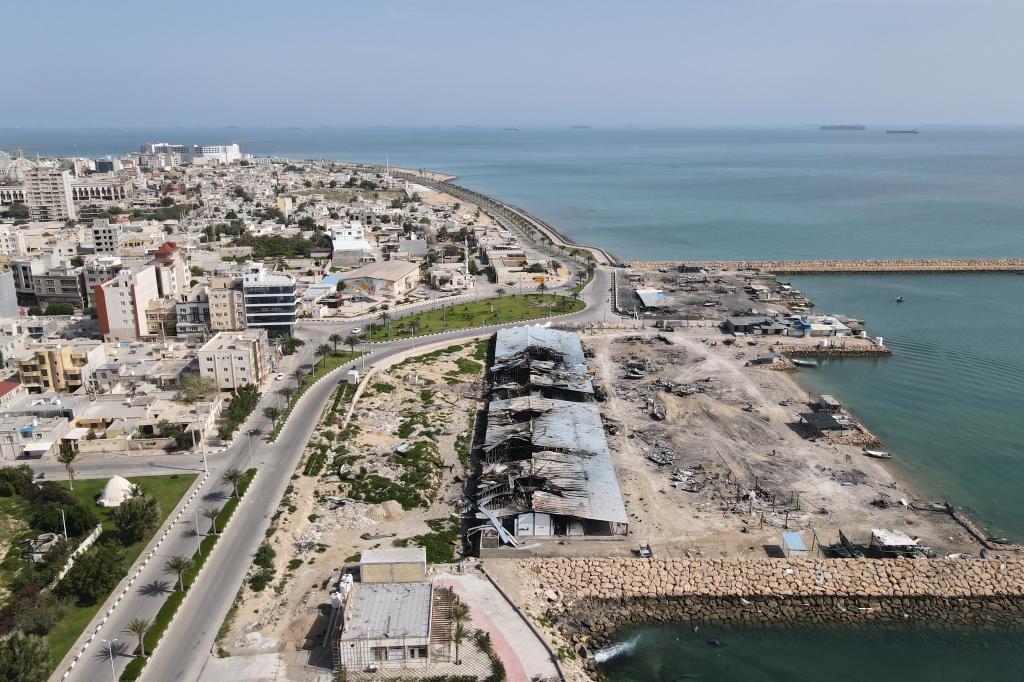
The article reports a sharp escalation in tensions between the United States and Iran after three U.S. Navy destroyers transiting the Strait of Hormuz came under attack by Iranian missiles, drones, and small boats. In response, the U.S. military carried out “self-defense strikes” on Iranian facilities, including the ports of Bandar Abbas and Qeshm, and drone and missile launch sites. Officials said the U.S. ships were not hit and no casualties or damage were reported. The confrontation appears to have strained an already fragile ceasefire that had been in place for about a month, even as President Trump insisted it remained valid and described the U.S. response in dismissive, combative terms.
The story places the clash in the broader context of control over the Strait of Hormuz, a vital chokepoint for global oil shipping. The article explains that commercial traffic had largely slowed after earlier U.S. and Israeli strikes on Iran, with many tankers avoiding the strait because of Iranian warnings and the risk of conflict. It also notes that the Trump administration had been trying to pressure Iran through a blockade of Iranian ports and briefly launched Project Freedom to escort commercial ships through the strait before pausing it to allow room for negotiations. U.S. officials said earlier and more recent engagements involved layered naval and air defenses, including ship guns, CIWS systems, Apache helicopters, and aircraft support. The piece closes by emphasizing that no peace deal has been announced and that Trump warned Iran of even harsher retaliation if it does not sign a deal soon.
Entities: United States, Iran, Strait of Hormuz, USS Truxton, USS Mason • Tone: urgent • Sentiment: negative • Intent: inform
08-05-2026
The US and Iran exchanged fire in the Strait of Hormuz, with both sides claiming the other initiated the attack. US President Donald Trump insisted that the ceasefire between Washington and Tehran remains in effect, despite the escalation. The conflict has disrupted one of the world's most critical energy chokepoints, with Shell CEO Wael Sawan warning of a potential oil shortage of 1 billion barrels. Oil prices rebounded in early Friday trading, with Brent crude futures rising 2.29% to $102.35 per barrel. The conflict has also impacted financial markets, with the S&P 500 falling on Thursday and Cloudflare shares tumbling 18% after the company announced plans to cut one-fifth of its workforce. Meanwhile, market watchers believe that a US-Iran peace settlement could lead to a rally in gold and silver prices.
Entities: US, Iran, Strait of Hormuz, Donald Trump, Shell • Tone: neutral • Sentiment: negative • Intent: inform
08-05-2026
Traders and market commentators have coined a new Wall Street acronym, “NACHO” — “Not A Chance Hormuz Opens” — to describe growing skepticism that the Strait of Hormuz will reopen quickly after renewed conflict between the U.S. and Iran. The article argues that investors are increasingly treating disruptions in the critical shipping lane as a structural macro risk rather than a short-lived geopolitical shock. Oil markets, shipping insurance, and rates markets are all signaling concern that elevated energy prices and supply disruptions may persist, even as equities remain relatively resilient.
The piece contrasts the new NACHO trade with the earlier “TACO” trade (“Trump Always Chickens Out”), noting that both narratives are shaping market behavior in the second quarter. Brent crude has fallen from its wartime peak but remains significantly above pre-conflict levels, and insurance premiums for Hormuz transits remain far higher than before the war, reinforcing the view that traders and insurers are not expecting an immediate resolution. Analysts from eToro, State Street Global Advisors, and Aviva Investors say the market is gradually pricing in a more prolonged disruption, with implications for inflation, Federal Reserve rate expectations, gold prices, and the broader risk of a global downturn.
Despite the market’s growing pessimism, some analysts still expect the Strait to reopen eventually. The article closes on the idea that the path forward may be messy, but market participants are increasingly accepting that a quick fix is unlikely.
Entities: NACHO trade, Strait of Hormuz, U.S. President Donald Trump, Iran, United States • Tone: analytical • Sentiment: neutral • Intent: inform
08-05-2026
The article argues that America’s short, chaotic war with Iran has left the Middle East more dangerous and unstable rather than more secure. It opens with the abrupt, muddled ceasefire: Donald Trump threatened a major escalation before suddenly agreeing to suspend hostilities for two weeks, with Pakistan’s prime minister Shehbaz Sharif helping mediate. The piece suggests that the war ended not with a decisive victory but with confusion, incomplete objectives, and a region forced to live with the consequences.
The core argument is that the conflict has damaged the strategic balance across the Middle East. Even if fighting pauses, the war has exposed how vulnerable the Gulf states are, how fragile shipping through the Strait of Hormuz remains, and how much regional actors now doubt the reliability of American protection. The article implies that the ceasefire is tenuous and may not resolve underlying tensions between the U.S., Israel, and Iran. Instead, it has created a more precarious security environment, where oil markets, maritime trade, and regional diplomacy remain highly exposed.
The article also frames the episode as part of a wider set of geopolitical anxieties. It links the ceasefire’s uncertainty to broader concerns about the Gulf’s future and the persistence of instability even after the guns fall silent. Overall, the article’s message is that America’s intervention has not restored order; it has worsened insecurity, highlighted regional weakness, and left the Middle East facing an even more uncertain future.
Entities: America, Iran, Israel, Donald Trump, Shehbaz Sharif • Tone: analytical • Sentiment: negative • Intent: analyze
08-05-2026
The article argues that the crisis in global oil markets is worsening and may persist longer than many traders expected. The central shock is the near-shutdown of traffic through the Strait of Hormuz, a chokepoint through which nearly a fifth of the world’s oil normally passes. For years, markets assumed that Iran would not fully close the strait because doing so would hurt its own economy, antagonize Gulf neighbors, and invite rapid American intervention. But after two months of sustained bombing by America and Israel, and Iran’s retaliation against commercial shipping, those assumptions have been overturned: shipping through Hormuz remains near zero, diplomatic efforts are inconsistent, and a negotiated reopening is far from certain.
The piece emphasizes that this is not a short-term disruption but a potentially prolonged structural crisis. As oil stocks dwindle, further price increases are described as inevitable. The article suggests that even if talks eventually succeed, the market damage is already severe, because global energy flows have become more vulnerable than previously believed. The title and framing imply that the crisis may intensify before any relief arrives, with consequences extending beyond prices to broader geopolitical and economic instability. The wider regional context is also important: the conflict has exposed how exposed Gulf states and global energy consumers are to renewed war and disruption in the Middle East.
Entities: Oil markets, Strait of Hormuz, Iran, America, Israel • Tone: analytical • Sentiment: negative • Intent: analyze
08-05-2026
The article examines the fragile ceasefire between the United States and Iran and argues that, far from stabilizing the Middle East, the truce exposes how vulnerable and interconnected the Gulf region has become. While Donald Trump portrays the pause in hostilities as the beginning of a “golden age,” the first day of the ceasefire is described as one of the bloodiest since the war began on February 28, suggesting that the fighting has not truly ended and that the strategic environment remains volatile. The piece frames the Gulf states as confronting a harder question than just whether the truce will hold: what their future security arrangements should be in a region where American power, Iranian influence, and local defenses all appear less reliable than before.
The broader argument is that America’s war on Iran has altered the Middle East in damaging ways. Rather than creating a safer balance, the conflict has made the region less secure than when it started. The Gulf states, long dependent on the United States for deterrence and protection, are shown to be newly exposed to the risks of escalation, retaliation, and instability. The article also implies that any short-term diplomatic pause should not be mistaken for a durable peace. Instead, it highlights the structural consequences of the war: weakened confidence in security guarantees, increased uncertainty about the region’s order, and a sense that the ceasefire may be only a temporary interruption in a larger and more dangerous struggle.
Entities: United States, Iran, Donald Trump, The Gulf, Middle East • Tone: analytical • Sentiment: negative • Intent: analyze
08-05-2026
CNN’s report describes a brief but dangerous escalation between Iran and the United States near the Strait of Hormuz on Thursday, centered on competing claims over who violated a ceasefire. According to the article, Iranian state-affiliated Fars news agency published footage it said showed missile launches toward U.S. vessels, while Tehran accused Washington of breaking the truce. The United States, meanwhile, maintained that its actions were carried out in self-defense. The piece also notes that President Trump said the ceasefire was still holding as Iran considered a U.S. proposal aimed at ending the wider conflict. The story is framed as a snapshot of a volatile moment in the region: military confrontation, diplomatic uncertainty, and information warfare unfolding at the same time. Because the article is a video/news clip page, it is short and highly focused on the immediate exchange of fire and the political messaging surrounding it, rather than providing broader background or detailed casualties. The central takeaway is that tensions remain high despite the declared ceasefire, and both sides are publicly asserting conflicting narratives about responsibility and next steps.
Entities: Iran, United States, Strait of Hormuz, Fars news agency, President Trump • Tone: urgent • Sentiment: negative • Intent: inform
08-05-2026
The article explains how Iran’s naval threat in the Strait of Hormuz does not depend mainly on its conventional navy, which analysts say has been heavily degraded, but on a layered system of asymmetric warfare. That system includes small fast-attack boats, drone boats, mines, midget submarines, and mobile anti-ship missile launchers hidden along Iran’s coastline. Military experts describe this collection of capabilities as Iran’s “mosquito fleet,” a low-cost, hard-to-detect force designed to harass shipping, create uncertainty, and impose financial and operational costs on the United States and commercial vessels without needing to win a conventional naval battle.
The piece emphasizes that the Strait of Hormuz’s geography gives Iran a strategic advantage because shipping has no real alternative route, making the security of the chokepoint extremely important to global trade and energy flows. Analysts quoted in the article say the United States faces a much higher burden than Iran: Washington must deploy expensive surveillance and defense assets across a vast maritime area, while Iran only needs to threaten enough attacks to raise insurance rates, deter ship owners, and disrupt traffic. The article notes that mines and missiles are damaging but that fast boats and underwater threats create a constant psychological and tactical challenge. It also highlights the difficulty of identifying safe shipping corridors and the added complexity of monitoring civilian-looking vessels used covertly by the IRGC.
The article further situates this in a current crisis context, describing attacks on vessels in the Strait of Hormuz and the Persian Gulf, U.S. military responses, sanctions warnings from the Treasury Department, and Iran’s attempts to assert greater control over passage through the strait. Overall, it portrays a tense standoff in which Iran’s limited, unconventional maritime capabilities continue to give it meaningful leverage over one of the world’s most important waterways.
Entities: Iran, Strait of Hormuz, Islamic Revolutionary Guards Corps (IRGC), United States military, US Navy • Tone: analytical • Sentiment: neutral • Intent: analyze
08-05-2026
CNN’s live updates cover a rapidly evolving conflict between the United States and Iran, with both sides exchanging fire while still publicly describing a ceasefire as in effect. President Donald Trump tried to reassure audiences that the truce was holding, even as he warned Iran of harsher retaliation if it fails to accept a U.S. proposal to end the war. The article reports that Iranian forces launched attacks on U.S. naval vessels in the Strait of Hormuz using anti-ship ballistic and cruise missiles and drones, while U.S. forces carried out strikes on Iranian military facilities they said were responsible for attacks on American warships. Iranian officials, however, claimed the U.S. strikes hit civilian areas along Iran’s coast.
The updates also describe regional spillover, including fresh missile warnings in the United Arab Emirates and Israeli strikes in Lebanon that killed at least 12 people, including a paramedic and a child. A separate update notes that internet shutdowns inside Iran have now lasted 70 days, deepening the isolation of the population during the conflict and intensifying concern about humanitarian access and economic strain. The article further notes that oil markets and U.S. gasoline prices have reacted to the fighting: Brent crude ticked higher, but only modestly, suggesting traders still expect the ceasefire to hold, while average U.S. gas prices remain elevated after recent increases. Overall, the live blog depicts a fragile and tense moment in which diplomacy, military escalation, and regional instability are all unfolding at once.
Entities: Iran, United States, Donald Trump, Strait of Hormuz, U.S. Central Command • Tone: urgent • Sentiment: negative • Intent: inform
08-05-2026
The article centers on comments by former U.S. President Donald Trump describing recent U.S. strikes on Iran as a “love tap,” underscoring the escalating but still uncertain confrontation between Washington and Tehran. The piece frames the remarks against a broader geopolitical standoff in which the United States is awaiting an Iranian response to a diplomatic proposal. It highlights the tension between military pressure and negotiations, suggesting that the situation remains fluid and potentially dangerous. The article also references the deadlock in the Strait of Hormuz, a critical global shipping route, and notes analysis that the impasse could ultimately benefit the Iranian regime by giving it leverage. Overall, the article depicts a moment of high stakes diplomacy mixed with public bravado, where military action, strategic positioning, and uncertain Iranian calculations are all converging. The story’s emphasis is less on the technical details of the strikes than on their political meaning and the uncertain next steps in a volatile U.S.-Iran relationship.
Entities: Donald Trump, Iran, United States, U.S. strikes on Iran, Iranian reply • Tone: analytical • Sentiment: neutral • Intent: inform
08-05-2026
CNN’s Aaron Blake argues that President Donald Trump is moving away from the sweeping aims he set at the start of the Iran war and may end up accepting a narrower, more limited agreement than he originally demanded. The article says current peace talks appear to focus on a short memorandum that would open a 30-day negotiation period, potentially leading to a temporary halt in Iran’s nuclear program, the transfer of highly enriched uranium, some sanctions relief, and a commitment to keep the Strait of Hormuz open. But that framework falls well short of Trump’s initial rhetoric, in which he repeatedly insisted Iran must be prevented from ever obtaining a nuclear weapon. The piece also notes that Trump initially called for unconditional surrender and appeared to endorse regime change, urging the Iranian people to seize control of their government in a launch-night video. Those goals, however, no longer seem central to the talks. Another early priority—forcing Iran to stop supporting proxy groups such as Hamas and Hezbollah—also appears to have faded from the negotiating agenda. The article concludes that Trump’s maximalist war aims have been quickly scaled back, leaving even some hawks dissatisfied and suggesting that the eventual outcome may be far less comprehensive than what he originally promised.
Entities: Donald Trump, Iran, Pete Hegseth, Karoline Leavitt, Aaron Blake • Tone: analytical • Sentiment: negative • Intent: analyze
08-05-2026
The article reports that Israeli officials and analysts are pressing for a very strict Iran agreement as the Trump administration signals progress in negotiations with Tehran. Israel’s central concern is that any deal must permanently prevent Iran from rebuilding the military and regional capabilities it used to threaten Israel before the recent conflict. Prime Minister Benjamin Netanyahu says Israel and the United States are in full coordination, and that the main objective is removing all enriched material from Iran and dismantling its enrichment capabilities.
Israeli experts quoted in the piece argue that a valid deal must go beyond temporary limits or symbolic concessions. They call for Iran’s enrichment infrastructure to be dismantled, underground nuclear sites to be destroyed, enriched uranium removed, and intrusive monitoring imposed without Iranian approval. They also strongly oppose “sunset clauses” that would let restrictions expire after a few years. Beyond the nuclear file, the article emphasizes Israel’s concern over Iran’s ballistic missile program, which analysts describe as an existential threat alongside nuclear weapons.
The story further notes that Israeli analysts want any deal to prevent Iran from rebuilding Hezbollah and Hamas, and to ensure Tehran does not gain political legitimacy or economic relief that could help restore its proxy network. The overall message is that Israel will only view a deal as acceptable if it is permanent, verifiable, and backed by serious enforcement and continued U.S.-Israeli strategic coordination.
Entities: Donald Trump, Benjamin Netanyahu, Iran, Israel, United States • Tone: analytical • Sentiment: neutral • Intent: analyze
08-05-2026
The article reports renewed tension in the Iran war after the United Arab Emirates said it had responded to missile and drone attacks on Friday, shortly after the U.S. announced it had intercepted Iranian attacks on three Navy ships in the Strait of Hormuz and carried out retaliatory strikes on Iranian military facilities. Although no damage was immediately reported in the UAE and U.S. officials said they were not seeking escalation, the exchange underscored how fragile the ceasefire remains as negotiations continue.
The piece explains that Iran and the U.S. are still trading military blows while negotiators try to reach an agreement over the war and Iran’s nuclear program, with Pakistan acting as mediator. President Donald Trump minimized the clashes as a “love tap,” insisted the ceasefire was still holding, and warned of further bombing if Tehran does not accept a deal that would allow oil and gas shipments to resume. Pakistani officials also voiced optimism that a settlement could be reached soon, while Israel-Lebanon talks were set to resume separately in Washington.
The article also highlights growing concerns over the Strait of Hormuz, where Iran has effectively restricted navigation and reportedly created a new authority to vet and tax ships seeking passage. That move, along with an attack on a Chinese-staffed oil tanker, raised alarm among shipping firms, maritime law experts, and governments worried about global trade and energy supplies. The disruption has bottled up commercial vessels, pushed fuel prices higher, and intensified diplomatic pressure on Iran, including possible sanctions and a U.N. response.
Entities: United Arab Emirates, Iran, United States, Strait of Hormuz, U.S. Navy • Tone: analytical • Sentiment: negative • Intent: inform
08-05-2026
President Trump downplayed Iran’s attack on three U.S. Navy destroyers in the Strait of Hormuz, calling it effectively a minor strike and insisting the fragile cease-fire with Iran was still intact. In posts and interviews, Trump said the missiles and drones were defeated without damage to the ships and framed the Iranian attack as a futile action by "lunatics" who would be met with even stronger retaliation if Iran failed to reach a deal quickly. The article says the U.S. has not yet declared the cease-fire broken and is still pursuing negotiations rather than immediate offensive strikes.
The piece places the attack in the context of ongoing, behind-the-scenes diplomacy over a broader framework agreement. According to sources, negotiators were working on a 14-point, one-page memorandum of understanding that could lead to a fuller treaty later. Core issues include Iran’s uranium enrichment, the fate of its stockpile of enriched uranium, sanctions relief, reopening shipping through the Strait of Hormuz, and whether Iran would have to halt enrichment for a long period. The U.S. is said to be demanding that remaining enriched uranium be turned over, while Iran prefers Russia to receive it if it must be surrendered.
The article also highlights disputes over control of the Strait of Hormuz, with U.S. officials accusing Iran of illegal mining and tolling operations and demanding international pressure through the UN. Mediator Pakistan is trying to consolidate the terms into a single framework, but major gaps remain and no final deal has been reached.
Entities: Donald Trump, Iran, U.S. Navy, USS Truxtun, USS Rafael Peralta • Tone: analytical • Sentiment: negative • Intent: inform
08-05-2026
The article reports that the U.S. military carried out retaliatory “self-defense” strikes on Iranian targets after Iran allegedly launched an “unprovoked” attack on three U.S. Navy guided-missile destroyers transiting the Strait of Hormuz. According to U.S. Central Command, American forces intercepted multiple missiles, drones, and small boats directed at the ships, and then struck Iranian military facilities tied to the assault, including missile and drone launch sites, command-and-control locations, and intelligence, surveillance, and reconnaissance nodes. President Trump said the destroyers USS Truxtun, USS Rafael Peralta, and USS Mason were unharmed, while also claiming the attacking forces and boats were destroyed. The strikes reportedly hit Qeshm port and Bandar Abbas in Iran, and Trump characterized the attack as a limited “love tap,” while warning that Iran would face harsher attacks if it did not sign a peace deal quickly. Despite the new strikes, a senior U.S. official told Fox News that the action did not indicate either a restart of the broader war or the end of the cease-fire announced on April 7. The article situates the incident within a wider months-long conflict involving U.S.-Israeli operations against Iran and recent Iranian strikes on a UAE oil facility, highlighting continued volatility around the Strait of Hormuz and ongoing efforts to reach a peace agreement.
Entities: Iran, United States, U.S. Central Command (CENTCOM), President Trump, Strait of Hormuz • Tone: urgent • Sentiment: negative • Intent: inform
08-05-2026
The article reports on escalating tensions between the United States and Iran after both sides exchanged fire in and around the Strait of Hormuz, yet President Trump insisted the cease-fire remained intact. According to U.S. Central Command, Iranian forces launched missiles, drones, and small boats at three American destroyers, prompting the U.S. military to strike Iranian military facilities linked to attacks on U.S. forces. Iran countered that the United States had violated the cease-fire first by firing on an Iranian oil tanker attempting to cross an American blockade, and said it retaliated against U.S. vessels. Trump publicly minimized the Iranian attacks as a “trifle,” but simultaneously warned Tehran to accept a U.S. peace proposal quickly or face severe consequences. The proposal, described as a one-page plan, would reopen the Strait of Hormuz and establish a 30-day pause in hostilities while broader negotiations continue, though key disagreements remain over Iran’s nuclear program and highly enriched uranium stockpile. The article also highlights the broader consequences of the conflict: oil prices have been volatile, global markets have weakened, and fuel costs remain elevated for consumers. Additional updates note that the United Arab Emirates said its air defenses intercepted missiles and drones from Iran, while Israeli forces claimed to have killed a senior Hezbollah commander in Beirut, suggesting the regional conflict is widening beyond the immediate U.S.-Iran exchange.
Entities: Donald Trump, Iran, United States, U.S. Central Command, Strait of Hormuz • Tone: urgent • Sentiment: negative • Intent: inform
08-05-2026
Oil prices and global markets were volatile on Friday after the United States said it had struck Iranian military sites in response to Iranian fire on U.S. warships in the Strait of Hormuz. The article describes a tense but still-fragile cease-fire between the two countries: President Trump said the truce remained in place, while also warning Iran of severe consequences if it did not accept a U.S. peace agreement quickly. Markets reacted cautiously. Brent crude, the global oil benchmark, was roughly flat at $100 a barrel, while West Texas Intermediate was slightly lower at $95. Analysts focused on possible disruption in the Strait of Hormuz, a critical chokepoint for global energy shipments that normally carries as much as one-fifth of the world’s oil supply. Equity markets were mixed to negative: U.S. stock futures pointed higher, but Europe and much of Asia were lower. At the consumer level, gasoline prices eased slightly, with the national average falling to $4.55 a gallon, though prices remained sharply elevated since the war began. Diesel also dipped marginally. The piece emphasizes how conflict in the region is already affecting energy costs, shipping routes, and investor sentiment, even as officials signal that a cease-fire still technically holds.
Entities: Oil prices, Brent crude, West Texas Intermediate, Strait of Hormuz, Iran • Tone: analytical • Sentiment: neutral • Intent: inform
08-05-2026
This New York Times podcast episode of The Headlines surveys several major news developments, centering on President Trump’s comments about the Iran conflict and a separate public health concern involving hantavirus. The episode frames Trump’s posture after U.S. and Iranian exchanges of fire in the Strait of Hormuz, noting that he maintained the cease-fire was still in effect and minimized the Iranian attacks as a “trifle.” That characterization, paired with the inclusion of multiple related headlines, suggests a broader focus on the geopolitical stakes of the Iran war, congressional responses in the United States, and the fragility of the cease-fire and regional truce.
The episode also highlights the latest coverage of a hantavirus outbreak and connects it to concerns about U.S. preparedness, specifically the effect of Trump-era cuts on public health readiness. In addition, the teaser list references U.S. debt, Venezuela, and a cultural segment about a Pulitzer-winning novel, indicating that the podcast blends hard news, policy analysis, and lighter cultural coverage in a concise morning briefing format. The overall piece is not a traditional narrative article but a podcast promo and episode outline, designed to inform listeners about the day’s key stories and encourage them to listen, subscribe, and follow the show.
Entities: Donald Trump, Iran, United States, Strait of Hormuz, cease-fire • Tone: analytical • Sentiment: neutral • Intent: inform
08-05-2026
The article reports that President Trump abruptly abandoned a planned U.S. naval escort mission through the Strait of Hormuz after Saudi Arabia denied U.S. forces access to its airspace and military bases, according to officials briefed on the episode. Trump had announced the operation on Sunday as a way to protect commercial shipping stranded by Iranian attacks, but the mission quickly became untenable without Saudi support, which was needed for air cover and logistics. After a series of calls involving Trump, Crown Prince Mohammed bin Salman, and top U.S. and Saudi officials, Saudi restrictions were lifted for bases and overflights, but permission to use Saudi territory for the operation was still not granted, and Trump paused the plan less than 24 hours after announcing it.
Beyond the immediate operational setback, the piece frames the episode as evidence of strain in the U.S.-Saudi relationship and growing frustration in Riyadh with Trump’s erratic approach toward Iran. The crown prince, who had earlier favored a hard line against Iran, has shifted toward diplomacy and regional stability, especially as Saudi Arabia tries to protect its economic ambitions and avoid wider conflict. The article notes that Saudi officials feared the escort mission could escalate tensions with Iran, while Iranian and U.S. officials were meanwhile discussing a temporary proposal to reopen the strait and reduce hostilities. Overall, the story highlights diplomatic uncertainty, alliance friction, and the volatile state of U.S.-Iran negotiations.
Entities: Donald Trump, Mohammed bin Salman, Saudi Arabia, United States military, Strait of Hormuz • Tone: analytical • Sentiment: negative • Intent: inform
08-05-2026
President Donald Trump said a ceasefire with Iran remained intact even after U.S. forces carried out strikes in response to attacks on American warships, signaling that the fragile pause in fighting was still holding despite renewed violence. The article frames the moment as a test of whether Washington and Tehran can move from battlefield escalation toward a negotiated settlement that would end hostilities. Trump’s statement attempts to project control and continuity, but the reported exchanges of fire underscore how precarious the ceasefire is and how quickly it could unravel. The story places the latest military action in the broader context of a deteriorating U.S.-Iran confrontation, suggesting that the prospects for diplomacy are uncertain and that each new strike deepens skepticism about whether either side can stabilize the situation. The article also indicates that public reaction and commentary are highly critical and skeptical of Trump’s handling of the crisis, adding to the sense of confusion surrounding U.S. strategy. Overall, the piece presents the ceasefire as technically still in place but under serious strain, with the potential for further escalation remaining high.
Entities: Donald Trump, Iran, United States, U.S. forces, American warships • Tone: analytical • Sentiment: negative • Intent: inform
08-05-2026
The U.S. launched military strikes on Iran in response to attacks on American warships, according to officials. This move casts doubt on efforts by Washington and Tehran to reach a negotiated settlement to end hostilities. The strikes come amid widespread skepticism and criticism of President Trump's handling of the situation with Iran, with many suggesting his actions are chaotic and potentially damaging to U.S. interests.
Entities: United States, Iran, Washington, Tehran, President Trump • Tone: neutral • Sentiment: negative • Intent: inform