08-05-2026
A third British national is suspected of having contracted hantavirus in connection with an outbreak on the Dutch cruise ship MV Hondius, according to the UK government. The suspected case is currently on Tristan da Cunha, a remote Atlantic island where the ship stopped in mid-April. Two other British men have confirmed infections: one was evacuated to the Netherlands and is in stable condition, while another was flown to South Africa and remains in intensive care, though officials say he is improving. In total, five hantavirus cases have been confirmed among passengers and crew, alongside three deaths, though not all deaths are confirmed to have involved the virus.
The outbreak has triggered international contact tracing and plans to return remaining British passengers and crew to the UK by chartered flight from the Canary Islands, where the ship is expected to dock at the weekend. Britons who may have been exposed are being told to isolate for up to 45 days on return. The article explains that some passengers disembarked before the first confirmed case was reported, complicating tracing efforts across several countries. The World Health Organization has called the situation a serious incident but emphasized that the public risk is low and that the outbreak is not comparable to Covid-19. The article also outlines hantavirus transmission, symptoms, and the possibility—considered rare—of human-to-human spread in close contact.
Entities: MV Hondius, hantavirus, British government, Tristan da Cunha, Netherlands • Tone: analytical • Sentiment: negative • Intent: inform
08-05-2026
Three suspected hantavirus patients were evacuated from the MV Hondius cruise ship and were receiving care in the Netherlands, while health authorities in multiple countries worked to track and contain an outbreak linked to the vessel. The cruise operator said the evacuees included German, Dutch, and British nationals, among them a British crew member, and that two were symptomatic while one was not. The UK Health Security Agency confirmed it was monitoring additional British nationals who had returned home without symptoms, and U.S. officials said they were coordinating support for Americans aboard the ship, which still had 17 U.S. passengers onboard according to the operator.
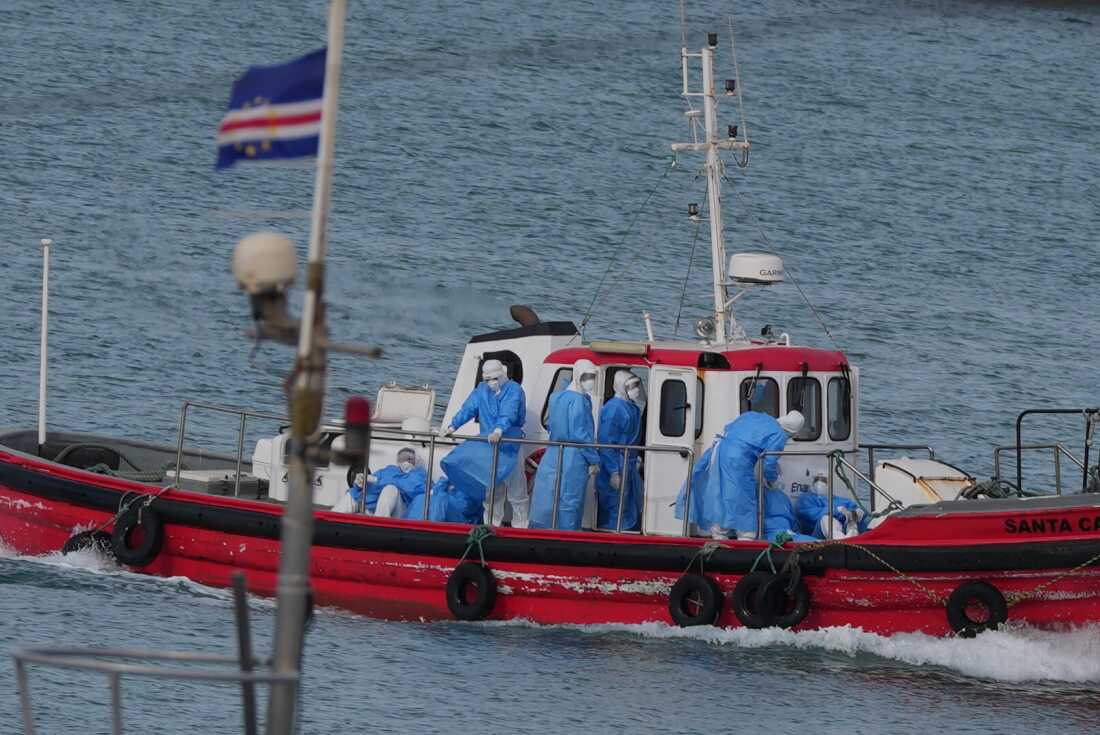
The outbreak has become an international public health issue as the ship, which left Ushuaia, Argentina, on April 1 and had been anchored off Cape Verde since Sunday, was expected to proceed to Tenerife in Spain’s Canary Islands for screening and inspection. Spanish national authorities said the dock plan would go ahead despite opposition from Tenerife’s local and regional leaders, who argued they had not been sufficiently consulted. The cruise operator said it was in close discussion with authorities about arrival, quarantine, and screening procedures.
Health officials from the WHO, CDC, South Africa, Switzerland, France, Georgia, and Argentina have all been involved in monitoring cases or tracing contacts. South African authorities identified the Andes strain of hantavirus in two former passengers, while Swiss authorities confirmed another positive case and French officials reported a contact case. The article says the total number of suspected or confirmed cases had reached nine, including three deaths. Despite the seriousness of the outbreak, officials stressed that the risk to the general public remained very low and that human-to-human spread is limited to close contact, though the Andes strain can spread between people.
Entities: MV Hondius, Oceanwide Expeditions, World Health Organization (WHO), U.K. Health Security Agency (UKHSA), Centers for Disease Control and Prevention (CDC) • Tone: analytical • Sentiment: negative • Intent: inform
08-05-2026
Health officials in the United States and at least 11 other countries are monitoring passengers and crew who were on the cruise ship MV Hondius after a rare, human-to-human transmissible strain of hantavirus was confirmed aboard. The outbreak has prompted contact tracing across multiple countries because travelers disembarked in several places before cases were identified. Three people tied to the ship have died: a Dutch couple and a German woman. A British man who became ill on board was evacuated to South Africa and is hospitalized but improving, and another traveler tested positive for the Andes strain in Switzerland. U.S. state health departments in Georgia, Texas, Virginia, Arizona, and California said they are monitoring identified passengers; none are showing symptoms so far. Officials repeatedly stressed that the public health risk remains low, though the event is being treated as a significant test of international outbreak response. The WHO confirmed the strain is the Andes variant, found primarily in Argentina and Chile and capable of person-to-person transmission under close contact. The ship has left Cape Verde and is heading toward the Canary Islands, where local officials have disputed whether it should be allowed to dock. Argentina has offered technical assistance because the strain is associated with its region.
Entities: MV Hondius, hantavirus, Andes strain, World Health Organization (WHO), Centers for Disease Control and Prevention (CDC) • Tone: analytical • Sentiment: neutral • Intent: inform
08-05-2026
A hantavirus outbreak aboard the cruise ship MV Hondius has left health officials trying to determine how the rare and sometimes fatal virus spread among passengers and crew. At least eight suspected or confirmed cases have been tied to the ship, including three deaths, and authorities say the most likely explanations are either limited human-to-human transmission among very close contacts or exposure to a contaminated environment before or during the voyage. The World Health Organization said the virus involved is the Andes strain, the only hantavirus strain previously known to spread between people, though only through prolonged close contact and not in a pandemic-like way.
Officials believe the Dutch couple who died may have been infected before boarding, possibly while traveling in Argentina or Chile or while encountering wildlife in South America. Argentina’s health ministry is reconstructing their itinerary and investigating possible rodent exposure in Ushuaia, the ship’s departure point. Other suspected and confirmed cases include passengers evacuated to South Africa, a Swiss man who tested positive, and several others treated or transferred for specialist care in the Netherlands.
As the ship remained stranded near Cape Verde and later headed toward Spain’s Canary Islands, authorities worked to manage passenger welfare, testing, transfers, and possible quarantine. Cape Verde blocked docking over health concerns, while Spain planned evaluations and repatriation for passengers once the ship arrived in Tenerife. WHO officials emphasized that hantavirus remains rare and that the outbreak is alarming for those onboard, but not a pandemic-level threat. Passengers described fear and uncertainty, with officials acknowledging the emotional strain and promising coordinated assistance.
Entities: MV Hondius, hantavirus, Andes strain, World Health Organization (WHO), Maria Van Kerkhove • Tone: analytical • Sentiment: negative • Intent: inform
08-05-2026
Health officials are monitoring an international hantavirus outbreak linked to the Dutch-flagged cruise ship M/V Hondius, with eight confirmed or suspected cases and three deaths so far. The article explains that hantaviruses are usually spread from rodents to humans, but the Andes virus strain identified here is notable because it can spread person to person through prolonged close contact. Because passengers and crew disembarked in multiple countries, public health agencies are conducting contact tracing, testing, isolation, and monitoring across at least a dozen countries.
The outbreak appears to have begun with a 70-year-old Dutch man who died aboard the ship on April 11 after developing symptoms several days earlier. His 69-year-old wife later died in South Africa after leaving the ship in Saint Helena; her blood tested positive for the Andes strain. The couple had previously traveled in South America, including areas where rat carriers of the virus are found. Other cases include a British passenger evacuated to South Africa and hospitalized in intensive care, a German woman who died aboard the ship, two people evacuated to the Netherlands with serious symptoms, and a Swiss man who tested positive after disembarking.
The World Health Organization says the incubation period can be lengthy, so additional cases may still emerge. Health agencies in the U.S. and several other countries are monitoring exposed individuals, though no one currently on the ship has symptoms, according to the operator. The article emphasizes the complexity of tracing exposed travelers across multiple countries and the need for ongoing surveillance and containment measures.
Entities: hantavirus, Andes virus, M/V Hondius, Oceanwide Expeditions, World Health Organization (WHO) • Tone: analytical • Sentiment: negative • Intent: inform
08-05-2026
This CNN video segment features an interview with Dr. Stephen Kornfeld, an Oregon doctor who is aboard a cruise ship dealing with a hantavirus outbreak. The segment focuses on his firsthand account of helping care for sick passengers and describes the developing health situation on the ship. The article’s framing indicates that the ship is carrying passengers affected by hantavirus and that medical personnel are working to manage the outbreak while the ship continues toward the Canary Islands. The broader context suggests mounting concern among health experts and relatives as officials and journalists track possible cases and the status of people still aboard. The segment is presented as a health news update, with related CNN clips highlighting expert criticism of the CDC’s quiet response, monitoring of passengers in Virginia, and efforts to trace potential victims. Overall, the piece serves as a brief news/video introduction to a live health crisis aboard a cruise ship rather than a full written feature, emphasizing the urgency of the outbreak and the role of clinicians on the scene.
Entities: Dr. Stephen Kornfeld, Erin Burnett, CNN, CNN Health, Oregon • Tone: urgent • Sentiment: negative • Intent: inform
08-05-2026
An American doctor, Dr. Stephen Kornfeld of Oregon, thought he was joining a once-in-a-lifetime Antarctic-style vacation aboard the MV Hondius, but instead found himself treating passengers during a dangerous hantavirus outbreak on the cruise ship. Kornfeld boarded the vessel in southern Argentina expecting to see wildlife and remote landscapes, but soon stepped in after the ship’s doctor fell ill and multiple passengers began showing symptoms. The outbreak, linked to the Andes strain of hantavirus, has already resulted in five confirmed infections among people connected to the ship, several suspected cases, and three deaths, including an elderly Dutch couple and a passenger who died after evacuation to South Africa. Public health authorities across several countries, including the WHO, UK Health Security Agency, and agencies in the US, Canada, and the Netherlands, are tracking possible exposures and tracing contacts as the ship heads to Tenerife with passengers and crew still aboard. Kornfeld described the rapid worsening of symptoms and emphasized that patients needed critical care that could not be provided on the ship. The WHO said it does not expect a Covid-like epidemic and sees no evidence of widespread transmission risk, while US political figures criticized the federal response and called for clearer plans to help American passengers return home safely.
Entities: Dr. Stephen Kornfeld, MV Hondius, hantavirus, Andes strain, World Health Organization (WHO) • Tone: analytical • Sentiment: negative • Intent: inform
08-05-2026
The article concerns the MV Hondius, a cruise ship that is heading toward Spain’s Canary Islands after a deadly hantavirus outbreak onboard. The main focus is not the outbreak itself, but what will happen when the ship arrives and how authorities will manage the aftermath. According to the article, officials are still working out key public-health and logistical steps, including how passengers will be screened, whether they will be quarantined, and how they will be repatriated.
The piece frames the arrival as a developing public-health situation with unresolved operational questions. Because hantavirus can be serious and the outbreak has already resulted in at least one death, the response onshore will likely involve coordination between the ship operator, local authorities, and health officials in Spain. The article emphasizes uncertainty: there is no final plan yet, and the screening and quarantine procedures remain under discussion.
The article also includes reference material from CNN’s video feed and related clips, but the central story is the impending docking of the MV Hondius and the challenge of handling passengers safely after a virus outbreak at sea. Overall, it reads as a brief, informative update centered on public health, maritime arrival procedures, and the practical consequences of a contagious disease incident on a cruise ship.
Entities: MV Hondius, hantavirus, Spain’s Canary Islands, Janelle Gonzalez, CNN • Tone: analytical • Sentiment: negative • Intent: inform
08-05-2026
CNN’s article explains the evolving hantavirus outbreak linked to the cruise ship MV Hondius by presenting the situation “by the numbers.” Health authorities in multiple countries are tracing exposed passengers and crew after five confirmed infections and three deaths were reported among people connected to the ship. The outbreak is considered low risk to the general public, but it has triggered broad contact tracing across Spain, the Netherlands, Switzerland, the United States, South Africa, and other countries because passengers disembarked at multiple ports and traveled onward before the outbreak was understood.
The article details how many people were aboard the ship, how many may have been exposed, and where they are being monitored. It describes the confirmed and suspected cases, including the deaths of a Dutch man, his wife, and a German woman, as well as the evacuation and intensive care treatment of other infected or potentially infected people. WHO says sequencing indicates the Andes strain of hantavirus, the only known strain with limited human-to-human transmission. Investigators believe the initial infection may have occurred before the cruise, possibly during activities in Argentina, where hantavirus is endemic.
The piece also explains the ship’s movements, the plan for disembarkation in Tenerife, and the 45-day monitoring period recommended for exposed passengers and crew. It concludes with background on hantavirus incubation and its severe, potentially fatal nature, emphasizing why public health officials are treating the cluster cautiously while still characterizing overall public risk as low.
Entities: Hantavirus, MV Hondius, World Health Organization (WHO), Jen Christensen, Tedros Adhanom Ghebreyesus • Tone: analytical • Sentiment: neutral • Intent: inform
08-05-2026
Argentine investigators are examining a possible source for a deadly hantavirus outbreak aboard the Dutch-flagged cruise ship MV Hondius, which has killed three passengers and sickened others while traveling off West Africa. Their leading theory is that a Dutch couple may have been exposed to rodents during a bird-watching excursion in Ushuaia, Argentina, specifically after a stop at a landfill, and then unknowingly carried the virus onboard. Officials say the couple visited a region that had never previously recorded a hantavirus case, making the suspected link especially notable.
The article explains that hantavirus is typically spread through inhalation of contaminated rodent droppings, while human-to-human transmission is uncommon but possible. The variant identified in the outbreak is the Andes strain, confirmed through testing in Switzerland, South Africa, and Senegal. This strain is primarily associated with Argentina and Chile and can spread through close contact in rare cases. Because passengers have disembarked across multiple continents, health authorities are carrying out contact tracing in Europe and Africa to determine whether anyone else may have been infected.
Swiss officials reported that a returning cruise passenger developed symptoms, sought medical care, and was isolated after testing positive for the Andes strain. Meanwhile, the World Health Organization said three suspected cases were evacuated from the ship and transported to the Netherlands for treatment. WHO Director-General Tedros Adhanom Ghebreyesus emphasized that, despite the seriousness of the outbreak and ongoing investigations, the overall public health risk remains low. The article presents the outbreak as an unfolding international public health investigation with a likely exposure event traced back to a tourist visit in Argentina.
Entities: Argentina, Ushuaia, Tierra del Fuego province, landfill, Dutch couple • Tone: analytical • Sentiment: negative • Intent: inform
08-05-2026
This NPR Short Wave episode covers a recent hantavirus outbreak aboard the cruise ship MV Hondius in the Atlantic Ocean, where at least three people died and others became ill. The story explains that the World Health Organization received an alarming report on May 2 and that experts later confirmed hantavirus as the cause. Although hantaviruses are usually associated with rodents and rare human infections, the article highlights that this outbreak involved a rare and deadly form that can spread human-to-human. The episode frames the event as a public health concern and uses it as a starting point for a broader explanation of the science behind hantavirus: how it is transmitted, how common it is in people, what symptoms and consequences it can cause, and what precautions people at risk should take. To provide that context, NPR speaks with Emily Abdoler, an infectious disease doctor at the University of Michigan. The article also situates the story as a science explainer, inviting listeners to learn more about related infectious disease topics and to submit questions for future coverage. Overall, the piece is both a news update about an outbreak and an educational segment meant to clarify risks and prevention.
Entities: Hantavirus, World Health Organization (WHO), MV Hondius, Atlantic Ocean, Emily Abdoler • Tone: analytical • Sentiment: negative • Intent: inform
08-05-2026
Spanish authorities were preparing emergency evacuations on Friday for more than 140 passengers and crew aboard the MV Hondius, a Dutch-flagged cruise ship struck by a hantavirus outbreak and heading toward Tenerife in Spain’s Canary Islands. Officials said the ship would arrive at a tightly controlled, isolated area, where health teams would carry out careful evacuations to reduce any risk of spread. At least three passengers have died and several others have fallen ill, though the World Health Organization says the public health risk beyond the ship remains low because hantavirus is usually transmitted through exposure to contaminated rodent droppings and is not easily spread between people.
The outbreak has triggered a multinational tracing effort across several continents. Health authorities are tracking passengers who disembarked the ship before the illness was recognized, including more than two dozen people from at least 12 countries who left on April 24 without contact tracing. The WHO said the first confirmed hantavirus case on the ship was not identified until May 2, nearly two weeks after the first death. The United States is sending a plane to repatriate its 17 citizens, and the United Kingdom will charter a plane for nearly two dozen British citizens. Dutch officials and the ship operator say they are coordinating with affected governments, while authorities in South Africa, the Netherlands, and the U.K. continue monitoring possible secondary exposures, including a flight attendant in Amsterdam and a suspected case on Tristan da Cunha.
Entities: Spain, Canary Islands, Tenerife, MV Hondius, Virginia Barcones • Tone: urgent • Sentiment: negative • Intent: inform
08-05-2026
The article reports that the U.S. Centers for Disease Control and Prevention has classified the ongoing hantavirus outbreak as a Level 3 emergency response and activated its emergency operations centers, while emphasizing that the designation is the lowest level of activation and that the public risk remains low. The outbreak is centered on the cruise ship M/V Hondius, where multiple suspected cases have been identified and several passengers and crew members have been evacuated for treatment. U.S. health agencies and state departments are monitoring American passengers who were on the vessel and have since returned home, with residents in Texas, Georgia, Arizona, and Virginia being observed for symptoms or temperature changes. The article notes that President Trump has been briefed on the situation and said a full report would follow. It also describes parallel actions in Europe, where the European Centre for Disease Prevention and Control has activated its own response after cases spread beyond the ship, including a suspected infection on Tristan da Cunha and a man in Zurich who sought care after developing symptoms. The World Health Organization has confirmed eight suspected cases and three deaths, while officials caution that more cases may yet be reported.
Entities: CDC, Centers for Disease Control and Prevention, hantavirus, Level 3 emergency response, emergency operations centers • Tone: urgent • Sentiment: negative • Intent: inform
08-05-2026
Health experts say the risk of a hantavirus outbreak in Asia is currently low, even as Singapore isolates two residents who returned from a cruise ship linked to several infections and deaths. The article explains that hantaviruses are rodent-carried viruses that typically spread to humans through direct exposure, while person-to-person transmission is rare. It notes that the virus can take weeks to incubate before symptoms appear, which makes early detection difficult. The concern in Asia has risen after multiple cases were reported among passengers on the MV Hondius cruise ship, including three deaths, according to the World Health Organization. In response, Singapore’s Communicable Diseases Agency said it had tested and isolated a 67-year-old Singaporean man and a 65-year-old Singapore permanent resident who had been on the vessel. Authorities stressed that the general public’s risk in Singapore remains low. The article frames the situation as a public health precaution rather than evidence of a broader regional outbreak, emphasizing vigilance by health authorities but no indication of widespread transmission.
Entities: hantavirus, Asia, Singapore, Communicable Diseases Agency (CDA), MV Hondius • Tone: analytical • Sentiment: neutral • Intent: inform
08-05-2026
The World Health Organization said more hantavirus cases could emerge from a limited outbreak linked to the cruise ship MV Hondius, which has already been associated with three deaths and several confirmed or suspected infections. WHO officials stressed that the outbreak is likely to remain contained if public health precautions are followed, though the incubation period for the Andes virus means additional cases may still appear over the coming weeks. The ship, carrying passengers across the Atlantic after departing Ushuaia, Argentina, has become the focus of an international tracing effort spanning multiple countries, including Britain, Germany, the Netherlands, Switzerland, South Africa, Chile, Uruguay, St Helena, and Cape Verde.
The article explains that the virus is a rare, rodent-borne hantavirus strain capable of human-to-human transmission, unlike most hantavirus infections, and that there is no vaccine or known cure. Health authorities in Argentina have not yet determined the exact source of the outbreak, but they are testing rodents in Ushuaia, where the ship departed. Several passengers and crew have been isolated or treated in Europe and elsewhere, while authorities work to identify everyone who boarded or disembarked from the vessel. Despite the seriousness of the deaths, officials repeatedly describe the risk of a broader epidemic as low, and the ship continues toward Tenerife as investigators and health agencies coordinate a multinational response.
Entities: World Health Organization (WHO), Dr Tedros Adhanom Ghebreyesus, Abdi Rahman Mahamud, MV Hondius, Hantavirus • Tone: urgent • Sentiment: negative • Intent: inform