09-04-2026
The United States and Iran have agreed to a conditional two-week ceasefire following a month of coordinated attacks by the US and Israel. The primary immediate condition of the truce is the reopening of the Strait of Hormuz to shipping traffic. The deal was mediated by Pakistan's Prime Minister Shehbaz Sharif and follows aggressive rhetoric from President Donald Trump, who had threatened total destruction if the strait remained closed. While Trump indicated a willingness to discuss sanctions and tariff relief, he simultaneously threatened 50% tariffs on any country supplying weapons to Iran.
Iran has proposed a 10-point plan for a permanent resolution, which includes the cessation of war in Iraq, Lebanon, and Yemen, the release of frozen assets, and a commitment to forgo nuclear weapons. However, a significant point of contention exists regarding Lebanon; while Pakistan claims the ceasefire extends there, both the US and Israel explicitly state that operations against Hezbollah in Lebanon are not included in the agreement.
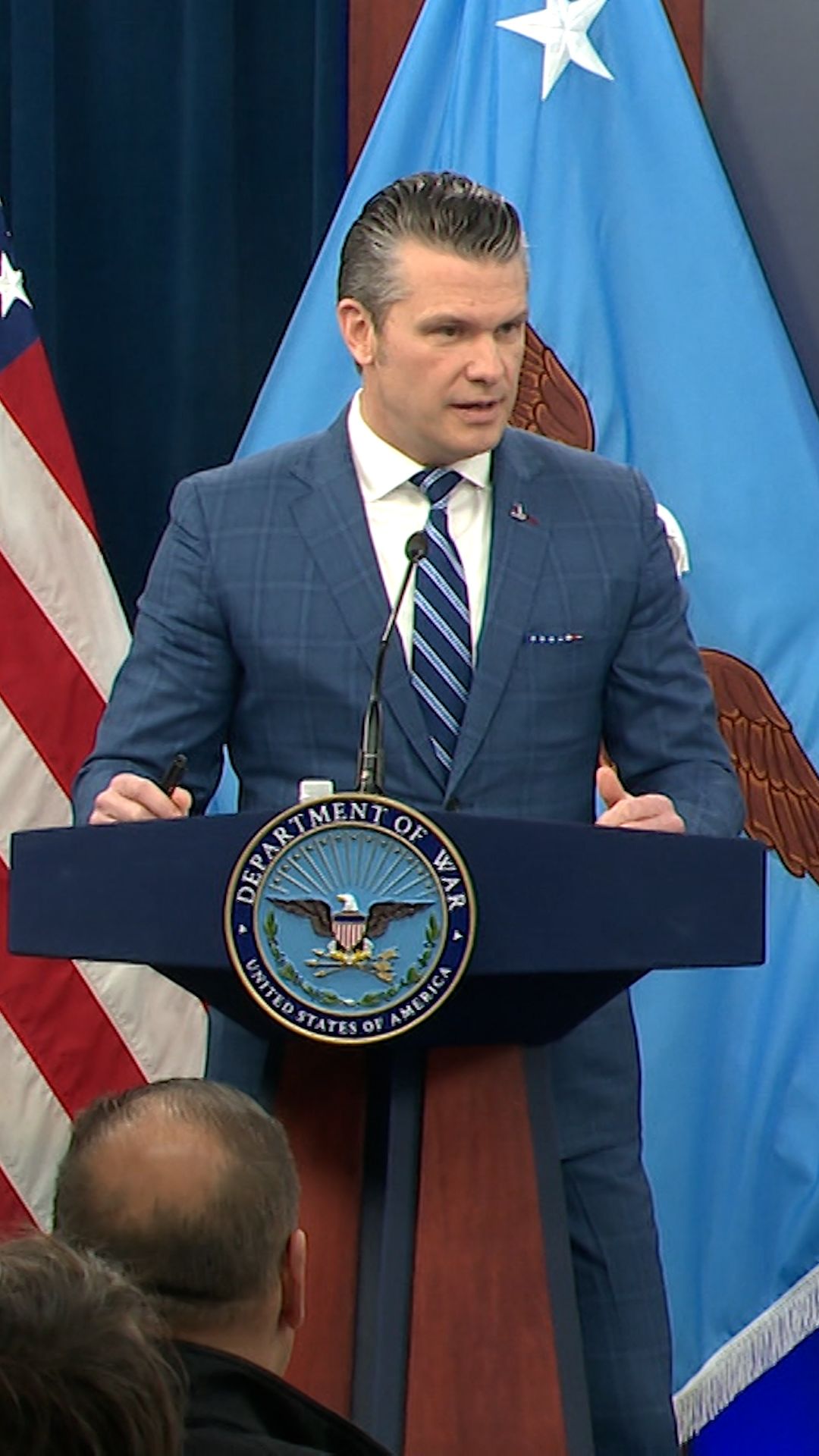
Despite the truce, tensions remain high. Israel reported intercepting Iranian missiles shortly after the announcement, and Kuwait reported Iranian drone attacks on its infrastructure. US Defense Secretary Pete Hegseth and Israeli Prime Minister Benjamin Netanyahu both emphasized that their militaries remain ready to resume fighting immediately if conditions are not met. Further negotiations are scheduled to take place in Islamabad this Friday, with US Vice President JD Vance and other key officials expected to attend to seek a more conclusive agreement.
Entities: Donald Trump, Benjamin Netanyahu, Shehbaz Sharif, JD Vance, United States • Tone: urgent • Sentiment: neutral • Intent: inform
09-04-2026
President Trump has agreed to a two-week 'double sided ceasefire' with Iran, narrowly avoiding a deadline that would have seen massive U.S. strikes on Iranian power plants and bridges. The agreement, brokered in part by Pakistan, is contingent upon the immediate and safe reopening of the Strait of Hormuz. Iranian Foreign Minister Seyed Abbas Araghchi confirmed that Iran will halt 'defensive operations' and coordinate safe passage through the strait. While Israel supports the ceasefire, Prime Minister Benjamin Netanyahu clarified that the accord does not extend to the ongoing conflict between Israel and Hezbollah.
The ceasefire follows nearly six weeks of war that began on February 28 with joint U.S.-Israeli strikes. The news caused oil futures to plummet by over 13%, as the Strait of Hormuz is a critical global oil chokepoint. Despite the temporary truce, significant diplomatic hurdles remain. Negotiations are set to begin in Islamabad this Friday to discuss a 10-point peace plan proposed by Iran. However, Iran's demands include the total withdrawal of U.S. forces from the region, the lifting of all sanctions, and an end to hostilities against the 'Axis of Resistance.'
Furthermore, the status of Iran's nuclear program remains a point of contention. President Trump has demanded an end to all uranium enrichment, while Iran maintains its program is peaceful. While Trump suggests the U.S. is 'very far along' in a definitive peace agreement, the Iranian Supreme National Security Council expressed 'complete distrust' toward the American side, warning that fighting will resume if a final deal is not reached.
Entities: Donald Trump, Seyed Abbas Araghchi, Benjamin Netanyahu, Iran, United States • Tone: urgent • Sentiment: neutral • Intent: inform
09-04-2026
President Donald Trump has issued a stark ultimatum to Iran, stating that 'a whole civilization will die tonight' if a deal is not reached by a Tuesday night deadline. The primary demand is for Iran to reopen the Strait of Hormuz. Trump threatened that failure to comply would result in military strikes aimed at destroying Iran's power plants and bridges, claiming the entire country could be 'taken out in one night.' Despite this aggressive rhetoric, Trump also noted that Iran has made a 'significant' proposal and suggested that 'smarter, and less radicalized minds' are currently leading the country, hinting that a 'revolutionarily wonderful' outcome is possible.
Simultaneously, U.S. officials confirmed that American forces conducted strikes on military targets on Kharg Island, though they specified that oil infrastructure was not targeted. This escalation has sparked intense backlash from Democratic leaders in Congress. Senate Minority Leader Chuck Schumer and House Minority Leader Hakeem Jeffries have condemned the rhetoric, with Jeffries calling on Republicans to prioritize patriotic duty over party loyalty to stop the 'madness.' Some members of Congress have gone as far as calling for impeachment or the invocation of the 25th Amendment, arguing that the threats could constitute war crimes. Even some Republicans, such as Senator Ron Johnson, expressed concern over the potential destruction of civilian infrastructure. The situation remains volatile as the world awaits the outcome of the deadline.
Entities: Donald Trump, Iran, Strait of Hormuz, Kharg Island, Chuck Schumer • Tone: urgent • Sentiment: negative • Intent: inform
09-04-2026
Oil prices experienced a significant uptick on Thursday following allegations from Iran that the United States has breached a two-week ceasefire agreement. Brent crude futures for June delivery rose by 2.08% to $96.83, while U.S. West Texas Intermediate (WTI) crude futures for May climbed 2.86% to $97.27. This surge follows a period of volatility, including a sharp single-day drop in U.S. crude prices just one day prior.
Mohammad Bagher Ghalibaf, Iran's parliamentary speaker, claimed that Washington violated three specific elements of Iran's 10-point truce proposal. These violations allegedly include continued Israeli strikes in Lebanon, a drone intrusion into Iranian airspace, and the denial of Iran's right to enrich uranium. Ghalibaf attributed these breaches to a historical pattern of distrust and broken commitments by the United States.
In response, U.S. Vice President JD Vance acknowledged the complexities of ceasefire agreements, stating that they are 'always messy.' He specifically contested the claims regarding Lebanon, asserting that any ceasefire covering that region was not part of the current agreement, and reaffirmed the U.S. position that Iran should not be permitted to enrich uranium. Despite the political tension, President Donald Trump had previously indicated that Iran's proposal could serve as a foundation for future discussions.
From a market perspective, Janiv Shah of Rystad Energy suggested that with oil prices currently below $100 per barrel, refiners should take the opportunity to resume buying. However, he warned that if refiners delay purchases in hopes of further price drops while physical supplies remain constrained, it could lead to increased product tightness even if geopolitical tensions eventually de-escalate.
Entities: Iran, United States, Israel, Lebanon, Hungary • Tone: analytical • Sentiment: negative • Intent: inform
09-04-2026
The article discusses the precarious state of a newly announced ceasefire between the United States and Iran, following a conflict that began on February 28th. Despite President Donald Trump's optimistic claims that the truce will lead to a 'golden age' for the Middle East, the initial period of the ceasefire has been marked by significant violence. The tension peaked when Mr. Trump threatened to 'wipe out Iranian civilisation' and targeted Iran's power grid to force the reopening of the Strait of Hormuz.
A two-week ceasefire was established just minutes before a critical deadline, providing a window for diplomatic negotiations. The two nations are scheduled to meet on April 10th in Islamabad, Pakistan, which has served as a key intermediary in the communications between the warring parties. The broader context suggests a region deeply exposed and unstable, with the war having previously spiraled in scope, involving strikes across a widening array of targets by the US, Israel, and Iran. The situation highlights the extreme vulnerability of global trade routes, specifically the Strait of Hormuz, and the fragility of peace in a region where high-stakes rhetoric and military threats remain prevalent.
Entities: Donald Trump, United States, Iran, Middle East, Strait of Hormuz • Tone: analytical • Sentiment: negative • Intent: inform
09-04-2026
This analysis examines the precarious nature of a newly established ceasefire between the United States and Iran under the Trump administration. The truce has been marred by immediate instability, characterized by conflicting reports regarding the status of the Strait of Hormuz and continued Israeli military operations in Lebanon against Hezbollah. While the White House portrays the ceasefire as a victory resulting from the degradation of Iran's military capabilities, the reality on the ground suggests a deep lack of trust and a significant gap in perceptions between the two adversaries.
Upcoming talks in Pakistan, led by Vice President JD Vance, aim to transition this two-week pause into a permanent agreement. However, the author argues that success is unlikely given the extreme demands from both sides regarding Iran's nuclear program and missile capabilities. The situation is further complicated by Iran's strategic control of the Strait of Hormuz, which Tehran is using as leverage against the global economy and the US. The article suggests that President Trump's preference for quick, transactional deals may be ill-suited for the ideological rigidity of the Iranian regime and the complex regional dynamics involving Israel and Lebanon. With the death of top Iranian leaders like Ayatollah Ali Khamenei, the internal political landscape in Tehran has shifted, potentially making negotiations even more volatile. Ultimately, the piece posits that the current diplomatic track is fraught with risk and may lay bare splits that could lead to a total breakdown of the peace process.
Entities: Donald Trump, JD Vance, Ayatollah Ali Khamenei, Karoline Leavitt, Pete Hegseth • Tone: analytical • Sentiment: positive • Intent: critique
09-04-2026
This news compilation analyzes the immediate aftermath of a two-week ceasefire agreement between the United States and Iran. CNN global affairs analyst Brett McGurk questions the actual impact of the ceasefire on the ground, suggesting that while a formal agreement exists, the geopolitical situation remains volatile. The report highlights several critical developments: the United States military, via Chairman of the Joint Chiefs of Staff Gen. Dan Caine, remains on high alert and ready to resume combat operations if necessary. Meanwhile, diplomatic efforts are shifting toward Islamabad, Pakistan, where delegations from the US and Iran are expected to meet to further discuss the terms of the agreement.
Beyond the direct US-Iran relationship, the ceasefire's implications extend to regional stability and trade, specifically regarding the potential reopening of the Strait of Hormuz. However, the broader regional conflict continues to escalate; the Israeli Defense Forces (IDF) recently conducted a massive coordinated strike in Lebanon, targeting over 100 Hezbollah command centers in Beirut. Politically, US Vice President JD Vance noted that the negotiations revealed insights into the Iranian system, claiming that Iran is 'better at negotiating than fighting.' Despite the official announcement, the mood within Iran is mixed, with citizens in Tehran expressing skepticism about the longevity and sincerity of the agreement. The report also briefly touches upon unrelated global tensions, noting increased Chinese investment in North Korea's infrastructure despite ongoing UN sanctions.
Entities: United States, Iran, Pakistan, Lebanon, Beirut • Tone: analytical • Sentiment: neutral • Intent: inform
09-04-2026
This news report covers a series of critical geopolitical developments centered around a volatile conflict involving Israel, Iran, and their respective allies. The primary focus is on a massive coordinated strike by the Israel Defense Forces (IDF) in Lebanon, described as the largest since the conflict began a month prior. The IDF claims to have targeted over 100 Hezbollah command centers and military sites, with CNN reporting directly from a blast site in central Beirut.
Parallel to the escalation in Lebanon, the report highlights a fragile diplomatic shift: President Donald Trump has announced a two-week ceasefire with Iran. This agreement has prompted various international reactions and strategic adjustments. In the United States, General Dan Caine of the Joint Chiefs of Staff emphasized that US forces remain on high alert and ready to resume combat operations if necessary. Meanwhile, Vice President JD Vance, who assisted in the final negotiations, commented on the Iranian system's aptitude for negotiation over combat.
Internationally, the ceasefire has sparked skepticism among citizens in Tehran and raised questions regarding the reopening of the Strait of Hormuz. Additionally, Pakistan is positioning itself as a diplomatic hub, with Prime Minister Shehbaz Sharif indicating that US and Iranian delegations are expected to meet in Islamabad to discuss the ceasefire details. The report concludes with a separate observation on the growing economic partnership between China and North Korea, evidenced by new large-scale infrastructure projects in Pyongyang despite existing UN sanctions.
Entities: Beirut, Israel Defense Forces (IDF), Hezbollah, Iran, United States • Tone: urgent • Sentiment: neutral • Intent: inform
09-04-2026
Israel has reportedly carried out a massive military operation in Lebanon, claiming to have launched 100 strikes within a ten-minute window. According to reports, this represents the largest wave of attacks across Lebanon since the onset of the conflict involving Iran. The human toll of these strikes is significant, with at least 112 people killed and hundreds more wounded. This escalation is particularly notable as it occurs amidst a reported ceasefire between the United States and Iran. CNN's Nada Bashir provided reporting from Beirut on the immediate aftermath of the strikes. Additionally, global affairs analyst Brett McGurk has raised questions regarding the actual impact of the US-Iran ceasefire, analyzing whether the diplomatic agreement has resulted in any tangible change to the volatile situation on the ground in the Middle East.
Entities: Israel, Lebanon, United States, Iran, Beirut • Tone: urgent • Sentiment: negative • Intent: inform
09-04-2026
A fragile two-week ceasefire between the United States and Iran is under severe strain following massive Israeli airstrikes in Lebanon. The strikes, which killed at least 182 people and wounded 890, have sparked a diplomatic dispute over the terms of the truce. Iran and Pakistan argue that Lebanon and Hezbollah were included in the ceasefire agreement, while the US and Israel maintain that the deal does not cover Lebanese territory. This tension has led to immediate repercussions in the Strait of Hormuz, where the IRGC claims shipping has stopped, a claim supported by MarineTraffic data showing negligible vessel movement.
Despite the volatility, high-level peace talks are scheduled to begin this Saturday in Islamabad, Pakistan. The US delegation, including Vice President JD Vance, special envoy Steve Witkoff, and Jared Kushner, will meet with Iranian representatives. Pakistan has emerged as an unlikely but critical mediator in the conflict, hosting the first direct talks between Washington and Tehran in years. Meanwhile, President Donald Trump has asserted that US military assets will remain deployed around Iran until a full agreement is reached, emphasizing that Iran must renounce nuclear weapons and ensure the Strait of Hormuz remains open and safe. The situation remains a 'watch and wait' scenario as the international community monitors whether the Islamabad talks can prevent a return to full-scale war.
Entities: United States, Iran, Israel, Lebanon, Pakistan • Tone: urgent • Sentiment: negative • Intent: inform
09-04-2026
The article reports on a critical tension threatening a fragile two-week ceasefire between the United States and Iran. The primary point of contention is the exclusion of Hezbollah, a Tehran-backed militant group in Lebanon, from the truce agreement. Iranian Foreign Minister Seyed Abbas Araghchi has issued a stark ultimatum, stating that the U.S. must choose between a comprehensive ceasefire that includes an end to Israeli operations in Lebanon or a continuation of war. This pressure comes as the Trump administration maintains that the deal does not cover Hezbollah, while intermediaries like Pakistani Prime Minister Shehbaz Sharif had previously suggested Lebanon would be included.
The situation is further complicated by ongoing military action. The Israel Defense Forces (IDF) recently conducted a massive strike hitting over 100 Hezbollah targets in Lebanon, resulting in significant casualties, including approximately 91 deaths in Beirut. The IDF justifies these strikes by claiming Hezbollah uses civilian populations as human shields. Security experts, such as Edy Cohen, argue that Hezbollah will never voluntarily disarm and suggest that any long-term resolution requires the Lebanese government to seize heavy weaponry and the international community to fully designate the group as a terrorist organization. The article highlights a volatile geopolitical environment where the U.S. is attempting to leverage a weakened Iranian regime, while Iran uses its proxies to challenge the terms of the peace agreement.
Entities: Iran, United States, Israel, Hezbollah, Lebanon • Tone: urgent • Sentiment: negative • Intent: inform
09-04-2026
This opinion piece argues that President Donald Trump faces a critical juncture regarding his legacy following the announcement of a cease-fire in the war with Iran. The author contends that while the cease-fire provides a temporary reprieve and has positively impacted oil markets, it must not lead to a 'wobbly' approach. The central thesis is that Trump must secure an 'air-tight' comprehensive deal that permanently eliminates the Iranian threat, or he must immediately resume military strikes to avoid being perceived as weak.
The author outlines specific non-negotiable demands for any lasting agreement: the complete removal of Iranian control over the Strait of Hormuz, the total destruction of nuclear production capabilities, the surrender of all enriched uranium, and the implementation of 'anytime, anywhere' monitoring by the US, Israel, or Arab allies. Additionally, the deal should require Iran to end its support for terror proxies like Hezbollah and Hamas and guarantee the right to peaceful protest for its citizens.
The piece warns that political pressures, such as the upcoming midterms and the desire to keep oil prices low, might tempt Trump to declare a premature victory. However, the author asserts that failing to 'finish the job' now would allow Iran to rebuild and accelerate its nuclear ambitions, especially if Democrats regain control of Congress. The author concludes that this is a unique historical window to end a 47-year conflict, placing the burden of success on Trump and Vice President JD Vance to ensure that diplomacy is backed by a credible threat of intense military force.
Entities: Donald Trump, JD Vance, Iran, United States, Israel • Tone: urgent • Sentiment: negative • Intent: persuade