07-09-2026
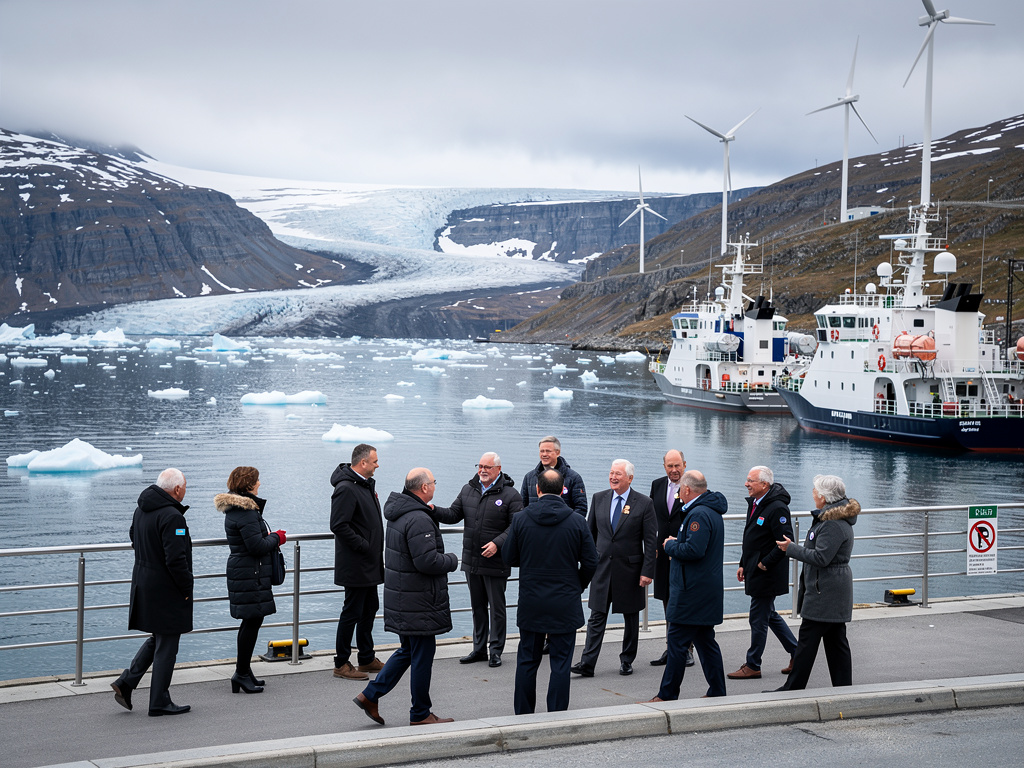
European Commission President Ursula von der Leyen is visiting Greenland for two days as the European Union prepares a major investment package for the strategically important Arctic territory. The visit is intended to demonstrate support for Greenland and Denmark while strengthening the EU’s political and economic relationship with the autonomous territory, which is part of the Kingdom of Denmark.
The planned investment package is expected to provide hundreds of millions of euros for critical minerals, satellite communications and renewable energy. Von der Leyen described the package as “substantial,” although she did not disclose specific figures. Greenlandic Prime Minister Jens-Frederik Nielsen said the visit offered an opportunity to deepen the territory’s friendship and partnership with the EU. Greenland left the EU in 1985, but its approximately 57,000 residents retain EU citizenship through their Danish nationality.
The visit takes place amid growing international competition in the Arctic. Melting sea ice is opening potential shipping routes and increasing access to mineral resources, making the region more strategically important to the United States, Russia, China and Europe.
US President Donald Trump has repeatedly argued that the United States needs Greenland for national-security reasons and has sought “total access” to the territory. He has claimed, without providing evidence, that Chinese and Russian ships are present around the island and has questioned Denmark’s ability to defend it. Greenland and Denmark have rejected Trump’s demands, which have strained US-European relations and increased tensions within NATO. Von der Leyen’s visit therefore combines economic cooperation with a diplomatic signal of European support for Greenland’s security and autonomy.
Entities: Ursula von der Leyen, Donald Trump, Jens-Frederik Nielsen, Mette Frederiksen, European Union • Tone: analytical • Sentiment: neutral • Intent: inform
07-09-2026
European Commission President Ursula von der Leyen is expected to announce a substantial increase in European Union investment in Greenland during a two-day visit to the Danish Arctic territory. The proposed funding will target critical minerals, satellite communications and renewable energy, broadening the EU’s existing support, which has mainly focused on fishing rights and education. The initiative is also intended to strengthen political ties with Greenland and Denmark as US President Donald Trump continues to demand American control of Greenland.
Von der Leyen’s visit to Nuuk is presented as a demonstration of European support for Greenland and Denmark, both of which have rejected Trump’s annexation campaign. Greenland Premier Jens-Frederik Nielsen welcomed closer cooperation with the EU. Although Greenland is an autonomous territory within the Danish realm and left the EU in 1985, Greenlanders retain EU citizenship through their Danish citizenship.
The article places the investment announcement within the broader geopolitical competition over the Arctic. Melting sea ice is opening potential shipping routes and making the region’s mineral resources more accessible, increasing interest from the United States, Russia, China and Europe. Von der Leyen also highlighted the visible effects of climate change during her visit.
Trump’s demands have strained US-European relations and created tensions within NATO. European officials emphasize that Greenland is covered by NATO’s mutual-defense agreement and that the United States already has treaty-based rights to expand its military presence there. Although Trump and NATO Secretary General Mark Rutte agreed in January that the United States, Denmark and Greenland would hold talks and that NATO would increase its Arctic role, negotiations have not produced an agreement. Trump renewed his demand for US control at a NATO summit in Turkey in July.
Entities: Greenland, European Union, Ursula von der Leyen, Donald Trump, Denmark • Tone: analytical • Sentiment: neutral • Intent: inform
07-09-2026
The European Union is preparing a substantial increase in investment and closer political engagement with Greenland, as the Arctic territory faces growing strategic pressure from the United States. European Commission President Ursula von der Leyen visited Greenland on September 6 for a two-day trip intended to demonstrate support for Greenland and Denmark, whose governments have rejected US President Donald Trump’s campaign to bring Greenland under American control.
Von der Leyen is expected to announce expanded EU funding for critical minerals, satellite communications and renewable energy. Greenland’s Premier Jens-Frederik Nielsen welcomed closer cooperation with the EU, describing the relationship as a close friendship and partnership. The new package would significantly increase existing EU support, which has traditionally focused on fishing rights and education, while broadening the range of sectors receiving funding.
The visit highlights Greenland’s rising geopolitical importance. Climate change and melting Arctic ice are opening new shipping routes and making the region’s mineral resources more accessible, attracting interest from the US, Russia, China and Europe. Von der Leyen also emphasized the environmental consequences of this transformation, describing the visible damage to Greenland’s ice sheet and warning that a new reality is emerging as the ice melts.
Trump’s demands for US control of Greenland created a crisis in US-European relations and caused tensions within NATO. European officials have argued that Greenland is already protected as NATO territory and that the US can expand its military presence there under an existing treaty. Although Trump and NATO Secretary-General Mark Rutte agreed in January to begin trilateral discussions involving the US, Denmark and Greenland, the talks have not produced an agreement. Trump repeated his demand at a NATO summit in Turkey in July. Greenland left the EU in 1985, but its residents retain EU citizenship as Danish citizens.
Entities: Greenland, European Union (EU), Ursula von der Leyen, Jens-Frederik Nielsen, Donald Trump • Tone: analytical • Sentiment: neutral • Intent: inform