07-07-2026
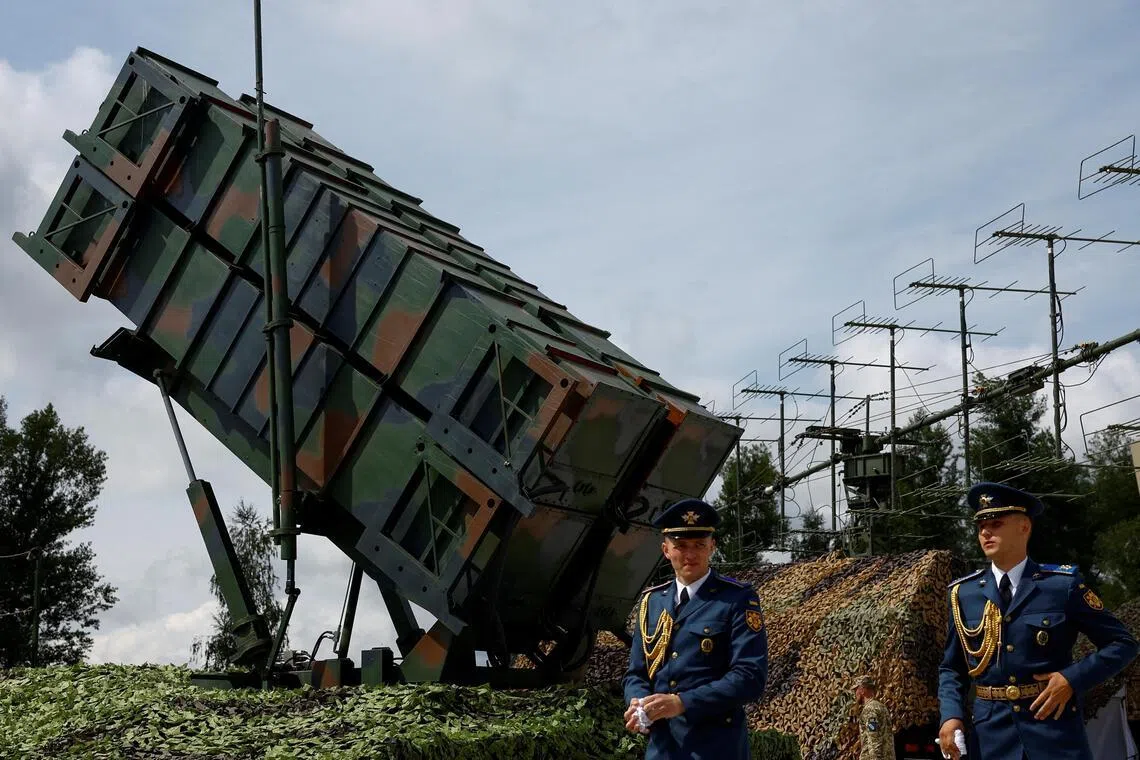
Ukrainian President Volodymyr Zelensky is heading to the NATO meeting in Turkey to press allies for urgently needed air defence systems, especially US-made Patriot missiles, after a series of intense Russian attacks on Kyiv and other Ukrainian targets. The article says the latest missile strikes killed more than 50 civilians in the Ukrainian capital over two attacks in less than a week, underscoring Ukraine’s vulnerability to ballistic missiles that it has struggled to intercept. Zelensky argues that allies should provide existing Patriot stockpiles now, rather than leave them in storage while civilians are being killed, and also wants NATO help developing Ukraine’s own equivalent air defence capability.
The piece also places Ukraine’s request within a broader escalation of the war. Ukraine has stepped up long-range drone strikes on Russian oil refineries, military targets, and infrastructure, allegedly creating fuel shortages, power cuts, and pressure inside Russia. Moscow has responded with claims that Ukrainian attacks amount to terrorism, while Ukraine frames its campaign as an “influence campaign” aimed at forcing Russia toward meaningful negotiations. NATO Secretary General Mark Rutte is quoted urging member states to contribute more and saying Ukraine is changing the battlefield dynamic.
Zelensky plans to use the summit and a possible meeting with Donald Trump to argue that Russia’s attacks are not signs of strength but weakness, and that Ukraine has leverage if it is properly supported. The central message is that Ukraine wants the war to end quickly through “strength or diplomacy,” but that any chance of that depends on more interceptor missiles to defend cities and civilians against Russian ballistic and missile strikes.
Entities: Volodymyr Zelensky, NATO, Turkey, Ankara, Donald Trump • Tone: analytical • Sentiment: negative • Intent: inform
07-07-2026
A CBS News report follows Kateryna Tereshkova, a Ukrainian volunteer emergency response worker in Kyiv who arrived at a residential building damaged by a Russian strike only to realize it was the same apartment complex she had helped repair after a previous attack a month earlier. Tereshkova describes the emotional whiplash of repeatedly returning to the same locations, helping residents clean up shattered windows, damaged balconies, and debris so they can remain in their homes while waiting for government aid. The article places her experience within the broader context of Russia’s intensified strikes on Kyiv, which killed at least 22 people in the capital and surrounding region and exposed Ukraine’s continued dependence on air defenses, especially U.S.-supplied Patriot systems, to intercept ballistic missiles. Tereshkova, a former restaurant and nightlife executive, has volunteered since Russia’s invasion in 2014 and made it her full-time work after the full-scale invasion in 2022. Despite exhaustion, she says the work feels like her destiny and that humor, persistence, and a little sleep keep her going.
Entities: Kateryna Tereshkova, Kyiv, Ukraine, Russia, Russian Defense Ministry • Tone: analytical • Sentiment: negative • Intent: inform
07-07-2026
Russia launched a major overnight barrage of missiles and drones against Kyiv and surrounding areas, killing at least 22 people and exposing serious weaknesses in Ukraine’s air defenses. Ukrainian officials said 351 drones and 68 missiles were fired, with all 29 ballistic missiles reportedly hitting their targets. The attack killed 15 people in Kyiv and seven more in the wider Kyiv region, injuring dozens and damaging residential buildings, with some residents believed trapped under rubble. The strike came days after another deadly Russian assault on the capital and appeared to be retaliation for recent Ukrainian long-range attacks on Russian oil infrastructure.
The article highlights Ukraine’s growing dependence on U.S.-made Patriot interceptors to defend against ballistic missiles, noting that the shortage of these systems is being worsened by limited global supply and pressure from the war in the Middle East. President Volodymyr Zelenskyy, speaking ahead of a NATO summit in Ankara, urged the United States and European allies to make urgent decisions to strengthen Ukraine’s air defenses and protect civilians. Ukrainian air force and military officials emphasized that while their forces can still intercept drones and cruise missiles effectively, ballistic missiles remain a major vulnerability. Russia, meanwhile, claimed it was targeting weapons factories, drone facilities, air defense repair sites, and energy infrastructure, though those claims could not be independently verified. The story also notes continued Ukrainian drone attacks on Russian territory and Russian-occupied Crimea, underscoring the widening cross-border escalation of the war.
Entities: Kyiv, Ukraine, Russia, Volodymyr Zelenskyy, Tymur Tkachenko • Tone: urgent • Sentiment: negative • Intent: inform
07-07-2026
President Donald Trump is traveling to Turkey for a NATO summit taking place under intense geopolitical strain, with Russia’s ongoing assault on Ukraine, U.S. pressure on allies to increase defense spending, and wider alliance tensions all looming over the meeting. The article frames the summit as a high-stakes test of NATO cohesion, with analysts warning that many issues could go wrong but hoping for at least incremental progress and no public breakdown. Trump’s schedule includes meetings with Turkish President Recep Tayyip Erdogan, NATO leaders, Ukrainian President Volodymyr Zelenskyy, and Syrian President Ahmed Hussein al-Sharaa, underscoring the summit’s broad diplomatic scope.
The central security backdrop is Russia’s latest missile and drone attack on Kyiv, which killed at least 11 people and reinforced Ukraine’s plea for more military aid, especially air-defense support. Zelenskyy is expected to use the summit to seek stronger commitments from NATO members, while Trump’s recent phone call with Vladimir Putin adds uncertainty, since Trump says both Russia and Ukraine want the war to end and that progress may be possible. However, Brookings scholar Michael O’Hanlon and others express skepticism that Putin is actually closer to a deal.
Another major theme is NATO spending. Although allies agreed in principle to move toward spending 5% of GDP by 2035, the Trump administration wants faster action and emphasizes that Europe should take over more of the conventional defense burden. The article portrays Trump as central to nearly every major tension at the summit, from Ukraine and defense funding to past disputes over Iran, Hormuz, and Greenland, making the gathering a potentially volatile moment for the alliance.
Entities: Donald Trump, Turkey, NATO, Russia, Ukraine • Tone: analytical • Sentiment: neutral • Intent: inform
07-07-2026
Ukrainian President Volodymyr Zelenskyy is urging the United States and European allies to step up military assistance for Ukraine, especially air-defense systems and interceptor missiles, as Russia continues to launch large-scale attacks. In a Monday post on X, Zelenskyy said Kyiv endured a major overnight assault involving 68 missiles and 351 attack drones, and argued that Ukraine’s defenses were able to intercept drones and cruise missiles but not Russian ballistic missiles because of a shortage of interceptor missiles. He called on the U.S. and European partners to leave the NATO summit in Ankara with concrete decisions supporting Ukraine’s air defense and protecting civilians.
The article places Zelenskyy’s appeal in the broader context of the prolonged Russia-Ukraine war and the upcoming NATO summit in Turkey, which President Donald Trump is expected to attend. Zelenskyy specifically said that as long as Patriot missiles remain in allies’ stockpiles, Russia is emboldened to continue targeting residential buildings, and he maintained that the U.S. and Europe have the capacity to stop the attacks. Reuters is cited as reporting that Zelenskyy, South Korean President Lee Jae Myung, European Council President Antonio Costa, and European Commission President Ursula von der Leyen are expected to dine with NATO leaders during the summit. The piece is framed as a call for stronger allied support and highlights the urgency of Ukraine’s air-defense needs amid ongoing Russian strikes.
Entities: Volodymyr Zelenskyy, Ukraine, Kyiv, Russia, United States • Tone: urgent • Sentiment: negative • Intent: inform
07-07-2026
The article explains how Ukraine has had to fundamentally rethink the use of its Patriot air defence systems in response to Russia’s evolving missile campaign. After training in the United States and Germany, Ukrainian forces initially used the Patriot system in the standard way, but they quickly discovered that Russia’s sustained barrages and Ukraine’s limited interceptor stockpiles made that approach unsustainable. Ukraine now reserves Patriots mainly for the fastest-moving ballistic missiles, while relying on other layers of air defence and experimentation to conserve precious interceptors.
The story highlights the strategic trade-off Ukraine faces: each Patriot missile is extremely valuable, and the country cannot afford to spend them on every incoming threat. At the same time, Russia has adapted its attacks, increasing the pressure on Ukrainian defences and causing civilian casualties even when some cruise missiles are intercepted. The piece underscores that Ukraine’s air defence problem is not only tactical but also industrial and political. Kyiv is urgently seeking US approval to produce more Patriot systems domestically and is pushing to expand its own air-defence production, but shortages in resupply remain severe.
Overall, the article presents Ukraine’s air defence as a constant improvisation under wartime strain. It shows a country trying to conserve limited resources, learn from battlefield experience, and build more self-sufficient defences, while facing an adversary that continues to escalate and adapt its missile attacks.
Entities: Ukraine, Kyiv, Russia, United States, Germany • Tone: analytical • Sentiment: negative • Intent: inform