07-07-2026
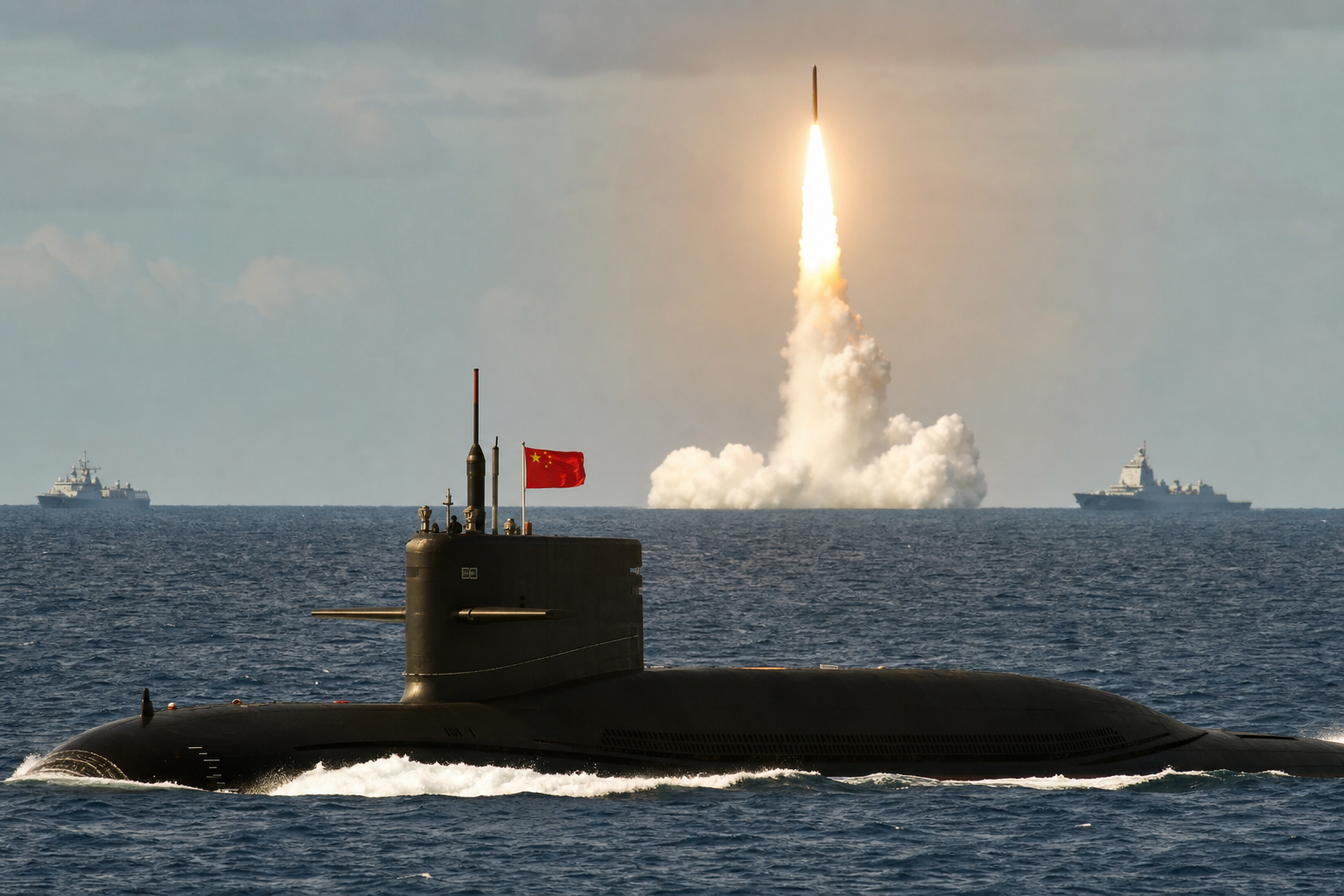
China test-launched a long-range ballistic missile from one of its nuclear-powered submarines in the South Pacific, prompting criticism from several regional governments and renewed concern about Beijing’s nuclear modernization. According to China’s official Xinhua News Agency, the missile was launched at 12:01 p.m. with a dummy warhead and was described as part of routine annual training that complied with international law and was not aimed at any country. The launch followed a previous Pacific missile test two years earlier, which was also presented as a demonstration of China’s expanding strategic capabilities. The test occurred the same day China and Russia began joint naval exercises off China’s coast, highlighting broader military activity by Beijing.
The United States said it monitored the launch and used the event to criticize China’s rapidly expanding and opaque nuclear buildup, urging Beijing to engage in arms control discussions and establish a regularized notification system for missile and space launches. Australia, New Zealand, Japan, and Taiwan also objected. New Zealand emphasized that the launch entered the South Pacific Nuclear Free Zone, while Australia called it destabilizing. Japan said it had been notified in advance but warned the missile could threaten Japanese security. Taiwan said China was trying to intimidate the international community.
China dismissed the criticism and urged countries not to overinterpret the test. The article places the incident in the context of China’s broader nuclear strategy, noting its “no first use” policy alongside continued modernization of the People’s Liberation Army. It also cites estimates of China’s submarine fleet and nuclear stockpile, including a Pentagon projection that China could surpass 1,000 nuclear warheads by 2030.
Entities: China, South Pacific, Xinhua News Agency, Ministry of Defense, United States • Tone: analytical • Sentiment: negative • Intent: inform
07-07-2026
China conducted a rare test-launch of a long-range ballistic missile from a nuclear-powered submarine in the South Pacific, using a dummy warhead, prompting criticism and concern from Australia, New Zealand, Japan, and the United States. The test occurred at a politically sensitive moment: the same day Australia and Fiji signed a mutual defense treaty aimed at countering Chinese influence in the Pacific. Chinese officials said the launch was routine annual training, complied with international law, and was not aimed at any country. But regional governments said they had been informed only shortly beforehand, and New Zealand noted the missile was fired into the South Pacific Nuclear Free Zone, established under the Treaty of Rarotonga. Analysts said the test underscores China’s expanding nuclear and submarine capabilities, growing military transparency concerns, and a signal to the United States that China’s nuclear deterrent is increasingly sea-based as part of its broader modernization of the People’s Liberation Army. The U.S. said China’s rapid and opaque nuclear buildup is troubling and urged Beijing to engage in arms control talks and a more regular launch-notification system.
Entities: China, South Pacific, Xinhua News Agency, Australia, New Zealand • Tone: analytical • Sentiment: neutral • Intent: inform
07-07-2026
Australian Prime Minister Anthony Albanese has warned that China’s recent missile test in the Pacific could have caused “considerable damage” if weaponised, describing the launch as a serious concern for regional stability and nuclear proliferation. The test involved a nuclear-capable intercontinental ballistic missile fired from a submarine and was reported by Chinese state media as part of routine military training. Albanese, speaking in Solomon Islands, said Australia would continue to press China over actions that could destabilise the region, especially given the test’s timing amid broader Pacific security tensions.
The article highlights growing international criticism of China’s launch, including objections from Australia and the United States that China gave insufficient notice to nearby countries and did not meet expectations under international law and the Hague Convention on ballistic missile testing. Australian cabinet minister Pat Conroy called the event “destabilising” and said China’s explanation was not accurate, while US State Department officials urged Beijing to adopt more transparent, regular notification procedures and pursue meaningful arms-control discussions.
Pacific leaders also weighed in. Solomon Islands Prime Minister Matthew Wale said he had lodged a strong protest with China’s ambassador and argued that no country—China, the US, or any other—should test ICBMs in the Pacific Islands region. Taiwanese national security official Joseph Wu called the launch a provocation and accused China of destabilising the Indo-Pacific. China, meanwhile, defended the launch as safe, professional, and routine, insisting it complied with international law and was not aimed at any country or target. The article frames the event as part of broader concerns over China’s military buildup and the strategic implications for the Pacific region.
Entities: Anthony Albanese, Matthew Wale, Pat Conroy, Penny Wong, Richard Marles • Tone: analytical • Sentiment: negative • Intent: inform