05-07-2026
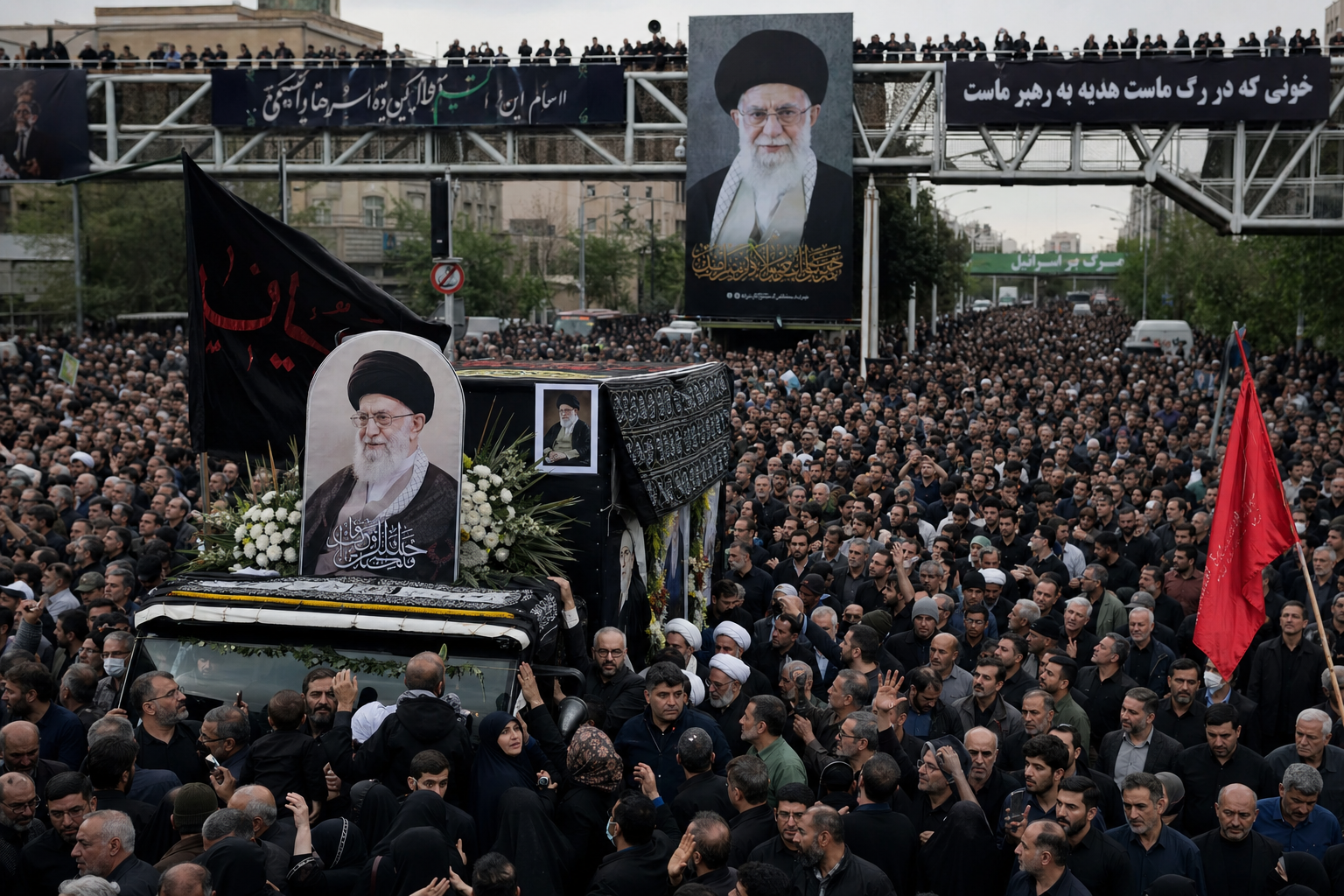
Large crowds gathered in Tehran for the first day of funeral commemorations for Iran’s former supreme leader, Ayatollah Ali Khamenei, whose body is lying in state at the Grand Mosalla before a multi-day procession across Iran and Iraq. The article describes the scale and symbolism of the ceremonies, with authorities expecting 15–20 million mourners over the coming days and supporters chanting anti-U.S. slogans and calls for revenge. Khamenei was killed in late February during joint U.S. and Israeli strikes, which triggered a broader regional conflict. The funeral route will move from Tehran to Qom, then to Najaf and Karbala in Iraq, before burial at the Imam Reza Shrine in Mashhad, with commemorative events continuing for 40 days and up to the first anniversary. The article also highlights political uncertainty around Khamenei’s successor, Mojtaba Khamenei, who has reportedly taken over as supreme leader but has not been seen publicly, fueling speculation about his health and the public visibility of the transition.
Entities: Ayatollah Ali Khamenei, Mojtaba Khamenei, Tehran, Grand Mosalla, Mashhad • Tone: analytical • Sentiment: neutral • Intent: inform
05-07-2026
CNN’s live updates cover the second day of a multi-day funeral in Tehran for Iran’s slain Supreme Leader Ayatollah Ali Khamenei, who was killed in a US-Israeli strike along with members of his family. The article describes large crowds gathering at the Imam Khomeini Grand Mosalla for prayers and public mourning, with Iranian state media showing scenes of grief, chanting, and officials in attendance, including IRGC commander Brig. Gen. Ahmad Vahidi. It also highlights signs of anger among mourners, with some calling for revenge and Iranian media amplifying slogans described as a call for blood vengeance.
A central thread of the live blog is uncertainty over the succession and leadership of Iran. Khamenei’s son and reported successor, Mojtaba Khamenei, has not appeared publicly since February and has not been seen at the funeral or at an earlier private ceremony for his late wife. The article notes that he has communicated only through written statements, fueling questions about who is actually leading Iran and whether he was injured in the attack that killed his father and family members.
The live updates also briefly widen to related regional developments, including a reported Israeli strike that killed an armed militant in southern Lebanon and a phone call between Israeli Prime Minister Benjamin Netanyahu and US President Donald Trump, during which they agreed to meet in Washington. Another update notes continuing disruptions in the Strait of Hormuz, where vessels turned back abruptly despite signs of partial recovery in commercial traffic. Overall, the piece combines现场 reporting, political uncertainty, and regional conflict developments around a rapidly evolving crisis.
Entities: Ayatollah Ali Khamenei, Mojtaba Khamenei, Donald Trump, Benjamin Netanyahu, Tehran • Tone: urgent • Sentiment: negative • Intent: inform
05-07-2026
The article describes footage from Iranian state media showing the funeral scene for late Supreme Leader Ali Khamenei in Tehran. According to CNN’s reporting, Khamenei’s sons—Mostafa, Meysam, and Masoud—were seen weeping as several coffins were carried into Tehran’s Grand Mosalla and placed on a raised platform at the funeral prayer site. The video emphasizes the scale and emotional intensity of the public mourning, with the late leader’s coffin among those transported to the ceremony. The article also notes the absence of Khamenei’s reported successor, his son Mojtaba Khamenei, who has not appeared publicly since February. Although brief, the piece centers on the visual tableau of grief and the significance of the funeral in marking a major political and religious transition in Iran after Khamenei’s death. The article is presented primarily as a video news item, with supporting context about the family members present and the missing public figure who is expected to play a role in succession.
Entities: Ali Khamenei, Mojtaba Khamenei, Mostafa Khamenei, Meysam Khamenei, Masoud Khamenei • Tone: emotional • Sentiment: negative • Intent: inform