03-07-2026
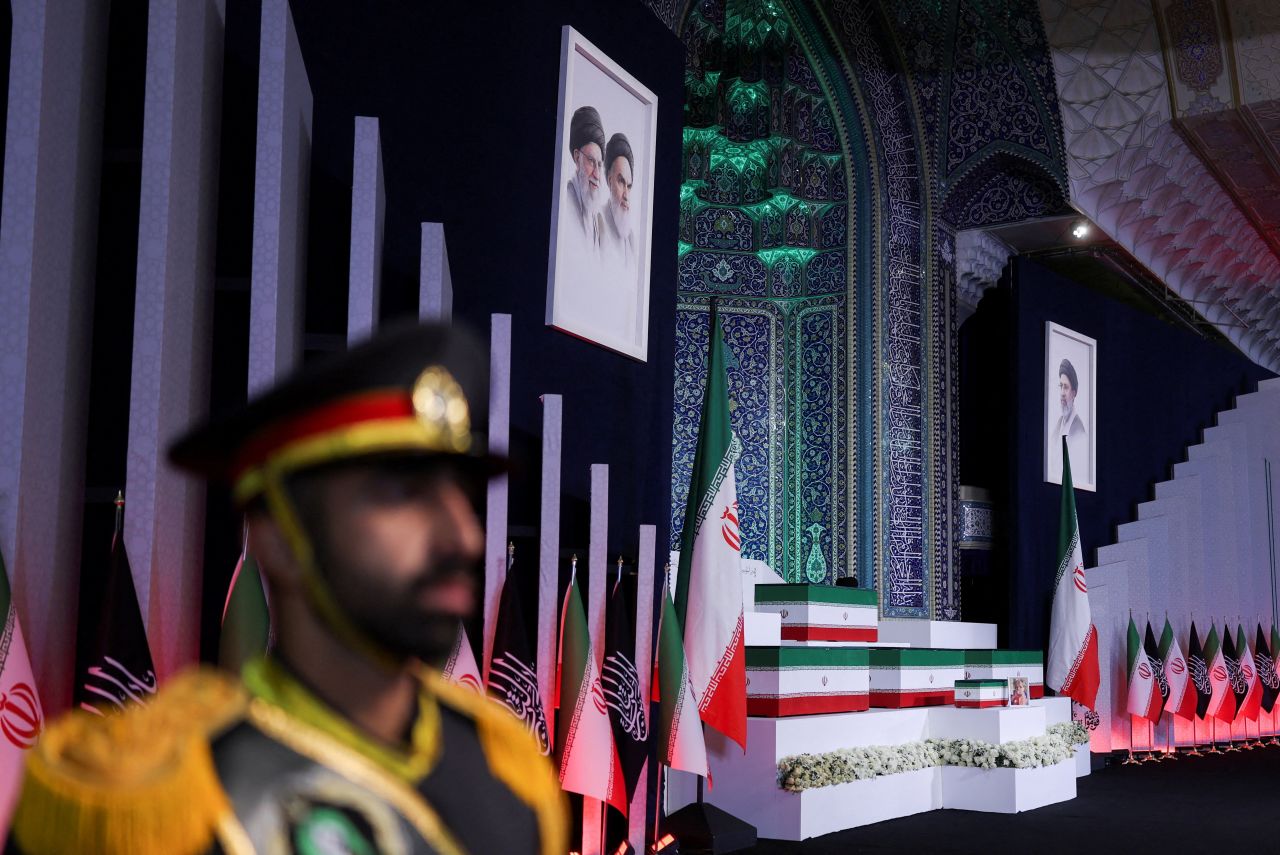
Iran has begun several days of public mourning and funeral processions for its former Supreme Leader, Ayatollah Ali Khamenei, whose body is being displayed in Tehran more than four months after he was killed in strikes carried out by the United States and Israel. The mourning period includes public viewing at Tehran’s Grand Mosalla, an official funeral ceremony in the capital, and a burial next Thursday in his hometown of Mashhad. Authorities expect a very large turnout, with estimates reaching up to 20 million mourners, and have imposed broad security and logistical measures in Tehran, including office closures, traffic restrictions, and partial airport airspace closures.
The ceremonies are taking place amid a fragile ceasefire between Iran and the United States after a preliminary deal in June to end their conflict. Khamenei’s body will lie in state for three days alongside family members also killed in the February strikes, and afterward will be taken to the Iraqi holy cities of Najaf and Karbala before burial. Officials say representatives from several countries are expected to attend, including Pakistan’s prime minister, Shehbaz Sharif. The article also notes that Khamenei has been succeeded by his son, Mojtaba, who has not appeared publicly since taking power, underscoring the political significance and continued uncertainty surrounding Iran’s leadership.
Entities: Ayatollah Ali Khamenei, Mojtaba Khamenei, Shehbaz Sharif, Tehran, Mashhad • Tone: neutral • Sentiment: neutral • Intent: inform
03-07-2026
The article describes Iran’s massive, highly choreographed funeral for Supreme Leader Ali Khamenei, who was killed at the start of the US-Israeli war on Iran. Presented as both a religious mourning ritual and a political statement, the weeklong ceremony is designed to project defiance, unity, and survival in the face of military defeat, sanctions, domestic unrest, and international pressure. The funeral is expected to span five cities in Iran and Iraq and draw millions of mourners, requiring extraordinary logistical and security measures, including airport shutdowns, traffic restrictions, cooling systems, mobile bakeries, ambulances, helicopters, and drones.
CNN frames the event as deeply symbolic: the timing overlaps with Muharram, a sacred Shiite period associated with martyrdom, and with the 250th anniversary of US Independence Day. The article says the regime is using the funeral to recast Khamenei as a martyr and reinforce the legitimacy of the Islamic Republic. It also suggests the ceremony may introduce his son and successor, Mojtaba Khamenei, to the public. The piece emphasizes that the spectacle is meant to send a message to Iran’s enemies that the regime survived war and intends to turn its slain leader into an enduring symbol of resistance. The article also notes the historical precedent of previous funerals for Ayatollah Khomeini and Qassem Soleimani, which were similarly massive and dangerous crowd events.
Entities: Ali Khamenei, Mojtaba Khamenei, Donald Trump, US-Israeli war on Iran, Tehran • Tone: analytical • Sentiment: negative • Intent: inform
03-07-2026
The article describes Iran’s preparations for a massive, multi-day funeral procession for Supreme Leader Ayatollah Ali Khamenei, who was killed in the opening stages of the US-Israeli war on Iran. His coffin, along with those of several family members, is on public display in Tehran as mourners gather ahead of ceremonies expected to span several cities in Iran and Iraq from July 4 to July 9. The funeral is being staged as a highly symbolic event, tied to the Islamic month of Muharram and overlapping with the United States’ July 4 Independence Day celebrations, which Iranian authorities appear to be using to underscore themes of resistance, martyrdom, and regime survival.
The report says Tehran has launched a major logistical operation to manage millions of expected participants, mobilizing state employees, universities, unions, firefighters, soldiers, aid workers, and religious mourning groups. Iranian media coverage has been dominated by tributes and documentaries about Khamenei, pushing aside earlier attention on indirect talks with the United States. Those talks, mediated by Qatar, have been paused until after the funeral, though Qatar says they made positive progress and are expected to resume afterward. The article also notes continued regional tensions: an Iranian army general warned the US and Israel not to attack during the funeral period, while the US military announced a second Marine unit has been deployed to the Middle East. Overall, the piece frames the funeral as both a national mourning event and a deliberate political spectacle intended to project defiance after war and loss.
Entities: Ayatollah Ali Khamenei, Mojtaba Khamenei, Donald Trump, Qatar, Tehran • Tone: analytical • Sentiment: neutral • Intent: inform
03-07-2026
The article reports that senior U.S. officials were so concerned about Israel’s apparent desire to assassinate key Iranian political figures that they took the extraordinary step of warning Iran through intermediaries. According to current and former officials, Washington feared that Israel might target Abbas Araghchi, Iran’s foreign minister, and Mohammad Bagher Ghalibaf, the parliamentary speaker, while the Trump administration was trying to negotiate an end to the war and reopen the Strait of Hormuz. U.S. officials had already urged Israeli counterparts not to continue killing Iran’s political leadership, but the concern persisted because Israeli actions appeared to be undermining the diplomatic track.
The article describes a widening rift between the United States and Israel over war aims. While the two countries initially shared an interest in regime change, U.S. officials eventually concluded that Iran’s military and clerical establishment would likely remain in power. The killing of Ali Larijani, Iran’s top national security official, is portrayed as a turning point because it removed a potential negotiating counterpart. The piece also notes that Israeli officials and pro-Israel lobbyists in Washington criticized a framework deal that would trade sanctions relief for nuclear restrictions, since it would preserve the Iranian regime rather than topple it.
The article frames these developments as evidence of limited U.S. leverage over Israel and deep strain in the alliance. It also highlights concern that assassination campaigns may have empowered harder-line Iranian figures and complicated prospects for diplomacy and regional stabilization.
Entities: United States, Israel, Iran, Trump administration, Abbas Araghchi • Tone: analytical • Sentiment: negative • Intent: inform
03-07-2026
Tehran is reportedly preparing for the July 9 burial of Supreme Leader Ali Khamenei, months after his death, and is mounting an unusually large security and propaganda effort around the funeral. The article says Iranian authorities are mobilizing the Basij militia and the Islamic Revolutionary Guard Corps (IRGC) to control crowds and project strength, with state media presenting the event as both a memorial and a political show of force under the slogan "We Must Avenge." Analysts quoted in the story question how Khamenei’s body has been preserved for so long, suggesting refrigerated storage rather than embalming because Islamic law discourages chemical embalming and allows delayed burial in exceptional cases. The article describes the funeral as a highly staged national event, with public viewings, processions in Tehran and Qom, and claims of massive attendance, international representation, and heavy media coverage. It also frames the funeral as part of a broader effort by the Iranian regime to demonstrate continuity and stability after war and internal unrest, emphasizing that the same security apparatus coordinating the funeral has also been used to suppress dissent and manage previous protests.
Entities: Ali Khamenei, Tehran, Qom, Iran, Basij militia • Tone: analytical • Sentiment: negative • Intent: inform