02-11-2026
The provided content does not include the article’s live updates or substantive reporting. It contains only the headline, URL, and website interface text: “30 Updates,” advertisements, and a prompt asking readers to enable alerts. The headline indicates that the live blog concerns tankers reportedly hit in the Strait of Hormuz and US President Donald Trump again saying the conflict will end soon, but the supplied text gives no details to verify or explain those claims. Because the article itself is absent, it is not possible to produce a comprehensive account of the reported events, their context, or the participants’ responses. The clean text can preserve only the available headline-level information; adding further article content would require inventing details. Accordingly, tone, sentiment, and intent can only be assessed cautiously from the headline, not from the missing live-blog updates.
Entities: Iran war, Strait of Hormuz, tankers, Donald Trump, United States • Tone: neutral • Sentiment: neutral • Intent: inform
02-11-2026
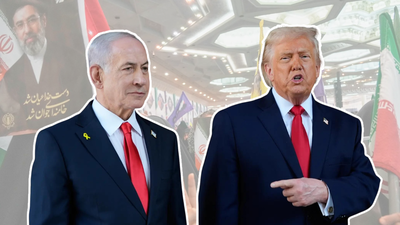
The live report describes ongoing efforts to prevent the U.S.-Iran war from restarting, alongside escalating threats and attacks in the Gulf. President Donald Trump said the United States had achieved a major victory and expected to end the conflict “very soon, one way or the other”: Iran could make a deal, or the U.S. could end the war by other means. He also said the U.S. still had one or two targets to address, including a suspected nuclear site, while claiming much of Iran’s military and nuclear program had been disabled. Trump said negotiations were going well, though he questioned Iran’s reliability, and reported a “very good” conversation with Israeli Prime Minister Benjamin Netanyahu about the war. Netanyahu did not publicly comment on the call.
Diplomatic contacts continued through mediators in Qatar. Iran’s foreign minister, Abbas Araghchi, said the outcome depended on U.S. responses to Iranian questions and urged Washington to choose diplomacy. He said Iran was prepared for either defense or diplomacy, and that indirect discussions were underway in Doha, not direct talks with the U.S. A proposal discussed by Iranian negotiators could reopen the Strait of Hormuz within two days if U.S. conditions were met. The United Arab Emirates expressed hope for a diplomatic breakthrough but said it was prepared for the worst.
The report also details maritime incidents and warnings. A vessel in the Strait of Hormuz reportedly sent a mayday after being struck by an unknown projectile. Qatar said its LNG tanker, Al Mayeda, had been hit by unidentified objects while transiting Gulf waters; its crew were unharmed and the vessel remained operational. Iranian officials warned that a renewed war could last longer than the previous conflict, and Supreme Leader Mojtaba Khamenei warned that Iranian attacks would not be geographically limited if hostilities resumed. U.S. Secretary of State Marco Rubio said no decision had been made about renewed military action, but the U.S. was prepared to act if necessary.
Entities: Donald Trump, Mojtaba Khamenei, Abbas Araghchi, Marco Rubio, Benjamin Netanyahu • Tone: analytical • Sentiment: neutral • Intent: inform
02-11-2026
Oil prices fell on Monday after statements from the United States and Iran suggested that diplomacy could still offer a path forward in their conflict. Brent crude futures for January delivery dropped 3.31% to $109.67 a barrel, while U.S. West Texas Intermediate futures for December fell 3.34% to $100.64.
U.S. Secretary of State Marco Rubio said President Donald Trump would prefer to resolve the conflict diplomatically rather than use military force. Rubio said Trump had not made a decision about military action, while adding that the United States believed it had the capacity to act if necessary. Iranian authorities also indicated that an agreement remained possible after two days of talks mediated by Qatar, provided that demands were implemented in a tangible way, Al Jazeera reported.
Those diplomatic signals came amid reports that both countries were preparing for possible renewed military strikes. The Wall Street Journal and The New York Times reported that the United States was preparing for potential action after the Nov. 3 midterm elections. Iran’s Supreme Leader Mojtaba Khamenei called on the country’s armed forces to respond immediately and without geographic limits to any level or type of threat.
The article cautions that the Middle East and Ukraine conflicts remain sources of uncertainty for energy markets. Tamas Varga, an analyst at PVM Oil Associates, said attacks on Middle Eastern ships and refineries, as well as attacks affecting civilians in Ukraine, did little to support expectations of lasting ceasefires. He nevertheless noted that hope for such outcomes persisted.
Entities: Marco Rubio, Donald Trump, Mojtaba Khamenei, Tamas Varga, United States • Tone: analytical • Sentiment: neutral • Intent: inform
02-11-2026
U.S. Secretary of State Marco Rubio said President Donald Trump prefers to resolve the war with Iran through diplomacy rather than military force, while emphasizing that the United States is prepared to act militarily if necessary. Rubio said Trump has not made a decision about further action and expressed confidence in U.S. military capabilities. The comments come amid reports that both the United States and Iran may be preparing for additional strikes after the Nov. 3 midterm elections. Iran’s Supreme Leader Mojtaba Khamenei called for the armed forces to respond immediately and broadly to any threat, and ordered an update to military targeting information to bring U.S. and Israeli assets within reach. The article notes that Washington has not publicly said it intends to resume attacks, although reports in The Wall Street Journal and The New York Times describe preparations for possible renewed U.S. military action. Trump said the conflict would end either through a deal or by other means, declaring that the United States had achieved a victory. Separately, Iran’s foreign ministry designated the United Kingdom’s Military Intelligence Services a “hostile group.” It accused the Royal Navy and Royal Air Force of supporting terrorist organizations, describing the move as retaliation for what Tehran called hostile actions by London, including the U.K.’s designation of Iran’s Islamic Revolutionary Guard Corps as a terrorist organization. Iran has also accused the U.K. of aiding the U.S. war effort by allowing American forces to use British military and logistical bases. The article reports that U.S. forces used RAF Fairford and Diego Garcia for strikes described as defensive.
Entities: Marco Rubio, Donald Trump, Mojtaba Khamenei, Iran, United States • Tone: analytical • Sentiment: neutral • Intent: inform
02-11-2026
Iran warned that a renewed war with the United States could last longer than the previous round of fighting and said Washington would not control when or on what terms it ended. The warning followed President Donald Trump's statements that the United States still had targets to strike in Iran, including a suspected underground nuclear complex known as Pickaxe Mountain. Trump also said he might have to give Tehran “the hammer,” while declining to detail the timing of any action.
The article describes continuing diplomatic efforts alongside threats of renewed US and Israeli bombardments. US media reported that Trump and Israeli Prime Minister Benjamin Netanyahu discussed the negotiations and possible military action in a Saturday call. According to sources cited by Axios, Netanyahu pressed for a strike after the US midterm elections, whereas Trump preferred to let talks continue. Trump confirmed discussing Iran with Netanyahu but gave no further details.
Iranian officials issued warnings of retaliation without geographical limits. Revolutionary Guards spokesperson Hossein Mohebbi said a vast theatre had been defined for inflicting damage on the enemy. Foreign Minister Abbas Araghchi said Iran hoped the United States would choose diplomacy, while emphasizing that Tehran was prepared for either diplomacy or defence. Security chief Mohsen Rezaei said he had received a letter from US Vice President JD Vance seeking to revive talks, but had not yet replied. Iran has tied negotiations to demands including the release of frozen assets, an end to the US naval blockade and sanctions, and a halt to the war on all fronts. The Strait of Hormuz, which Iran says it controls, remains a central point of tension.
The United Arab Emirates said it hoped diplomacy would produce a breakthrough but was preparing for the worst. Residents in Tehran expressed contrasting reactions: one described feeling powerless and worried, while another said he was not afraid of another war. The article portrays a region facing renewed conflict even as diplomatic channels remain open.
Entities: Iran, United States, Israel, Donald Trump, Ayatollah Mojtaba Khamenei • Tone: analytical • Sentiment: negative • Intent: inform
02-11-2026
The supplied page presents a live-news headline and a set of related updates about tensions involving Iran, the United States, Israel and Gulf countries. Its main headline says oil prices fell by more than 3% after US President Donald Trump indicated that Iran should be given more time for diplomacy. A secondary headline says Trump had a “tough” call with Israeli Prime Minister Benjamin Netanyahu while favouring additional time for negotiations with Iran.
The other listed developments convey the wider regional stakes but provide little supporting detail. The Islamic Revolutionary Guard Corps (IRGC) is said to claim that two oil tankers exploded after striking mines in the Strait of Hormuz. An Iranian lawmaker reportedly warned that Iranian missiles could reach Europe in the event of another war. The UAE, according to former official Dr Anwar Gargash, does not want renewed conflict but is prepared for the worst. An adviser says Iraq intends to remain neutral and curb threats to Gulf states if a US-Iran war resumes. Saudi Arabia is reported to have condemned an attack on a Qatari liquefied natural gas carrier in Gulf waters.
The page also lists video items and related headlines on US-Iran negotiations, threats to Gulf states, possible Israeli action, the US military presence in the Gulf, and diplomatic efforts to prevent escalation. However, the supplied content contains no full article narrative, detailed oil-market figures, dates for the reported incidents, or direct explanations from the parties beyond the short headlines and captions. It is therefore best understood as a snapshot of a live-news page, rather than a complete report. The central themes are a possible diplomatic opening, uncertainty over renewed conflict, and the security risks to energy shipping and neighbouring states.
Entities: Donald Trump, Benjamin Netanyahu, Iran, United States, Islamic Revolutionary Guard Corps (IRGC) • Tone: analytical • Sentiment: neutral • Intent: inform
02-11-2026
Oil prices fell more than 3 per cent on Monday, November 2, as markets responded to signs that US President Donald Trump was willing to give diplomacy with Iran more time before considering renewed military action. Brent crude traded at $110 a barrel at 7.55am UAE time, while West Texas Intermediate (WTI) fell to $100.90. The decline followed a recent six-month high, reached amid concern about attacks in the Strait of Hormuz and the possibility of US strikes on Iran.
Reports said Trump told Israeli Prime Minister Benjamin Netanyahu in a phone call that he wanted to allow further diplomatic efforts after Tuesday’s US midterm elections. Speaking to Right Side Broadcasting Network before a campaign rally in Iowa, Trump said the US would end the war “one way or the other”, either through a deal or by other means. US Secretary of State Marco Rubio said no decision had been made about renewed strikes and that Trump preferred a diplomatic resolution.
Diplomatic activity included an Iranian delegation’s visit to Qatar on Saturday for discussions with mediators. However, risks to shipping remained: the UK Maritime Trade Operations reported that a vessel was hit by a projectile in the Strait of Hormuz on Sunday, following an attack on a liquefied natural gas tanker on Friday. It also reported a vessel struck east of Ras Al Khafji on Saudi Arabia’s Gulf coast.
Despite Monday’s drop, supply concerns and geopolitical uncertainty have kept oil prices elevated. Brent and WTI had each risen about 0.8 per cent over the preceding week and had gained roughly 15 per cent and 12 per cent, respectively, over the month, reaching their highest levels since April. UBS expects Brent to remain near $110 a barrel at year-end, citing volatile Middle Eastern supply, geopolitical uncertainty, high freight costs, constrained tanker capacity and recovering Chinese imports.
Entities: Donald Trump, Marco Rubio, Benjamin Netanyahu, Shweta Jain, United States • Tone: analytical • Sentiment: neutral • Intent: inform
02-11-2026
The article reports claims by US political commentator Tucker Carlson that Israeli Prime Minister Benjamin Netanyahu is urging US President Donald Trump to use a nuclear weapon against Iran. In a post on X, Carlson alleged that a possible target was Pickaxe Mountain, where he said Iran may have restarted nuclear enrichment in underground tunnels. He argued that conventional weapons could not reach the site. The article emphasizes that Carlson provided no independently verifiable evidence for the alleged nuclear plan or Netanyahu’s pressure on Trump.
Carlson also connected the alleged push for military action to Netanyahu’s political future, claiming the Israeli leader needs Trump’s support to remain in office and avoid investigations. He named several US officials whom he said backed Netanyahu’s position, and made further claims about former president Barack Obama and a secret Netanyahu trip to Abu Dhabi; the article says he did not substantiate these assertions.
The story outlines Carlson’s warnings about regional and global consequences, including damage to shipping and disruption to energy and fertilizer markets. He alleged a nuclear strike could contaminate the Persian Gulf and threaten the water supply of millions, and warned that it could encourage nuclear use by other countries. These scenarios are presented as Carlson’s claims, not verified findings.
The article then describes ongoing diplomacy. Trump and Netanyahu reportedly discussed Iran in a phone call, with sources differing on its tone; Trump later called it a “very good talk.” Trump said negotiations were proceeding and that he was not in a hurry, while also saying the US needed to address one or two Iranian nuclear sites. Vice President JD Vance sent a letter to Iranian official Mohsen Rezaei, and Qatari mediators continued discussions with Iranian officials. Iran’s foreign minister Abbas Araghchi said no agreement had been reached and called for the US to respond to Tehran’s questions. Carlson urged the administration to pursue diplomacy rather than risk nuclear escalation.
Entities: Tucker Carlson, Benjamin Netanyahu, Donald Trump, Iran, Pickaxe Mountain • Tone: analytical • Sentiment: negative • Intent: inform
02-11-2026
According to a report by Axios, US President Donald Trump and Israeli Prime Minister Benjamin Netanyahu spoke by telephone on Saturday about Washington’s negotiations with Iran and the possibility of renewed military operations. The report says Netanyahu pressed Trump to launch fresh strikes after Tuesday’s US midterm elections, while Trump preferred to give diplomatic efforts more time. Sources described the call as “tough” and “direct.” Trump later called it a “very good talk” and confirmed Iran was discussed, but gave no further details. The White House and Netanyahu’s office declined to comment.
Trump is keeping diplomatic and military options open. He said talks with Iran were going well and that he was not in a hurry, while expressing doubt that Tehran would stick to an agreement. He also said the US might need to address one or two Iranian nuclear sites, including a suspected underground facility at Pickaxe Mountain, and indicated that military plans were ready.
Diplomatic outreach has included a letter from Vice President JD Vance to Iran’s national security chief, Mohsen Rezaei, about restarting negotiations. Qatar has also been mediating, with its representatives meeting Iranian officials for a third consecutive day in an effort to enable direct US-Iran talks. Iranian Foreign Minister Abbas Araghchi said no agreement had been reached and that progress depended on Washington answering Tehran’s questions. He said Iran remained prepared for either defence or diplomacy. Araghchi also described discussions in Qatar about a proposal that could reopen the Strait of Hormuz within two days if the US met conditions, while stressing that direct talks between Washington and Tehran were not taking place. The article presents renewed diplomacy alongside continued consideration of military action.
Entities: Donald Trump, Benjamin Netanyahu, JD Vance, Mohsen Rezaei, Abbas Araghchi • Tone: analytical • Sentiment: neutral • Intent: inform