25-10-2026
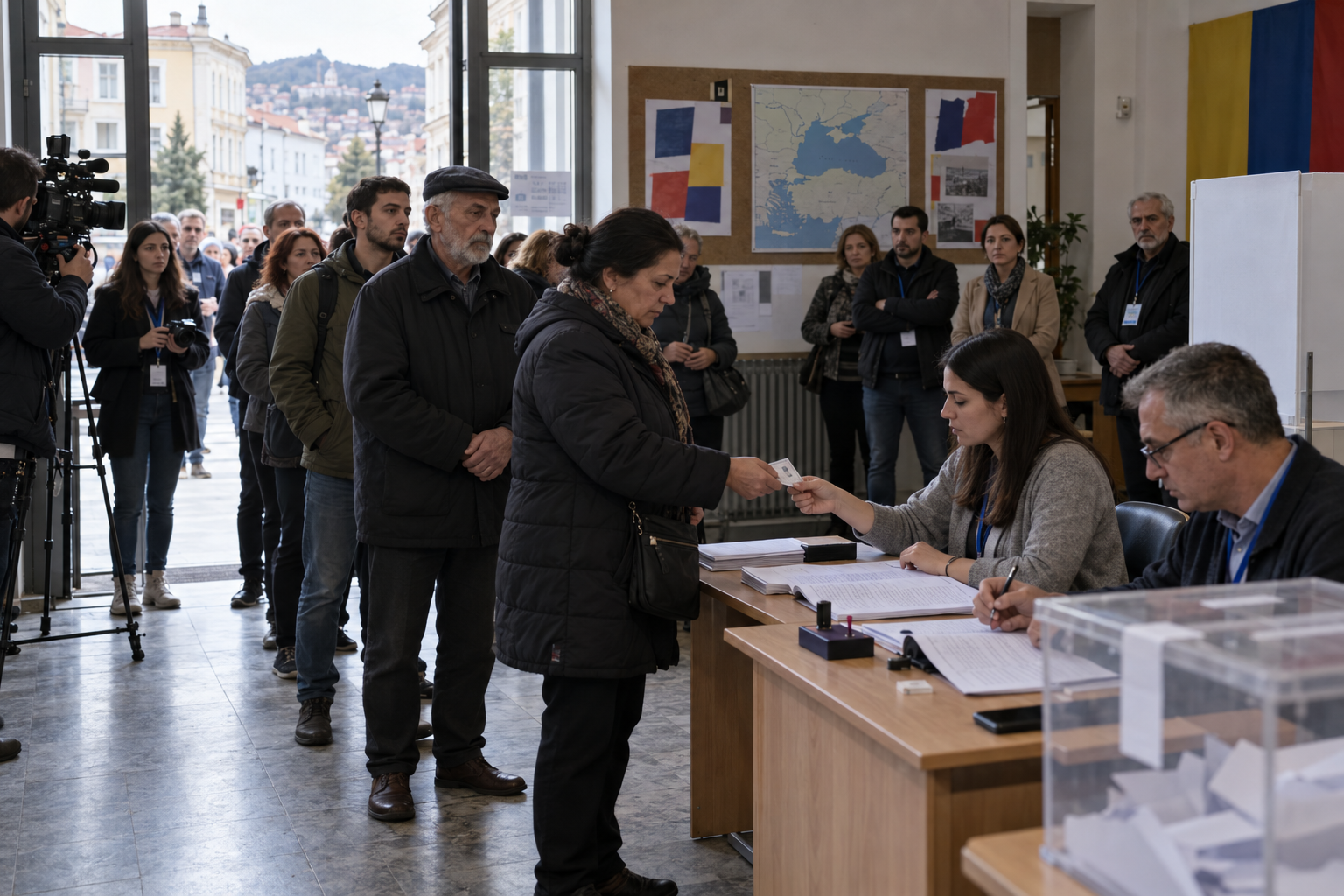
Bulgarians voted in a presidential election shaped by economic hardship, uncertainty over Russia’s war on Ukraine, and drone attacks on merchant ships in the Black Sea. Incumbent Iliana Iotova and former caretaker Prime Minister Andrey Gyurov led a field of 27 candidates ahead of the vote. Although Bulgaria’s presidency is largely ceremonial, the president can lead the armed forces, veto legislation, sign treaties and appoint ambassadors, giving the directly elected office meaningful political influence.
The attacks on ships off Bulgaria’s coast likely killed around two dozen international seafarers. They raised concerns about the war’s growing reach and led Bulgaria to seek allied help to strengthen maritime security. The government has not directly blamed Russia, though Prime Minister Rumen Radev said Russia benefits from the strikes.
The leading candidates have condemned the attacks but differ over Ukraine. Gyurov, backed by pro-Western reformist parties, supports Ukraine and signed a security cooperation agreement with Kyiv while serving as premier. Iotova, backed by Radev, calls for a diplomatic end to the war and argues that Bulgarians are exhausted by it. Analysts say she favors a more neutral stance, including ending aid and arms deliveries to Ukraine; critics characterize such language as echoing Kremlin rhetoric.
The campaign also addressed rising energy prices and inflation, which are straining households, especially in rural areas. Alpha Research polling put Iotova at 41 percent and Gyurov at 28 percent. Analysts expected no candidate to win an outright majority in the first round. With turnout forecast below 40 percent—short of the 50 percent threshold among 6.6 million registered voters—a runoff on November 1 was considered likely.
Entities: Bulgaria, Iliana Iotova, Andrey Gyurov, Rumen Radev, Dobromir Zhivkov • Tone: analytical • Sentiment: neutral • Intent: inform
25-10-2026
Serbia is holding snap parliamentary elections amid a student-led protest movement challenging longtime leader Aleksandar Vucic. The demonstrations began after a railway station canopy collapsed in Novi Sad in 2024, killing 16 people. Protesters have blamed government corruption and what they describe as creeping authoritarianism, and the movement has since attracted widespread public support. A defeat for Vucic could represent a major political shift in the Balkan country, though he remains a strong incumbent with supporters who credit him with economic development and modernization.
Vucic called the election in September and resigned as president to run again for prime minister. His campaign has promised higher pensions and public-sector salaries, investment in state healthcare, and subsidies for young couples. In foreign policy, he has maintained ties with China and Russia while keeping open the possibility of Serbia joining the European Union. However, relations with the EU have deteriorated over what the bloc sees as insufficient progress on judicial reform, the rule of law, and corruption.
The opposition Student List focuses on tackling corruption and improving education, while offering few details about its international policy. Its 250 candidates include professors, actors, and farmers, and it is led by cardiologist Ilija Srdanovic. Polls suggest a close contest: one Ipsos survey gave Vucic’s Serbian Progressive Party 47 percent and the student movement 40 percent, while other polls have placed the students ahead. About 150,000 people attended a student movement rally in Belgrade. Rights groups and activists say repression has increased since the Novi Sad collapse, while Vucic and his party deny allegations of repression, corruption, and spying. Vucic has also accused the movement of receiving foreign support, which the students deny.
Entities: Serbia, Aleksandar Vucic, Student List, Ilija Srdanovic, Novi Sad train station canopy collapse • Tone: analytical • Sentiment: neutral • Intent: inform
25-10-2026
Bulgarians are voting in a presidential election amid heightened concern that Russia’s war in Ukraine is affecting security in the Black Sea. The contest features 27 candidates, with acting President Iliana Iotova and former caretaker prime minister Andrey Gyurov leading in polls. Although Bulgaria’s presidency is largely ceremonial, the election has acquired added importance following drone attacks on merchant ships off the country’s Black Sea coast. The attacks likely killed about two dozen international seafarers, drew international condemnation and raised concerns about the war’s expanding reach. Bulgaria has sought allied help to strengthen maritime security but has not directly accused Russia of carrying out the strikes. Prime Minister Rumen Radev said their outcome “benefits the Russian Federation.”
Both leading candidates condemned the attacks, but they differ in their positions on the wider war. Gyurov is backed by pro-Western, reformist parties and has expressed support for Ukraine. As caretaker prime minister, he signed a security cooperation agreement with Kyiv. He has called for Bulgaria to be a reliable NATO ally with a distinct voice in Europe, emphasizing preparedness and diplomacy. Iotova, a former vice president who became acting president in January after Radev resigned to run in parliamentary elections, is supported by Radev. Both favor a diplomatic end to the war. Iotova’s election would make her Bulgaria’s first elected female president. At a rally, she criticized the idea of a war of attrition and said Bulgarians were exhausted.
Alpha Research polling puts Iotova at 41 percent and Gyurov at 28 percent. If no candidate receives a majority, a runoff is scheduled for November 1. Polling stations open at 7 a.m. and close at 8 p.m.
Entities: Bulgaria, Sofia, Iliana Iotova, Andrey Gyurov, Rumen Radev • Tone: analytical • Sentiment: neutral • Intent: inform
25-10-2026
Serbia began voting in a pivotal election as a student-led protest movement sought to end the long rule of Aleksandar Vucic and his Serbian Progressive Party (SNS). Polls indicated a close contest between the SNS and the newly formed, youth-backed Students' List. The election followed nearly two years of demonstrations sparked by the deadly 2024 collapse of a train station canopy in Novi Sad. Calls for accountability over the disaster grew into Serbia's largest protest movement since the fall of Slobodan Milosevic in 2000.
Vucic, who has dominated Serbian politics for more than a decade, called snap elections the previous month. He stepped down as president to run for prime minister; Serbia's constitution bars him from seeking a third presidential term. The Students' List aimed to end 14 years of SNS rule in the vote. The student movement also hoped to emulate Peter Magyar's April victory in Hungary over Vucic's ally, Viktor Orban. Polling stations were scheduled to close at 8 p.m. local time (1900 GMT).
The article presents the election as a test of whether a sustained, youth-backed protest movement can translate public pressure into a change in government. It links the immediate political contest to the unresolved demand for accountability after the Novi Sad disaster, while noting the SNS's entrenched position and the close polling. It does not report the election result.
Entities: Serbia, Belgrade, Novi Sad, Aleksandar Vucic, Slobodan Milosevic • Tone: analytical • Sentiment: neutral • Intent: inform