25-10-2026
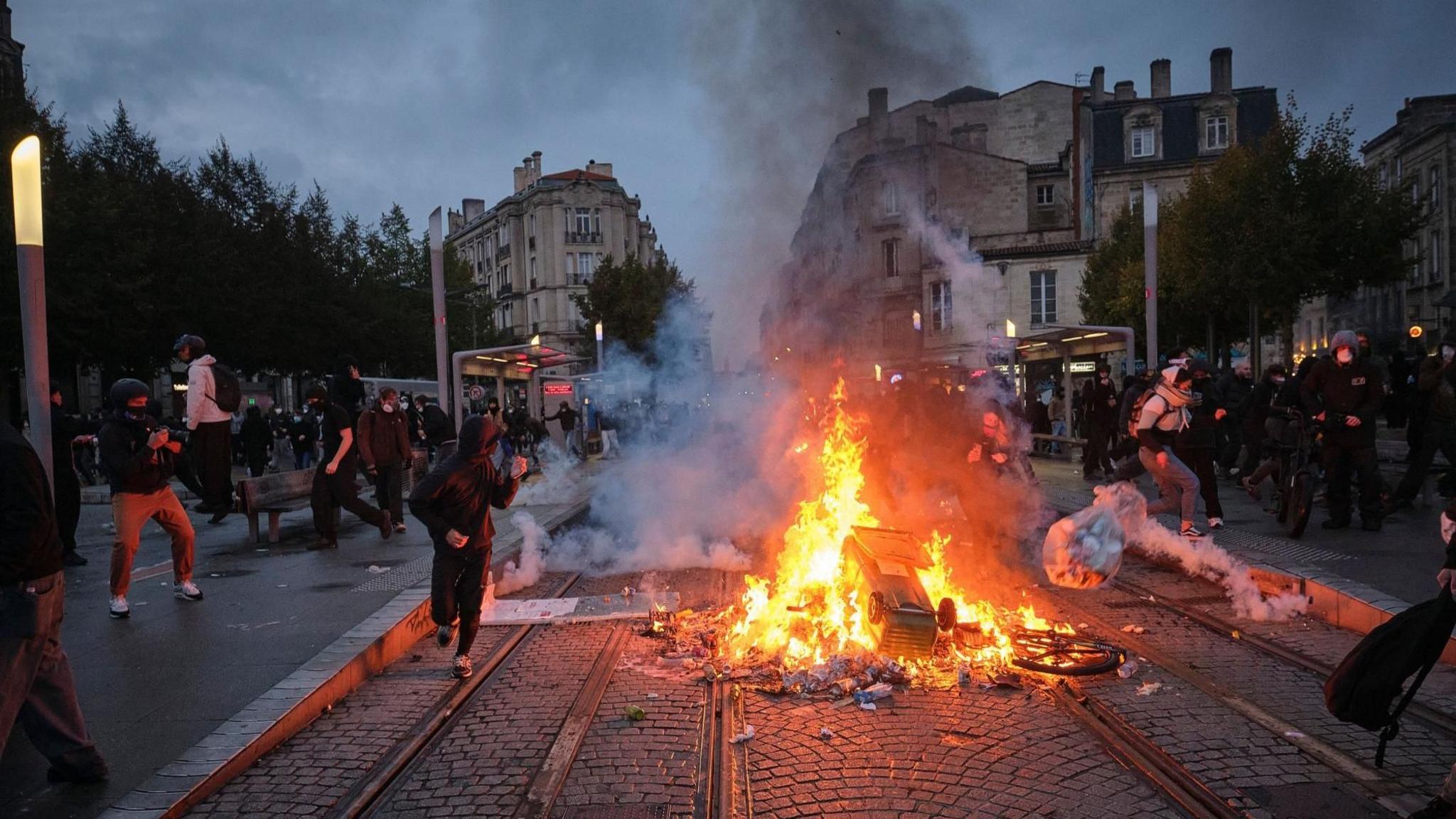
Nearly 1,000 people were arrested during a new round of protests across France on Saturday, following demonstrations involving hundreds of thousands of people. The protests focused on the cost of living and poor school conditions. The day was largely peaceful, but clashes broke out later in several cities. Police used tear gas and water cannon in Paris and elsewhere; barricades were burned in Marseille, and protesters damaged property in Bordeaux. Two people were seriously injured, according to Interior Minister Laurent Nuñez.
Estimates of the turnout differed: the interior ministry put it at 410,000, while unions estimated about 800,000. Some 70,000 police officers were deployed, and President Emmanuel Macron had said that only demonstrations organised by recognised trade unions would be allowed. Authorities said the unrest had not reached the scale of the previous weekend’s violence, when more than 2,500 people were arrested and more than 2,000 businesses were affected. The damage was estimated at hundreds of millions of euros, and about 1,000 police officers were injured.
Protesters described frustration, poverty, police violence and a sense that young people had been abandoned by the government. One said the demonstrations would continue until there was a response to their demands, while also condemning looting. A separate rally against the far-right National Rally in Orléans proceeded peacefully.
Protests and unrest were also reported elsewhere in Europe, including Barcelona, Tirana and Brussels. The French demonstrations come six months before the presidential election, as leading contenders have blamed Macron and his ministers for the unrest.
Entities: Emmanuel Macron, Laurent Nuñez, France, Paris, Marseille • Tone: analytical • Sentiment: negative • Intent: inform
25-10-2026
France saw protests in nearly 300 locations on Saturday over the cost of living and the education system. The demonstrations were largely peaceful at first, but clashes broke out later in several cities. Interior Minister Laurent Nuñez said nearly 1,000 people had been arrested and expected the total to rise. He attributed much of the violence to groups he described as “ultra-left,” and said some businesses were looted, though damage was less extensive than during protests the previous week. The Interior Ministry estimated that 410,000 people took part nationwide; labor organizers put attendance at about 800,000. Police said they had seized an assortment of weapons and prepared a large security deployment, with up to 70,000 officers and equipment including helicopters, armored vehicles and water cannons.
In Paris, an authorized march was moved from near the city center to Porte d’Italie. The march itself ended without incident, but clashes later lasted about two hours. Authorities reported 64 arrests, including six minors, and said more than 3,000 people were stopped and checked. In Orléans, thousands protested against a congress of Marine Le Pen’s National Rally party, whose leader is campaigning to succeed President Emmanuel Macron. That demonstration ended peacefully.
Elsewhere, police used tear gas, water cannons and other measures in Lyon, Nantes, Marseille, Clermont-Ferrand, Bordeaux, Strasbourg, Toulouse and Nice. Street fires and confrontations were reported, as were serious injuries in Clermont-Ferrand and Toulouse. Authorities also reported far-right activists seeking confrontations in Cannes and Montpellier, and arrests following clashes involving far-right extremists in Nice.
The Yellow Vests announced plans for another round of demonstrations on October 31, calling for rallies and sit-ins to oppose what they called the government’s “authoritarian drift” and defend public freedoms. The unrest, which began in September with student protests over conditions, has spread nationwide.
Entities: Laurent Nuñez, Emmanuel Macron, Marine Le Pen, France, Paris • Tone: analytical • Sentiment: negative • Intent: inform
25-10-2026
The article reports on two linked developments: US President Donald Trump’s criticism of France’s immigration policies and mass protests in France over the cost of living and education funding. Speaking at a campaign rally for Republican candidates in Perry, Georgia, Trump said France was “burning down” because it had opened its borders to people who hate the country. He used the unrest to argue for restrictive US immigration policies as early voting began for the November 2026 midterm elections.
In France, Interior Minister Laurent Nunez said nearly 1,000 people had been arrested during demonstrations on Saturday, with the total expected to rise. The French government estimated turnout at 410,000, while organisers put it closer to 800,000. Although some gatherings started peacefully, confrontations with police intensified in Paris and other cities, including Lyon, Lille, Marseille, Montpellier, Nantes and Toulouse. Police used water cannons and tear gas after projectiles were thrown, and authorities reported rioting near the end of the Paris march.
The article also describes a dispute over foreign leaders’ comments on the unrest. French President Emmanuel Macron criticized leaders who, he said, were exploiting events in France for political purposes, and rejected claims of visible foreign interference while condemning misinformation circulated afterward. He confirmed that Trump was among those he had in mind. Israeli Prime Minister Benjamin Netanyahu separately accused France of failing to confront what he called extremist Islam.
The protests began more than a month earlier with students’ concerns about school conditions, teacher shortages, schedules and educational inequality. They later widened into a national movement involving unions, left-wing political groups, students, activists, nongovernmental organizations and the Yellow Vests. The article presents the unrest as both a domestic response to economic and education concerns and a subject of international political controversy.
Entities: Donald Trump, Emmanuel Macron, Benjamin Netanyahu, Laurent Nunez, France • Tone: analytical • Sentiment: negative • Intent: inform
25-10-2026
A New York Post reporter describes how a large protest in Paris began as an orderly march but ended in a violent confrontation after dark. The reporter was among mostly masked demonstrators in eastern Paris when tear gas suddenly caused coughing and a burning, constricted feeling in the throat. The march had started at Porte d’Italie after police changed its approved route the previous night, citing concerns about securing the original route through central Paris. The new path passed mainly through residential blocks rather than commercial streets, and residents watched tens of thousands of marchers from their balconies.
The reporter says the demonstration remained largely peaceful during its nearly three-hour journey to Porte de Vincennes. At the endpoint, riot and military police appeared ready to intervene quickly if the crowd became disorderly. For close to another hour, demonstrators chanted, danced, and jumped, and the reporter considered moving elsewhere to see what was happening. The atmosphere changed as many marchers boarded the metro to leave and a different group arrived. These newcomers wore face coverings and gas masks, carried no visible signs identifying a cause, and appeared purposeful.
The violence began with loud bangs after masked rioters threw rocks and fireworks at police. Officers responded with tear gas and sound grenades. Smoke filled the streets as police tried to push the masked group back, transforming what had been a peaceful march into a chaotic clash. The article situates the protest within demonstrations that began the previous week over France’s high cost of living and notes that unrest had also occurred during the preceding weekend.
Entities: Paris, Porte d’Italie, Porte de Vincennes, Place de la Bastille, Place de la Nation • Tone: emotional • Sentiment: negative • Intent: inform