24-10-2026
France is preparing for a second nationwide day of protests on Saturday, one week after riots involving looting, arson and clashes with police. Authorities have imposed restrictions on demonstrations and the interior ministry plans to deploy 70,000 police officers, following criticism that the government failed to anticipate the scale of the previous unrest. Interior Minister Laurent Nuñez has promised a firm response to violence, while Justice Minister Gérald Darmanin said 232 people had been imprisoned and more than 1,100 had appeared in court over the riots. Prosecutors have been directed to seek additional penalties for people convicted of looting or attacking police.
Despite restrictions and gathering bans in some cities, hundreds of demonstrations are planned. Their scale and permitted routes vary locally: some bans have been reversed, while Paris authorities have diverted a student- and union-backed march away from the city centre. Museums will close, a Paris Saint-Germain match has been postponed, and businesses have boarded up in anticipation of further disorder. The yellow-vest movement, which has supporters across the political spectrum, has also called for action and demanded President Emmanuel Macron’s resignation.
The protests come amid public frustration over living costs, national debt and the prospect of spending cuts, as well as political polarisation ahead of next spring’s presidential election. Macron’s centrist movement may struggle to reach the election’s second round, potentially leaving a contest between the National Rally and La France Insoumise. Both parties have blamed Macron’s government for the disorder. A National Rally conference in Orléans, where Marine Le Pen is due to speak, is another potential flashpoint, with left-wing counter-protesters expected and thousands of police to be deployed.
Entities: France, Emmanuel Macron, Laurent Nuñez, Gérald Darmanin, Paris • Tone: analytical • Sentiment: negative • Intent: inform
24-10-2026
Paris prepared for another large protest march by students and workers over education funding and the rising cost of living, a week after demonstrations across France included looting, burned cars and attacks on public buildings. Authorities redirected the Paris march away from the city centre and announced a nationwide deployment of as many as 70,000 officers, supported by helicopters, armoured vehicles and water cannons. More than half a million people had taken to the streets the previous week, and officials expected another substantial turnout.
The protests began over staff shortages at a high school southeast of Paris but have broadened into demands for better-funded schools, more teachers and university places, higher wages and pensions, and assistance with everyday expenses. Student groups are seeking 250,000 additional higher-education places, changes to the Parcoursup admissions system, increased grants and a freeze on public student-housing rents. The government says the movement has been taken over by outsiders and turned toward urban violence; rights groups and students have criticized what they describe as disproportionate police force against minors.
Authorities closed major Paris museums and some businesses prepared for possible unrest. Art Basel cancelled its weekend programming. Around 3,000 shops across France were damaged or looted the previous weekend. Some planned rallies were banned in cities including Lyon, Nice and Montpellier, prompting unions to object that the restrictions infringe on freedom of expression. Police reportedly used tear gas in Lyon, while two people were formally investigated over a fire that nearly destroyed Limoges’s city hall.
The crisis comes near the end of President Emmanuel Macron’s term, with his popularity at a low point and the next presidential election approaching. The protests reflect mounting anger about public services and economic pressures, alongside concerns about violence and the government’s response.
Entities: Paris, France, Emmanuel Macron, Laurent Nuñez, Marine Le Pen • Tone: analytical • Sentiment: negative • Intent: inform
24-10-2026
France prepared for another weekend of demonstrations over the high cost of living, deploying extensive security forces after more than half a million people protested the previous week and thousands of shops were damaged or looted. Interior Minister Laurent Nuñez said police had arrested 135 people and seized an assortment of weapons, while reporting no major incident so far. As many as 70,000 officers, helicopters, armored vehicles and water cannons were expected to be used nationwide. In Lyon, where demonstrations were banned, police fired tear gas at about 150 people who briefly tried to block a road. In Orleans, thousands protested a congress held by Marine Le Pen’s National Rally party; organizers and police gave sharply different attendance estimates. The demonstration ended peacefully, according to French media. Paris authorities described conditions as calm, though police moved the city’s only authorized march from the Bastille to a more remote location. Union representatives and demonstrators criticized restrictions and cited anger over wages and a government they believe is not listening. Museums and businesses closed or boarded up, and organizers of Art Basel canceled its weekend program. Some events connected to the first NFL game in France were also closed or postponed, while a Paris soccer match was moved to Monday. The Yellow Vests called for further demonstrations on October 31. The article also reports protests and heightened security elsewhere in Europe: soldiers were deployed in Milan after earlier unrest, police used water cannons during demonstrations in Albania, pension protesters marched in Madrid, and a housing march was planned in Lisbon. The demonstrations addressed a range of issues, including living costs, education, pensions, housing and corruption.
Entities: France, Paris, Lyon, Orleans, Laurent Nuñez • Tone: analytical • Sentiment: negative • Intent: inform
24-10-2026
France’s renewed unrest is intensifying investor concern about the country’s already fragile fiscal outlook, political stability and growth prospects. French borrowing costs rose to their highest level since 2002, while the spread between French and German 10-year government bonds reached its widest point since 2011. Moody’s kept France’s sovereign rating at Aa3 but retained a negative outlook, citing the risk that political fragmentation will continue to impair legislative institutions. The agency said a stable outlook could be restored if France’s institutions make progress in reducing the budget deficit.
The government aims to cut the deficit to 5% of GDP in 2027, from a projected 5.4% in 2026, but opposition lawmakers are resisting proposed tax measures. Analysts say the government could use constitutional or executive mechanisms to advance its budget, though uncertainty remains over whether the budget will pass and whether concessions will dilute its savings. Investors are also concerned that prolonged protests could erode confidence, weaken economic activity and make spending cuts harder to deliver.
Further demonstrations were planned for Oct. 24, with a union-backed day of strikes and protests scheduled for Nov. 5. Economists warn that persistent unrest could deter shoppers and tourists and delay business investment. France’s growth outlook was already weak: ING expected GDP growth of 0.3% in 2026 and 0.6% in 2027, with further downside if disruption and market tensions worsen. Earlier protests offer a measure of potential economic impact, with strikes and demonstrations having shaved about 0.1 percentage point from quarterly growth on previous occasions.
Retail, hospitality, tourism, transport and logistics are among the sectors most directly exposed. Carrefour cited unrest and higher energy costs when it cut its profit outlook, while more than 2,000 businesses were reportedly directly affected. Banks could also face pressure from higher costs of equity, slower lending and credit risks. Luxury firms have less direct exposure to France, but reduced tourism could hurt tax-free purchases. Overall, investors are weighing whether short-lived disruption becomes a lasting confidence and fiscal problem.
Entities: France, Emmanuel Macron, Moody’s, National Assembly, Alain Durré • Tone: analytical • Sentiment: negative • Intent: analyze
24-10-2026
France planned to deploy 70,000 police officers ahead of Saturday’s protests, as officials warned that online calls for violence and looting could lead to a repeat of the previous weekend’s unrest. Interior Minister Laurent Nunez said police would be reinforced by elite and mounted units, heavy vehicles, helicopters, water cannon, drones, and anti-drone systems. He vowed a firm response to rioters and looters.
The security buildup followed riots in Paris and other major cities. Protests had begun with students demanding improvements to education, including better facilities and more teachers, but widened into anger over the cost of living. The previous Saturday’s demonstrations turned violent, with masked groups accused of burning cars and buildings and ransacking thousands of stores. Authorities said radical militants and young looters had exploited public anger. Paris shopkeepers boarded up windows, while the city council urged residents and business owners to remove objects that could be used to start fires, as projectiles, or as barricades.
Authorities maintained overnight curfews in designated areas, including two central Paris squares, and approved only one march in the capital: a labor union CGT demonstration on a limited route. Requests from student union UNEF and the Yellow Vest movement to hold separate rallies were rejected. UNEF said it would protest anyway, and Yellow Vest supporters were expected to join the authorized march. Marseille authorities reversed a ban and allowed a union demonstration, while officials planned to keep protesters away from central Lyon.
The government sought to distinguish peaceful demonstrations from violence. President Emmanuel Macron rejected claims that Islamist extremists and migrants were driving the unrest, but accused far-left groups of attempting a coup. After meeting secondary-school representatives for the first time, Macron faced renewed calls for protests. Student representative Nathanael Combary said students were not satisfied and were waiting for concrete proposals at a meeting with the prime minister on Monday.
Entities: France, Paris, Marseille, Lyon, Laurent Nunez • Tone: analytical • Sentiment: negative • Intent: inform
24-10-2026
France is preparing for another day of nationwide protests after authorities imposed last-minute restrictions on demonstrations, raising tensions with trade unions and student groups. In Paris, police authorities changed the approved route for a march between Place de la Bastille and Nation, citing fears of renewed violence. Organisers warned the alternative route would be harder to secure and said they planned to follow the original route; unions have challenged the decision legally.
The restrictions follow widespread violence and looting on 17 October, when authorities say more than 3,000 shops were damaged or looted. Interior Minister Laurent Nuñez announced that 70,000 police officers and gendarmes would be deployed on Saturday, alongside specialist units, armoured vehicles and water cannons. A police intelligence assessment cited by Le Monde estimated that 60,000 to 120,000 people might demonstrate in Paris, with 300 to 600 potentially violent activists identified. Authorities also instructed prefects to step up transport checks and consider limiting the movement of people deemed serious threats to public order.
The government has paired its security measures with promises to address protesters’ demands. Prime Minister Sébastien Lecornu pledged proposals on education and support to rebuild Limoges’s historic town hall, damaged in the previous weekend’s unrest. President Emmanuel Macron reportedly promised secondary-school representatives an overhaul of the Parcoursup university admissions system. Student organisations, however, said they would keep demonstrating until concrete reforms were announced.
Other cities are preparing for unrest and imposing their own limits. Lyon, where 150 to 200 businesses were targeted during the previous weekend’s looting, arranged private security patrols and banned demonstrations across much of the centre. Legal challenges to the restrictions were rejected, though student groups said they intended to protest. Bordeaux unions are contesting a demonstration ban, Marseille’s march will follow a modified route, and curfews or gathering restrictions were introduced in Toulouse, Limoges and Saint-Étienne. In Orléans, a large demonstration against the far-right National Rally is expected during the party’s congress, with thousands of security personnel deployed and the counter-demonstration route moved away from the historic centre.
Entities: France, Paris, Place de la Bastille–Nation demonstration route, Laurent Nuñez, Sébastien Lecornu • Tone: urgent • Sentiment: negative • Intent: inform
24-10-2026
Fresh cost-of-living protests began across France on Saturday, 24 October, as authorities sought to prevent a repeat of the violence seen during demonstrations the previous weekend. Interior Minister Laurent Nuñez said 135 people had been arrested nationwide by 1 p.m. In Lyon, riot police reportedly used tear gas to disperse about 150 protesters who tried to block a road near the city centre, where demonstrations were restricted. A student told AFP that police were moving quickly to break up marches before they could form.
The previous Saturday, protests in several cities had involved clashes with police, fires, smashed shop windows and looting. Unrest continued in Paris the following day, with masked youths erecting burning barricades and police charging crowds. In response, the government increased security for the new round of protests, while some businesses boarded up their windows or closed.
A dispute over the route of a planned Paris demonstration has added to tensions. Police reversed approval for a march from Bastille to Nation squares and proposed a route instead between Porte d’Italie and Porte de Vincennes, along the southeastern edge of the capital. Unions and left-wing politicians objected, arguing that the change could scatter protesters and increase the risk of disorder.
Authorities were also monitoring the National Rally’s congress in Orléans, where party figures Marine Le Pen and Jordan Bardella were due to speak. The gathering drew both supporters and counterprotesters, raising concerns about possible clashes. Police deployed officers at city entry points and across the centre, conducting checks and seizing objects they said could be used to disrupt events or provoke violence. By around midday, police reported seizing such items in Orléans, Pau, Rennes, Marseille and Tours.
Entities: France, Laurent Nuñez, Marine Le Pen, Jordan Bardella, National Rally • Tone: urgent • Sentiment: negative • Intent: inform
24-10-2026
The report says French police used tear gas on Saturday, 24 October, to disperse approximately 150 protesters gathered outside Lyon 3 University in Lyon. The demonstration was held in an area where protests had been prohibited. The incident occurred amid heightened tensions across France after a weekend of unrest in several cities, including clashes, arson and looting. Authorities have tightened security in areas where gatherings are banned, seeking to prevent a recurrence of the destruction associated with the previous weekend’s protests. The article provides no further details about injuries, arrests, the protesters’ demands, or the circumstances immediately preceding the police response. Its focus is on the police action, the size and location of the gathering, and the broader security context. Overall, it presents a brief, factual account of a protest dispersal against the backdrop of continuing unrest and efforts by authorities to limit further damage.
Entities: Lyon, Lyon 3 University, France, French police, Protesters • Tone: neutral • Sentiment: negative • Intent: inform
24-10-2026
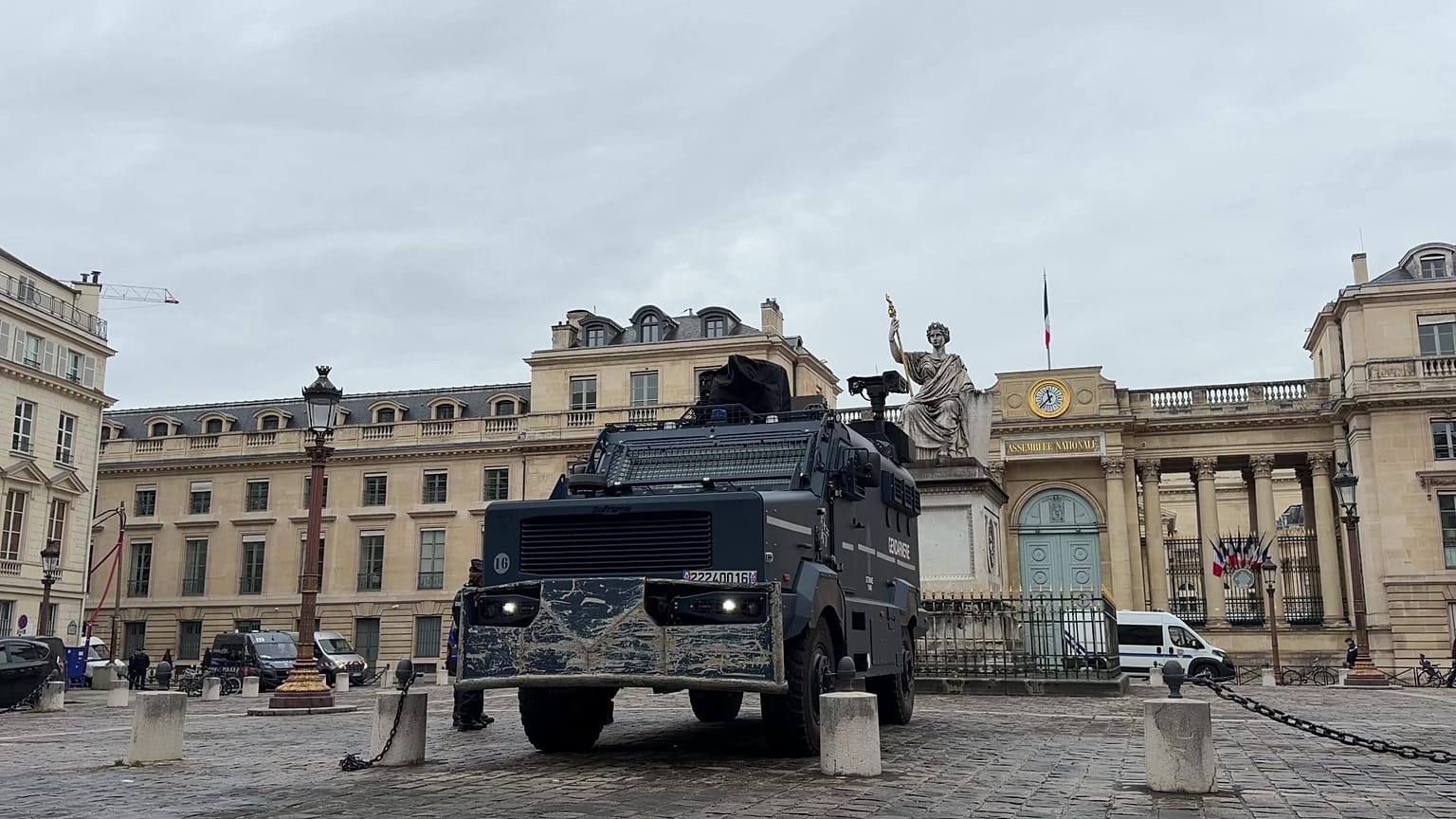
French police and gendarmes deployed Centaure armoured vehicles in Paris and Marseille on Saturday, 24 October 2026, as authorities prepared for demonstrations about the rising cost of living. In Paris, an armoured vehicle was positioned behind the National Assembly. In Marseille, security forces patrolled streets with armoured vehicles and a water cannon. The deployments took place amid concern that protests could turn violent. The article links those concerns to clashes, looting and arson reported in several French cities the previous weekend. It presents the visible security measures and their locations but does not identify the groups organising the demonstrations, specify their expected size, or give details about any arrests or incidents on Saturday. Nor does it provide statements from officials or protesters. The report’s focus is therefore on preparations by security forces ahead of planned protests, rather than on the demonstrations themselves or the underlying cost-of-living issues. The footage headline and accompanying text describe a heightened security posture in two major French cities, with armoured vehicles deployed and, in Marseille, a water cannon also present. The stated reason for the preparations is the possibility of renewed unrest following the violence of the previous weekend.
Entities: Paris, Marseille, France, French police, French gendarmes • Tone: neutral • Sentiment: negative • Intent: inform
24-10-2026
The France 24 report previews a planned wave of demonstrations across France on Saturday, 24 October 2026. The march is described as a coalition involving the Yellow Vests movement, trade unions and students. Its stated demands concern study conditions and purchasing power. The article says authorities expect about 70,000 police officers to be deployed as they prepare for the protests.
The stated security concern is that the demonstrations could be accompanied by looting and vandalism like those seen during unrest the previous Saturday. The report therefore presents the mobilization both as a protest over social and educational concerns and as a significant public-order operation for authorities. Its headline, “France braces for new protests,” emphasizes preparation and anticipation, while the brief description focuses on the protesters’ demands and the planned police presence.
The supplied page extract does not include a full article or further reporting on the organizers, the protest route, the expected number of demonstrators, or the authorities’ specific measures. It also does not provide details about the previous Saturday’s unrest. Accordingly, this summary is limited to the available France 24 description and does not infer how the demonstrations unfolded. The page lists Emmanuel Macron among its keywords, but the supplied article description does not explain his role in the planned march. The listed related headlines and videos are separate page content, not additional reporting within this article.
Entities: France, Yellow Vests movement, Trade unions, Students, J. Pownall • Tone: neutral • Sentiment: neutral • Intent: inform
24-10-2026
France 24 reports that a coalition involving the Yellow Vests movement, trade unions and students is planning marches across France on Saturday. The demonstrators are expected to raise concerns about study conditions and purchasing power. The article says authorities anticipate deploying approximately 70,000 police officers as they prepare for the demonstrations. Officials fear that the protests could be accompanied by looting and vandalism similar to unrest that occurred the previous Saturday. The report provides no further detail about the planned routes, organizers, specific demands, or expected locations beyond saying that marches will take place across France. It is presented as a brief video report, issued on October 24, 2026. Overall, the article focuses on the planned demonstrations, the coalition behind them, the issues motivating participants, and the scale of the police response. Its framing is factual and concise: it describes the protests and the authorities’ preparations without endorsing either the demonstrators or the government response.
Entities: France, Paris, Yellow Vests movement, Trade unions, Students • Tone: neutral • Sentiment: neutral • Intent: inform
24-10-2026
France is preparing for another day of protests over the cost of living, with additional police deployed across the country after violence followed demonstrations the previous Saturday. Government figures put last weekend’s turnout at more than half a million, and similarly large crowds may gather again. The protests began with high school students demonstrating against poor conditions and a lack of resources, then grew into a broader movement.
The article reports developments in several locations. In Lyon, where demonstrations have been banned, police used tear gas to disperse approximately 150 people who had gathered to protest. In Paris, the protest was due to start at Porte d’Italie after a last-minute change to the route. The city has also taken precautions against a repeat of last weekend’s looting: the Louvre, Orsay and Picasso museums are closed, and many luxury boutiques have shut and boarded up their windows.
France 24 journalist Elitsa Gadeva reports on the latest developments. The account focuses on the scale and spread of the demonstrations, the police response, and measures taken by public institutions and businesses. It presents a country preparing for renewed protests while seeking to prevent a recurrence of the violence and looting reported after the previous weekend’s marches.
Entities: Paris, Porte d’Italie, Lyon, France 24, Elitsa Gadeva • Tone: urgent • Sentiment: negative • Intent: inform
24-10-2026
France deployed up to 70,000 police officers nationwide on Saturday as protests over school funding and rising living costs continued, with authorities seeking to prevent a repeat of the looting, vehicle fires and attacks on public buildings seen the previous weekend. Paris officials changed the route of the main march, keeping it away from the city center, while some demonstrations in other cities were banned. Police used tear gas in Lyon, according to French media.
The protests began last month over staff shortages at a high school southeast of Paris and have expanded into a national movement involving students and workers. Demonstrators are calling for better schools, higher wages and pensions, and relief from everyday costs. More than 500,000 people marched the previous Saturday, and about 3,000 shops were damaged or looted over that weekend. Interior Minister Laurent Nuñez said the new deployment would include helicopters, armored vehicles and water cannons. He acknowledged that police had lost control in some cities during the earlier unrest and offered to resign, but President Emmanuel Macron refused the offer.
The demonstrations have disrupted businesses and cultural institutions. Paris landmarks closed, shopkeepers boarded up storefronts, and major museums—including the Louvre, Orsay Museum and Picasso Museum—shut for the day. Art Basel canceled its weekend program after opening to the public on Friday.
Macron met with high school representatives, who said he had promised changes to university admissions but insisted that protests should continue until concrete measures are announced. Student groups are seeking 250,000 additional higher-education places, an end to selection through the Parcoursup admissions system, more teachers, school and university repairs, increased student grants and a freeze on public student-housing rents. Separately, thousands marched in Orléans against the far right while Marine Le Pen’s National Rally held a congress there. Trade unions criticized bans on some rallies as violations of constitutionally protected freedom of expression.
Entities: France protests, Emmanuel Macron, Laurent Nuñez, Marine Le Pen, National Rally • Tone: neutral • Sentiment: negative • Intent: inform
24-10-2026
France is preparing to deploy about 70,000 police and security personnel nationwide on Oct 24, following violent disorder that accompanied protests a week earlier. The demonstrations began with high school students protesting learning conditions but have expanded into a broader movement fuelled by anger over the rising cost of living. Interior Minister Laurent Nunez said authorities were responding in part to calls for violence and looting circulating on social media. The government has distinguished protesters’ demands from looting, arson and ransacking. Courts have sentenced 217 people, about half first-time offenders, to prison, while President Emmanuel Macron has called for “the utmost severity” against delinquency.
Authorities have imposed restrictions or bans on demonstrations in several cities. In Orleans, where Marine Le Pen is scheduled to attend her National Rally party congress, counter-protests are expected to draw 20,000 to 30,000 people and will be kept out of the city centre. Restrictions are also planned in Lyon and Paris, where unions object to an alternative route for a permitted march. Marseille authorities made an exception to a protest ban for one union-organised demonstration. Major Paris museums, including the Louvre, will close, and the Art Basel fair will end early.
The restrictions have prompted criticism from Amnesty International and Human Rights Watch, which raised concerns about peaceful protest rights, police conduct and reports of children injured by crowd-control weapons. The deployment is about 20 per cent larger than the previous weekend’s security presence, amid questions about police preparedness and intelligence gathering.
The unrest comes six months before elections to replace Macron and has affected the political climate. A poll conducted after the violence showed Le Pen leading in the first round at 33 to 35 per cent and projected her winning a runoff against hard-left leader Jean-Luc Melenchon. The article also notes that France’s rising government debt is worrying investors.
Entities: France, Emmanuel Macron, Marine Le Pen, Laurent Nunez, Gerald Darmanin • Tone: analytical • Sentiment: neutral • Intent: inform
24-10-2026
The article reports escalating unrest in France and outlines the situation for readers who may be planning to travel there. Anti-government demonstrations that began in September as largely peaceful, student-led protests over the quality of public education intensified into widespread violence over the weekend before publication. Thousands of protesters clashed with police, set fire to municipal buildings and cars, and ransacked storefronts. Further demonstrations were planned for that weekend and the following two weeks.
According to the French Interior Ministry, the unrest had resulted in more than 2,000 arrests and nearly 1,000 injured police officers, making it the country’s worst rioting in decades. In an effort to restore control, authorities imposed curfews and bans on protests in parts of several cities on October 19. The cities named include Paris, Lyon, Marseille, Nice and Lille.
The supplied article text contains only this introductory account and does not include specific travel recommendations or a fuller guide for visitors. Its central message is that unrest had spread and intensified, with additional protests expected, while authorities were restricting movement and demonstrations in some urban areas.
Entities: France, Paris, Lyon, Marseille, Nice • Tone: neutral • Sentiment: negative • Intent: inform
24-10-2026
Paris shopkeepers and businesses in other French cities are reinforcing their premises ahead of a new round of anti-government demonstrations scheduled for Saturday. Their precautions follow violent unrest the previous weekend, when more than 2,500 people were arrested nationwide and about 450 Paris shops were damaged or looted, according to the French government. At Place de la République, businesses and public infrastructure were left with shattered windows, graffiti, and fire damage. Restaurant owner Abdul Mahmoud condemned vandalism while affirming the right to protest.
Authorities are preparing a major security response. Interior Minister Laurent Nuñez said about 70,000 police officers and gendarmes would be deployed across France, and warned that the government would act firmly against violence and looting. Restrictions on demonstrations have been imposed in several cities. President Emmanuel Macron said only marches organized by recognized trade unions would be allowed on Saturday, although hundreds of demonstrations and other actions were still planned. Some museums in Paris were set to close, and a Paris Saint-Germain home match was rescheduled.
Preparations extend beyond Paris. In Lyon, workers installed protective panels and fencing at public buildings and shops. In Orléans, businesses are boarding up along the planned protest route as the city hosts a congress of the far-right National Rally party. Organizers expect 20,000 to 30,000 opponents of the event, with nearly 3,000 police and security personnel deployed; left-wing groups also plan counter-protests.
The unrest began last month with high school student protests over school conditions and broadened into demonstrations involving wider groups angered by the rising cost of living and government policies. Protesters are divided over looting: some condemn it, while others defend it as an expression of grievances. Macron met student representatives on Friday, who said he had made commitments but urged continued mobilization. The protests have heightened political tensions ahead of France’s 2027 presidential election.
Entities: Paris, France, Abdul Mahmoud, Laurent Nuñez, Emmanuel Macron • Tone: analytical • Sentiment: negative • Intent: inform
24-10-2026
France deployed up to 70,000 police officers, backed by helicopters, armoured vehicles and water cannons, as protests over living costs, wages and education funding spread nationwide. The heightened security followed violent unrest the previous weekend, when about 3,000 shops were damaged or looted and public buildings and vehicles were attacked. Interior Minister Laurent Nuñez said police had arrested 135 people and seized weapons. He had acknowledged that police lost control in some cities and offered to resign, but President Emmanuel Macron refused the offer.
Authorities restricted a union-organised march in Paris to the southeastern outskirts, banned some rallies in other cities and closed major museums, including the Louvre and Orsay Museum. Shopkeepers boarded up storefronts, while police used tear gas to disperse demonstrators in Lyon. Trade unions condemned restrictions as violations of freedom of expression. In Orléans, thousands marched against the far right alongside a congress of Marine Le Pen’s National Rally.
The movement began last month over staff shortages at a high school but has broadened into demands for better public services and relief from rising costs. Students seek more university places, an end to selection through Parcoursup, additional teachers and repairs to educational institutions, as well as increased grants and a rent freeze in public student housing. Workers and unions are seeking higher wages and pensions. The protests are adding to pressure on Macron, whose popularity is described as being at its lowest since he took office in 2017. Student representatives said he promised to overhaul university admissions but insisted that protests should continue until concrete measures are announced.
The article also describes unrest and planned demonstrations elsewhere in Europe. Italy increased security in Milan and Rome; students in Albania planned another anti-government rally amid demands concerning education, tuition and corruption; and retirees and supporters marched in Spain to defend public pensions. The supplied article ends mid-sentence while beginning a reference to events in Lisbon.
Entities: France, Laurent Nuñez, Emmanuel Macron, Yellow Vests, National Rally • Tone: analytical • Sentiment: negative • Intent: inform
24-10-2026
The supplied page content does not include the live blog’s updates or any article body. It contains only the headline, site identification, a “10 Updates” label, and advertising and alert-prompt text. The headline states that 135 people were arrested as marches took place in France under tight security. No further information is provided about where the marches occurred, what prompted the protests, who organized or attended them, how the arrests happened, or how authorities and demonstrators responded. The article’s URL identifies it as an Al Jazeera live blog dated October 24, 2026, but the provided text does not allow its reported events or details to be independently assessed. Accordingly, this summary is limited to the headline and page metadata; it cannot represent the missing live updates. The headline’s framing indicates that the report concerns protests, marches, arrests, and security measures, and its apparent purpose is to provide news coverage. The available material does not establish a broader political context, the scale or duration of the demonstrations, or the consequences of the arrests. It also does not provide enough article text to reliably assess the article’s overall emotional sentiment beyond the neutral, informational framing of the headline.
Entities: France, French protests, Marches, 135 arrests, Tight security • Tone: neutral • Sentiment: neutral • Intent: inform
24-10-2026
A fire during riots on 17 October caused extensive damage to Limoges Town Hall, a historic building in central France. The town hall, which opened in 1883 and is listed as a historic monument, suffered a collapsed roof and severe damage to its interior, including corridors and stairwells. Parts of the building were destroyed. Images filmed on 19 October show the aftermath of the blaze, with firefighters also visible at the site. Authorities are investigating the incident as a suspected arson attack; the investigation is ongoing. The report documents the damage and the emergency response visible in the footage, while providing brief historical context about the building. It does not identify suspects, describe the cause of the fire beyond the suspected arson, or report on injuries or arrests.
Entities: Limoges, France, Limoges Town Hall, 17 October riots, Town hall fire • Tone: neutral • Sentiment: negative • Intent: inform
24-10-2026
Paris closed the Louvre and several other museums and cultural venues on Oct. 24 as a precaution ahead of planned demonstrations, leaving visitors unable to see major attractions including the Mona Lisa. The closures followed nationwide protests over the cost of living and deteriorating public services a week earlier, when demonstrations escalated into some of France’s worst street violence in years. The resulting damage and security concerns led authorities to impose localised curfews and shut public venues before the new protests.
The shutdown affected much of Paris’s cultural sector. The Orangerie, Jeu de Paume and Picasso museums were among the institutions closed, and the Tuileries Gardens complex was sealed off. The Paris Opera cancelled performances at both the Palais Garnier and Opera Bastille, citing safety concerns for staff and audiences. Organisers also cancelled the weekend programme of the Art Basel Paris fair.
Visitors expressed disappointment and frustration, particularly when they found multiple attractions closed or discovered that the Louvre grounds, including its glass pyramid, were inaccessible. Italian visitor Selena Bertoni said she had paid €50 for two tickets to the Musée d’Orsay and described the timing as bad. French visitor Heidi Rosar said the closures should have been communicated more clearly. Canadian visitor Don Nowschuk questioned whether authorities were overreacting, given the security presence in Paris. Some cultural institutions had posted closure warnings on Oct. 23, but several visitors said they had not expected museums to close or had not seen the notices.
The article presents the closures as a precautionary response to recent unrest and anticipated demonstrations, while showing their effects on tourists and the city’s cultural events.
Entities: Louvre, Mona Lisa, Paris, France, Selena Bertoni • Tone: neutral • Sentiment: negative • Intent: inform
24-10-2026
In this France 24 video segment, Andrew Smith, a historian of modern France at Queen Mary University of London, argues that policing and political blame cannot resolve the social and political tensions behind renewed unrest in France. His central point is that public order and social cohesion are not the same: although the state may be able to impose order, that ability does not give it the political capacity to address the grievances and demands motivating people to mobilize. Smith warns that neither greater policing nor assigning blame can substitute for social reform or the rebuilding of public trust. He frames the situation as a challenge to the French Republic, involving the relationship between social protest, presidential authority and democratic legitimacy. The scale of the demonstrations, he says, is significant and should not be treated as a spontaneous or accidental event: “500,000 people on the streets of France doesn't happen by chance.” The segment is presented amid renewed protests in France, including demonstrations involving students and other groups. Its emphasis is analytical rather than a detailed account of particular incidents or policy proposals: Smith identifies a broader political paradox and argues that addressing the causes of protest requires more than the use of state power. The article does not provide further detail about the specific reforms he recommends or the circumstances of each demonstration.
Entities: Andrew Smith, Queen Mary University of London, France, French Republic, Delano D'Souza • Tone: analytical • Sentiment: neutral • Intent: analyze
24-10-2026
The France 24 report describes student protests in France that began more than a month before publication. The initial demonstrations focused on problems in high schools: poor conditions, shortages of teachers, the pace of the school day, and inequalities between private and public education. According to the article, the movement has since expanded beyond students, becoming a broader mobilisation that includes the Yellow Vests, trade unions, and wider civil society. The report presents the demonstrations as a demand for concrete action from President Emmanuel Macron, as reflected in its headline. It also features commentary from Joseph Downing, a senior lecturer in politics and international relations at Aston University, who shares further details about the movement. The supplied article text does not include his commentary or describe specific government measures, protest events, or responses from Macron, so those details cannot be established from the material provided.
Entities: France, Emmanuel Macron, Joseph Downing, Aston University, Yellow Vests • Tone: analytical • Sentiment: neutral • Intent: inform