31-10-2026
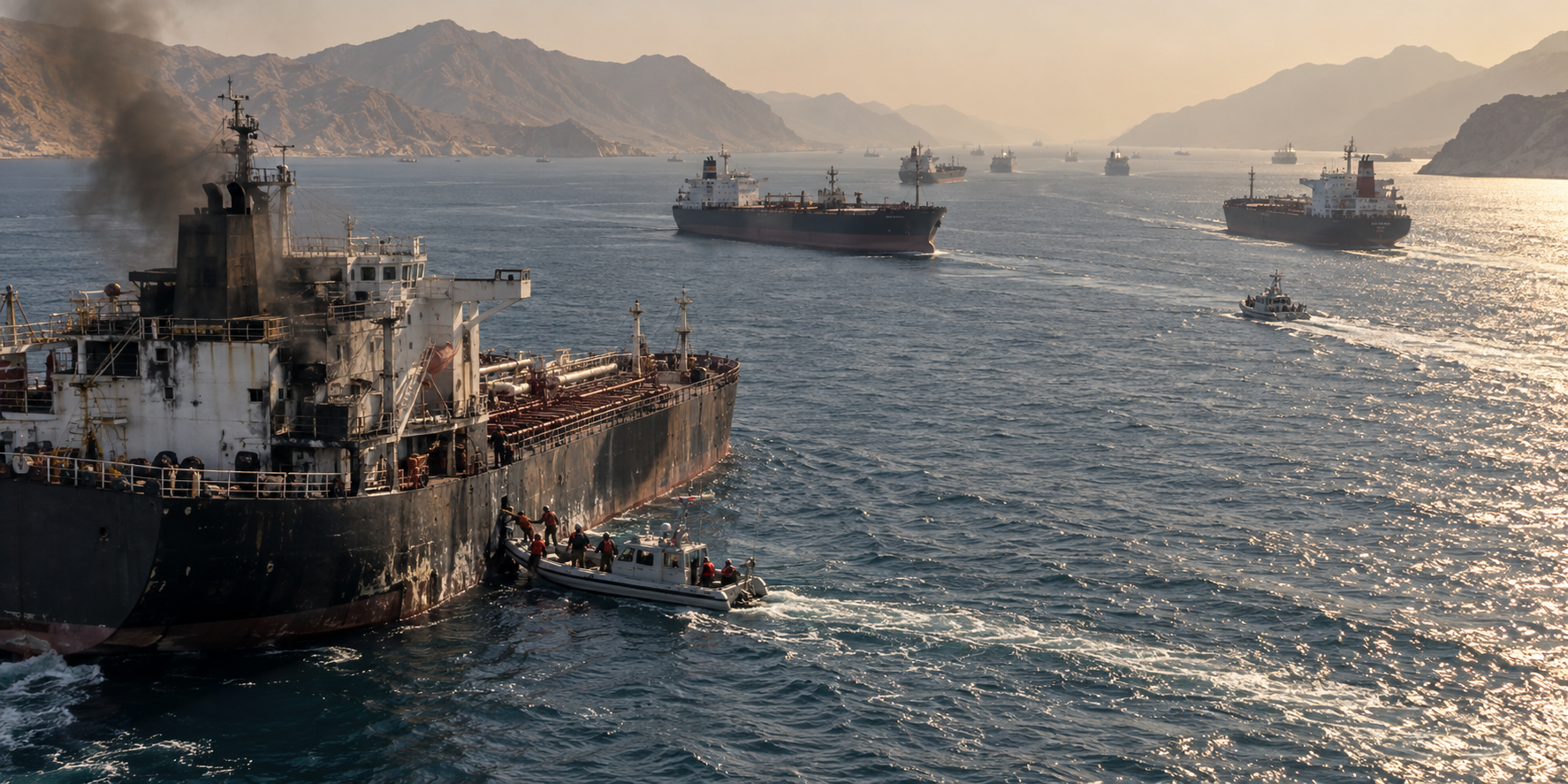
Al Jazeera reports that Iran’s Islamic Revolutionary Guard Corps (IRGC) says four tankers caught fire in the Strait of Hormuz after striking naval mines. According to the IRGC, the vessels were travelling on routes that Tehran describes as “unauthorised.” The report attributes the account to Iran’s Revolutionary Guard and does not independently establish the cause of the fires or provide details about the tankers, their operators, their crews, or the extent of any damage. It also does not identify the routes involved or explain why Iran considers them unauthorised. The item is dated 31 October 2026 and is presented as a short news video. Its central subject is a reported maritime incident in the Strait of Hormuz, with the account linking the fires to mines and to a dispute over shipping routes. The available text offers no response from the vessels’ owners or other authorities, and gives no additional information about casualties, rescue efforts, or effects on shipping. Accordingly, the report should be understood as a brief account of the IRGC’s claim rather than a fully corroborated explanation of the incident. The article’s language is concise and attribution-focused: it states what Iran’s Revolutionary Guard says, while leaving important details and independent confirmation unaddressed.
Entities: Iran, Islamic Revolutionary Guard Corps (IRGC), Strait of Hormuz, four tankers, naval mines • Tone: neutral • Sentiment: neutral • Intent: inform
31-10-2026
Oman said it rescued 25 crew members from the Panamanian-flagged merchant ship RITI after an attack caused a fire on board. The sailors received medical care, though Oman did not provide further details. The UK Maritime Trade Operations agency separately reported that a vessel about 40 nautical miles south of Iran’s Lavan Island was hit by an unknown projectile on Oct. 30, causing a fire. Its crew were reported safe, with no environmental impact reported at the time.
The incidents occurred amid escalating tensions over the Strait of Hormuz, a strategic waterway that normally carries about one-fifth of the world’s oil. Iran has restricted maritime traffic since the regional war began on Feb. 28 with US-Israeli strikes on Iran. The Islamic Revolutionary Guard Corps said three oil tankers had been stopped after unspecified incidents or mine strikes. It accused the vessels of using a route Iran considers unauthorized, switching off navigation systems, and disregarding radio warnings. Iran requires ships to use a designated route and coordinate passage with its armed forces. The IRGC later said a supertanker carrying two million barrels of oil had stopped after an explosion that it attributed to a naval mine, describing it as the third tanker to explode and catch fire that day.
US Central Command chief Brad Cooper said US forces had cleared the strait’s internationally recognized primary transit routes of Iranian sea mines and would remain to keep them clear. He also said Washington had helped Gulf countries export more than 1.5 billion barrels of crude through the strait since summer. The United States has imposed a counterblockade on Iranian ports in response to Iran’s blockade, further limiting Iran’s oil exports and trade. The competing claims and restrictions underscore the strait’s role as a flashpoint in the conflict.
Entities: Oman, RITI, Strait of Hormuz, Gulf of Oman, Iran • Tone: analytical • Sentiment: negative • Intent: inform
31-10-2026
The supplied page is a live-news roundup from The National, updated on October 31, 2026, at 5:41 a.m. Its lead headline reports that attacks on ships transiting the Strait of Hormuz reached their highest monthly level since the start of the war. The provided text does not include the underlying article reports, figures, named sources, or explanations, so it is not possible to establish how many attacks occurred, who was responsible, or what evidence supports the comparison.
Other listed updates point to a widening regional and diplomatic story. They say Israel’s army is revising its target list ahead of possible strikes on Iran; Qatari mediators have returned to Tehran as efforts to reach a deal continue; and a Saudi-led coalition has destroyed drones launched by the Houthis. A tanker was also struck by an unidentified projectile in the Strait of Hormuz. The headlines further report that Donald Trump expects the Iran war to end soon, while oil prices are on track for a fourth consecutive monthly gain amid fears of renewed escalation.
The page’s video links broaden the focus to Gulf security, diplomacy, US policy, Yemen, Israeli politics, and energy routes. These are teasers rather than full reports in the supplied material. Overall, the page presents a snapshot of heightened maritime and regional tensions alongside ongoing diplomatic initiatives and concerns about possible further escalation and its effects on oil markets. The available text supports a concise account of the headlines, but not a detailed assessment of events or their causes.
Entities: The National, Strait of Hormuz, Iran war, Iran, Israel • Tone: neutral • Sentiment: neutral • Intent: inform