31-03-2026
The article is a transcript of an interview with Iran policy analyst Karim Sadjadpour and former CENTCOM commander Gen. Frank McKenzie on 'Face the Nation with Margaret Brennan'. They discussed the ongoing war in Iran, the role of mediators, and the potential for a negotiated settlement. Sadjadpour stated that the Iranian regime is not willing to compromise due to rising oil prices and declining American public opinion about the war. McKenzie assessed that Iran's activation of its militias in Yemen is not a game-changer and that the US has the capability to prevent disruptions to the Strait of Hormuz. The conversation also touched on the potential for a ceasefire, the Iranian regime's ideology, and the likelihood of a US-Iran normalization.
Entities: Karim Sadjadpour, Gen. Frank McKenzie, Margaret Brennan, Iran, Pakistan • Tone: analytical • Sentiment: negative • Intent: inform
31-03-2026
The article discusses the recent developments in the Iran war and their impact on the financial markets. The Pentagon has denied a report that U.S. Defense Secretary Pete Hegseth sought to make a defense investment ahead of the war outbreak. Meanwhile, U.S. President Donald Trump has made conflicting statements about the war, causing volatility in the oil markets. Federal Reserve chair Jerome Powell has stated that inflation expectations are grounded and there is no need to hike interest rates. Billionaire investor Bill Ackman has urged investors to buy quality stocks, saying it's one of the best times in a long time.
Entities: Pete Hegseth, Iran, Donald Trump, Jerome Powell, Bill Ackman • Tone: neutral • Sentiment: negative • Intent: inform
31-03-2026
The article discusses the impact of President Donald Trump's reported comments on the Iran war on oil prices. Trump told his aides he was willing to end U.S. operations against Iran even if the Strait of Hormuz remained shut. Oil prices swung in volatile trading as traders assessed Trump's statements. Experts cited in the article believe Trump's threats are an attempt to conclude a deal and that a large-scale bombing of Iran is unlikely. The Iran war has entered its fifth week, with hostilities escalating across the region, and shipping traffic through the Strait of Hormuz has virtually ground to a halt.
Entities: Donald Trump, Iran, Strait of Hormuz, Matt Gertken, BCA Research • Tone: neutral • Sentiment: negative • Intent: inform
31-03-2026
U.S. Defense Secretary Pete Hegseth's broker at Morgan Stanley attempted to make a multimillion-dollar investment in BlackRock's iShares Defense Industrials Active ETF in February, ahead of the Iran war. The Pentagon denied the report, calling it 'entirely false and fabricated.' The ETF, which includes major defense companies like RTX Corp, Lockheed Martin, and Northrop Grumman, has lost 12.4% in the past month. The U.S. war against Iran continues, with the Pentagon preparing for ground operations and Trump threatening to target Iran's infrastructure.
Entities: Pete Hegseth, Morgan Stanley, BlackRock, iShares Defense Industrials Active ETF, RTX Corp • Tone: neutral • Sentiment: negative • Intent: inform
31-03-2026
European Central Bank President Christine Lagarde warns that the risks associated with the Iran war and its impact on energy prices are being underestimated. She cautions that expectations of a swift return to normal may be overly optimistic, citing the International Energy Agency's assessment that the current energy shock is the largest ever. Lagarde's comments suggest that the surge in energy prices will likely push up the cost of living, although she notes that with luck, the Iran war may not cause a recession.
Entities: Christine Lagarde, European Central Bank, International Energy Agency, Iran, Donald Trump • Tone: neutral • Sentiment: negative • Intent: inform
31-03-2026
The article discusses how Iran is benefiting financially from the third Gulf war, which was triggered by Donald Trump's actions. The war has disrupted oil supplies from the Middle East, causing a global shortage and price increase. Despite the conflict, Iran is making a profit from selling its crude oil, with the help of China and the Revolutionary Guards. The article highlights that the war has damaged the reputation of Gulf states as reliable oil suppliers, with all states slashing output and seeing export proceeds plunge. The global economic implications of the war are also discussed, including the potential for increased inflation and the impact on energy prices.
Entities: Iran, Donald Trump, China, Revolutionary Guards, Middle East • Tone: analytical • Sentiment: neutral • Intent: inform
31-03-2026
The article discusses the potential for Donald Trump to send troops into Iran, with the author, Shashank Joshi, noting that the political costs of a land war could be 'extremely high'. The piece is part of The Economist's 'The War Room' newsletter and touches on Trump's approach to foreign policy, particularly with regards to Iran. It also references other related articles and topics, such as Trump's diplomacy style and the risks associated with his strategy towards Iran.
Entities: Donald Trump, Iran, Shashank Joshi, The Economist, United States • Tone: analytical • Sentiment: neutral • Intent: inform
31-03-2026
The article analyzes the ongoing conflict between the US, Israel, and Iran, questioning the effectiveness of the US military might in achieving a decisive victory. Despite having a significant military advantage, the US is constrained by the risk of escalating the conflict and causing significant economic damage. Iran has managed to gain leverage by closing the Strait of Hormuz, a critical energy export route, and is using this to impose economic costs on the US and its allies. The article suggests that the conflict is becoming a contest of leverage, with the US facing growing political and economic costs. The author argues that the US needs to consider alternative strategies, such as lifting sanctions on Iranian oil exports, to bring the conflict to a negotiated end.
Entities: Donald Trump, Iran, United States, Israel, Strait of Hormuz • Tone: analytical • Sentiment: neutral • Intent: inform
31-03-2026
The US is indirectly negotiating with Iranian officials through Pakistan and Turkey, but it's unclear if they have the authority to make a deal. President Trump is optimistic, calling the new negotiators 'more reasonable,' despite Tehran calling the US' 15-point proposal 'unrealistic.' The Iranian regime is severely weakened, with key officials killed, and the status of Supreme Leader Mojtaba Khamenei is unknown. The US is testing the negotiators' power, but some Iranian officials distrust the US due to past broken agreements. The talks are considered preliminary, and an in-person meeting is unlikely soon. The war continues, with the US striking 11,000 targets and sinking 150 naval vessels.
Entities: Donald Trump, Iran, US, Pakistan, Turkey • Tone: neutral • Sentiment: negative • Intent: inform
31-03-2026
The article reports on a US Air Force E-3 Sentry aircraft being damaged in an Iranian strike at Saudi Arabia's Prince Sultan Air Base. Images circulating online show the badly damaged aircraft, which CNN geolocated to the same spot where it was seen earlier in the month. The article also touches on other news stories, including Iran's threat to target US and Israeli-affiliated universities, Israeli settler violence in the West Bank, and a CNN exclusive interview with Fidel Castro's grandson. Additionally, the article discusses the potential for the US to seize Kharg Island off Iran's coast to disrupt the country's oil exports.
Entities: US Air Force, E-3 Sentry aircraft, Saudi Arabia, Prince Sultan Air Base, Iran • Tone: neutral • Sentiment: negative • Intent: inform
31-03-2026
The article discusses Pakistan's efforts to broker peace talks between the US and Iran amidst escalating conflict in the Middle East. The conflict has resulted in thousands of deaths and billions of dollars in economic losses. Pakistan's Foreign Minister Ishaq Dar met with top diplomats from Turkey, Saudi Arabia, and Egypt to discuss crisis talks. Pakistan has expressed its willingness to host US-Iran peace talks, with both countries expressing confidence in Pakistan's ability to facilitate the talks. However, the situation remains fluid and dangerous, with the risk of the war expanding further.
Entities: Pakistan, US, Iran, Saudi Arabia, Israel • Tone: neutral • Sentiment: negative • Intent: inform
31-03-2026
Iran's parliament speaker, Mohammad Baqer Qalibaf, has vowed that the country will never accept 'humiliation' from the US, in response to reports that the Trump administration is considering deploying ground forces to Iran. The US is reportedly preparing for potential military action against Iran, including limited raids and seizures of territory, in response to Iran's nuclear program and its control over the Strait of Hormuz. The situation remains tense, with the US having dispatched thousands of Marines to the Middle East and Iran rejecting a US ceasefire proposal.
Entities: Iran, United States, Mohammad Baqer Qalibaf, The Washington Post, Trump administration • Tone: neutral • Sentiment: negative • Intent: inform
31-03-2026
The article discusses the necessary terms for a cease-fire deal between the US, Israel, and Iran. The author argues that Iran must agree to destroy its nuclear capabilities, open the Strait of Hormuz, and commit to internal reforms, including guarantees of rights to peaceful protest. The US and Israel will not end the military operation until Iran meets these conditions, and even then, sanctions will remain in place until Iran demonstrates years of good behavior. The author draws parallels with the 1975 Helsinki Accords, which led to reforms in the Soviet Union.
Entities: Iran, US, Israel, Donald Trump, Strait of Hormuz • Tone: analytical • Sentiment: negative • Intent: persuade
31-03-2026
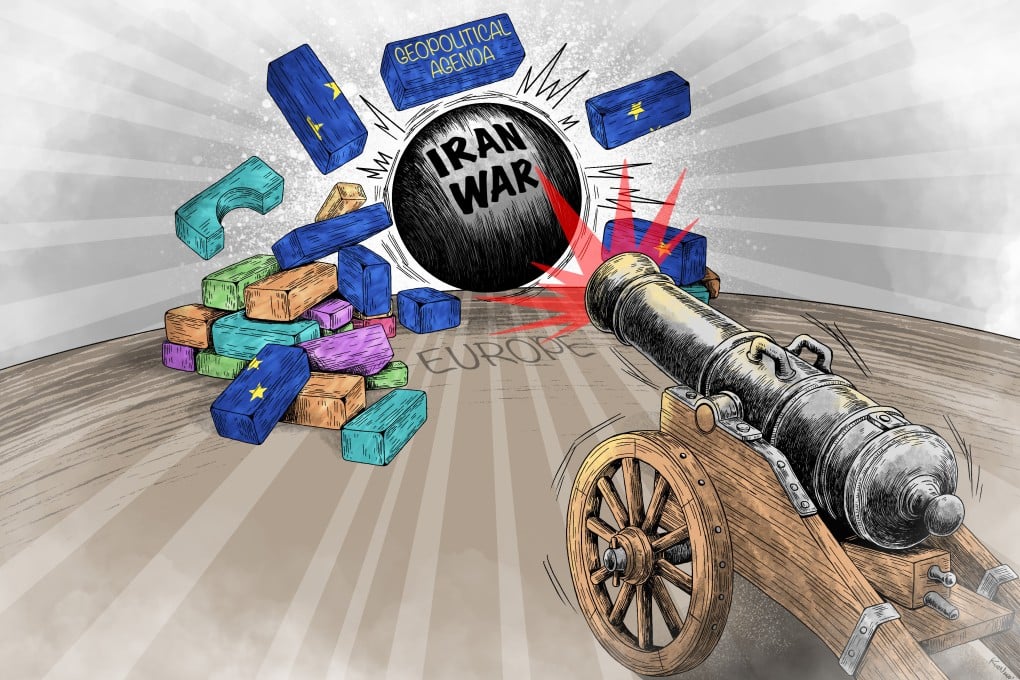
The article discusses how the recent conflict between the US, Israel, and Iran has dominated Europe's geopolitical agenda, overshadowing other pressing issues such as trade with China and support for Ukraine. European leaders have been divided in their responses, with some like German Chancellor Friedrich Merz initially supporting regime change in Iran, while others like Spanish Prime Minister Pedro Sanchez condemned the war as illegal. As the situation escalated, European countries began to focus on the potential consequences for their own economies and security, including soaring energy prices and the prospect of a new wave of displaced migrants.
Entities: Europe, Iran, United States, Israel, European Commission • Tone: analytical • Sentiment: negative • Intent: inform
31-03-2026
Gulf allies of the United States, led by Saudi Arabia and the United Arab Emirates, are urging President Donald Trump to continue the war against Iran, arguing that Tehran has not been weakened enough by the month-long US-led bombing campaign. Officials from Saudi Arabia, the UAE, Kuwait, and Bahrain have conveyed in private conversations that they do not want the military operation to end until there are significant changes in the Iranian leadership or a dramatic shift in Iranian behavior. Trump is vacillating between claiming that Iran's decimated leadership is ready to settle the conflict and threatening to further escalate the war if a deal is not reached soon, while struggling to rally public support at home for a war that has left over 3,000 dead across the Middle East and is shaking the global economy.
Entities: Donald Trump, Saudi Arabia, United Arab Emirates, Iran, Tehran • Tone: neutral • Sentiment: negative • Intent: inform