29-09-2026
Iranian Foreign Minister Abbas Araghchi met Qatari mediators in New York to discuss Iran’s proposal to reopen the Strait of Hormuz. He said the mediators would relay ideas to Washington and that he expected a response soon, though he planned to return to Tehran. Iran’s proposal calls for the United States to release frozen Iranian funds, lift sanctions and end its blockade of Iranian ports. Tehran says those steps could be completed within days, allowing the strait to reopen and negotiations on a final agreement—including Iran’s nuclear programme—to begin. US President Donald Trump rejected the proposal as unacceptable.
A US official described ongoing indirect talks as “positive and constructive,” but said no agreement to end the war would be reached unless Iran’s nuclear programme was addressed. The official said Trump was willing to ease sanctions and release frozen funds in exchange for nuclear progress, while noting that the sides remained apart over the timing and sequence of commitments. Washington also accused Iran of violating a June memorandum by firing on commercial vessels; Tehran denies this and says the US failed to meet its own commitments.
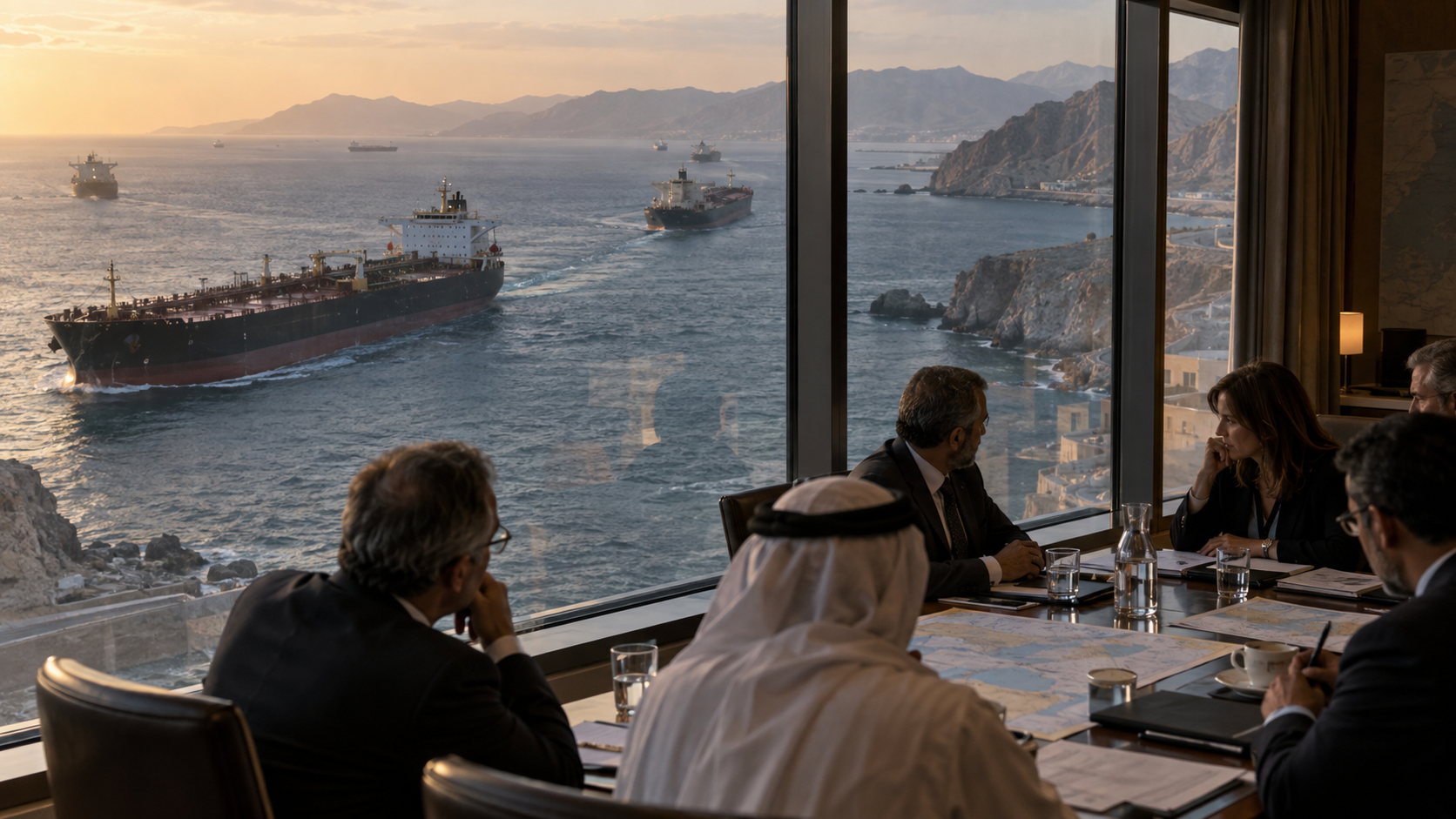
The conflict and Iran’s closure of the Strait of Hormuz have sharply curtailed shipping and pushed oil prices above $100 per barrel. September crude exports from major Middle Eastern producers rebounded to 12.8 million barrels per day, but remained well below February’s 18.8 million. Some vessels have travelled along an Oman coast route under US military supervision. The United States has also blockaded Iranian ports and threatened secondary sanctions affecting aviation-related entities.
Trump said the United States would win the war and predicted it would end quickly, while Iranian leaders issued defiant warnings. Supreme Leader Mojtaba Khamenei said foreign forces would be driven from the region, and senior military officials warned of a severe response to threats against Iran. Iran’s navy also maintained that the Strait of Hormuz remained closed.
Entities: Abbas Araghchi, Donald Trump, Mojtaba Khamenei, Qatar, United States • Tone: analytical • Sentiment: negative • Intent: inform
29-09-2026
The live report describes renewed indirect communication between the United States and Iran amid a seven-month war, while highlighting uncertainty over whether diplomacy can produce an agreement. President Donald Trump confirmed that the countries exchanged messages through mediators on September 28, but gave no details and said, “We’re going to win.” Iranian Foreign Minister Abbas Araghchi said Tehran was prepared both to resume fighting and to pursue diplomacy, leaving the choice to Trump.
The central obstacle is Iran’s nuclear program. A U.S. official said discussions through mediators were positive and constructive, and that Trump might offer sanctions relief and release frozen Iranian funds if there is concrete nuclear progress. The official stressed, however, that no deal would be reached without addressing nuclear issues. The sides reportedly disagree over the timing and sequence of commitments, and the U.S. is seeking assurances after Iran allegedly violated an earlier memorandum of understanding. Trump denied offering Iran anything, responding to reports that he was open to sanctions relief.
The report also covers the wider consequences of the conflict. Uncertainty over the Strait of Hormuz has contributed to oil-price volatility and rising U.S. bond yields, while high fuel costs are affecting motorists, delivery workers and farmers. Economists warn that a prolonged U.S. ban on diesel exports could ultimately raise domestic gasoline prices, despite potentially lowering costs at first. In Yemen, the defense ministry claimed its forces struck Houthi targets 356 times in 24 hours. Separately, new U.S. sanctions have disrupted flights from Iran, leaving some travelers trying to reach Turkey by road. The excerpt ends during a report about an Israeli court releasing Palestinian-American journalist Naqaa Hamed on bail after nearly two weeks in detention.
Entities: Donald Trump, Abbas Araghchi, Iran, United States, Strait of Hormuz • Tone: analytical • Sentiment: negative • Intent: inform
29-09-2026
U.S. and Iranian officials have renewed indirect diplomatic efforts to end the seven-month war, meeting separately with mediators on Monday. Iranian Foreign Minister Abbas Araghchi met Qatari mediators in New York and said Tehran was awaiting Washington’s response to a revised ceasefire proposal, which he expected by Tuesday. Iran’s plan calls for the United States to release frozen Iranian funds, lift sanctions on Iranian oil, and end its naval blockade of Iranian ports within four to five days. Nuclear negotiations would begin within seven days. Iran has linked reopening the Strait of Hormuz to those steps. President Donald Trump rejected the proposal as “unacceptable” on Sunday, but said Monday that U.S. officials had also spoken with mediators and predicted the conflict would end quickly.
Meanwhile, oil-export data suggests some recovery in regional supply. Middle Eastern crude exports have risen to around their highest level since the war began in February, reaching just under 80% of pre-conflict levels, according to Kpler. However, traffic through the Strait of Hormuz remains substantially below normal: Saturday’s clearance rate was 10,591 kilobarrels per day, compared with a prewar baseline of 17,133.
The conflict’s effects are also being felt in U.S. fuel markets. Retail diesel prices are near a record $6.53 per gallon, and the Trump administration is again considering a diesel export ban after recently distancing itself from an earlier version. Kpler estimates such a ban would keep about 1.2 million barrels per day in the United States and could overwhelm Gulf Coast storage capacity.
Entities: Abbas Araghchi, Donald Trump, Iran, United States, Qatar • Tone: analytical • Sentiment: neutral • Intent: inform
29-09-2026
US President Donald Trump denied that he had offered Iran sanctions relief or the release of frozen Iranian funds in return for concessions on its nuclear programme. In a Sept 28 post on Truth Social, he called the reports “untrue” and wrote, “I offered them nothing.” Axios had reported, citing unnamed US officials, that Trump was willing to provide relief in exchange for “concrete” steps by Iran. CNN separately reported, also citing an unidentified US official, that sanctions relief and frozen funds could be part of a final deal if Iran made “concrete progress” on the nuclear issue.
The reports came as US and Iranian officials engaged with mediators in a renewed effort to end a seven-month conflict. The talks took place on Sept 28, but the article does not describe a specific agreement or outcome. The war began on Feb 28, when the US and Israel attacked Iran; Tehran responded with strikes on Israel and Gulf states hosting US bases. US-Israeli strikes in Iran and Israeli attacks in Lebanon have killed thousands and displaced millions, according to the article.
Trump has described weakening Iran’s nuclear capabilities as one of the war’s objectives, while offering shifting goals and timelines for the conflict. Iran says it is not seeking nuclear weapons and maintains that, as a party to the Nuclear Non-Proliferation Treaty, it has the right to develop nuclear technology for peaceful purposes. The article notes that the US possesses nuclear weapons. It presents the disagreement over possible sanctions relief and nuclear conditions amid continuing conflict and diplomatic efforts.
Entities: Donald Trump, Iran, Tehran, United States, Israel • Tone: neutral • Sentiment: neutral • Intent: inform
29-09-2026
The supplied material identifies an Al Jazeera liveblog about the US-Israel war on Iran. Its headline says that US President Donald Trump stated he had not offered Tehran sanctions relief. The page text also includes the label “24 Updates,” indicating a live-update format. However, the article body and the individual updates are not included in the provided content. As a result, there is no supporting detail about what Trump said, when or where he said it, what prompted the denial, whether Tehran responded, or how sanctions and the broader conflict were discussed. The headline establishes the central reported point—Trump’s denial that he offered sanctions relief to Iran—but does not provide enough information to assess its context or implications. The remaining supplied text consists of advertisements and a prompt asking readers to enable instant alerts, which are website elements rather than article content. This summary is therefore limited to the headline and page label; it does not infer events or claims beyond those explicitly provided.
Entities: Donald Trump, Iran, Tehran, United States, Israel • Tone: neutral • Sentiment: neutral • Intent: inform