27-06-2026
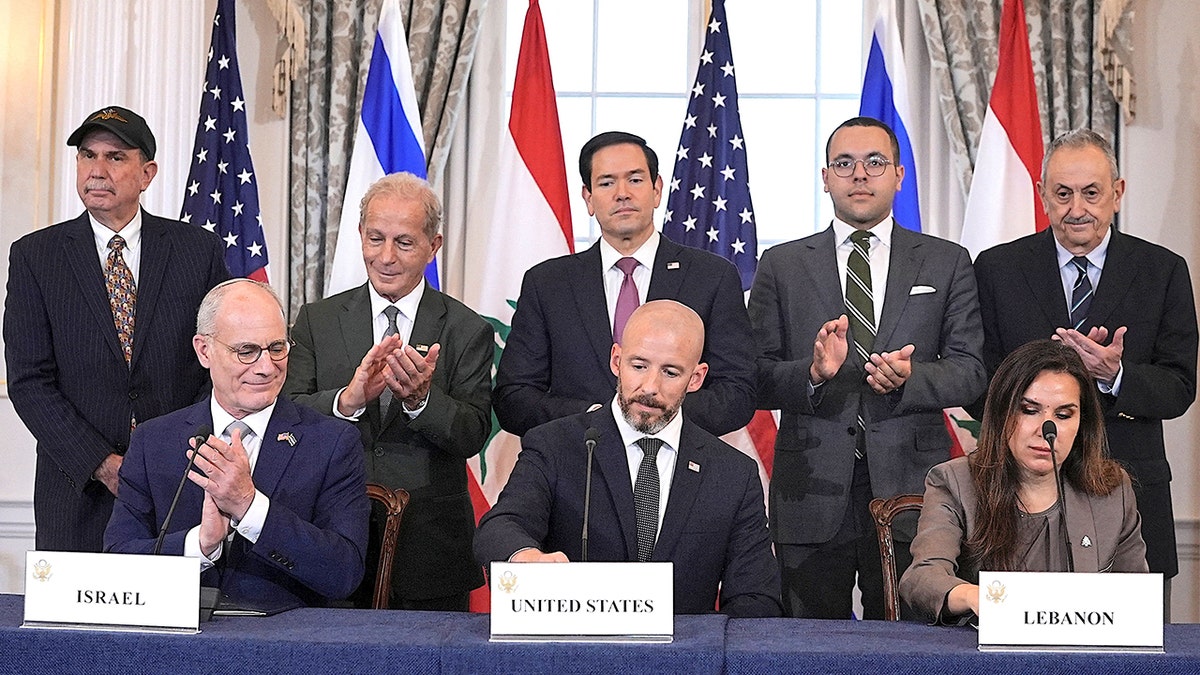
Israel and Lebanon have signed a US-brokered 14-point framework agreement in Washington intended to establish a path toward lasting peace, security, and coordination between the two countries. The accord comes despite continued limited fighting between Israeli forces and Hezbollah in southern Lebanon, and despite the fact that Hezbollah itself is not a signatory. The framework calls for both states to affirm each other’s right to live in peace, to end hostile actions in political and legal fora, to work on releasing detainees and returning remains, and to support the Lebanese Armed Forces in restoring authority over all Lebanese territory once non-state armed groups are disarmed and their infrastructure dismantled. It also proposes a US-backed military coordination group to help implement the plan.
Although the signing was presented as a diplomatic step forward, the situation on the ground remains fragile. Israeli Prime Minister Benjamin Netanyahu said Israeli forces would stay in southern Lebanon until Hezbollah disarms, while Lebanon’s President Joseph Aoun described the deal as a first step toward restoring sovereignty. The article notes that Israeli strikes and cross-border fire have repeatedly threatened ceasefire efforts, and that the conflict has caused severe casualties and displacement in Lebanon as well as deaths among Israeli soldiers and civilians. The agreement also reflects Washington’s broader concern that instability involving Hezbollah could interfere with wider regional diplomacy, including US efforts to manage tensions with Iran. The article closes by highlighting the US role in the negotiations and the high stakes for a durable settlement.
Entities: Israel, Lebanon, Hezbollah, US, Marco Rubio • Tone: analytical • Sentiment: neutral • Intent: inform
27-06-2026
The article reports that the United States carried out strikes on Iranian targets after a drone attack on a cargo ship in the Strait of Hormuz, escalating tensions between Washington and Tehran. According to US Central Command, the strikes hit missile and drone storage facilities and coastal radar positions in response to what it called an Iranian attack on commercial shipping that violated a ceasefire. Iran disputed the US account, saying the ship was traveling on an unauthorized route and accusing the US of launching an airstrike under false pretenses. The Islamic Revolutionary Guard Corps claimed it retaliated against US military positions, though it gave no details. The confrontation comes against the backdrop of a fragile truce and a June memorandum of understanding aimed at keeping the Strait of Hormuz open to toll-free commercial traffic. The article highlights the strategic importance of the waterway for global trade and oil shipments, the impact of the shutdown on prices and shipping, and the uncertainty around whether the ceasefire remains intact. President Trump refused to say how the US would respond next, while Vice-President JD Vance and Iranian officials exchanged warnings through public statements. The article also notes that the attack hit the Singapore-flagged Ever Lovely and caused the International Maritime Organization to pause an evacuation effort for stranded sailors in the region.
Entities: United States, Iran, Donald Trump, JD Vance, US Central Command (Centcom) • Tone: urgent • Sentiment: negative • Intent: inform
27-06-2026
Iran’s Revolutionary Guards reportedly attacked a Singapore-flagged commercial vessel in the Strait of Hormuz with a drone, according to a U.S. official, escalating tensions around a newly signed U.S.-Iran shipping memorandum and raising concerns about the safety of the vital maritime corridor. The strike damaged the ship’s bridge off the coast of Dahit, Oman, but caused no reported casualties or environmental damage. In response, the U.N. International Maritime Organization temporarily paused a newly launched evacuation plan intended to move vessels and mariners stranded in the Persian Gulf, saying it needed to reconfirm that safety guarantees were still in place.
The article explains that the Strait of Hormuz is a strategic chokepoint through which about one-fifth of the world’s oil normally passes, and that shipping through the area had begun to recover after months of conflict. Under the U.S.-Iran memorandum of understanding, Iran was expected to help ensure toll-free safe passage for 60 days, and vessel traffic had increased sharply in the days after the deal. However, long-running disputes remain over which routes ships should take and whether Iran can demand permission, tolls, or insurance-related conditions. Iran’s maritime authority warned that ships outside its designated framework would not be covered by safe-passage guarantees or insurance. U.S. officials, including Secretary of State Marco Rubio, said the administration would judge Iran by its actions, warning that threats to shipping would violate the agreement and create a serious problem.
Entities: Iran, Iran’s Revolutionary Guards, Strait of Hormuz, Singapore, U.S. government • Tone: analytical • Sentiment: negative • Intent: inform
27-06-2026
The article reports that the U.S. military carried out strikes on Iranian targets after an Iranian drone attack on a commercial cargo ship in the Strait of Hormuz, escalating tensions and testing a fragile ceasefire between the two countries. U.S. Central Command said it targeted missile and drone storage facilities and radar sites in response to what it called Iran’s “dangerous behavior” and an unlawful attack on commercial shipping. A U.S. official said American aircraft hit four targets along the Strait of Hormuz and on Qeshm Island, and the operation has concluded.
The trigger for the strikes was an attack a day earlier by Iran’s Islamic Revolutionary Guard Corps on a Singapore-flagged cargo ship off the coast of Oman. The vessel was damaged but no casualties or environmental harm were reported. President Trump condemned the incident as a “foolish violation” of the ceasefire and suggested Iran would face consequences. The article frames the incident as a potential setback to efforts to reopen the Strait of Hormuz to normal shipping and stabilize regional trade and oil markets.
The piece also explains that the U.S. and Iran still disagree over how passage through the strait should work, including whether ships must use a southern route near Oman or a northern route closer to Iran, and whether tolls could be imposed after a 60-day agreement expires. Iran’s maritime authority warned that travel outside its designated framework would not receive safe-passage guarantees or insurance coverage. The article ends by noting uncertainty over how the renewed strikes will affect upcoming U.S.-Iran talks on Iran’s nuclear program, while Vice President JD Vance warned that violence would be met with violence.
Entities: United States, Iran, Strait of Hormuz, U.S. Central Command (CENTCOM), Islamic Revolutionary Guard Corps (IRGC) • Tone: analytical • Sentiment: negative • Intent: inform
27-06-2026
Secretary of State Marco Rubio announced a U.S.-brokered framework agreement between Israel and Lebanon that both governments described as a major step toward peace and security. The deal, mediated and supported by the United States, is presented by Rubio and Israeli Prime Minister Benjamin Netanyahu as a rejection of Iranian influence in Lebanon and a potential path toward broader diplomatic normalization between two countries that remain formally at war. Netanyahu said the agreement is a serious blow to Iran and signaled that neither Hezbollah nor any other armed group should have a role in southern Lebanon. Lebanese President Joseph Aoun thanked the Trump administration for facilitating the negotiations and supporting Lebanon’s position.
The article frames the agreement as potentially historic but fragile. Supporters argue it could strengthen Lebanese sovereignty, reduce Hezbollah’s power, and create opportunities for long-term stability, economic cooperation, and shared security. However, experts caution that the deal’s value will depend entirely on implementation and on whether the Lebanese state can assert control without interference from Hezbollah or other external actors. The article emphasizes that Hezbollah, backed by Iran, has long destabilized the region and fought multiple wars with Israel. Some analysts describe the agreement as more of a ceasefire framework than a true peace deal, warning that Iran is likely to object and may try to undermine it. Overall, the story presents the accord as a significant diplomatic opening that could alter regional dynamics, while underscoring the risks of sabotage and the uncertainty surrounding enforcement.
Entities: Marco Rubio, Benjamin Netanyahu, Israel, Lebanon, United States • Tone: analytical • Sentiment: neutral • Intent: inform
27-06-2026
The article reports that the United States carried out strikes on Iran after a drone attack on a cargo ship in the Strait of Hormuz, marking a major escalation in an already fragile interim understanding between Washington and Tehran. According to the piece, the U.S. military targeted missile and drone sites as well as coastal radar installations in Iran after President Donald Trump said the ship attack violated the ceasefire. The strikes came after a period of tentative de-escalation and negotiations aimed at reopening the strategic waterway and working toward a permanent end to months of war. The article emphasizes how sensitive the Strait of Hormuz remains as a global shipping chokepoint and bargaining tool, noting that maritime traffic had been slowly recovering before the attack slowed normalization again. It also reports reactions from Iranian officials, including warnings that Iran controls the strait, and from Vice President JD Vance, who said violence would be met with violence but suggested that disagreements should be handled by phone. The piece broadens the regional picture by mentioning a separate Israel-Lebanon agreement framed as a step toward peace, underscoring how multiple conflicts in the Middle East remain in flux while the U.S.-Iran confrontation intensifies.
Entities: United States, Iran, Strait of Hormuz, President Donald Trump, U.S. Central Command • Tone: urgent • Sentiment: negative • Intent: inform
27-06-2026
Vice President JD Vance used a Friday appearance on Bill Maher’s HBO show to argue that the United States would come out ahead whether or not Iran agrees to a final deal over its nuclear program. Vance said that if no agreement is reached, Iran’s nuclear program would still be destroyed and the country would remain weaker, meaning “America wins either way.” He framed the Trump administration’s approach as an effort to offer Iran a chance to fundamentally change its behavior toward the West, while making clear that the United States still has leverage if Iran refuses to cooperate.
The article also describes Vance’s recent trip to Switzerland, where he met with Iranian representatives in talks mediated by Pakistani and Qatari officials. Those discussions were presented as part of a broader memorandum of understanding between President Trump and Iranian President Masoud Pezeshkian intended to halt fighting and begin 60 days of negotiations for a larger agreement to end Iran’s nuclear ambitions. Vance said the goal was to “transform our relationship” with Iran if its leadership gave up regional destabilization and nuclear ambitions.
The piece then shifts to a reported cease-fire violation, saying Trump claimed Iran broke the truce after an Iranian drone struck a Singaporean-flagged ship. In response, U.S. forces carried out strikes on Iranian drone storage facilities and coastal radar sites. Vance warned that while the U.S. had honored the cease-fire and was willing to address disputes through direct communication, any violence would be met with force.
Entities: JD Vance, Bill Maher, Donald Trump, Iran, United States • Tone: analytical • Sentiment: neutral • Intent: inform
27-06-2026
Israel agreed to test a limited military withdrawal from two areas in southern Lebanon under a U.S.-brokered framework agreement announced Friday by Secretary of State Marco Rubio, marking an initial but cautious step toward a broader peace and security arrangement. The deal was presented as a framework for future negotiations between Israel and Lebanon, but officials stressed that it is only a starting point and that major obstacles remain. The agreement centers on “pilot zones” where Israeli forces would transfer control to the Lebanese Armed Forces, which would be expected to prevent Hezbollah from reasserting itself there. In exchange, the longer-term goal is that Lebanon would disarm Hezbollah and assume broader responsibility in the south, while Israel would eventually stop its military operations against Hezbollah and withdraw fully from Lebanese territory.
Despite the diplomatic announcement, both sides signaled skepticism and resistance. Prime Minister Benjamin Netanyahu emphasized that Israel intends to keep its security zone in southern Lebanon until Hezbollah is disarmed, while a Hezbollah official rejected the framework, arguing that Hezbollah would not surrender its weapons without a full Israeli withdrawal. Lebanese officials, meanwhile, are worried that their country’s position could be weakened by U.S. diplomacy with Iran, especially after language in a recent U.S.-Iran memorandum suggested a broader peace deal could affect Lebanon as well. The article places the agreement in a wider regional context shaped by war, U.S.-Iran tensions, Israeli strikes on Hezbollah, and fears in Beirut that Hezbollah’s influence and Iranian leverage could constrain Lebanon’s future. The United States also pledged humanitarian aid and proposed a military coordination mechanism to support the process, but the article makes clear that the accord is fragile, tentative, and politically contested.
Entities: Israel, Lebanon, Marco Rubio, Benjamin Netanyahu, Hezbollah • Tone: analytical • Sentiment: neutral • Intent: inform