25-08-2026
Israeli Prime Minister Benjamin Netanyahu has claimed that Iran attempted to kill one of his sons, but he did not identify which son was targeted or provide details about when or where the alleged plot occurred. He made the allegation during a phone interview with Channel 14, a conservative Israeli broadcaster that generally supports his government.
The claim came as Netanyahu’s coalition was trailing in opinion polls ahead of Israel’s general election in October, following the United States and Israel’s war on Iran. The conflict began with a joint strike on Tehran that killed Iranian Supreme Leader Ali Khamenei and four members of his family, including his daughter Boshra and his 14-month-old granddaughter Zahra. Iran has promised revenge for the killings.
Netanyahu made the statement while responding to reports that an Israeli security agency had declined to provide round-the-clock protection for Gadi Eisenkot, a former army chief and Netanyahu’s main rival for the premiership. Netanyahu said Eisenkot should receive continuous protection, warning that without it Iranian operatives could succeed.
Netanyahu has two sons and a daughter. His two sons and his wife were granted extended personal protection by Israeli authorities in July. His elder son, Yair, has spent extended periods in Miami since early 2024, prompting controversy in Israel over the taxpayer cost of protecting him.
Following Ali Khamenei’s death, his son Mojtaba was named Iran’s new supreme leader. Mojtaba has not appeared publicly since his appointment, but said in a message issued for his father’s funeral ceremonies that he would avenge the former supreme leader’s death. The article provides no independent confirmation of Netanyahu’s claim about an attempt on his son’s life.
Entities: Benjamin Netanyahu, Iran, Israel, United States, Ali Khamenei • Tone: analytical • Sentiment: negative • Intent: inform
25-08-2026
Israeli Prime Minister Benjamin Netanyahu said Iran had attempted to assassinate one of his two sons, but he did not identify which son was allegedly targeted or provide details about the incident. Netanyahu made the claim during a phone interview with Israel’s Channel 14 on Monday.
The remarks came while Netanyahu was discussing reports that Israel’s Shin Bet domestic security agency had declined to provide a security detail for Gadi Eisenkot, a former army chief and Netanyahu’s political rival. Eisenkot is reportedly running neck and neck with Netanyahu ahead of Israel’s October 27 elections. Netanyahu expressed support for providing Eisenkot with round-the-clock protection, arguing that such security was necessary rather than an optional benefit. He warned that without adequate protection, “the Iranians” would succeed, apparently referring to a possible assassination attempt.
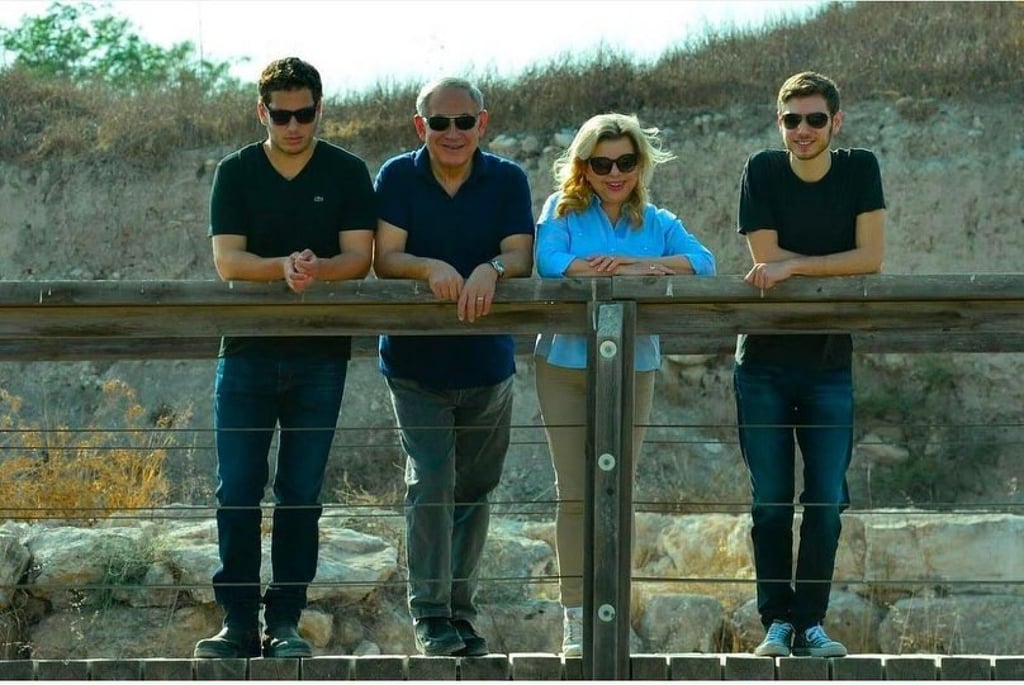
Netanyahu has two sons, Yair and Avner, as well as a daughter. The article notes that it remains unclear which son he was referring to. Yair Netanyahu, the elder son, has lived under state protection in Miami, but the report does not say whether he was the alleged target. A photograph caption identifies Sara and Benjamin Netanyahu with their sons, Yair and Avner.
The report provides no independent confirmation or additional evidence regarding Iran’s alleged attempt. Its focus is on Netanyahu’s statement, the security dispute involving Eisenkot, and the broader political and security context surrounding the upcoming election.
Entities: Benjamin Netanyahu, Iran, Yair Netanyahu, Avner Netanyahu, Gadi Eisenkot • Tone: neutral • Sentiment: negative • Intent: inform
25-08-2026
The article argues that Israeli Prime Minister Benjamin Netanyahu achieved his long-standing objective of drawing the United States into a conflict with Iran, but the war may have produced strategically unfavorable results for Israel. Although Israel inflicted significant damage on Iran’s nuclear infrastructure, military capabilities and economy, Iran’s government survived and may now be more determined to pursue nuclear weapons as a deterrent. The conflict also failed to produce the regime change Netanyahu said he hoped to encourage.
The outcome was complicated by US President Donald Trump’s inconsistent approach. Trump initially joined Israel in launching the war, then abruptly pursued a ceasefire and negotiations as American public opposition grew and oil prices rose. This left Israel facing an uncertain choice: accept a new nuclear agreement that could strengthen Iran, or continue military pressure and risk encouraging Tehran to build a nuclear weapon. Analysts quoted in the article disagree over whether Israel achieved its strategic objectives, but one described the overall strategy as a failure despite operational successes.
The war has also created domestic and diplomatic problems for Netanyahu. A Hebrew University survey found that 92 per cent of Israelis believed Iran had won or gained more from the conflict, potentially damaging Netanyahu before elections. The conflict strained Israel’s relationship with Washington and further harmed Israel’s image in the United States, following the damage caused by the Gaza war.
Finally, the article warns that the attacks may have created lasting hostility among Iranians toward Israel and the United States. Civilian deaths, infrastructure damage and strikes on universities could shape Iranian perceptions for years, even if the Islamic republic eventually loses legitimacy or its current leadership changes.
Entities: Benjamin Netanyahu, Donald Trump, Iranian Islamic Republic, Israel, United States • Tone: analytical • Sentiment: negative • Intent: analyze