25-05-2026
A senior humanitarian worker with Médecins Sans Frontières (MSF), Kate White, says the Ebola outbreak in the Democratic Republic of Congo is creating “massive challenges” for aid groups because supplies, personnel and diagnostic capacity are difficult to move into affected areas. Speaking as she departed Manchester Airport for the relief effort, White said she was deeply concerned about the inability to get resources into the country and warned that the scale of what is needed is enormous. The outbreak has reportedly caused more than 200 suspected deaths and more than 850 suspected cases, with some early victims believed to have been Red Cross volunteers handling dead bodies. The World Health Organization has said the disease may be spreading faster than first thought and declared a public health emergency of international concern. The article explains that Ebola is a severe viral disease spread through contact with infected bodily fluids, with symptoms ranging from fever and fatigue to vomiting, diarrhea, organ failure and sometimes bleeding. It also notes that the latest outbreak is especially difficult because it involves a rare Ebola species for which there is no approved vaccine, the area is affected by conflict, and the outbreak may have been circulating for some time before being detected, making transmission chains harder to understand and control. White emphasizes the need for protective measures, better case confirmation, and faster deployment of treatment, vaccines and diagnostic tools.
Entities: Ebola outbreak, Democratic Republic of Congo (DRC), Kate White, Médecins Sans Frontières (MSF), World Health Organization (WHO) • Tone: urgent • Sentiment: negative • Intent: inform
25-05-2026
Three Red Cross volunteers have died in the Democratic Republic of Congo from suspected Ebola, likely after handling dead bodies before the outbreak was officially identified. The International Federation of Red Cross and Red Crescent Societies said the volunteers — Alikana Udumusi Augustin, Sezabo Katanabo, and Ajiko Chandiru Viviane — were working in Mongwalu in Ituri province and died between 5 and 16 May. The outbreak, caused by the rare Bundibugyo strain of Ebola, has already led to more than 200 suspected deaths and over 850 suspected cases, with Mongwalu now considered the epicentre. Health officials warn that bodies remain highly infectious after death, making burial practices a major transmission risk.
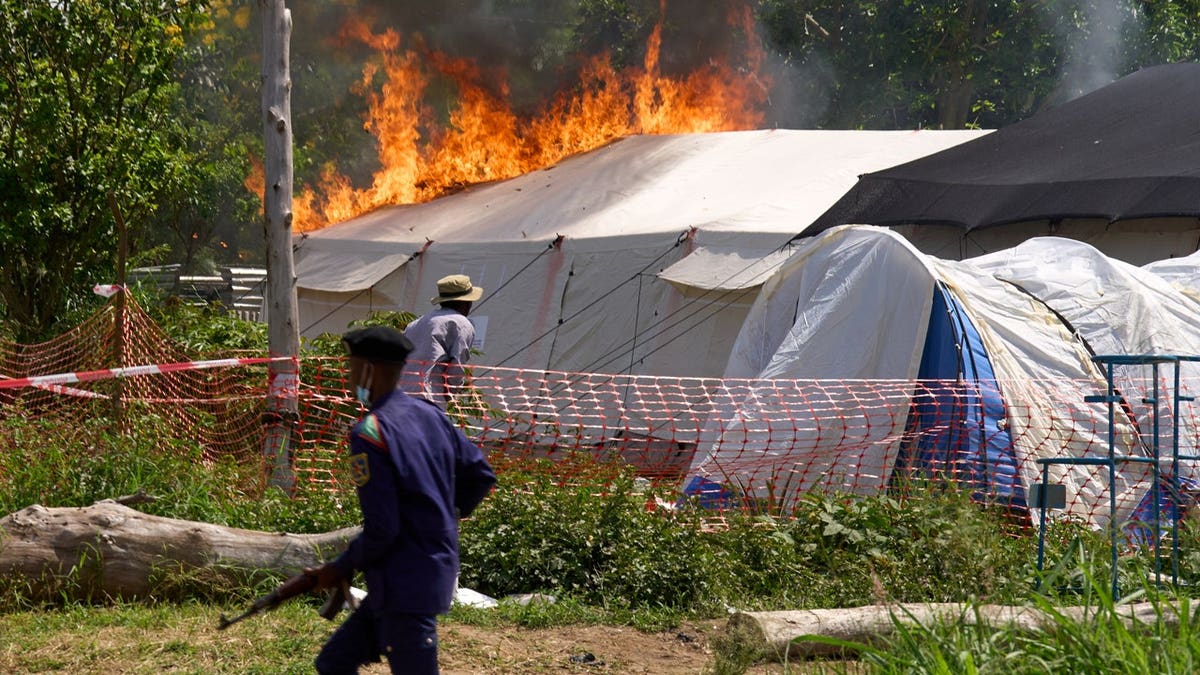
The article also describes the wider public health response and the growing regional concern. The World Health Organization has raised the risk level in DR Congo from high to very high, while Uganda has confirmed new cases and the Africa CDC has flagged 10 additional countries at risk. DR Congo has suspended flights to and from Bunia to prevent cross-border spread and local authorities have imposed restrictions on gatherings and funeral wakes. At the same time, the response is complicated by distrust and violence in communities, including an incident where an MSF-provided tent was burned and an angry crowd attacked part of a hospital after being blocked from removing a body for burial. The outbreak is unfolding amid insecurity in eastern Congo, where rebel activity also hinders containment efforts.
Entities: Red Cross, International Federation of Red Cross and Red Crescent Societies (IFRC), Democratic Republic of Congo, Ebola, Bundibugyo strain • Tone: urgent • Sentiment: negative • Intent: inform
25-05-2026
Residents in eastern Congo, angered by Ebola-control measures and burial practices, attacked and burned part of a treatment center in Mongbwalu, making it the second Ebola-related health facility attack in the region in a week. The fire caused panic among staff and led 18 people with suspected Ebola infections to flee and become unaccounted for, heightening concerns about further spread. The article explains that tensions have been rising because Ebola burials involve strict infection-control procedures that often prevent families from handling or mourning their dead in traditional ways. In nearby Rwampara, a communal burial was held under heavy police and military security after another treatment center had been burned the previous day when family members were denied access to the body of a suspected Ebola victim. Health officials and aid groups warn that distrust between communities and responders is complicating the outbreak response.
The article also outlines the scope and seriousness of the Ebola outbreak in Congo’s Ituri province. The World Health Organization says the outbreak poses a “very high” risk to Congo, with more than 100 confirmed cases and hundreds of suspected cases and deaths, and additional cases expected as surveillance expands. It notes that the outbreak involves the rare Bundibugyo strain, for which no vaccine is available. The article further reports that an American doctor working with a missionary group has tested positive, and that several Red Cross volunteers died after handling bodies during a humanitarian mission. Finally, it describes new U.S. travel restrictions barring green-card holders recently in Ebola-affected countries from reentering the United States, a move federal officials say is intended to preserve resources for screening and monitoring U.S. citizens.
Entities: Ebola outbreak, Mongbwalu, Rwampara, Ituri province, Congo (Democratic Republic of the Congo) • Tone: urgent • Sentiment: negative • Intent: inform
25-05-2026
An Ebola treatment center in eastern Congo was set on fire after local residents clashed with authorities over the handling of a suspected Ebola victim’s body, highlighting the tension between public health containment protocols and local burial customs. According to witnesses and officials, young people tried to retrieve the body of a friend who reportedly died of Ebola, police intervened, and the confrontation escalated into arson at Rwampara Hospital. Two treatment tents were burned, and a reporter saw what appeared to be a suspected Ebola victim’s body being burned inside the facility.
The incident occurred amid a worsening Ebola outbreak in the Democratic Republic of the Congo, where health officials reported 160 suspected deaths and 671 suspected cases across two provinces. The World Health Organization has declared the outbreak a public health emergency, citing concern over its rapid spread, while neighboring Uganda has also reported cases and a death. The article notes that the outbreak involves the Bundibugyo strain, a rarer variant for which existing vaccines may be less effective. Authorities and aid groups condemned the violence, warned against misinformation, and urged calm as emergency funding and international response efforts continue. The story emphasizes both the public health danger posed by the outbreak and the mistrust and social conflict complicating containment efforts.
Entities: Ebola, Democratic Republic of the Congo, Rwampara Hospital, Ituri Province, World Health Organization (WHO) • Tone: urgent • Sentiment: negative • Intent: inform
25-05-2026
In this CBS News transcript, Dr. Deborah Birx discusses the escalating Ebola outbreak in the Democratic Republic of the Congo (DRC), emphasizing that the outbreak may have spread undetected for several weeks before being reported, which makes the current case counts difficult to interpret. She explains that the apparent surge in cases likely reflects delayed detection rather than only rapid recent transmission, and stresses that the most important measure is the trajectory of new infections over time.
Birx says Americans should be concerned but not panic, noting that the DRC has experienced many Ebola outbreaks over the past few decades and that the U.S. and international community have learned lessons from COVID-19 and prior Ebola responses. She points to existing preparedness measures in the United States, such as strengthened hospitals, bio-containment facilities, CDC staff on the ground, and interagency response efforts. She also describes the travel restrictions and diversion of a passenger plane as examples of proactive containment.
The interview turns to whether U.S. policy changes—including cuts to USAID, withdrawal from the World Health Organization, and reduced funding to the DRC and Uganda—may have contributed to weaker outbreak response or delayed reporting. Birx does not directly blame the administration, instead arguing that the larger failure lies in why institutions such as the African CDC and local laboratory systems did not detect and control the outbreak earlier, despite significant global investment. She expresses concern that conflict in the region complicates response efforts, but says the global community owes the people of the DRC a stronger, faster public health system.
Finally, Birx reassures viewers that the U.S. has a “deep bench” of experienced public health professionals even without confirmed leadership at agencies like the CDC, FDA, and Surgeon General’s office, while reiterating that stronger African CDC capacity is essential for future outbreak control.
Entities: Dr. Deborah Birx, Nancy Cordes, Face the Nation with Margaret Brennan, Democratic Republic of the Congo, Ebola outbreak • Tone: analytical • Sentiment: neutral • Intent: inform