23-02-2026
US President Donald Trump is questioning why Iran has not 'capitulated' in the face of Washington's military build-up in the Middle East, according to US special envoy Steve Witkoff. The US and its European allies suspect Iran of moving towards making a nuclear weapon, which Iran denies. Meanwhile, anti-government protests have been staged at several universities in Iran, the first rallies on such a scale since January's deadly crackdown by the authorities. Iran's Foreign Minister Abbas Araghchi said there was still a chance the dispute could be solved diplomatically, and negotiators were working on the elements of a deal. The US and Iranian officials discussed Iran's nuclear programme at indirect talks in Geneva, and the next round of negotiations is set for Geneva this Thursday.
Entities: Donald Trump, Steve Witkoff, Iran, United States, Tehran • Tone: neutral • Sentiment: negative • Intent: inform
23-02-2026
Iranian Foreign Minister Abbas Araghchi stated that Iran has the right to peaceful nuclear energy, including enrichment, as the US and Iran negotiate a deal on Iran's nuclear program in Geneva. Araghchi emphasized that diplomacy is the only way to resolve the issue and that a solution is within reach. The US has expressed skepticism about Iran's nuclear program, with many Republicans calling for zero enrichment and dismantlement. Araghchi argued that enrichment is a matter of dignity and pride for Iranians and that they will not give it up. The two sides will meet again in Geneva on Thursday to work on a draft proposal.
Entities: Abbas Araghchi, Iran, US, Geneva, President Trump • Tone: neutral • Sentiment: negative • Intent: inform
23-02-2026
European Central Bank President Christine Lagarde discussed global trade uncertainty, tariffs, and central bank independence in an interview with CBS News. Lagarde emphasized the need for clarity on trade policies and warned that uncertainty could disrupt business. She also defended the independence of central banks and expressed concerns about populism. Lagarde discussed the impact of tariffs on consumers and the economy, and the potential risks of political pressure on central banks.
Entities: Christine Lagarde, European Central Bank, Margaret Brennan, CBS News, Germany • Tone: neutral • Sentiment: negative • Intent: inform
23-02-2026
Iranian Foreign Minister Abbas Araghchi was interviewed on 'Face the Nation with Margaret Brennan' about escalating tensions between the U.S. and Iran. Araghchi stated that diplomacy is the only way to resolve Iran's peaceful nuclear program and that a diplomatic solution is still possible. He mentioned that Iran is working on a draft proposal to be discussed in Geneva and that a better deal than the 2015 nuclear deal is achievable. Araghchi emphasized Iran's right to enrichment and its commitment to the Non-Proliferation Treaty (NPT). The interview also touched on the U.S. military buildup in the region, Iran's air defenses, and the country's stance on ballistic missiles and proxies.
Entities: Abbas Araghchi, Margaret Brennan, Iran, United States, Tehran • Tone: neutral • Sentiment: negative • Intent: inform
23-02-2026
The article discusses the escalating tensions between the United States and Iran, with former President Donald Trump warning of a potential attack on Iran. Trump stated that a 'massive armada is heading to Iran' and threatened that the next attack would be 'far worse' than the raids on Iran's nuclear sites last year. The article highlights the ongoing protests in Iran, where thousands have been killed, and Trump's previous promise to support the protesters. The situation is tense, with Trump's statements raising concerns about a potential military conflict.
Entities: Donald Trump, Iran, America, United States, hrana • Tone: neutral • Sentiment: negative • Intent: inform
23-02-2026
The Economist's Middle East & Africa section covers various regional issues, including the standoff between the US and Iran, the rise of Nigerian fashion, and the complexities of Syria's post-conflict landscape. Other articles discuss Libya's leadership crisis, the rivalry between Saudi Arabia and the UAE, and the security challenges facing Nigeria. The section also explores cultural and economic developments, such as the Damascus book fair and the growth of Tanzania's authoritarianism under Samia Suluhu Hassan. Ethiopia's escalating conflict in Tigray and the economic concerns of young Saudis are also examined.
Entities: Donald Trump, Iran, America, Nigeria, Syria • Tone: analytical • Sentiment: neutral • Intent: inform
23-02-2026
The article discusses the escalating standoff between the United States and Iran under the presidency of Donald Trump. Trump has ordered a significant military buildup in the Middle East, the largest in two decades by some measures, but has not followed through with a strike against Iran. This inaction has left Trump with a difficult decision: either to proceed with an attack or to retreat, which would be perceived as humiliating. The standoff has been ongoing for two months, with Trump's threats failing to compel Iran to negotiate a deal that would prevent a potential conflict. The article highlights the complexities and risks associated with Trump's options, suggesting that too much sabre-rattling could lead to unintended consequences.
Entities: America, Iran, Donald Trump, Middle East, The Economist • Tone: analytical • Sentiment: neutral • Intent: inform
23-02-2026
The article discusses the potential military options available to Donald Trump in the event of a conflict with Iran. The author, Shashank Joshi, the defence editor, analyzes the various ways in which the US could strike Iran, considering the military capabilities and the potential consequences of such an action. The article highlights the complexities and risks involved in any military action against Iran.
Entities: Donald Trump, Iran, America, Shashank Joshi, The Economist • Tone: analytical • Sentiment: neutral • Intent: inform
23-02-2026
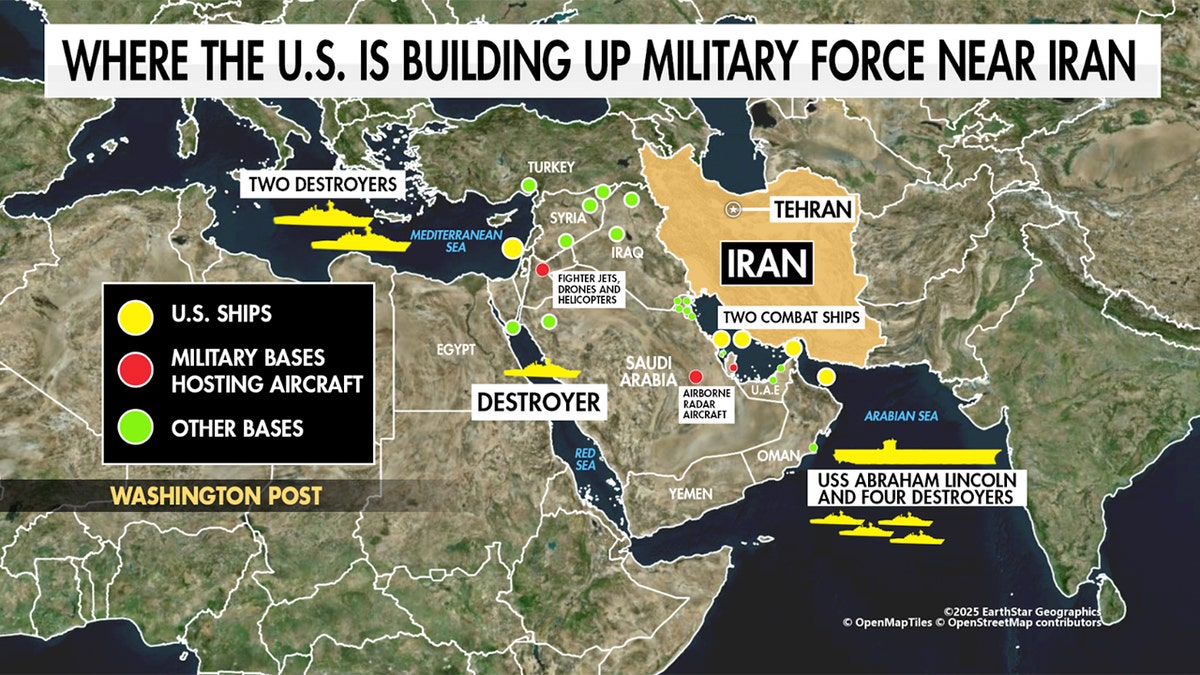
The article discusses the military options available to former US President Donald Trump in the event of a conflict with Iran. It highlights the significant military presence of the US in the Middle East, with a large naval armada and troops stationed in Saudi Arabia. The article suggests that Trump's envoy, Steve Witkoff, has expressed confusion over Iran's lack of response to the US military buildup, and that Trump has a range of options if he decides to attack Iran. The article is set in a speculative tone, exploring the potential consequences of a US-Iran conflict.
Entities: Donald Trump, Steve Witkoff, Iran, Middle East, America • Tone: analytical • Sentiment: neutral • Intent: inform
23-02-2026
The article reports that Iran's Islamic Revolutionary Guard Corps (IRGC) has tightened its control over Hezbollah amid rising tensions with the US, as President Trump weighs potential military strikes against Iran. Analysts warn that if the US strikes the Iranian regime, Hezbollah is likely to be activated, potentially leading to a wider regional conflict. The IRGC has been rebuilding Hezbollah's military infrastructure and managing strategic war plans, particularly after the killing of Hezbollah leader Hassan Nasrallah last year. The US and Iran are set to hold another round of talks in Geneva, focusing on Iran's nuclear program and sanctions relief. Experts warn that the situation is precarious, with a high risk of escalation and potential attacks spreading across the region.
Entities: Iran, Hezbollah, US, Israel, IRGC • Tone: urgent • Sentiment: negative • Intent: inform
23-02-2026
Anti-government protests have reignited at major universities in Iran, particularly in Tehran and Mashhad, as students mark 40-day memorials for those killed during January's nationwide demonstrations. The protests have been met with a forceful response from authorities, with reports of tear gas and shots fired. Students have chanted slogans such as 'This is the year of blood' and have trampled on pictures of Iran's Supreme Leader, Ayatollah Ali Khamenei. The protests come amid heightened tensions between Iran and the US, with the US considering a potential military strike on Iran.
Entities: Iran, Tehran, Mashhad, University of Tehran, Khajeh Nasir University • Tone: negative • Sentiment: negative • Intent: inform
23-02-2026
Iran has tested a new naval air defense missile, Sayyad 3-G, during military drills in the Strait of Hormuz amid heightened regional tensions and a continued U.S. military buildup in the Gulf. The missile is a naval adaptation of Iran's land-based Sayyad-3 air defense system and has a range of approximately 150 kilometers. The U.S. has been building up forces in the region, including the USS Abraham Lincoln aircraft carrier and multiple guided-missile destroyers. Iranian Foreign Minister Abbas Araghchi said diplomacy remains the only path forward and dismissed the impact of the U.S. military buildup, stating that talks are focused solely on nuclear issues.
Entities: Iran, United States, Strait of Hormuz, Sayyad 3-G missile, Islamic Revolutionary Guard Corps Navy • Tone: neutral • Sentiment: negative • Intent: inform
23-02-2026
The US is positioned for a potential 'kinetic' campaign against Iran after launching one of its largest recent military buildups in the Middle East, according to a former senior Pentagon official. Dana Stroul, now research director at The Washington Institute for Near East Policy, stated that the US military is ready for a sustained, highly kinetic campaign should President Trump order it. The buildup includes the deployment of two US aircraft carriers, the USS Gerald R. Ford and USS Abraham Lincoln, and an increase in guided-missile destroyers, fighter aircraft, refuelers, and air defense systems in the region. The military buildup comes as indirect diplomatic talks between Washington and Tehran continue, with Oman serving as a mediator. Stroul argued that Iran's leadership is trying to balance brinkmanship with negotiation, but is completely outmatched in conventional terms.
Entities: Dana Stroul, The Washington Institute for Near East Policy, US, Iran, Middle East • Tone: analytical • Sentiment: negative • Intent: inform
23-02-2026
Protests have resumed in Tehran, Iran, as students mark the 40th day of mourning for those killed by security forces in January. Despite the authorities' previous crackdown, protesters are calling for change, with some chanting 'death to this rule.' Iran's Supreme Leader, Ayatollah Khamenei, has signaled a willingness to work towards a deal with the US, potentially on the country's nuclear program, while also standing ready to fight if the US strikes. The situation remains tense, with the US military buildup in the Middle East adding to the uncertainty. The article analyzes the potential implications of Iran's actions and the response of the US under President Donald Trump.
Entities: Ayatollah Khamenei, Tehran, Iran, Donald Trump, US • Tone: analytical • Sentiment: neutral • Intent: inform
23-02-2026
Iranian students clashed with security forces at Tehran universities, commemorating those killed in a government crackdown last month. The protests come as US President Donald Trump considers military action against Iran, with the USS Gerald Ford aircraft carrier en route to the Middle East. Trump warned of possible strikes, while Iran's president, Masoud Pezeshkian, sounded defiant, stating that Iran will not bow to pressure. The US has scaled up its military presence in the region, with Trump expressing frustration that Iran has not capitulated amid the naval build-up.
Entities: Donald Trump, Iran, Tehran, USS Gerald Ford, Masoud Pezeshkian • Tone: neutral • Sentiment: negative • Intent: inform
23-02-2026
The article discusses the recent joint military drills between Russia and Iran in the Strait of Hormuz and the Gulf of Oman, and how this move is seen as a provocation by the United States under President Donald Trump. The author argues that Russian President Vladimir Putin's actions are a clear attempt to support Iran against US demands, and that this is a foolish move that will have consequences. The article also references the ongoing conflict in Ukraine and how Russia's actions are bolstering their efforts there. The author criticizes Trump's leniency towards Putin and suggests that Putin's latest move should lead to a reevaluation of this stance.
Entities: Vladimir Putin, Donald Trump, Iran, Russia, Ukraine • Tone: negative • Sentiment: negative • Intent: critique