20-08-2026
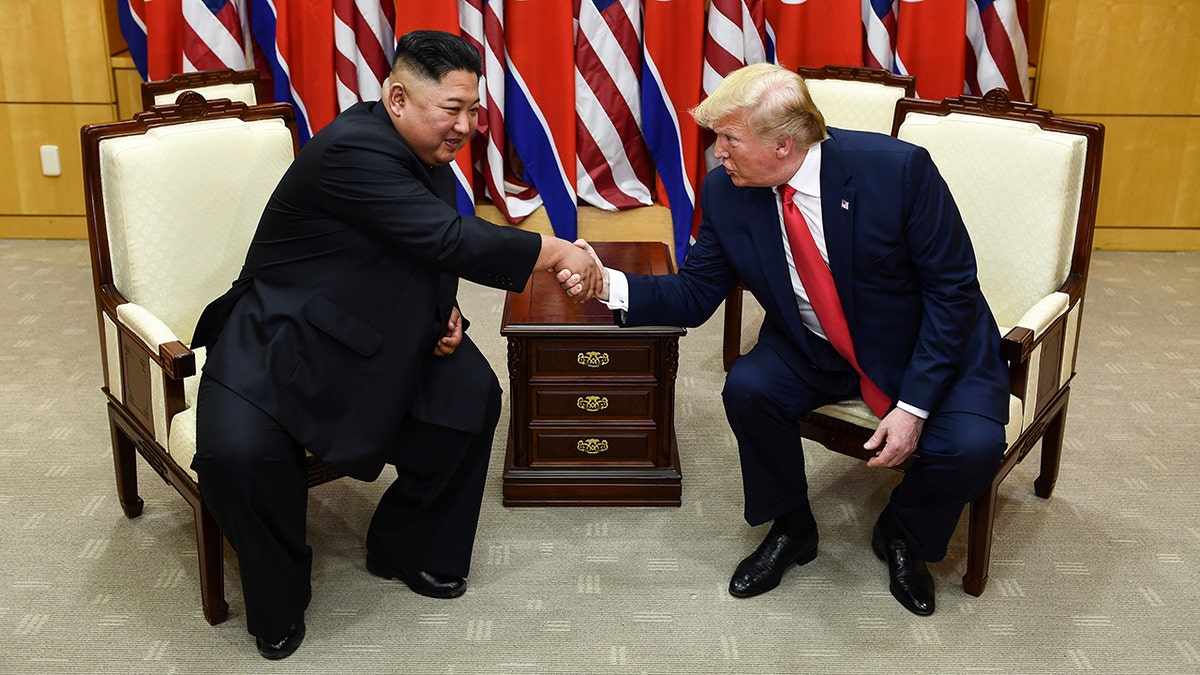
President Donald Trump said he expects to meet North Korean leader Kim Jong Un again before the end of the year, following a Wall Street Journal report that the administration was seeking to arrange a summit, potentially during the November APEC meeting in Shenzhen, China. Neither the White House nor Pyongyang has confirmed that a meeting is planned. Trump has reportedly instructed aides to contact North Korea in an effort to restart negotiations over its nuclear weapons program.
Trump and Kim met three times during Trump’s first term, but those summits produced little progress toward denuclearization. Since then, North Korea has continued expanding its nuclear capabilities. Analysts estimate that the country possesses dozens of nuclear warheads, while Trump said North Korea now has 57. Kim has shown no clear willingness to surrender the program and has instead sought international recognition of North Korea as a nuclear state.
Trump also linked his diplomatic approach to his decision to reduce U.S. participation in the Ulchi Freedom Shield military exercise with South Korea. He described the drills as a hostile and inappropriate signal to North Korea and said the reduction was based partly on his relationship with Kim. He also cited South Korea’s lack of assistance in the war with Iran as a factor. The exercise was shortened from its usual 10 days and is scheduled to end Friday.
The move has unsettled regional allies, particularly South Korea and Japan, which are questioning the reliability of the U.S. security guarantee. South Korean President Lee Jae Myung has called for greater military independence from Washington and is advocating faster acquisition of nuclear-powered submarines. During a visit to Seoul, Chinese Foreign Minister Wang Yi discussed regional issues with South Korean officials, who sought China’s cooperation on denuclearization.
Entities: Donald Trump, Kim Jong Un, North Korea, South Korea, United States • Tone: analytical • Sentiment: neutral • Intent: inform
20-08-2026
The United States and South Korea have agreed to shorten and scale back their annual Ulchi Freedom Shield military exercises at President Donald Trump’s direction. The drills began Monday and were initially scheduled to last 11 days, but they will now end Friday, one week earlier than planned. The Pentagon said the exercises had been “substantially reduced,” with some live-training events canceled or converted into computer simulations. Officials maintained that the changes would preserve essential readiness and training objectives.
South Korea’s Joint Chiefs of Staff confirmed that the reduced schedule and downsized field exercises were requested by the United States. The announcement followed Trump’s stated desire to maintain a good relationship with North Korean leader Kim Jong Un, as well as his criticism of South Korea’s refusal to join the U.S. war against Iran.
Experts warned that reducing the exercises could damage combined U.S.-South Korean military readiness and weaken the alliance, which has existed since the Korean War. Ulchi Freedom Shield is primarily a computer-simulated command-post exercise designed to prepare the allies for regional threats, especially potential North Korean aggression. The exercises have long angered North Korea, which views them as rehearsals for invasion and has often responded with missile tests.
Although North Korea has not directly responded to Trump’s latest overture, its state media condemned the drills as dangerous and vowed to oppose the allies’ actions. Analysts said Kim is unlikely to return to negotiations without significant concessions, particularly regarding sanctions relief and the U.S. demand for denuclearization. Trump and Kim met three times between 2018 and 2019, but their diplomacy collapsed over disagreements about the scope of sanctions relief North Korea would receive in exchange for limited denuclearization steps.
Entities: Donald Trump, Kim Jong Un, Pete Hegseth, United States, South Korea • Tone: analytical • Sentiment: negative • Intent: inform
20-08-2026
President Donald Trump has ordered a substantial reduction in U.S.-South Korean military exercises, reportedly catching Seoul off guard. The decision affects the annual Ulchi Freedom Shield exercise, which began on Aug. 17 and is now scheduled to end on Friday rather than continue through Aug. 27. Trump said the drills could send an unnecessarily hostile signal to North Korea and argued that Pyongyang had been relatively restrained during his current term.
The article examines concerns that reducing the exercises could weaken the allies’ combat readiness and undermine confidence in the reliability of the U.S. security commitment. Retired South Korean Lieutenant General Chun In-Bum warned that the change creates a dangerous gap because North Korean troops are gaining combat experience while fighting alongside Russia in Ukraine. He said the exercises are essential for testing command systems, integrating responses and adapting to developments such as drone warfare, electronic warfare and artillery coordination. Other experts, including Lami Kim and former U.S. diplomat Henry Haggard, said the move could make allies question Washington’s predictability and strategic commitment.
A U.S. official said the scaled-back drills would preserve essential training and readiness objectives. Jennifer Kavanagh of Defense Priorities argued that fewer exercises could reduce regional tensions by limiting the likelihood that North Korea or China would respond with their own military activity, weapons tests or missile launches.
North Korea offered no immediate concession. Kim Yo Jong rejected the reduction as a meaningful confidence-building measure, saying Pyongyang viewed the exercises themselves as evidence of U.S. hostility. The article therefore presents the decision as a trade-off between lowering tensions with North Korea and maintaining military preparedness, deterrence and alliance credibility.
Entities: Donald Trump, United States, South Korea, North Korea, Ulchi Freedom Shield • Tone: analytical • Sentiment: negative • Intent: analyze
20-08-2026
North Korea has dismissed the Trump administration’s decision to scale back annual military exercises with South Korea, saying the reduction does not alter Pyongyang’s view that the drills are provocative and aggressive. Kim Yo Jong, the sister of North Korean leader Kim Jong Un, said the exercises remain unacceptable despite reductions in their duration and size. Her comments represented North Korea’s first response to the US decision to substantially reduce the exercises.
Kim Yo Jong also referenced other US-South Korean military activities conducted earlier in the year and South Korea’s efforts to introduce nuclear-powered submarines. She denied that there is currently communication between Donald Trump and Kim Jong Un, despite Trump’s claim that Kim had responded to his request for talks. Nevertheless, her statement avoided North Korea’s usual harsh rhetoric and described relations between Kim Jong Un and Trump as “still excellent,” recalling Kim’s comments about having “good memories” of the US president.
The article suggests that North Korea may be trying to preserve its relationship with Trump while seeking further concessions before restarting diplomacy. Trump said he expects to meet Kim Jong Un later in the year, but declined to clarify whether the two leaders are exchanging letters.
The US and South Korea confirmed that they were reducing the 11-day Ulchi Freedom Shield exercises at Washington’s request. The drills will end on 21 August rather than 27 August, and some field-training activities will also be downsized. Trump cited his relationship with Kim and South Korea’s refusal to support him in the war in Iran. South Korean officials were reportedly surprised by the decision, which was made without prior notice, and warned that it could undermine joint defense readiness. Critics likewise argued that the move damages US credibility and signals a retreat from its allies. Ulchi Freedom Shield is primarily a computer-simulated command-post exercise intended to prepare the allies for possible North Korean aggression.
Entities: North Korea, Kim Yo Jong, Kim Jong Un, Donald Trump, United States • Tone: analytical • Sentiment: negative • Intent: inform
20-08-2026
US President Donald Trump said on Wednesday that he expects to meet North Korean leader Kim Jong-un later in 2026, though he provided no details about the timing, location, or purpose of the meeting. Such a meeting would be the first between the two leaders since Trump’s first term in office. Trump said he knows Kim “very well” and that they get along, presenting their relationship as a positive factor in managing tensions with North Korea.
Trump also claimed that North Korea possesses “57 very powerful nuclear weapons,” an unusually specific estimate that was not substantiated in his remarks. He said North Korea’s nuclear arsenal should never have been allowed to develop and suggested that the country’s future stability would depend on having a competent US president.
The comments came days after Trump announced that the United States would scale back joint military exercises with South Korea. He described the drills as costly and said they sent an “inappropriate and hostile” signal to Pyongyang. In a Truth Social post, Trump characterized North Korea as unthreatening and respectful during his presidency.
The article places Trump’s claims against assessments from the International Atomic Energy Agency. IAEA Director General Rafael Grossi said in April that North Korea was showing a “very serious increase” in its ability to produce nuclear weapons. The agency observed increased activity at the Yongbyon 5-megawatt reactor, its reprocessing unit, and other facilities. Grossi estimated that North Korea possessed a few dozen nuclear warheads. North Korean state media later reported that Kim had pledged to strengthen the country’s nuclear force both qualitatively and quantitatively. North Korea has conducted six confirmed nuclear tests since 2006.
Entities: Donald Trump, Kim Jong-un, North Korea, United States, South Korea • Tone: neutral • Sentiment: neutral • Intent: inform
20-08-2026
South Korean President Lee Jae Myung called for stronger independent military capabilities after President Donald Trump ordered a substantial reduction in U.S. participation in the annual Ulchi Freedom Shield exercises. The 11-day drills, which began one day before Lee’s cabinet meeting, are conducted by U.S. and South Korean forces to prepare for potential emergencies on the Korean Peninsula.
Lee described the exercises as purely defensive and said South Korea’s priority remains preserving peace with North Korea. However, he stressed that the country must be prepared for a worst-case scenario and specifically cited the need to advance South Korea’s nuclear-powered submarine program. Lee argued that a strong U.S.-South Korean alliance provides a foundation for regional security, while greater South Korean military capabilities would make the country a more valuable and necessary ally.
Trump criticized the exercises in a post on Truth Social, saying they were expensive, with much of the cost borne by the United States, and sent an inappropriate and hostile signal to North Korea. Trump pointed to his positive relationship with North Korean leader Kim Jong Un and described North Korea as unthreatening and respectful during his presidency. South Korean National Security Adviser Wi Sung-lac said Seoul hoped the relationship between Trump and Kim could produce meaningful dialogue and lasting change.
Trump also said he had asked Lee whether South Korea would join U.S. efforts to denuclearize Iran, but claimed that Seoul declined. The article presents the reduction in joint exercises as a development that could affect deterrence, alliance dynamics, and South Korea’s defense planning, while also highlighting the competing diplomatic priorities of the Trump administration.
Entities: Lee Jae Myung, Donald Trump, Kim Jong Un, South Korea, North Korea • Tone: analytical • Sentiment: neutral • Intent: inform
20-08-2026
US President Donald Trump said he plans to meet North Korean leader Kim Jong Un later in 2026, reviving a relationship from Trump’s first term despite North Korea’s expanding nuclear arsenal. Trump said it was important for Washington to “get along” with Kim and claimed North Korea possessed 57 “very powerful” nuclear weapons. He reportedly may seek a meeting during a planned trip to Shenzhen, China, for the Asia-Pacific Economic Cooperation summit in November, although Trump provided no details.
The proposed engagement follows Trump’s decision to scale back joint US-South Korean military exercises, which he described as “very insulting” to Kim. The move has unsettled Asian allies and prompted speculation that Trump may be seeking a foreign-policy success while his Iran war has stalled. South Korean officials estimate North Korea has between 80 and 120 nuclear weapons, while Seoul continues to oppose formally recognizing Pyongyang as a nuclear weapons state. South Korean President Lee Jae Myung said he would support Trump’s peacemaking efforts.
Kim Yo Jong, Kim Jong Un’s powerful sister, said she was “completely unaware” of any recent communication between the North Korean and US leaders. However, she said Kim retained “good memories and feelings” about Trump and described their relationship as “excellent.” She dismissed the shortened Ulchi Freedom Shield exercises as unimportant.
Trump and Kim met three times during Trump’s first term, with their last meeting taking place in 2019. Although Trump described their relationship in unusually warm terms, the summits produced little progress on denuclearization. The article also notes North Korea’s closer military relationship with Russia, including the deployment of troops to support Moscow’s war against Ukraine and a mutual defence treaty signed in 2024. The United States maintains about 28,500 troops in South Korea, where the annual exercises are intended to prepare for a possible North Korean attack.
Entities: Donald Trump, Kim Jong Un, Kim Yo Jong, United States, North Korea • Tone: analytical • Sentiment: negative • Intent: inform
20-08-2026
US President Donald Trump said he plans to meet North Korean leader Kim Jong-un later in 2026, apparently seeking to revive the personal relationship they developed during Trump’s first term. Trump said it was important for the two leaders to “get along” and claimed that North Korea now possesses 57 “very powerful” nuclear weapons. He offered no evidence or further details about the proposed meeting, although The Wall Street Journal reported that it could take place during Trump’s planned trip to Shenzhen, China, for the Asia-Pacific Economic Cooperation summit in November.
Trump’s renewed focus on North Korea comes as he has ordered the United States and South Korea to scale back joint military exercises. He described the drills as “very insulting” to Kim, while saying the North Korean leader had been “very well behaved.” The decision has alarmed US allies in Asia and fueled speculation that Trump is seeking a diplomatic or foreign-policy success while his war with Iran encounters difficulties.
Trump and Kim met three times during Trump’s first term, but their summits produced little progress toward denuclearization. North Korea remains officially unrecognized by Washington as a nuclear-weapon state, although US government and independent assessments estimate that it has between 50 and 60 nuclear weapons. Kim’s sister, Kim Yo Jong, said she was unaware of any recent communication between Trump and her brother, but added that Kim retains good memories and feelings toward the US president.
The announcement coincided with South Korea’s decision to end the annual Ulchi Freedom Shield exercises about a week early at the request of the United States. The Pentagon said the change would not reduce its training objectives, while Kim Yo Jong dismissed the adjustment as unimportant. The United States maintains approximately 28,500 troops in South Korea, whose security depends on an alliance increasingly unsettled by Trump’s criticism of longstanding US commitments in East Asia.
Entities: Donald Trump, Kim Jong-un, Kim Yo Jong, North Korea, United States • Tone: analytical • Sentiment: negative • Intent: inform