19-01-2026
The article discusses Donald Trump's crusade against high interest rates, likening him to historical figures like King Hammurabi and Oliver Cromwell who also opposed usury. Trump has been pressuring the Federal Reserve to cut interest rates and is now targeting supposed usurers in the private sector. The article explores the implications of Trump's actions on the financial sector and the potential consequences of his attacks on the Fed.
Entities: Donald Trump, King Hammurabi, Oliver Cromwell, Federal Reserve, Wall Street • Tone: analytical • Sentiment: neutral • Intent: inform
19-01-2026
The Economist's finance and economics section features various articles discussing current events and trends in the financial world. The articles cover topics such as the US bond market, the economics of regime change, and the impact of politics on central banks. Other topics include the potential for a stock market bubble due to passive investment, the Trump administration's attacks on the Federal Reserve, and the global economic implications of pessimism. The section also touches on specific country issues, such as Venezuela's debt crisis and Vietnam's fragile economic growth. Overall, the articles provide in-depth analysis and insights into the complex world of finance and economics.
Entities: US bond market, Federal Reserve, Venezuela, Iran, Jerome Powell • Tone: analytical • Sentiment: neutral • Intent: inform
19-01-2026
The article discusses the growing trend of passive investment and its potential to inflate a stock market bubble. It references a working paper that suggests passive investing is worse than Marxism and notes that trillions of dollars have flowed into passive investment funds, with 60% of American equity funds now in such vehicles. The article questions whether this trend is sustainable and if it poses a risk to the market.
Entities: Bernstein, Investment Company Institute, America, Venezuela, Iran • Tone: neutral • Sentiment: negative • Intent: inform
19-01-2026
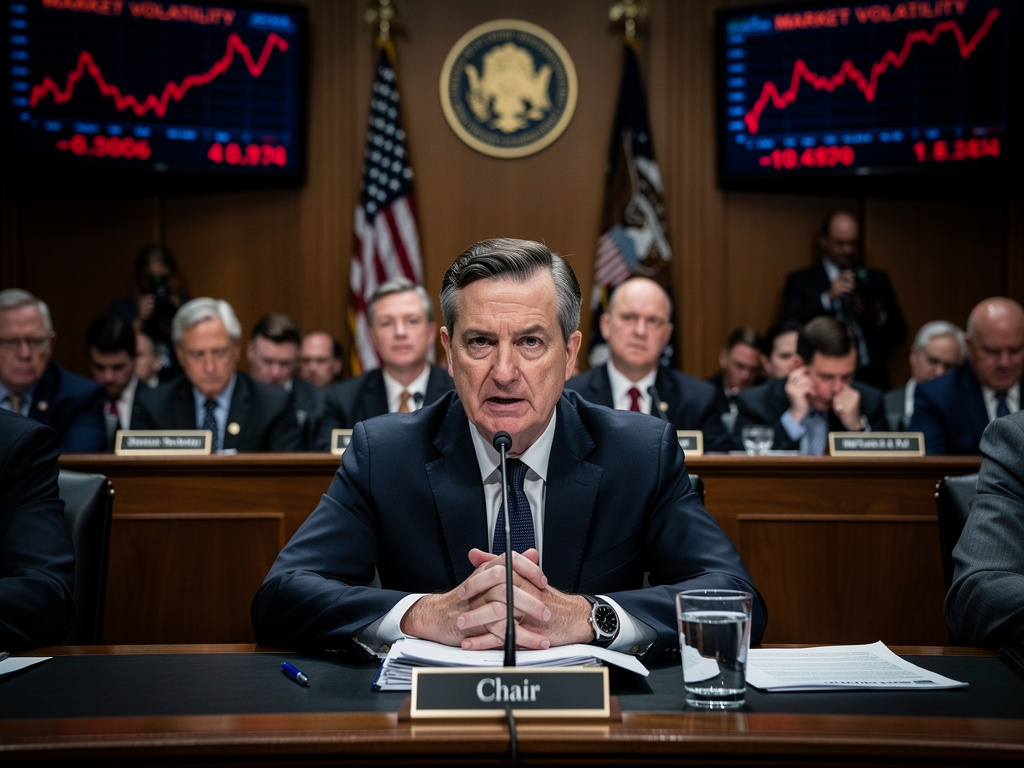
The article discusses the increasing politicization of central banks worldwide, using the US Federal Reserve as a prime example. It highlights how President Donald Trump's pressure on the Fed to cut interest rates has escalated into a threat of criminal indictment against its chair, Jerome Powell, over a long-standing dispute regarding the renovation costs of the central bank's headquarters. The article suggests that this interference is not isolated to the US, implying a broader trend where central banks face political pressure, potentially undermining their independence.
Entities: Federal Reserve, Donald Trump, Jerome Powell, Bank of France, Napoleon Bonaparte • Tone: negative • Sentiment: negative • Intent: inform
19-01-2026
The article discusses the recent confrontation between the Federal Reserve and the Trump administration. The Department of Justice served subpoenas to the Fed regarding a probe into the cost of renovating its headquarters. Fed Chair Jerome Powell responded strongly, stating that the probe was a result of the Fed setting policy based on sound economics rather than following the president's preferences. The article highlights the Fed's unusual resistance to the administration's attack and notes that the central bank is not alone in facing political pressure. The conflict could escalate and have significant implications for the Fed's independence and monetary policy.
Entities: Jerome Powell, Donald Trump, Federal Reserve, Department of Justice, United States • Tone: analytical • Sentiment: negative • Intent: inform
19-01-2026
The article discusses the economic implications of regime change, using Venezuela and Iran as examples. It highlights that while political change can occur suddenly, economic outcomes take longer to materialize. The article notes that many Venezuelans are optimistic about their economic prospects following the ousting of Nicolás Maduro, and similarly, many Iranians hope for improvement after protesting against their theocratic rulers. The piece draws on historical lessons to caution that economic recovery is not immediate and is influenced by various factors including fiscal discipline and state decay.
Entities: Venezuela, Iran, Nicolás Maduro, America, The Economist • Tone: analytical • Sentiment: neutral • Intent: inform
19-01-2026
The article discusses the conflict between the Trump administration and the Federal Reserve, with the administration criticizing the Fed's independence and the Fed pushing back against the criticism.
Entities: Donald Trump, Jerome Powell, Federal Reserve, The White House, United States • Tone: neutral • Sentiment: negative • Intent: critique
19-01-2026
The article discusses the resilience of America's bond market despite concerns over the country's growing debt and the independence of the Federal Reserve. The author argues that the bond market has shrugged off these concerns, and that the US is not typically associated with the kind of fiscal mismanagement seen in some emerging economies. The article touches on recent tensions between the Trump administration and the Fed, including criticism of high interest rates and threats against the central bank's independence.
Entities: America, Federal Reserve, Jerome Powell, Donald Trump, Wall Street • Tone: analytical • Sentiment: neutral • Intent: inform