17-04-2026
Iran's state media reported that an Iranian crude oil tanker and a bulk carrier transporting food supplies transited the Strait of Hormuz, despite a U.S. blockade on Iranian ports. The U.S. CENTCOM commander stated that the blockade was 'fully implemented' and aimed to halt economic trade with Iran by sea. The blockade does not apply to sanctioned vessels unless they enter or depart Iranian ports. Several vessels, including sanctioned tankers, were tracked passing through the Strait of Hormuz after the blockade began.
Entities: Iran, United States, Strait of Hormuz, CENTCOM, Adm. Brad Cooper • Tone: neutral • Sentiment: negative • Intent: inform
17-04-2026
Most Asia-Pacific markets fell on Friday despite cautious optimism over Middle East tensions, diverging from Wall Street's record highs. US President Donald Trump signaled progress on ceasefires and talks between the US, Iran, Israel, and Lebanon. Japan's Nikkei 225 and Hong Kong's Hang Seng index declined, while India's Nifty 50 rose. Oil prices fell amid reports of a potential ceasefire. The Japan Bank for International Cooperation will set up a $3.8 billion investment window to help Asian countries secure energy supplies.
Entities: Donald Trump, Iran, Israel, Lebanon, Japan • Tone: neutral • Sentiment: negative • Intent: inform
17-04-2026
The article discusses a 10-day ceasefire agreement between Israel and Lebanon, facilitated by the US, and its potential impact on the Middle East peace process. President Trump announced the truce and invited the leaders of Israel and Lebanon to the White House for talks. Despite lingering geopolitical uncertainties, markets reacted positively to the news. Meanwhile, the war in Iran continues, with Trump expressing optimism about its imminent end. The article also touches on other news, including the UK Prime Minister's controversy over a new appointment and the surge in Allbirds' stock price after the company rebranded as NewBird AI.
Entities: Israel, Lebanon, Donald Trump, Benjamin Netanyahu, Joseph Aoun • Tone: neutral • Sentiment: positive • Intent: inform
17-04-2026
The article discusses how oil prices fell after US President Donald Trump announced a ceasefire between Israel and Lebanon, raising hopes for broader peace talks in the Middle East. The truce led to a decline in US crude oil futures and international benchmark Brent. ING analysts noted that while the ceasefire was positive, physical oil markets remained tight due to disruptions in the Strait of Hormuz. The article highlights the potential for peace talks between the US and Iran to end the conflict, but also notes the risks of the talks breaking down.
Entities: Donald Trump, Israel, Lebanon, Iran, United States • Tone: neutral • Sentiment: positive • Intent: inform
17-04-2026
The article discusses the ongoing conflict between America and Iran, highlighting the recent ceasefire and ongoing talks in Islamabad. It emphasizes the need for both countries to resume efforts to strike a deal, despite its potential imperfections. The closure of the Strait of Hormuz has significant economic implications, but a deep global recession may still be averted. The author argues that an agreement is crucial to prevent further economic damage and stabilize the region.
Entities: America, Iran, Islamabad, Strait of Hormuz • Tone: urgent • Sentiment: neutral • Intent: persuade
17-04-2026
The US has implemented a naval blockade on Iranian ports in the Strait of Hormuz, aiming to halt economic trade and pressure Iran economically. However, maritime intelligence firm Windward AI reports that Iran is circumventing the blockade by using covert offshore oil networks, transferring tens of millions of barrels of oil through ship-to-ship transfers. The blockade, enforced by US Central Command (CENTCOM), has already stopped nine oil tankers attempting to breach it, costing Iran an estimated $435 million daily. Despite this, Iranian oil flows continue through indirect distribution networks, accumulating offshore rather than transiting directly through Hormuz.
Entities: Iran, United States, Strait of Hormuz, Windward AI, Donald Trump • Tone: neutral • Sentiment: negative • Intent: inform
17-04-2026
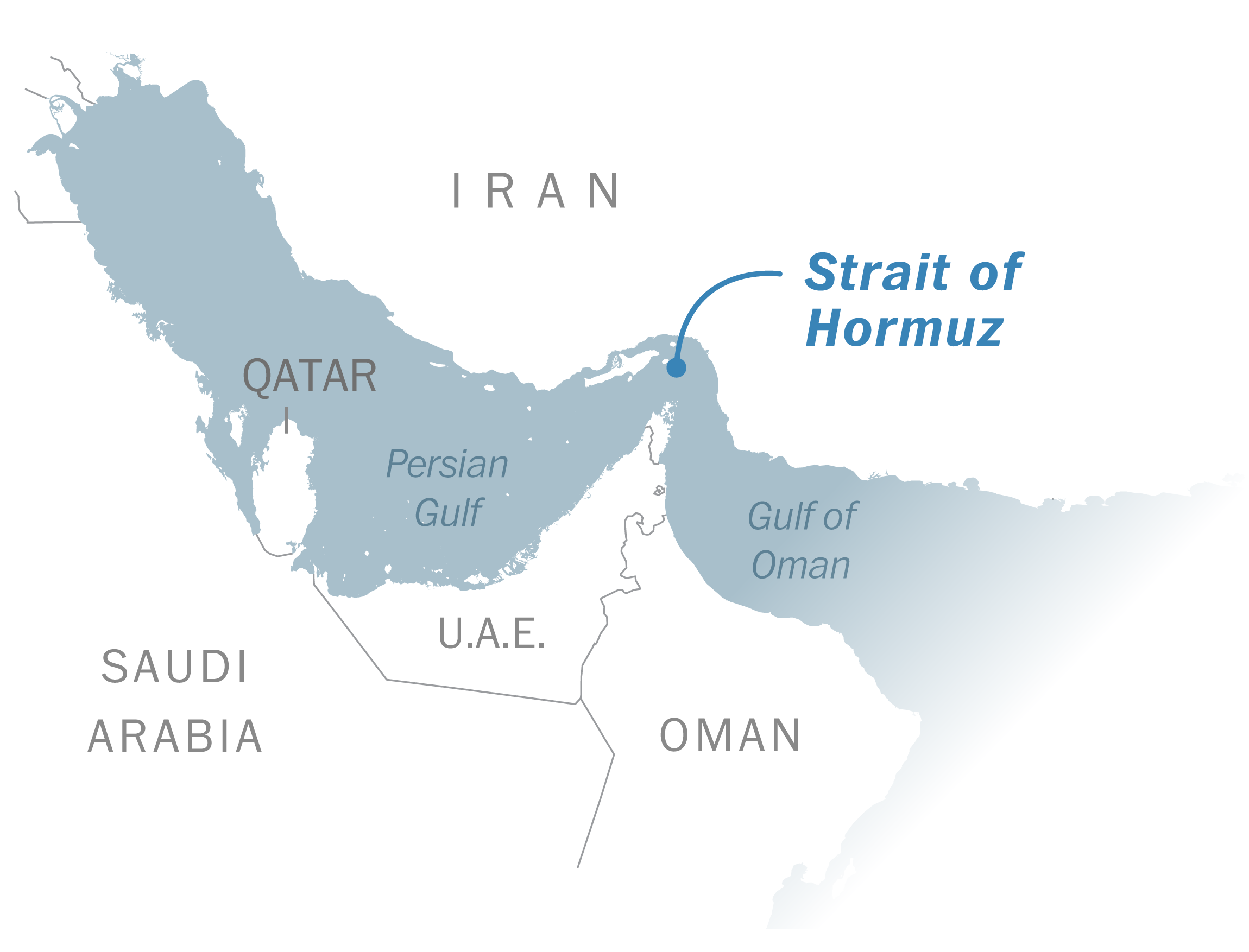
The Strait of Hormuz remains a critical chokepoint for global oil and natural gas trade, with Iran exerting significant control due to its geography. Despite a ceasefire agreement between the US and Iran, tensions have escalated as Iran demands that ships coordinate with its forces and pay tolls, prompting the US to block ships entering or exiting Iranian ports. The strait's narrow lanes and shallow waters make it vulnerable to missile and small-boat attacks, and Iran's ability to lay mines and exploit the terrain gives it a powerful advantage. Shipping companies remain hesitant to cross the strait due to the risk of attack and the uncertainty surrounding the ceasefire.
Entities: Iran, Strait of Hormuz, United States, Donald Trump, Persian Gulf • Tone: analytical • Sentiment: neutral • Intent: inform