Articles in this Cluster
17-01-2026
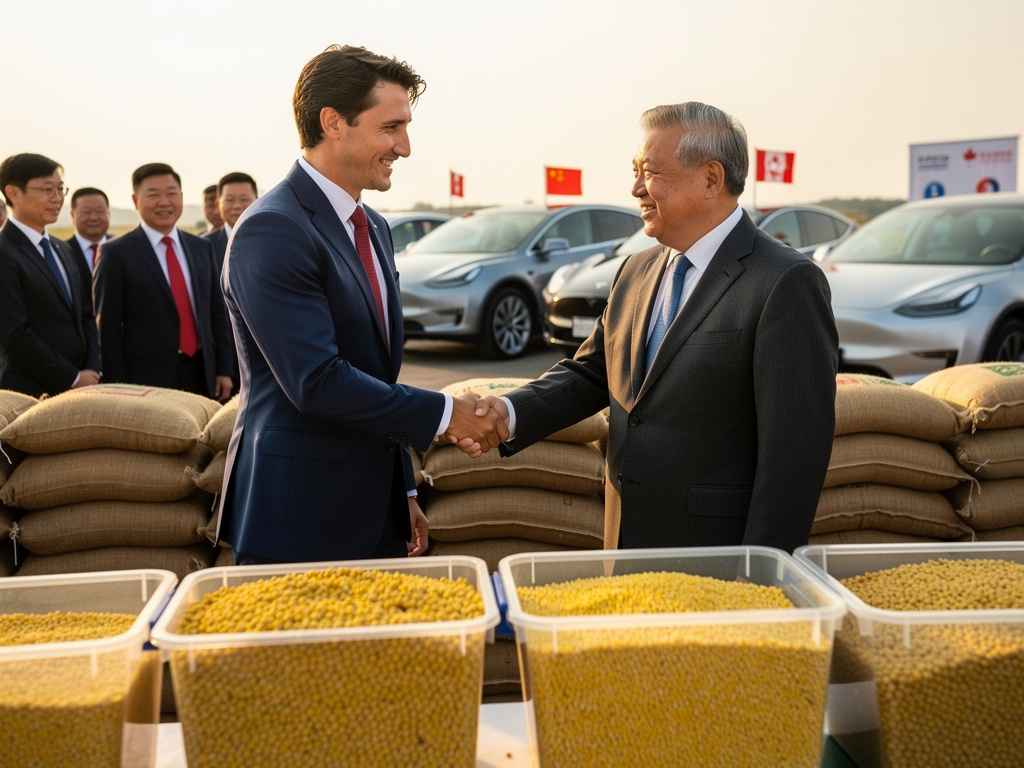
Canadian Prime Minister Mark Carney and Chinese leader Xi Jinping announced a breakthrough deal to lower tariffs between their countries after a high-stakes meeting in Beijing. China will reduce levies on Canadian canola oil from 85% to 15% by March 1, while Canada will tax Chinese electric vehicles at a 6.1% tariff rate. The agreement signals a reset in their strained relationship and is seen as a win for Carney, who is trying to diversify Canadian trade away from the US. The deal could also lead to more Chinese investments in Canada. Despite differences on issues like human rights and Taiwan, both leaders emphasized the importance of a stable and predictable relationship.
Entities: Mark Carney, Xi Jinping, China, Canada, Beijing • Tone: positive • Sentiment: positive • Intent: inform
17-01-2026
Canadian Prime Minister Mark Carney has agreed to cut Canada's 100% tariff on Chinese electric vehicles in exchange for lower tariffs on Canadian farm products during his visit to China. The deal includes an initial annual cap of 49,000 vehicles on Chinese EV exports to Canada, growing to about 70,000 over five years. China will reduce its total tariff on canola seeds from 84% to about 15%. Carney stated that China has become a more predictable partner than the U.S. and that the agreement will help improve global governance. The move marks a divergence from Canada's previous alignment with the U.S. on tariffs imposed on Chinese goods.
Entities: Mark Carney, China, Canada, United States, Xi Jinping • Tone: neutral • Sentiment: positive • Intent: inform
17-01-2026
Canada and China have reached an initial trade deal during Prime Minister Mark Carney's visit to China, slashing tariffs on electric vehicles (EVs) and canola. Canada will allow up to 49,000 Chinese EVs at a 6.1% tariff, increasing to 70,000 in five years. China is expected to lower its tariffs on Canadian canola seed from 84% to around 15% by March 1. The deal aims to rebuild ties between the two nations after months of diplomatic efforts and is seen as a significant step in Canada's efforts to diversify its trade relationships amid tensions with the US. The agreement also includes commitments to boost trade and investment, strengthen cooperation in agriculture and green energy, and restart high-level economic and financial dialogue. US President Donald Trump expressed support for the deal, despite some criticism from his cabinet members.
Entities: Canada, China, Mark Carney, Xi Jinping, Donald Trump • Tone: neutral • Sentiment: positive • Intent: inform
17-01-2026
The article discusses China's response to the US tech restrictions, with Beijing implementing its own 'small yard, high fence' policy to limit US tech companies' access to the Chinese market. China is restricting the use of Nvidia's advanced AI chips and investigating Meta's acquisition of a Chinese AI start-up, signaling a shift in the US-China tech war where China is now taking a more defensive and offensive stance.
Entities: Jake Sullivan, Joe Biden, China, US, Nvidia • Tone: neutral • Sentiment: negative • Intent: inform