16-01-2026
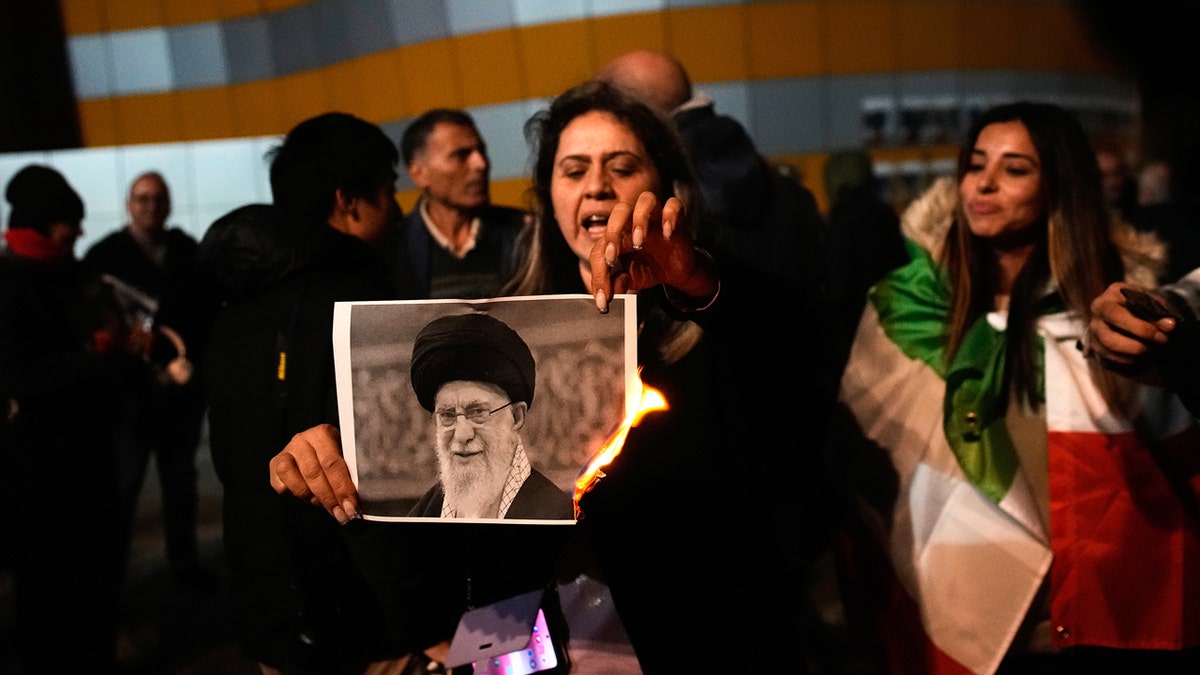
The Iranian judiciary has denied reports that it has scheduled the execution of Erfan Soltani, a 26-year-old man detained during recent protests in Iran. Soltani's family was reportedly told he faced execution, but the judiciary claims he faces charges of 'colluding against national security' and 'propaganda activities against the establishment', which are not punishable by death. The protests, which began over economic issues, have escalated into a broader movement against Iran's clerical establishment, with demonstrators chanting 'Death to the dictator' and 'Seyyed Ali [Khamenei] will be toppled this year'. The US has imposed new sanctions on Iranian officials and warned of 'very strong action' if executions are carried out.
Entities: Erfan Soltani, Iran, Hengaw, IRIB, Abbas Araghchi • Tone: neutral • Sentiment: negative • Intent: inform
16-01-2026
The Iranian authorities are demanding large sums of money from the families of protesters killed during the recent protests in exchange for the return of their bodies. Multiple sources have told BBC Persian that bodies are being held in mortuaries and hospitals, and security forces will not release them unless their relatives hand over money. The protests, which began on December 29, have resulted in the deaths of at least 2,435 people, including 13 children, and the arrest of 18,470 others. The authorities have also been accused of trying to extort money from families by offering to release bodies without charge if they claim their loved ones were members of the Basij paramilitary force.
Entities: Iran, BBC Persian, Rasht, Tehran, Kurdish • Tone: negative • Sentiment: negative • Intent: inform
16-01-2026
A 23-year-old Iranian fashion student, Rubina Aminian, was killed during protests in Tehran, Iran. Her family, including her aunt Hilala Noori, described the traumatic experience of searching for her body in a morgue filled with hundreds of other bodies. Aminian's mother was forced to search through the bodies and eventually carried her daughter's body out of the morgue. Noori holds Iran's Supreme Leader Khamenei and the Islamic Revolutionary Guard Corps responsible for Aminian's death. The protests in Iran have resulted in a significant number of deaths, with estimates ranging from 12,000 to 20,000. Aminian's family is calling for action against the Iranian government, with Noori expressing hope that President Trump will take action.
Entities: Rubina Aminian, Iran, Hilala Noori, Tehran, Kermanshah • Tone: emotional • Sentiment: negative • Intent: inform
16-01-2026
Several key U.S. allies in the Middle East, including Saudi Arabia, Qatar, Egypt, and Oman, are engaging in intensive diplomacy to prevent a military conflict between the United States and Iran. The diplomatic efforts focus on reducing public rhetoric and avoiding military action that could trigger regional instability. The U.S. has withdrawn some personnel from Al Udeid Air Base in Qatar as a precautionary measure, and Iran has warned that it will target U.S. facilities in the Gulf if attacked. The situation remains tense, with the U.S. and Iran exchanging threats and warnings. The diplomatic campaign aims to create space for eventual discussions on a nuclear deal and other issues.
Entities: United States, Iran, Saudi Arabia, Qatar, Egypt • Tone: neutral • Sentiment: negative • Intent: inform
16-01-2026
The Iranian regime is cracking down on individuals who supported recent anti-government protests, arresting thousands and threatening death sentences. The regime is also targeting businesses and financial assets connected to protesters, with Mohammad Saedinia, a prominent businessman, being a high-profile example. The protests, which began as demonstrations against economic hardship, quickly escalated into nationwide protests against the Islamic Republic's leadership. The regime is seeking to intimidate people into silence, while also attempting to show that it is moving on from the unrest. The international community, including the US, is watching the situation closely, with President Trump threatening to take action against the regime.
Entities: Iran, Mohammad Saedinia, Tehran, Qom, Tasnim • Tone: negative • Sentiment: negative • Intent: inform
16-01-2026
The Democratic Party of Iranian Kurdistan (PDKI), an armed opposition group based in Iraq, is ready to take on the Iranian regime but has not yet done so, awaiting international help for protesters in Iran. The group's leader, Mustafa Hijri, expressed hope for US intervention, specifically strikes on Iranian forces suppressing protests. However, he believes that without such help, sending PDKI forces into Iran could backfire and provide the regime with an excuse to kill more protesters. The PDKI has been training for years to topple the Iranian regime and wants Kurds and other ethnic minorities to be allowed to live under democratic law. The US President has stepped back from threats of military intervention, saying he heard on 'good authority' that killings in Iran have stopped.
Entities: Democratic Party of Iranian Kurdistan (PDKI), Iran, Iraq, Mustafa Hijri, President Trump • Tone: neutral • Sentiment: negative • Intent: inform
16-01-2026
President Trump stated that he has been informed on 'good authority' that the killing in Iran is stopping and that there are 'no plans for executions' amid anti-government protests where thousands are feared dead. Trump had previously warned of 'very strong actions' against the Iranian regime if it hangs accused protesters. The situation remains fluid, with the Trump administration indicating a range of options at its disposal, from conventional military strikes to cyber warfare.
Entities: Donald Trump, Iran, Tony Dokoupil, CBS News, CBS Evening News • Tone: neutral • Sentiment: neutral • Intent: inform
16-01-2026
The article discusses the potential US response to the Iranian protests, with President Trump warning of 'very strong action' against Iran if it hangs anti-government protesters. The US government is considering various options, including military strikes, cyberwarfare, and psychological warfare. Experts weigh in on the potential targets and consequences of such actions, including targeting the Islamic Revolutionary Guard Corps (IRGC) and Supreme Leader Ayatollah Ali Khamenei. The article also notes that the US State Department has issued a security alert urging US citizens to leave Iran, and the Pentagon has ordered a reduction of personnel at a major US military base in the region.
Entities: Donald Trump, Iran, United States, Ayatollah Ali Khamenei, Islamic Revolutionary Guard Corps (IRGC) • Tone: analytical • Sentiment: neutral • Intent: inform
16-01-2026
The U.S. is withdrawing a small number of personnel from Al Udeid airbase in Qatar as a precautionary measure amid rising tensions with Iran. The move comes after President Trump threatened to take 'very strong action' against Iran for its brutal crackdown on anti-government protesters. The Al Udeid airbase is a major U.S. military base in the Middle East and serves as the forward operating headquarters for U.S. Central Command. The reduction in personnel is seen as a precautionary measure as the U.S. weighs its options and watches for Iran's response. The U.S. has been considering various military and covert measures to target Iran, including cyber and psychological operations. The situation is tense, with Iran having already threatened to retaliate against any U.S. military action by targeting U.S. troops. The last time the U.S. reduced its presence at Al Udeid was during the U.S. bombing of Iran's nuclear facilities last summer, after which Iran retaliated with ballistic missiles.
Entities: United States, Iran, Qatar, Al Udeid airbase, President Trump • Tone: neutral • Sentiment: negative • Intent: inform
16-01-2026
The article discusses the ongoing protests in Iran and the regime's brutal response to quell the unrest. After more than two weeks of protests, parts of Iran have descended into a war-like situation with snipers firing into crowds and surveillance drones buzzing overhead. The regime's actions have led to a significant number of casualties, with families crowding morgues to identify their loved ones. The article suggests that the Islamic Republic's legitimacy is eroding, and the protests have forever changed the country. The regime's violent response has been met with international attention, with threats of a military strike by the American president, Donald Trump. The article also touches upon the potential consequences of the Islamic Republic's collapse and the silence of Arab states on the matter.
Entities: Iran, Islamic Republic, Donald Trump, Khamenei, Reza Pahlavi • Tone: negative • Sentiment: negative • Intent: inform
16-01-2026
The article discusses Iran's current internet blackout, which has severely limited Iranians' ability to communicate with each other and share news of the ongoing protests and government crackdown with the outside world. The blackout is worse than previous ones in 2019 and 2022, with internet connectivity dropping to 1% of its normal levels on January 8th. The regime's actions have been brutal, and the article suggests that the Islamic Republic's legitimacy is eroding. The article also touches on the potential consequences of the regime's collapse and the reactions of other countries in the region.
Entities: Iran, Reza Pahlavi, The Economist, Islamic Republic, Middle East • Tone: analytical • Sentiment: negative • Intent: inform
16-01-2026
The Economist's Middle East & Africa section covers various news stories, including Nigeria's oil industry rebound, Iran's ongoing protests and potential regime change, and the reactions of Arab states and Israel to the situation. The articles analyze the complexities of the Iranian regime's crackdown on protesters, the potential consequences of its collapse, and the interests of various regional and international actors. Other topics include Uganda's elections and an interview with Israeli Prime Minister Benjamin Netanyahu.
Entities: Nigeria, Iran, Reza Pahlavi, Islamic Republic, Arab states • Tone: analytical • Sentiment: neutral • Intent: inform
16-01-2026
The Middle East Dispatch newsletter discusses Iran's bloody crackdown on protesters, with the regime using brutal force to quell the unrest. The article highlights the regime's lack of legitimacy, its efforts to hide its brutal actions, and the potential consequences of its collapse. The newsletter also touches on related topics, such as Nigeria's oil industry and the potential for change in Iran if the Islamic Republic falls.
Entities: Iran, Reza Pahlavi, Islamic Republic, Nigeria, Arab states • Tone: analytical • Sentiment: negative • Intent: inform
16-01-2026
The article discusses Reza Pahlavi, the son of the last Shah of Iran, who has been championing his claim to the throne for 47 years. Despite being dismissed as the 'Clown Prince' by Iran's regime, its opponents, and Western diplomats, Pahlavi claims that Iran is undergoing a revolution. The article explores the possibility of Pahlavi ruling Iran if the Islamic Republic falls, amidst ongoing protests in the country.
Entities: Reza Pahlavi, Iran, Washington, DC, Islamic Republic, Donald Trump • Tone: analytical • Sentiment: neutral • Intent: inform
16-01-2026
The article discusses the current state of Iran's regime and whether it is on the verge of collapse. The author examines the country's steady decay and the impact of ongoing protests on the Islamic Republic. The article also touches on the potential consequences of the regime's collapse, including the possibility of Reza Pahlavi, the son of the deposed shah, ruling Iran. The Economist's defence editor, Shashank Joshi, analyzes the situation and notes that while the regime may linger for a while, it has been forever changed by the weeks of protest.
Entities: Iran, Reza Pahlavi, Shashank Joshi, The Economist, Islamic Republic • Tone: analytical • Sentiment: neutral • Intent: inform
16-01-2026
The article discusses the potential collapse of Iran's regime amidst ongoing protests and violence. The protests, which began with chants of 'death to the dictator', have been met with brutal force by the government, resulting in thousands of deaths and arrests. The article considers the implications of the regime's collapse, including the potential consequences for Iran and the wider region. It highlights the high stakes involved and the need for careful consideration of the potential outcomes.
Entities: Iran, Ali Khamenei, Revolutionary Guards, protesters, dictator • Tone: analytical • Sentiment: negative • Intent: inform
16-01-2026
The article discusses why Arab states are remaining silent about the ongoing unrest in Iran, despite potentially welcoming the collapse of the Islamic Republic. The author suggests that Arab states are cautious due to concerns about the potential consequences of regime change, including instability and the rise of alternative powers. The article highlights the complex relationships between Iran and Arab states, as well as the regional dynamics at play.
Entities: Iran, Arab states, Islamic Republic, Tehran, Reza Pahlavi • Tone: analytical • Sentiment: neutral • Intent: inform
16-01-2026
The US was on the verge of striking Iran after President Trump was briefed on the country's planned execution of protester Erfan Soltani. However, after Iran announced a postponement of the execution, Trump decided not to take military action. The decision was influenced by input from top US allies, including Israeli Prime Minister Benjamin Netanyahu, who encouraged Trump to hold off on plans for an attack. The US remains prepared for potential military action in the future.
Entities: Donald Trump, Iran, Erfan Soltani, Israel, Benjamin Netanyahu • Tone: neutral • Sentiment: negative • Intent: inform
16-01-2026
Iran's airspace appears to have reopened after a temporary closure amid ongoing protests against the government. The closure, which lasted around five hours, disrupted flights across the region. President Donald Trump stated that he was informed that the killing of protesters was 'stopping,' but Senator Lindsey Graham disagreed, citing a mounting death toll. The protests have continued for 18 days with reports of at least 2,615 deaths and 18,470 arrests. Trump has threatened action against the Iranian regime, warning them to stop killing their people.
Entities: Iran, Donald Trump, Lindsey Graham, Tehran, United States • Tone: neutral • Sentiment: negative • Intent: inform
16-01-2026
A senior Iranian official, Mohsen Rezaei, has threatened President Donald Trump with retaliation if the US takes military action against Iran. Rezaei warned that Iran would abandon any ceasefire if attacked and that US bases in the region would not be safe. The threat comes as the US is repositioning military assets, including at least one aircraft carrier, towards the Middle East amid rising tensions with Tehran. Unrest in Iran continues, with reports of widespread arrests, communication blackouts, and clashes between security forces and protesters.
Entities: Mohsen Rezaei, Donald Trump, Iran, United States, Middle East • Tone: neutral • Sentiment: negative • Intent: inform
16-01-2026
The article argues that President Trump has an opportunity to support the ongoing protests in Iran against the Ayatollah Khamenei's regime, which has been in power since the 1979 Iranian Revolution. The author claims that the current protests are larger than previous ones and that Trump's presidency is different from his predecessors, who were weak in their response to the Iranian regime. The article suggests that Trump could aid assets and allies inside Iran to take out major centers of the terror regime, hit the headquarters of the Iranian Revolutionary Guards Corp, and assist people inside Iran to target those responsible for terror. The author believes that Trump's actions could help end Iran's 'reign of terror' and prove that he is a president who stands for freedom in the face of terror.
Entities: Donald Trump, Ayatollah Khomeini, Ayatollah Khamenei, Iran, United States • Tone: urgent • Sentiment: negative • Intent: persuade
16-01-2026
The article reports on the ongoing protests in Iran, which have been met with a government-imposed nationwide communications blackout and a crackdown on protesters. The protests, which began on December 28, have seen thousands take to the streets to demonstrate against the country's ailing economy and call for the end of the Islamic republic. According to the U.S.-based Human Rights Activists News Agency, security forces have killed as many as 2,000 people since the unrest began. The Washington Post has not independently verified this figure. The protests are among the largest since the 1979 revolution, with Iranians demanding change amid the country's dire economic situation.
Entities: Iran, Tobi Raji, Washington Post, Human Rights Activists News Agency, Islamic republic • Tone: neutral • Sentiment: negative • Intent: inform