14-06-2026
According to U.S. officials familiar with the matter, American military planners have been discussing contingency options for helping secure Iran’s nuclear materials if a deal with Tehran is reached. The planning is described as preliminary and conditional, not a decision to launch an operation. One scenario under consideration would position U.S. forces in several Middle Eastern countries to support a rapid-response mission, while specialized teams from the Department of Energy and other agencies could enter Iran to locate, secure, and remove stockpiles of highly enriched uranium. The article says the Pentagon had previously examined related concepts before an F-15E Strike Eagle was shot down in April, which prompted a major search-and-rescue effort. That earlier planning reportedly included the Department of Energy’s Nuclear Emergency Support Team, U.S. Special Operations forces, and the Army’s 20th Chemical, Biological, Radiological, Nuclear, Explosives Command.
A senior administration official said any eventual agreement could require Iran’s enriched uranium to be destroyed on site and then removed from the country, with a technical process still to be worked out. The official said technical negotiations would last 60 days after a memorandum of understanding is signed. The piece emphasizes that the discussions are routine contingency planning amid ongoing U.S.-Iran tensions and volatile diplomacy, not confirmation of an approved military mission.
Entities: Iran, United States, U.S. military, Pentagon, Department of Energy • Tone: analytical • Sentiment: neutral • Intent: inform
14-06-2026
The article reports that the Houthi movement in Yemen declared a total ban on Israeli-owned ships in the Red Sea, saying such vessels are “legitimate targets,” which prompted a firm response from the U.S. State Department. Washington said Iran and its Houthi proxies are escalating tensions and disrupting global shipping, and vowed to keep working with partners to protect freedom of navigation in the Red Sea and Strait of Hormuz. The piece places the announcement in the broader context of rising regional instability, noting the Red Sea and Bab-el-Mandeb Strait have become increasingly important shipping routes as the Strait of Hormuz has been constrained.
The article quotes Edmund Fitton-Brown of the Foundation for Defense of Democracies, who says the Houthi rhetoric appears intended to exploit U.S. political anxiety and market volatility and to separate the U.S. from Israel. He warns that if the Houthis intensify attacks on shipping, it could trigger further Israeli and U.S. strikes on Houthi-held areas such as Sanaa and Hodeida and create the possibility of a broader escalation, though he says the allies retain military advantages. The article then expands to the strategic significance of Ethiopia, describing it as an increasingly important U.S. partner against Islamic terrorism in the Horn of Africa. A researcher quoted in the story argues that Ethiopia’s location makes it a “keystone state” amid a widening pressure zone involving maritime disruption, insurgent violence, terrorist threats, and proxy competition tied to Iran’s reach toward the Red Sea corridor.
Entities: Houthis, Yahya Saree, Iran, U.S. State Department, Red Sea • Tone: analytical • Sentiment: negative • Intent: inform
14-06-2026
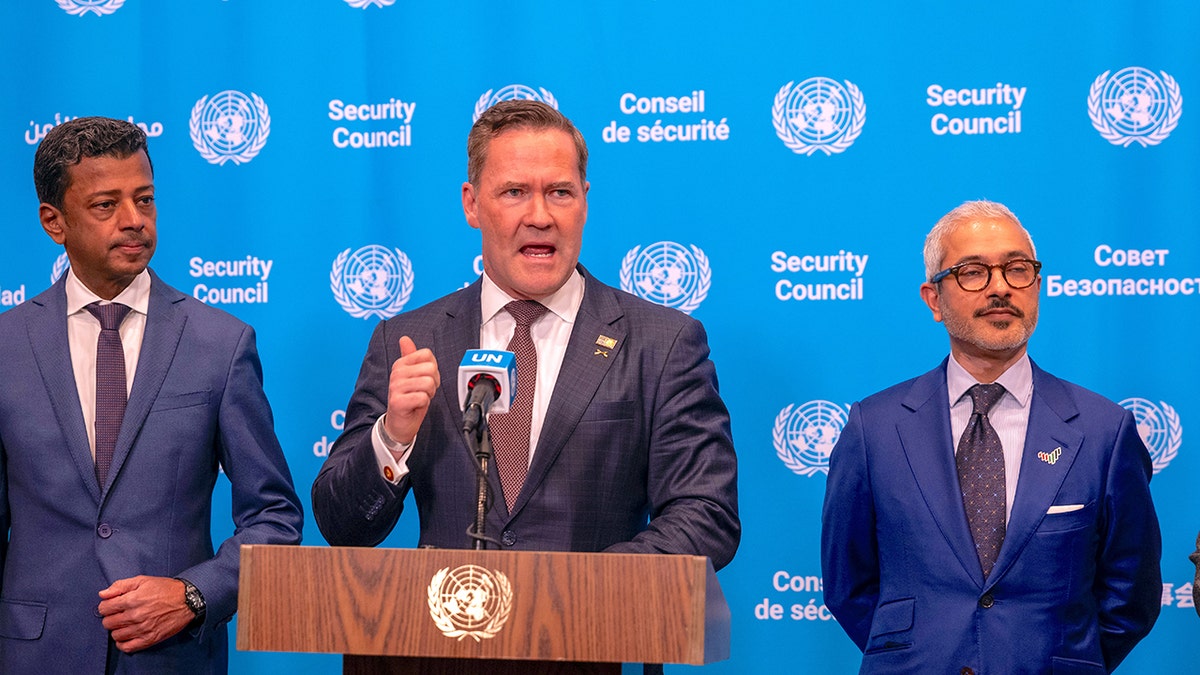
U.S. Ambassador to the United Nations Mike Waltz said Gulf allies are strongly supporting President Donald Trump’s blockade and broader economic pressure campaign against Iran, arguing that regional leaders believe Tehran is beginning to feel the effects. After visits to Bahrain, the United Arab Emirates and the United Kingdom, Waltz told Fox News Digital that the Trump administration’s sanctions and military pressure are squeezing Iran’s economy and strengthening U.S. leverage in ongoing negotiations aimed at preventing Iran from obtaining a nuclear weapon.
Waltz said allies in the Gulf, especially the UAE, want Washington to keep up “credible pressure” and view the current approach as effective. He claimed Iran’s currency is collapsing, foreign reserves are dwindling, inflation is rising, and the regime is having difficulty paying the military, government workers and police. He framed the situation as one in which Iran is becoming increasingly desperate and said the administration is using that pressure to its advantage.
The article also notes that officials were simultaneously signaling progress in U.S.-Iran talks, with one unnamed U.S. official saying an agreement could be signed within days, though not yet finalized. Waltz emphasized that regional partners are aligned with U.S. goals and willing to absorb short-term pain to stop Iran from acquiring a nuclear weapon. Bahrain, home to the U.S. Fifth Fleet and exposed to Iranian attacks and threats, was highlighted as another key partner in the effort. The broader regional backdrop includes missile and drone attacks, shipping security concerns in the Strait of Hormuz, and the Abraham Accords’ role in reshaping Gulf-Israel relations against Iran.
Entities: Mike Waltz, Donald Trump, Iran, Bahrain, United Arab Emirates • Tone: analytical • Sentiment: negative • Intent: inform