13-10-2026
The article reports continuing Russian and Ukrainian strikes amid uncertainty about a proposed “energy ceasefire.” Ukraine’s president says Russian attacks on Ukraine’s energy infrastructure have not stopped, despite US President Donald Trump announcing that Russia and Ukraine had agreed to such an arrangement. The article notes, however, that neither Moscow nor Kyiv has confirmed that an agreement is in place. As a result, the reported announcement and the situation on the ground remain at odds: an agreement was publicly described by Trump, while Ukraine says attacks on energy infrastructure continue and both governments have yet to verify the deal. The report does not provide further details about the announcement, the strikes, their effects, or the terms and duration of any proposed ceasefire. It therefore presents the status of the arrangement as unresolved rather than treating it as a confirmed agreement. Overall, the article focuses on the gap between the claim of an energy ceasefire and Ukraine’s account of ongoing attacks, while emphasizing the absence of confirmation from either side.
Entities: Russia, Ukraine, Donald Trump, Moscow, Kyiv • Tone: analytical • Sentiment: negative • Intent: inform
13-10-2026
The article reports a dispute over US President Donald Trump’s claim that Russia and Ukraine agreed to stop attacking energy infrastructure. Trump said the two leaders had accepted an energy ceasefire after he declared one on Sunday, but Ukrainian President Volodymyr Zelenskyy said Russian forces had struck at least six Ukrainian energy facilities since then, wounding 33 people. Trump acknowledged possible violations by both sides but offered no details, and made an unsupported claim that 32,000 people had been killed in the war in the past month. He urged Zelenskyy and Russian President Vladimir Putin to meet and end what he called a “ridiculous” war.
The announcement reportedly caught Kyiv and European allies off guard. It followed Trump’s temporary easing of US sanctions on Russian diesel, which drew criticism in Europe and Ukraine. Zelenskyy said the move weakened efforts to isolate Russia and could strengthen its war effort. Some US lawmakers from both parties questioned whether the decision violated US law. Ukraine said it supported an energy truce and had not attacked Russian refineries overnight, while offering to sign guarantees. Zelenskyy nevertheless said Moscow appeared unwilling to comply. Russia’s Foreign Minister Sergey Lavrov rejected a pause and said Moscow would continue its military campaign.
The article also places Trump’s claims in the context of US politics. Trump has portrayed Ukraine as an obstacle to peace and suggested Putin is more interested in a deal. Al Jazeera correspondent Alan Fisher said Trump has announced agreements before that did not materialize, and that it was unclear whether this one existed. The report suggests the announcement may be connected to Trump’s aim of lowering diesel prices before the November 3 US midterm elections, amid voter concern about living costs. Meanwhile, European Union foreign ministers approved a major new sanctions package targeting about 1,569 people and businesses. German Chancellor Friedrich Merz said pressure on Russia was necessary for serious negotiations.
Entities: Donald Trump, Volodymyr Zelenskyy, Vladimir Putin, Sergey Lavrov, Alan Fisher • Tone: analytical • Sentiment: negative • Intent: analyze
13-10-2026
Ukrainian President Volodymyr Zelenskyy said Russia was not complying with an energy ceasefire announced by U.S. President Donald Trump. Zelenskyy reported that Russia struck a power plant in eastern Ukraine shortly after Trump’s announcement and then attacked six more energy facilities. He said Ukraine was prepared to observe the ceasefire and called on Russia to take matching steps. Trump said he was unsure whether violations had occurred, asserted that both sides had violated agreements, and urged Zelenskyy and Russian President Vladimir Putin to end the war. He later said he believed Putin was more interested in a deal than Zelenskyy.
The article describes previous unsuccessful efforts by Trump to secure pauses in attacks on energy infrastructure. In January, Russia struck Kyiv power and heating plants four days after Trump said Putin had agreed to a weeklong pause. A September proposal for both countries to stop attacking energy infrastructure also failed. Zelenskyy had expressed willingness to participate but doubted Russia would reciprocate.
The article explains that the two countries’ attacks have unequal effects. Ukrainian strikes mainly target Russian oil and gas infrastructure, reducing refining and diesel production, but have not brought Russia’s economy close to collapse. Russia’s larger economy and greater missile and drone capacity allow it to cause more extensive harm to Ukraine, including civilian power and heating outages. An Eurasia Group analyst said Russian attacks often do not distinguish between civilian and military infrastructure.
The dispute is occurring amid high global energy prices and a shift in U.S. policy that reportedly allows some Russian diesel sales. European and Ukrainian officials told CBS News that the Trump administration threatened to suspend intelligence sharing and halt a weapons-purchase arrangement for Ukraine through the PURL system unless Ukraine stopped deep strikes on Russian energy facilities. Ukraine considers the threats serious because it relies on U.S. intelligence and the program to obtain scarce Patriot missiles. Zelenskyy said progress depends on the United States putting pressure on Russia.
Entities: Volodymyr Zelenskyy, Donald Trump, Vladimir Putin, Ukraine, Russia • Tone: analytical • Sentiment: negative • Intent: inform
13-10-2026
US President Donald Trump said an energy ceasefire between Russia and Ukraine was in effect, despite Ukrainian President Volodymyr Zelenskyy’s report that Russia had continued striking Ukrainian energy sites. Asked about the reported attacks, Trump said he would need to examine them and added that there had been violations “on both sides.” He had previously announced the ceasefire in a brief social media post, saying it took effect immediately and warning, “Do not break it!” The post provided few details. The Kremlin did not confirm that Russia had agreed to the arrangement: spokesman Dmitry Peskov said only that contacts were ongoing.
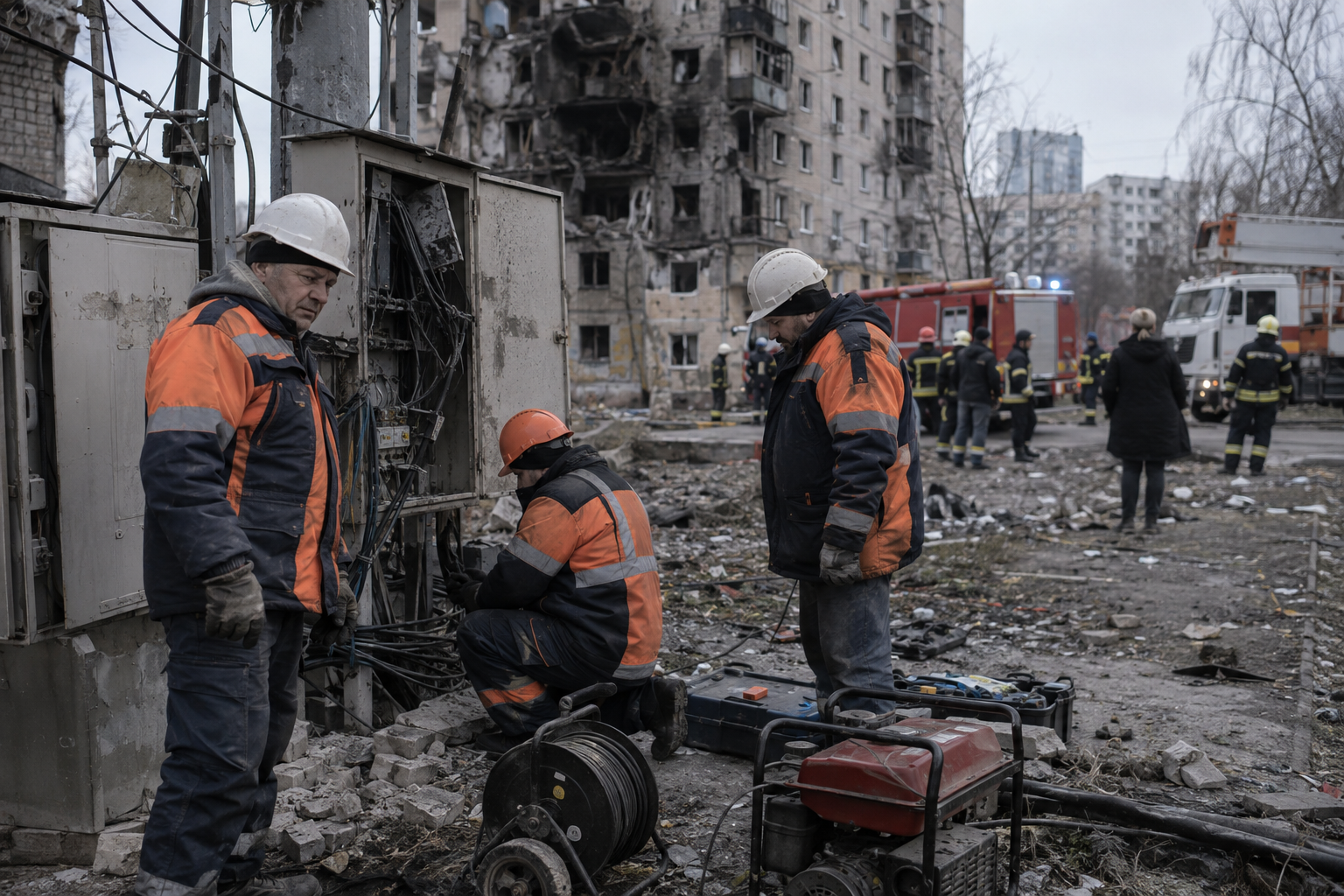
Meanwhile, a Russian drone struck a 25-storey residential building in Kyiv’s Darnytskyi district on Monday night. The city’s military administration reported that one woman was killed and at least five other people were injured. Earlier that day, falling debris from Russian attacks had started a fire at a private home in the same district, and at least two people were injured in daytime strikes.
Zelenskyy said Ukraine was willing to stop attacks on Russian energy infrastructure, but that Moscow continued to target Ukrainian energy sites. The article thus describes a gap between Trump’s assertion that an energy ceasefire existed and the lack of confirmation from the Kremlin, alongside reports of continued attacks and civilian casualties in Kyiv.
Entities: Donald Trump, Volodymyr Zelenskyy, Dmitry Peskov, Russia, Ukraine • Tone: analytical • Sentiment: negative • Intent: inform