12-06-2026
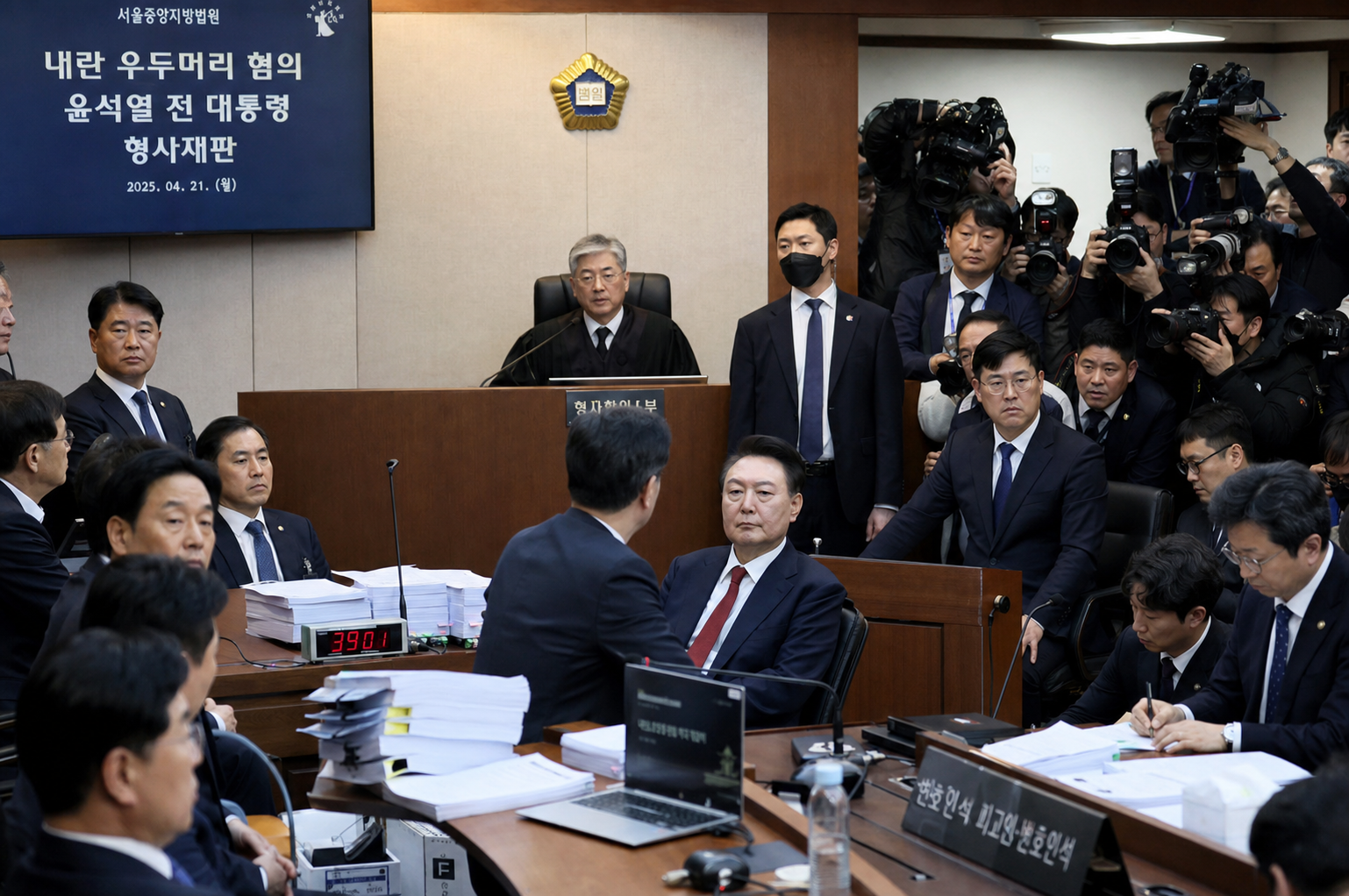
A South Korean court sentenced former President Yoon Suk Yeol to 30 years in prison over charges tied to military drone operations over Pyongyang, which prosecutors said were intended to help justify his failed martial law declaration in December 2024. According to Yonhap, the Seoul Central District Court found Yoon guilty of abuse of power and aiding the enemy, concluding that he had conspired from the outset in the October 2024 drone incursion. Yoon denied wrongdoing, and his lawyers argued that he did not order or later approve the operation, insisting it was unrelated to martial law and was instead a response to North Korea’s repeated balloon launches carrying rubbish across the border. The decision adds another major legal blow to Yoon, who has already faced severe consequences over the martial law attempt. In February, he was sentenced to life in prison for leading an insurrection connected to that effort, and he was removed from office after South Korea’s Constitutional Court upheld his impeachment. That political upheaval triggered a snap election won by liberal President Lee Jae Myung. Yoon, who is currently in custody, may appeal the latest ruling.
Entities: Yoon Suk Yeol, Seoul Central District Court, South Korea, Pyongyang, North Korea • Tone: analytical • Sentiment: negative • Intent: inform
12-06-2026
South Korea’s ousted former President Yoon Suk Yeol and former defense minister Kim Yong Hyun were sentenced to 30 years in prison in a case centered on alleged drone flights over Pyongyang in 2024. Prosecutors said Yoon ordered the flights to provoke North Korea, create a national emergency, and help justify declaring martial law in South Korea. The Seoul Central District Court found both men guilty of aiding an adversary and abusing power, concluding the alleged actions endangered South Korea’s military interests by exposing capabilities and encouraging North Korean defenses. The ruling is part of a broader legal collapse for Yoon, who had already been sentenced to life in prison in another case involving rebellion over his short-lived martial law declaration in December 2024.
The article explains that North Korea accused Seoul of sending drones over Pyongyang to drop propaganda leaflets, while Yoon’s side argued the flights were a response to North Korean trash balloons sent into the South. Tensions between the two Koreas rose sharply but did not result in direct military conflict. The prosecution portrayed the drone operation as part of a larger authoritarian plan to consolidate power and target political opponents. Yoon has already been removed from office, arrested, and remains involved in multiple criminal proceedings, with the rebellion verdict appealed by both sides.
Entities: Yoon Suk Yeol, Kim Yong Hyun, Seoul Central District Court, North Korea, South Korea • Tone: analytical • Sentiment: negative • Intent: inform
12-06-2026
A South Korean court has convicted former President Yoon Suk Yeol of ordering military drones to fly over North Korea as part of a scheme to heighten tensions and create a justification for declaring martial law. The verdict adds to a growing list of criminal findings against Yoon, who was impeached and removed from office after imposing martial law in late 2024 and later received a life sentence for masterminding an insurrection. In this case, a three-judge panel of the Seoul Central District Court said the drone operation was designed not for national security, but for a private political purpose: provoking North Korea so Yoon could present the country as facing an emergency and then seize greater power.
The court sentenced Yoon to 30 years in prison for the drone operation, the second-most serious charge against him, which concerns undermining South Korea’s military interests or benefiting an enemy state. Two close aides were also convicted: former defense minister Kim Yong-hyun received 30 years, and former counterintelligence commander Lt. Gen. Yeo In-hyong received 15 years. Prosecutors argued the operation was an anti-state crime, while Yoon’s lawyers said the flights were a legitimate response to North Korean balloons carrying trash into the South.
The article places the ruling in the wider context of the political crisis Yoon triggered in December 2024, when he declared martial law and sent armed troops to the National Assembly. Citizens and lawmakers quickly mobilized to block the move and force its reversal. The case reflects deep political polarization in South Korea and rising concern about the damage done to democratic institutions and national security.
Entities: Yoon Suk Yeol, South Korea, North Korea, Seoul Central District Court, Kim Yong-hyun • Tone: analytical • Sentiment: negative • Intent: inform