12-06-2026
The article argues that the 2026 FIFA World Cup could become the most economically unusual and extreme tournament ever, not because of the football alone but because of its pricing model, geopolitical context, and scale. It highlights a backdrop of global instability: the United States, Canada and Mexico are co-hosting amid trade tensions, while war and diplomacy involving the US, Iran, Israel and wider energy markets add to the uncertainty surrounding the event. Against that setting, the World Cup is presented as a high-wire act for FIFA and world politics.
The central economic point is that fans are being pushed to absorb unprecedented costs. Ticket prices are described as extraordinarily high, and travel costs, such as expensive commuter rail fares in New Jersey, further squeeze spectators. The article says this reflects a shift toward a more American-style, revenue-maximizing model, influenced by NFL stadium economics and dynamic pricing. Instead of the traditional World Cup logic of building infrastructure and spreading benefits through host-country investment, FIFA has rented existing stadiums and extracted revenue directly from attendees.
The piece frames the tournament as a case study in inequality within advanced economies: a K-shaped economy in which better-off consumers can still pay, while ordinary fans are priced out. FIFA argues that the money will be redistributed to support football development in poorer nations, but the article treats the 2026 tournament as a radical experiment in global sports economics, one that may set a new precedent for how mega-events are priced and consumed.
Entities: FIFA, Donald Trump, Gianni Infantino, United States, Canada • Tone: analytical • Sentiment: neutral • Intent: analyze
12-06-2026
The article describes the opening of the 2026 World Cup in Mexico City, where the tournament began with a highly theatrical ceremony at the Azteca Stadium featuring Shakira, other global music stars, dancing, and patriotic performances. Thousands of fans packed the stadium to celebrate Mexico hosting its first World Cup on home soil in 40 years, creating an atmosphere of excitement and national pride. The match that followed gave the home crowd more to celebrate, as Mexico defeated South Africa 2-0 to begin their campaign strongly.
Alongside the festive atmosphere, the article notes that the event was shadowed by protests outside the stadium. Some demonstrations turned violent when radical protesters clashed with police, prompting a heavy security response and briefly disrupting nearby metro stations. Mexican officials said the situation was eventually brought under control. The protests also included teachers and families of missing persons, who used the global spotlight to draw attention to domestic grievances linked to Mexico’s drug war.
The article also highlights FIFA’s large-scale entertainment strategy for the tournament, naming performers such as J Balvin, Burna Boy, Danny Ocean, Andrea Bocelli, Ejae, Alejandro Fernández, and Tyla. Overall, the piece presents the World Cup’s opening in Mexico as a mix of spectacle, celebration, and tension, capturing both the joy of a major sporting event and the political and social unrest surrounding it.
Entities: World Cup 2026, Mexico City, Azteca Stadium, Mexico, South Africa • Tone: analytical • Sentiment: neutral • Intent: inform
12-06-2026
The article covers the launch of the 2026 FIFA Men’s World Cup in North America, emphasizing the tournament’s expanded 48-team format, the first three-country hosting arrangement, and the three opening ceremonies held in Mexico City, Toronto, and Los Angeles. Shakira headlined the Mexico City celebration and performed with Burna Boy, while Canadian and U.S. ceremonies featured major local and international artists. The article then moves through early tournament matchups, noting Mexico’s 2-0 win over South Africa, Canada’s home opener against Bosnia and Herzegovina, and the United States’ first home World Cup match since 1994 against Paraguay. It also highlights heightened security preparations across U.S. host cities, including FBI tactical teams and ICE involvement, amid concerns tied to U.S. immigration enforcement and a referee being denied entry. Additional sections explain stadium rules on prohibited items and water bottles, fan backlash over concessions and drink restrictions, and complaints about steep ticket prices that have priced some supporters into upper-deck seats despite the tournament’s broader accessibility through more host cities and matches.
Entities: 2026 FIFA Men’s World Cup, Shakira, Burna Boy, Gianni Infantino, FIFA • Tone: analytical • Sentiment: neutral • Intent: inform
12-06-2026
The article explains how FIFA World Cup matches are decided when games are tied, with a focus on the 2026 Men’s World Cup. It outlines the basic structure of regulation play, added time, extra time, and penalty shootouts, noting that group-stage matches can end in draws while knockout matches move to extra time and, if needed, penalties. The article also revisits the now-abolished “golden goal” rule and explains why it was removed after concerns that it encouraged overly cautious play. Beyond tie-breaking, the piece details several new rules approved for 2026 aimed at improving pace and discipline, including a five-second countdown for throw-ins and goal kicks, limits on substitution delays, mandatory short exits for players treated by medical staff, and tougher punishment for certain forms of dissent or offensive conduct. It also covers FIFA’s planned hydration breaks, which will occur in every match regardless of weather, and an expanded role for VAR, which will now review more situations such as incorrectly awarded corners and some card decisions. The article concludes by noting that the official match ball, Adidas Trionda, includes a motion sensor chip to support VAR decision-making.
Entities: FIFA, 2026 FIFA Men's World Cup, International Football Association Board (IFAB), VAR (video assistant referee), Adidas Trionda • Tone: analytical • Sentiment: neutral • Intent: inform
12-06-2026
CBS News explains how fans can watch the 2026 FIFA Men’s World Cup, highlighting that while tickets may be difficult to obtain and expensive, most of the 104 matches will be widely available through broadcast and streaming options. The tournament is being co-hosted by the United States, Mexico, and Canada, and begins on Thursday, June 11, with the opening match in Mexico City. The article emphasizes that FOX and NBCUniversal hold U.S. broadcasting rights, with FOX airing 78 games in the U.S. and NBCUniversal’s Telemundo and Universo carrying Spanish-language coverage. It also notes that many matches will be available for free over the air or via ad-supported streaming services, while others will require cable or subscription streaming services such as Fox Sports 1, Peacock, FOX One, YouTube TV, Fubo, and Hulu + Live TV.
The story also lays out the U.S. Men’s National Team’s group-stage schedule, including matches against Paraguay, Australia, and Turkey in venues in California and Seattle. In addition, it provides a detailed day-by-day broadcast schedule for the first portion of the tournament, listing matchups, kickoff times, host cities, and U.S. broadcast platforms. The overall article is a practical viewing guide for fans, designed to help them plan how to watch the tournament and where each key match will air.
Entities: 2026 FIFA Men's World Cup, CBS News, Tim Ream, FOX, NBCUniversal • Tone: analytical • Sentiment: neutral • Intent: inform
12-06-2026
The article describes the kickoff of the 2026 FIFA Men’s World Cup in Mexico, where the first of three opening ceremonies across the host nations began in Mexico City with performances and cultural tributes. The ceremony, held shortly before the opening match at Estadio Azteca, featured an opening dance routine inspired by Aztec culture, followed by performances from Mexican rock band Maná and other Latin music artists including Danny Ocean, Los Ángeles Azules, and J Balvin. Colombian singer Shakira and Nigerian artist Burna Boy then performed the tournament’s official anthem, “Dai Dai,” which they co-wrote.
After the ceremony, Mexico defeated South Africa 2-0 in the tournament’s first Group A match, energizing the home crowd. The article also notes that two additional opening ceremonies are scheduled in the other host countries: Canada, with performances by Alanis Morissette and Michael Bublé in Toronto, and the United States, with performances by Katy Perry, Future, and Anitta in Los Angeles ahead of the U.S. Men’s National Team’s opening match against Paraguay. Overall, the piece frames the World Cup as a major multinational spectacle combining sports, music, and national cultural showcases.
Entities: 2026 FIFA Men's World Cup, Mexico, Canada, United States, Mexico City • Tone: neutral • Sentiment: neutral • Intent: inform
12-06-2026
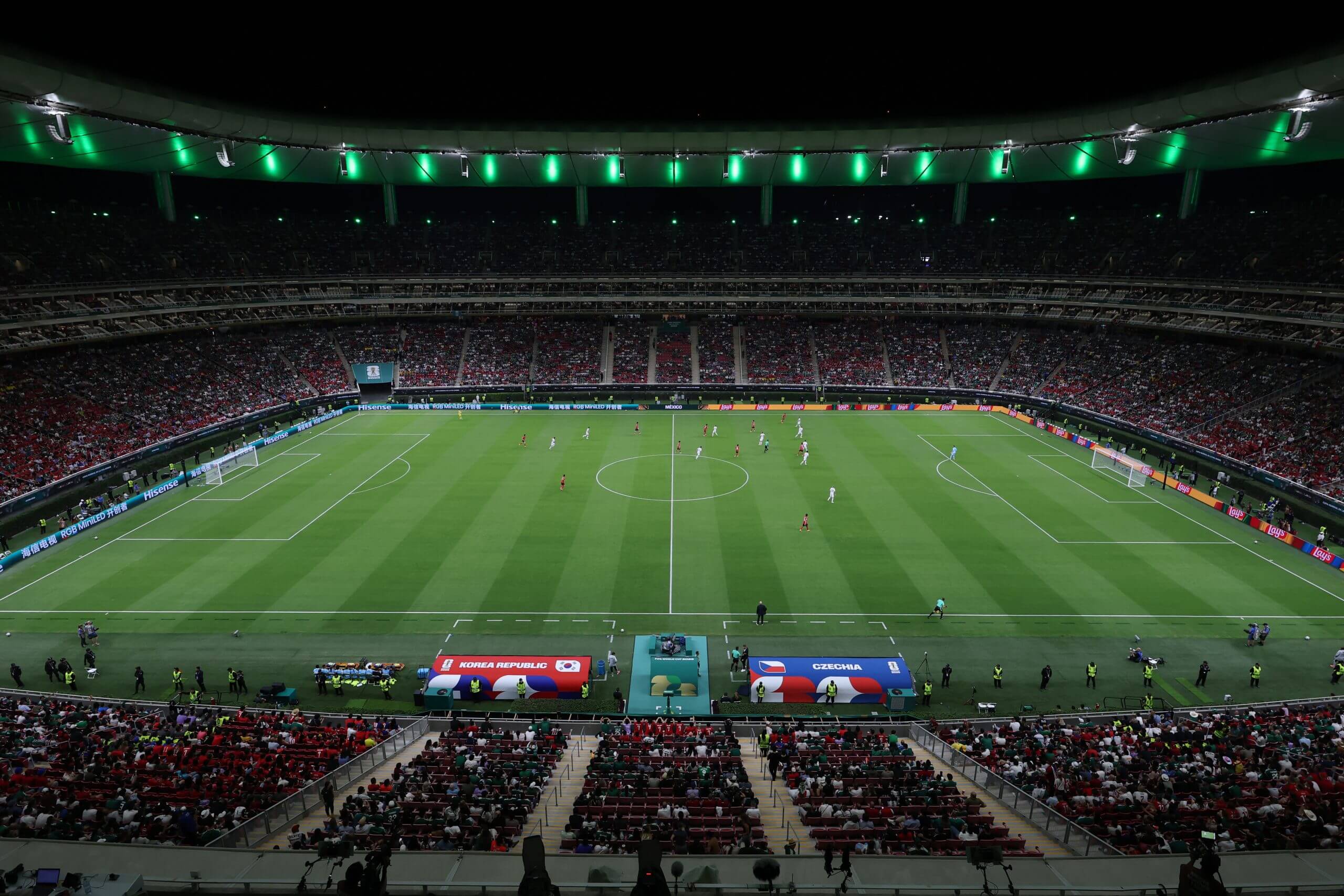
The article examines South Korea’s 2-1 comeback win over the Czech Republic in the World Cup’s second match, while focusing heavily on the conspicuously large number of empty seats at Guadalajara’s Akron Stadium. Although FIFA had touted unprecedented demand and massive ticket sales, the scene in the stadium appeared to contradict those claims, with visible gaps especially in premium and hospitality areas. The piece notes that ticket prices were high, travel to Mexico, Canada, and the United States was expensive, and visa complications likely contributed to lower attendance. It also points out that Czech Republic, a late qualifier expected to draw fewer traveling supporters, was playing in one of the tournament’s less prominent host cities, which may have reduced turnout further.
On the field, the match was disjointed for long stretches, with South Korea’s Son Heung-min missing several chances that could have put his team ahead. Czech Republic struck first through Ladislav Krejci, who headed in from a long throw, but South Korea responded quickly: Hwang In-beom produced a clever chip over the goalkeeper to equalize, and Oh Hyeon-Gyu scored the late winner. The article frames this as a mixed performance for South Korea, suggesting that Son’s influence may be waning even though the team still showed resilience and quality in the comeback. It concludes by situating the result within Group A, where Mexico and South Korea both won their openers and are now well placed to advance, while the Czech Republic likely faces a tougher path to the knockout stage.
Entities: South Korea, Czech Republic, World Cup 2026, Akron Stadium, Guadalajara • Tone: analytical • Sentiment: neutral • Intent: analyze
12-06-2026
In a brief CNN video segment, FIFA President Gianni Infantino addressed concerns about visa problems affecting fans and participants ahead of the 2026 World Cup. Infantino said FIFA was actively working to find solutions to the issue, but emphasized that the organization cannot override immigration or visa decisions made by governments. His comments were meant to calm concerns and reassure the public that FIFA was engaged, even though the ultimate authority over visas remains with national governments. The article presents the issue as a growing logistical challenge for the tournament, while highlighting FIFA’s limited power in resolving it. Infantino’s message, summarized in the headline’s quote, was essentially to remain patient and not panic: “Chill, relax.” The piece frames the visa question as one of the practical hurdles surrounding the build-up to the World Cup rather than a scandal or conflict, and focuses on FIFA’s response and boundaries of responsibility.
Entities: Gianni Infantino, FIFA, CNN, Shannon Gillece, 2026 World Cup • Tone: analytical • Sentiment: neutral • Intent: inform
12-06-2026
This article is an interactive 2026 FIFA World Cup schedule and scores tracker from The Athletic, designed as a live reference page for tournament coverage. Rather than a traditional narrative story, it functions as a standings-and-probabilities hub for the expanded 2026 Men’s World Cup, listing the participating national teams and organizing them by group. The page also highlights “chances for each team,” giving percentage estimates for qualification or advancement in groups A through L.
The content presented here focuses on the tournament structure and likely outcomes rather than match reports or analysis. It includes a broad list of teams from around the world, reflecting the international scope of the event, and then breaks them into groups with percentage chances assigned to each side. These probabilities suggest an ongoing model or projection of how teams are expected to perform in the competition.
Because the supplied text is largely a tracker interface, the article’s value lies in providing readers with quick access to teams, group composition, and projected chances. It serves as a World Cup companion page where fans can follow the schedule, results, and evolving tournament picture in one place. In short, the piece is a data-driven, continuously updated World Cup tracker rather than a conventional article with a single news angle or conclusion.
Entities: 2026 FIFA World Cup, The Athletic, FIFA, World Cup schedule, scores • Tone: analytical • Sentiment: neutral • Intent: inform