11-07-2026
China has accused the United States of ignoring the political goodwill generated by the recent Trump-Xi summit in Beijing and of unfairly targeting Chinese firms through a sweeping new round of blacklisting. In a statement issued by the Chinese embassy in Washington, Beijing said the Trump administration had “disregarded the consensus” reached by President Donald Trump and Chinese leader Xi Jinping in May and had abused the concept of national security to justify suppressing Chinese enterprises. The dispute centers on the Pentagon’s June decision to add more than 60 Chinese companies to its blacklist, including major firms such as Alibaba, Baidu and BYD, designating them as “Chinese military companies operating in the United States.” China responded days later with export controls aimed at leading U.S. rare earth firms, escalating the tit-for-tat tensions. Despite the renewed friction, sources cited by the South China Morning Post said the actions are unlikely to derail Xi’s expected visit to the United States in September, though they do underscore the fragility of the current thaw in relations. Affected Chinese technology companies have also begun legal efforts to challenge the U.S. designation.
Entities: China, United States, Donald Trump, Xi Jinping, Beijing • Tone: analytical • Sentiment: negative • Intent: inform
11-07-2026
China’s Star Market, the tech-focused board launched on the Shanghai Stock Exchange after President Xi Jinping first floated the idea in 2018, has grown into a major pillar of Beijing’s drive for technological self-reliance and innovation. The article explains how the market was designed to correct long-standing weaknesses in China’s capital markets, which were seen as too rigid and not supportive enough of fast-growing new-economy firms. By giving domestic technology companies easier access to capital, the Star Market has helped channel funding toward frontier industries such as artificial intelligence, robotics and semiconductors.
With a combined market capitalisation of 15.5 trillion yuan (US$2.3 trillion), the Star Market now hosts strategically important companies that China hopes will reduce dependence on foreign technology, especially in areas where the United States has imposed restrictions. The article highlights listed firms such as Cambricon Technologies, Moore Threads Technology and Semiconductor Manufacturing International Corporation (SMIC), describing them as symbols of China’s effort to build up its own advanced industrial base.
The piece also frames the Star Market as a broader reform success. It helped reverse the problem of innovative Chinese companies seeking overseas listings because domestic markets were not flexible enough. Seven and a half months after Xi’s announcement, the board began trading in July 2019 with an initial group of 25 companies. Overall, the article presents the Star Market as a key financial tool in China’s strategy to promote innovation, support hard technologies and strengthen economic growth.
Entities: Star Market, Sci-Tech Innovation Board, Shanghai Stock Exchange (SSE), Xi Jinping, Beijing • Tone: analytical • Sentiment: neutral • Intent: inform
11-07-2026
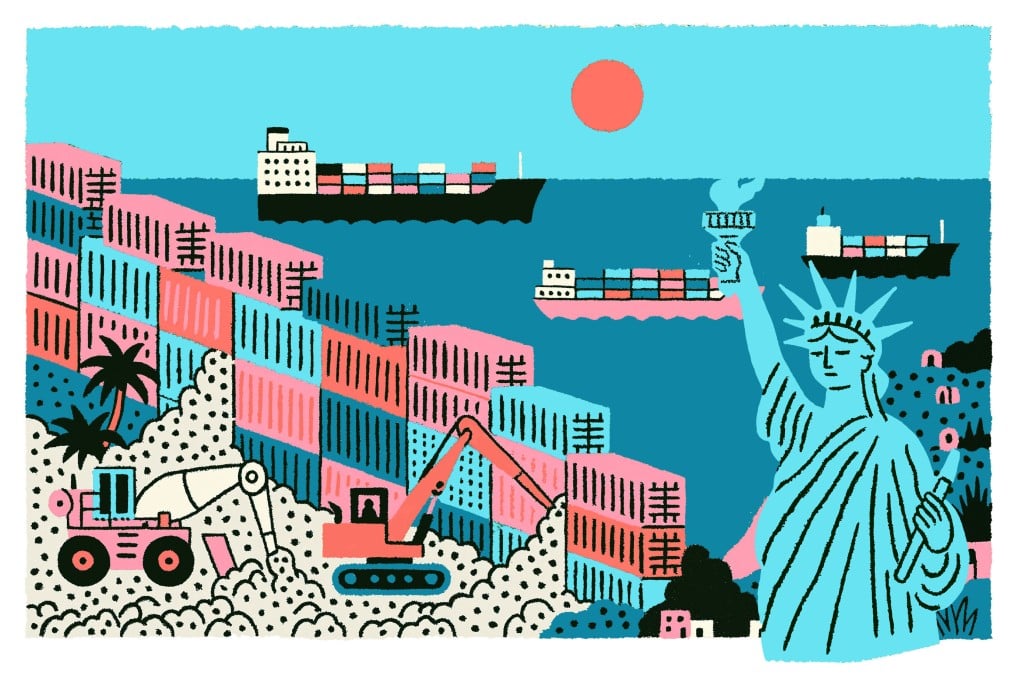
The article examines how Donald Trump’s second-term tariff strategy, branded as “Liberation Day,” is reshaping the global trade order and potentially boxing the United States into a more protectionist economic posture. It places Trump’s tariff actions in historical context, comparing them to the Smoot-Hawley Tariff Act of 1930 and the early U.S. tariff regime associated with Alexander Hamilton, but argues that the modern measures are more consequential because of their breadth, their impact on allies, and the structural shift they signal away from decades of open-market policy.
The piece says Trump imposed sweeping tariffs on nearly all of Washington’s major trading partners in April of the previous year and justified them as a restoration of an older American economic tradition. However, historians and trade analysts quoted in the article dispute that framing, arguing that the policy is not merely a revival of tradition but a major reversal of postwar trade liberalization. The article emphasizes that the United States and China have since reached a fragile truce, yet analysts warn that the broader protectionist pivot is likely to endure. It also notes that the administration has moved to establish a more permanent tariff authority, suggesting that tariffs may become embedded in U.S. policy rather than remain a temporary negotiating tool.
Overall, the article presents Trump’s tariffs as a defining shift with long-term consequences for the global economic order, U.S. alliances, and the future of trade policy.
Entities: Donald Trump, Xinyi Wu, Beijing, United States, China • Tone: analytical • Sentiment: neutral • Intent: analyze