11-06-2026
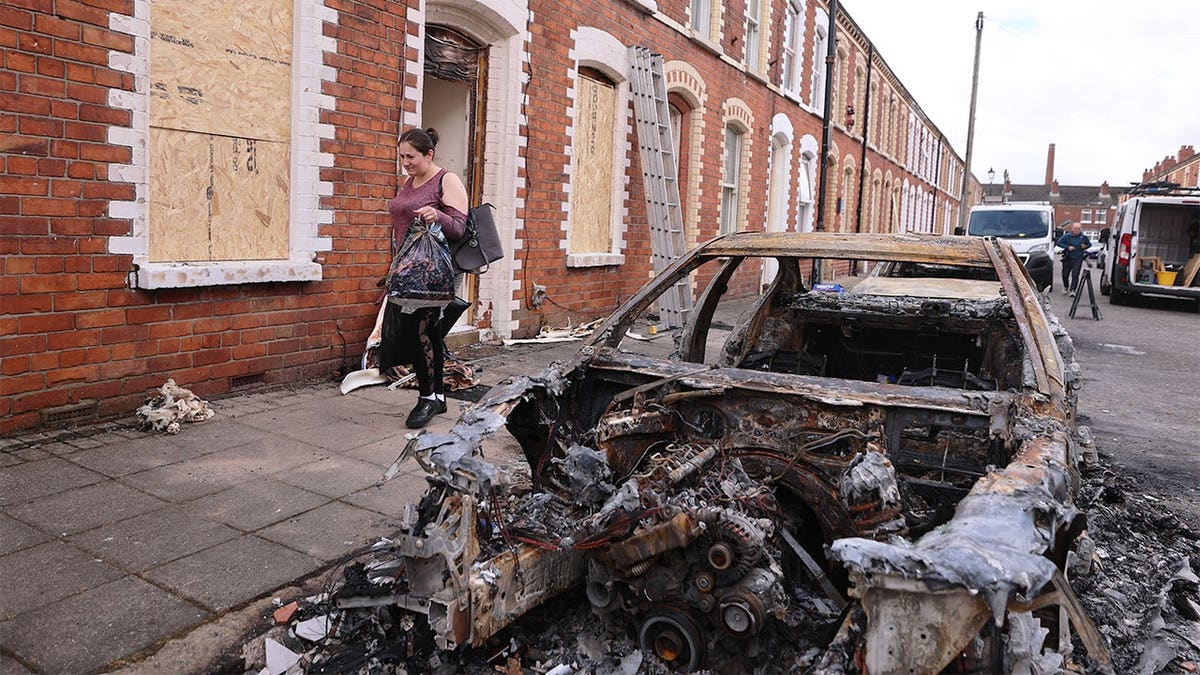
Violent unrest erupted again in Belfast and nearby northern areas after a stabbing attack that police say left a man seriously injured and led to charges against a 30-year-old Sudanese man, Hadi Alodid. On Wednesday, police used water cannons to disperse masked protesters who threw bricks, rocks, bottles, and other objects, while setting fires and smashing pavement. The disturbances followed a second night of anti-immigrant violence, during which masked groups torched homes they believed housed migrants, burned a bus, and forced families to flee; firefighters rescued several people, including children, and police said more than two dozen people were left homeless. The unrest was fueled by social media and far-right activists, even as police and political leaders urged calm and condemned the attacks as racist, cowardly, and unjustified. Alodid appeared in court charged with attempted murder, possessing a knife, and threatening to kill a hospital worker. Police said the attack was not being treated as terrorism. The article also places the violence in a wider context of anti-immigration unrest in the U.K., referencing previous riots after a stabbing in Southampton and the sensitive political history surrounding the Northern Ireland border and the peace process.
Entities: Belfast, Northern Ireland, Police Service of Northern Ireland (PSNI), Hadi Alodid, Stephen Ogilvie • Tone: urgent • Sentiment: negative • Intent: inform
11-06-2026
Violent anti-immigration unrest broke out in Belfast after a graphic stabbing attack spread online and triggered calls for mass protests from far-right figures. In the immediate aftermath, masked demonstrators gathered in multiple parts of the city, set fire to buses, cars, trash cans and homes, and shouted anti-immigrant slogans. Police said they had detained and charged a Sudanese man in his 30s with attempted murder, knife possession and threats to kill; he had entered Northern Ireland after seeking asylum and later received a five-year U.K. visa. The stabbing victim suffered serious injuries and remains the focus of the police investigation.
The article emphasizes the contrast between public anger over the attack and the deliberate escalation of violence by protesters. Local politicians and police urged calm, while officials including First Minister Michelle O’Neill condemned the scenes as thuggery and said families were being burned out of their homes. BBC reporting described masked men carrying bricks and bottles, kicking in doors, smashing windows, and targeting immigrant neighborhoods. Emergency services responded to dozens of fire-related incidents, and residents fled burning homes.
The piece also situates the Belfast unrest in a broader pattern of anti-immigration agitation across the U.K., referencing earlier protests after the murder of Henry Nowak in Southampton and allegations of “two-tier” policing promoted by far-right activists. It includes testimony from residents who say immigration pressures and political inaction are fueling frustration, but it clearly frames the street violence, intimidation, and arson as unacceptable and lawless. The article closes with condemnation from U.K. Prime Minister Keir Starmer and notes that police have not indicated the stabbing was terror-related, with the motive still under investigation.
Entities: Belfast, Northern Ireland, Police Service of Northern Ireland, Sudanese man, Claire Hanna • Tone: urgent • Sentiment: negative • Intent: inform
11-06-2026
A man in his 40s was seriously injured in a violent knife attack in north Belfast, Northern Ireland, after police say a Sudanese migrant was arrested on suspicion of attempted murder. The incident occurred shortly after 10:30 p.m. Monday and left the victim with serious injuries to his face, neck, back, and eyes. Police recovered what they believe was a kitchen knife at the scene. Video from the aftermath showed bystanders confronting the attacker, including one person using a hurling stick, and police praised the public intervention as heroic because it likely helped save the victim’s life.
The Police Service of Northern Ireland initially described the suspect as Somali before later correcting that he is believed to be Sudanese, framing the update as part of a fast-moving investigation. Assistant Chief Constable Ryan Henderson said police understand the suspect came into Northern Ireland from Dublin and had been granted leave to remain, though he noted that the Home Office would provide further clarity on his immigration status. He also said there was no current evidence to suggest the attack was terrorism-related, while emphasizing the inquiry was still in its early stages.
The attack quickly became politically charged, with critics using it to highlight concerns about Britain’s immigration and border systems. Alan Mendoza of the Henry Jackson Society argued the case showed failures in the U.K.’s migration policies. Prime Minister Keir Starmer condemned the violence as “sickening” and praised first responders and bystanders. Reform UK leader Nigel Farage also demanded that authorities immediately disclose the attacker’s identity and immigration status, reflecting wider public and political anger over the incident.
Entities: Belfast, Northern Ireland, Police Service of Northern Ireland (PSNI), Sudanese migrant, Home Office • Tone: negative • Sentiment: negative • Intent: inform
11-06-2026
A Sudanese asylum seeker, Hadi Alodid, appeared in Belfast Magistrates’ Court after being accused of a stabbing attack that left a Belfast man, Stephen Ogilvie, blinded in one eye and seriously injured. Prosecutors said Alodid, 30, was charged with attempted murder, threatening to kill, and possessing a knife. The attack, which was captured on graphic video and spread quickly online, triggered anger and helped ignite anti-immigrant unrest across Northern Ireland.
Police said Ogilvie suffered severe injuries to his face, neck, back, and eyes, and a knife believed to be used in the attack was recovered. Bystanders who intervened at the scene were praised as “heroic” by police for helping save the victim’s life. Alodid, who had entered Northern Ireland from the Republic of Ireland in 2023 and was granted a five-year asylum permit, declined legal representation and did not enter a plea. Authorities initially misidentified him as Somali before correcting his nationality to Sudanese.
The article then focuses on the broader fallout: masked groups set fire to homes believed to house immigrants, burned bins and a Belfast bus, and attacked police, prompting firefighters to rescue residents and police to declare a critical incident. Political leaders including Michelle O’Neill, Emma Little-Pengelly, and Keir Starmer condemned the violence and urged restraint, while police said they had no indication the stabbing was terror-related and were not seeking other suspects.
Entities: Hadi Alodid, Stephen Ogilvie, Belfast, Northern Ireland, Belfast Magistrates' Court • Tone: urgent • Sentiment: negative • Intent: inform
11-06-2026
Police in Belfast used water cannons and other crowd-control measures on Wednesday as unrest entered a second night following a stabbing attack that left a local man seriously injured and triggered anti-immigrant violence. The violence spread after online far-right activists amplified the attack video and helped fuel protests that turned into rioting, with masked demonstrators setting fires, hurling bricks, rocks, and bottles, and targeting homes believed to house immigrants. Firefighters rescued families from burning houses, and more than two dozen people were left homeless. Police arrested and charged a 30-year-old Sudanese man, Hadi Alodid, with attempted murder and related offenses; he was ordered held in jail and police said there was no indication the stabbing was terrorism-related. Northern Ireland officials, the UK prime minister, and the victim’s family condemned the violence, warning against racism and urging calm. The article also places the unrest in the broader context of tensions over immigration and Northern Ireland’s sensitive border with the Republic of Ireland, noting how activists and politicians seized on the case to push broader political arguments.
Entities: Belfast, Northern Ireland, Republic of Ireland, Police Service of Northern Ireland (PSNI), Hadi Alodid • Tone: urgent • Sentiment: negative • Intent: inform