10-06-2026
Vice President JD Vance said the United States is close to reaching a deal with Iran that would curb Tehran’s nuclear program over the long term, though he cautioned the timing remains uncertain and could be as soon as next week or as far off as months away. Speaking in an interview airing on CBS Sunday Morning, Vance emphasized that the administration’s goal is not just a temporary arrangement but one that would prevent Iran from obtaining a nuclear weapon well beyond President Trump’s term. He said the administration believes it is nearing that objective, while acknowledging that some issues still need to be resolved.
Vance also said the agreement could be reached before the November midterm elections, suggesting that “we’re going to know a lot before the midterm elections.” His comments came amid President Trump’s own remarks that talks with Iran were in their “final throes” and could produce a deal within days. But Trump later escalated tensions after reporting that Iran had shot down an Apache helicopter near the Strait of Hormuz and promising a U.S. response.
The article also notes that the two Apache crew members were rescued by a sea drone in what officials described as the first such U.S. military rescue operation of its kind. They were not injured. Vance dismissed the idea that Iran was merely delaying negotiations, arguing that Iran’s system takes time to reach internal consensus. He said he does not “trust” the Iranian government, but does trust the administration’s negotiating ability and the enforcement mechanisms it expects to secure in any agreement.
Entities: JD Vance, Donald Trump, Iran, Iranian nuclear program, CBS News • Tone: analytical • Sentiment: neutral • Intent: inform
10-06-2026
China’s inflation data for May showed a striking split between wholesale and consumer prices, highlighting the pressure of rising input costs even as domestic demand remains weak. Producer prices rose 3.9% year on year, the fastest pace since July 2022 and above economists’ expectations, driven by higher fuel, power, and raw material costs linked to the Iran war and to a boom in artificial intelligence-related investment. The conflict in the Middle East has disrupted energy and commodity flows through the Strait of Hormuz, while China’s strong demand for computing equipment and semiconductors has added another layer of cost pressure. Factory input costs for fuel, power, and non-ferrous metals surged sharply, suggesting margins are being squeezed for manufacturers. Meanwhile, consumer inflation came in softer than expected at 1.2%, below forecasts and slightly lower in core terms than the prior month, indicating households are still cautious and spending remains subdued. Analysts said weak domestic demand is preventing cost increases from fully passing through to consumers. Market reactions were muted but slightly negative, with Chinese equities and bond yields little changed. The article frames China’s economy as caught between externally driven cost inflation and internally weak consumption, even as exports and some high-end luxury spending show pockets of resilience.
Entities: China, National Bureau of Statistics, Iran war, Strait of Hormuz, artificial intelligence (AI) • Tone: analytical • Sentiment: neutral • Intent: inform
10-06-2026
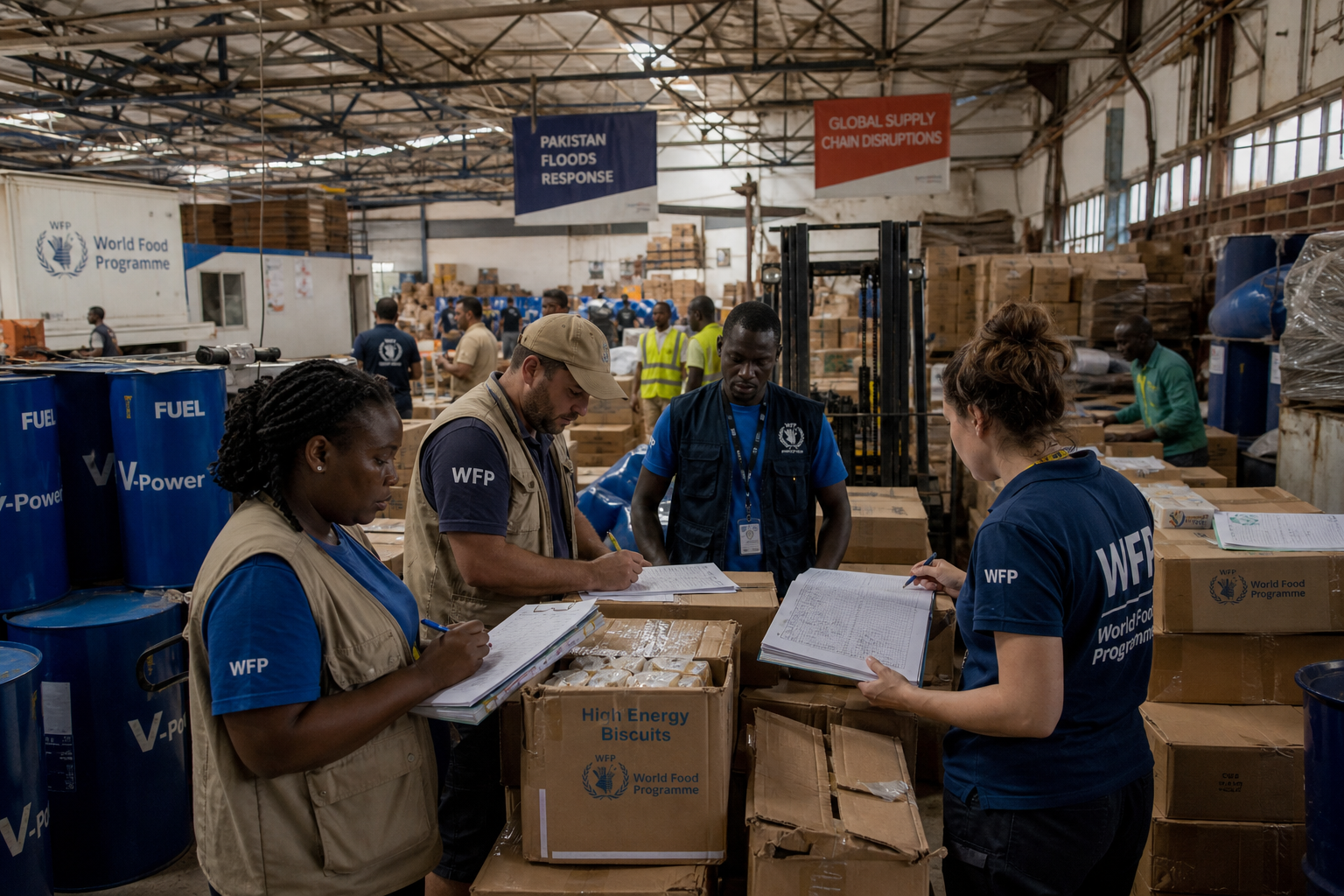
The article reports that the war in Iran and the closure of the Strait of Hormuz are worsening global hunger by driving up fuel, food, and fertilizer costs, according to Carl Skau, acting executive director of the World Food Program (WFP). Because the WFP depends heavily on donor funding, the organization is being forced to make painful triage decisions about who receives aid, even as needs are rising in multiple crisis zones. Skau says the higher cost of fuel makes WFP operations more expensive, food prices are increasing in vulnerable countries, and fertilizer shipments needed for planting in places such as Sudan are being disrupted. The article highlights that the United States, WFP’s largest donor, has sharply reduced its contribution this year compared with 2024, leaving the agency with far less money to respond to emergencies.
Skau warns that the effects of the conflict are already visible in countries such as Sri Lanka, Somalia, Afghanistan, South Sudan, Sudan, Lebanon, and Ukraine. In some places, the WFP is forced to choose between helping one group of vulnerable people and excluding another because resources are insufficient. The article emphasizes the compounding crisis created by conflict-driven supply disruptions, inflation in basic goods, and declining humanitarian funding. Skau argues that even if the Strait of Hormuz reopens soon, recovery will take time and rich countries should step in to cushion the impact on the poorest populations. He also frames global hunger as a security issue, saying that a “hungry world is an unstable world,” and urges continued support for humanitarian aid.
Entities: Iran war, Strait of Hormuz, World Food Program (WFP), Carl Skau, United States • Tone: analytical • Sentiment: negative • Intent: inform