10-06-2026
Police in Northern Ireland detained a man after a brutal stabbing attack in Belfast that British Prime Minister Keir Starmer condemned as “sickening.” The attack, captured in graphic video and rapidly circulated online by far-right figures, triggered renewed tensions over immigration and helped fuel calls for anti-immigration protests across Northern Ireland. Police said the suspect, initially described as Somali and later identified as a Sudanese man in his 30s, was arrested on suspicion of attempted murder. The victim, a man in his 40s, remained in serious condition with severe slash wounds.
Authorities and political leaders urged calm, warning people not to share the video because of its graphic nature and the risk of retraumatizing those involved. Northern Ireland’s five main political parties issued a joint condemnation of the violence, saying there was no place in society for such brutality. At the same time, several far-right and anti-immigration accounts amplified the attack online and promoted demonstrations, leading hundreds of masked protesters to gather in Belfast, where some vehicles were set on fire and roads were blocked.
Police said they had no information to suggest the incident was terrorism-related, though the investigation was at an early stage and motive had not been established. The story is set against a broader backdrop of immigration becoming a deeply polarizing issue in Britain and Northern Ireland, with recent riots and protests over similar flashpoints. The article highlights the intersection of violent crime, online misinformation and mobilization, immigration politics, and fears of renewed disorder.
Entities: Belfast, Northern Ireland, Police Service of Northern Ireland (PSNI), Keir Starmer, Dublin • Tone: urgent • Sentiment: negative • Intent: inform
10-06-2026
A man was hospitalized with serious injuries after a knife attack in north Belfast, Northern Ireland, prompting police to arrest a Sudanese migrant on suspicion of attempted murder. According to the Police Service of Northern Ireland (PSNI), the attack occurred shortly after 10:30 p.m. Monday and left the victim with wounds to his face, neck, back, and eyes. Police recovered what they believe was a kitchen knife, and online video appeared to show bystanders intervening, including one person using a hurling stick. PSNI Assistant Chief Constable Ryan Henderson praised those who stepped in as heroic, saying their actions likely helped save the victim’s life.
The article emphasizes the evolving details of the suspect’s background. Police initially said the suspect was Somali, later correcting that he is believed to be Sudanese, and said the man had come into Northern Ireland from Dublin and had been granted leave to remain in the UK. The Home Office was expected to clarify his immigration status. Henderson said there was no current evidence to suggest the incident was terrorism-related, though the investigation remained at an early stage.
The piece also frames the stabbing within a broader political debate over immigration and border policy in the UK and Ireland. Conservative and right-leaning figures, including Reform UK leader Nigel Farage, criticized the government’s screening and demanded transparency about the suspect’s identity and status. Prime Minister Keir Starmer condemned the violence and thanked both emergency responders and members of the public who intervened. The article uses the Belfast attack to underscore ongoing tensions around immigration, public safety, and political accountability.
Entities: Belfast, Northern Ireland, Police Service of Northern Ireland (PSNI), Ryan Henderson, Keir Starmer • Tone: analytical • Sentiment: negative • Intent: inform
10-06-2026
U.K. leaders urged restraint and calm after a stabbing in Belfast triggered anti-immigration unrest and online speculation about the suspect’s immigration status. Police in Northern Ireland said a 30-year-old Sudanese man had been charged with attempted murder, possessing a knife in a public place, and making threats to kill after a man in his 40s was seriously injured in an attack on a Belfast street. Authorities said they were still investigating the motive and had found no indication the assault was terrorism-related.
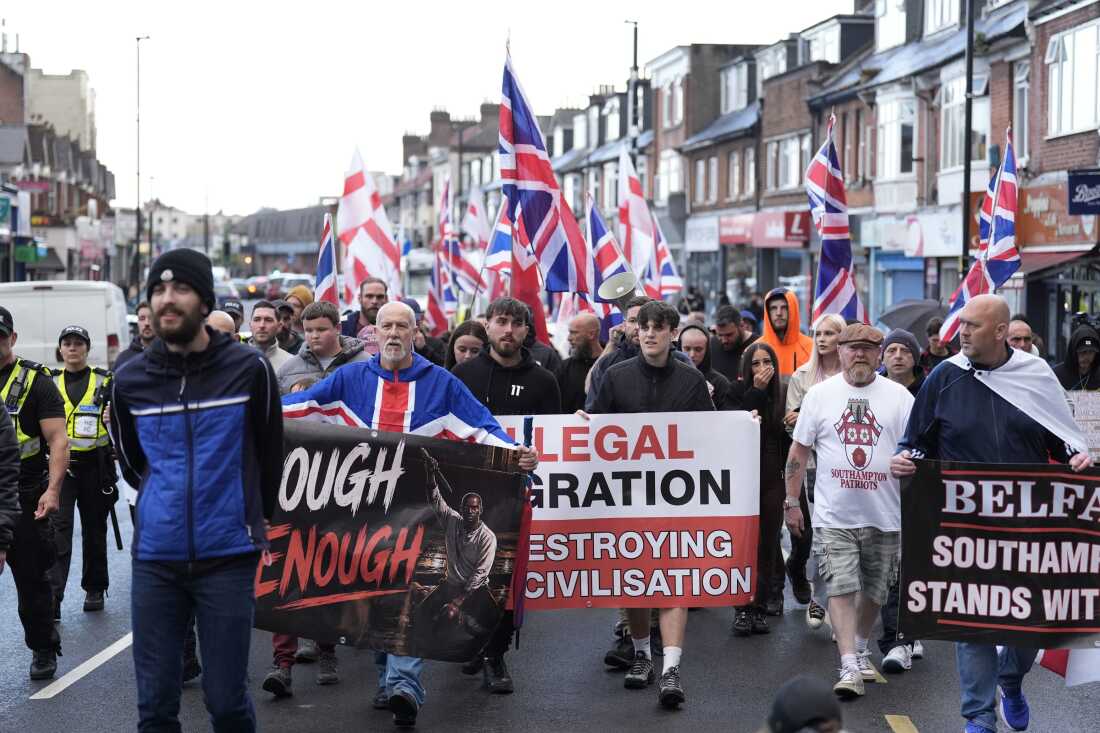
The arrest quickly became a flashpoint in an already tense political environment. Protesters gathered in East Belfast, where vehicles, trash bins, and a bus were set on fire, while demonstrations also took place in other parts of the city. Across the U.K., including Southampton, anti-immigration activists used the Belfast case and other recent violent incidents to argue against immigration and asylum policies. Some politicians, including Democratic Unionist Party leader Gavin Robinson, called for tighter controls, while Northern Ireland’s chief constable and U.K. Prime Minister Keir Starmer urged people not to spread hate, fear, graphic images, or disinformation.
The article places the Belfast unrest in the context of broader debates over immigration, policing, race, and public disorder in the U.K. It also references a recent Southampton murder case that has been politicized by activists and U.S. Vice President JD Vance, underscoring how violent crimes are being drawn into wider culture-war arguments about migration and public safety.
Entities: Belfast, Northern Ireland, Southampton, United Kingdom, Police Service of Northern Ireland • Tone: urgent • Sentiment: negative • Intent: inform