10-05-2026
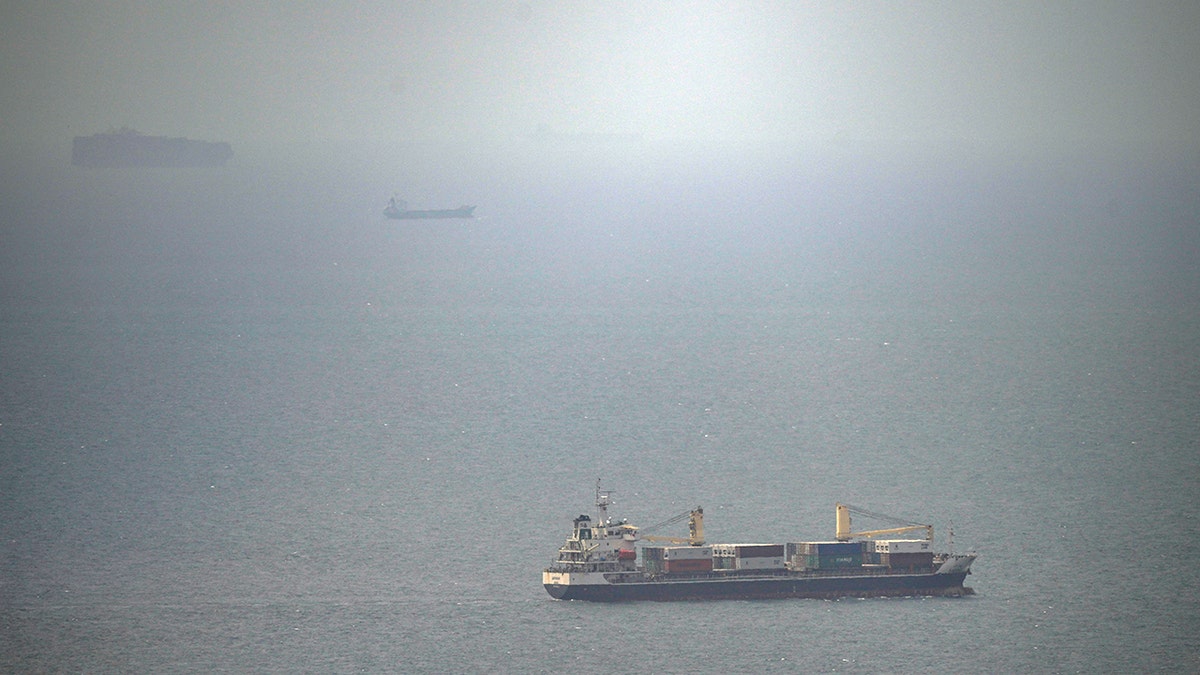
Iran’s foreign minister Abbas Araghchi accused the United States of choosing a “reckless military adventure” instead of a diplomatic path, as tensions escalated around the Strait of Hormuz and the wider Iran-Israel-US confrontation. The article describes a sequence of military and diplomatic developments: each side blamed the other for attacks in the strategic waterway, the US military said it had disabled Iranian-flagged tankers trying to enter Iranian ports, and Washington maintained a naval blockade to pressure Tehran. The Strait of Hormuz, through which roughly 20% of global oil and liquefied natural gas trade passes, is central to the dispute, and disruptions there have already driven prices higher.
The report also notes that Trump said a ceasefire remained intact despite the clashes, and that Iran was expected to respond to US proposals on Friday. US Secretary of State Marco Rubio expressed hope that Iran’s response would be serious. Beyond the Strait of Hormuz, the article outlines parallel US-led diplomacy on Lebanon, where the US said it was ready to host a new round of Israel-Lebanon talks focused on security for Israel and reconstruction for Lebanon, though Hezbollah rejects disarmament demands. The article further describes Vice-President JD Vance’s meeting with Qatar’s prime minister to discuss Pakistan’s mediation efforts between the US and Iran, with Qatar urging negotiations to address the “root causes of the crisis.” Overall, the piece presents a volatile regional standoff shaped by military pressure, maritime clashes, and fragile diplomatic efforts.
Entities: Iran, United States, Abbas Araghchi, Donald Trump, Marco Rubio • Tone: urgent • Sentiment: negative • Intent: inform
10-05-2026
CNN’s live updates describe a volatile and widening conflict involving Iran, the United States, Israel, Hezbollah, and shipping in the Strait of Hormuz, with ceasefire talks progressing unevenly even as attacks continue. The article opens with Iran warning that it would launch a “heavy assault” on US assets in the Middle East if further attacks on its ships occur during the ceasefire. It reports that satellite imagery shows smoke still billowing from an Iranian-flagged vessel struck by a US fighter jet, underscoring that maritime clashes remain active despite the pause in fighting.
The updates also cover negotiations in which US special envoy Steve Witkoff and Secretary of State Marco Rubio met Qatar’s prime minister in Miami, while officials await Tehran’s response to a proposal intended to end the conflict. At the same time, the article notes the conflict’s spillover effects on energy and daily life in Iran, where officials are urging reduced electricity and gas consumption because US restrictions have disrupted supply flows.
Additional updates highlight continued fighting in Lebanon, where Israeli attacks killed at least 22 people, including children, according to Lebanese authorities, while the Israeli military said it killed Hezbollah members and hit numerous Hezbollah sites. Hezbollah claimed its own attacks against Israeli forces. The article also describes a senior Iranian military warning to states enforcing sanctions that their vessels could face problems in the Strait of Hormuz, and it reports a separate incident in which a bulk carrier in the Persian Gulf was struck by an unknown projectile.
Finally, the live blog includes analysis of President Donald Trump’s repeated assertions that the war will soon end and that a deal with Iran is close, even though no broad agreement appears imminent. It closes with commentary on the war’s domestic US economic effects, including gasoline prices and falling consumer sentiment, and another note confirming smoke from the tanker Sevda after a US strike.
Entities: Iran, United States, Strait of Hormuz, Lebanon, Hezbollah • Tone: urgent • Sentiment: negative • Intent: inform
10-05-2026
The article reports a period of relative calm around the Strait of Hormuz as the United States awaits Iran’s response to a new proposal aimed at ending more than two months of conflict and opening peace talks. US Secretary of State Marco Rubio said Washington expected an answer within hours, but there were still no clear signs from Tehran regarding the plan, which would formally end the war before broader negotiations begin, especially on Iran’s nuclear programme. Rubio also met Qatar’s prime minister in Miami to discuss continued cooperation on regional stability and security. Meanwhile, President Donald Trump indicated he still expected Iran’s answer soon. The article places these diplomatic efforts in the context of mounting pressure to conclude a war that has triggered a global energy crisis and threatens the world economy. It also notes a potentially significant sign of easing tensions: a Qatari liquefied natural gas tanker was reported heading through the Strait of Hormuz toward Pakistan, with sources saying Iran had approved the movement as a confidence-building gesture toward Qatar and Pakistan, both of which are mediating in the conflict. Separately, Iran’s army warned that ships from states that continue to follow US sanctions against Iran would face difficulties crossing the waterway, underscoring that the situation remained fragile despite the temporary calm.
Entities: Strait of Hormuz, Iran, United States, Marco Rubio, Donald Trump • Tone: analytical • Sentiment: neutral • Intent: inform
10-05-2026
The article reports that tensions remain high around the Strait of Hormuz as the United States awaits Iran’s response to a ceasefire-and-peace proposal aimed at ending more than two months of war. Washington says it wants the fighting to stop first, before broader negotiations on issues such as Iran’s nuclear programme begin. Despite claims by US officials that Iran would respond quickly, no movement from Tehran had been seen by the time of publication. Meanwhile, the conflict continues to disrupt shipping and energy markets, underscoring the strategic importance of the strait.
A key development highlighted is a Qatari liquefied natural gas tanker sailing toward the strait en route to Pakistan, reportedly with Iran’s approval as a confidence-building step involving Qatar and Pakistan, both mediators in the conflict. If the transit is completed, it would be the first passage of a Qatari LNG vessel through the strait since the war began on Feb 28. The article also notes renewed flare-ups near the waterway: clashes between Iranian forces and US vessels, US strikes on Iran-linked vessels, and a projectile strike on a bulk carrier north-east of Doha that caused a small fire but no casualties.
Diplomatically, the article shows little progress. Trump says the ceasefire is holding, while Iran accuses the US of violating it. Iranian officials warn that vessels from states following US sanctions may face difficulties crossing the strait, and lawmakers are reportedly preparing legislation to formalize tighter control over passage. International support for Washington appears limited, with Britain and France discussing a maritime mission to ensure safe transit and Britain deploying a warship in preparation. Overall, the piece portrays a fragile stalemate: military tension persists, diplomacy is stalled, and global concerns remain high because of the risk to shipping and energy supply.
Entities: Strait of Hormuz, United States, Iran, Qatar, Pakistan • Tone: analytical • Sentiment: neutral • Intent: inform
10-05-2026
Donald Trump’s upcoming summit with Xi Jinping in Beijing is presented as a high-stakes diplomatic test shaped by multiple vulnerabilities for the US president. The article argues that Trump enters the meeting from a weakened position after an attack on Iran has exposed limits in US power and diverted attention from his China strategy. The trip, shortened to two days, comes after years of worsening tensions that include a trade war, pandemic disruption, and growing US concern over China’s military posture, especially around Taiwan.
Despite the tense backdrop, both sides have incentives to find limited economic wins. The 2025 Busan meeting created a temporary trade truce after Trump imposed tariffs as high as 145% on Chinese goods and China retaliated with rare earth export restrictions that disrupted US industry. Now Trump wants visible results before the midterm elections, including possible headline-grabbing deals involving Boeing jets, agricultural purchases, and investment commitments. China, meanwhile, wants to preserve access to US technology, extend the trade truce, and secure relief from export controls.
The summit is further complicated by the war in Iran, which affects global oil flows through the Strait of Hormuz and could harm both China’s economy and the broader global outlook. Washington is pressing Beijing to use its influence with Tehran, even as China seeks to avoid recessionary fallout. Beneath the economic diplomacy lies deep mutual distrust, with trade, military relations, and Taiwan remaining unresolved fault lines. The article portrays the summit as a fragile balancing act in which photo opportunities and symbolic gestures may matter as much as substantive agreements.
Entities: Donald Trump, Xi Jinping, Beijing, China, United States • Tone: analytical • Sentiment: neutral • Intent: analyze
10-05-2026
The article argues that the Trump administration’s escalating sanctions and maritime pressure campaign against Iran is squeezing the country’s oil-export system so severely that Tehran may be dumping crude into the Gulf near Kharg Island. Based on satellite imagery reviewed by analysts and reported by Reuters, a large suspected oil slick appeared west of Kharg Island, Iran’s main oil export terminal, suggesting either an operational overflow or leaks from aging tankers being used as floating storage or sanctions-busting vessels. Experts quoted in the piece say the slick reflects a mismatch between Iran’s upstream production and its limited storage and export capacity under blockade conditions.
The article frames the incident as evidence that U.S. pressure is reaching a new level of leverage. Iran’s ability to move oil has been constrained by sanctions enforcement, threats against shipping firms and banks, and an expanded U.S. naval presence in the Strait of Hormuz. With Kharg Island handling roughly 90% of Iran’s oil exports, any disruption there carries major economic consequences for Tehran. Analysts warn that if Iran cannot export or store enough crude, it may be forced to shut wells, potentially damaging oil fields, or dispose of excess oil in ways that could create environmental harm in the Gulf. The piece presents the situation as part of a broader U.S.-Iran confrontation over oil, shipping lanes, and regional power, while emphasizing the possibility that the blockade is now producing visible operational and ecological consequences.
Entities: Donald Trump, Marco Rubio, Bill Hemmer, Dana Perino, Miad Maleki • Tone: analytical • Sentiment: negative • Intent: analyze
10-05-2026
U.S. and Iranian forces exchanged direct military fire in and around the Strait of Hormuz, raising doubts about the durability of a monthlong ceasefire between the two countries. According to CBS News and U.S. officials, three U.S. Navy destroyers — USS Truxtun, USS Mason and USS Rafael Peralta — were attacked on Thursday by Iranian missiles, drones and small boats while transiting the strategic waterway. The U.S. military said its ships were not hit and that it responded with self-defense strikes on Iranian facilities, including drone and missile launch sites, targeting the ports of Bandar Abbas and Qeshm.
The article describes the engagement as more intense than an earlier attack earlier in the week, with Iranian fast-attack boats, drones, missiles and supporting aircraft meeting sustained U.S. defensive fire from shipboard guns, CIWS systems, helicopters and machine guns. No casualties or damage to the American vessels were reported at the time of publication. President Trump characterized the U.S. strikes as a restrained response while also warning that future retaliation could be much more severe if Iran does not agree to a deal.
The report places the incident in the broader context of a tense standoff over the Strait of Hormuz, a critical oil shipping route, where commercial traffic has been heavily disrupted since earlier U.S. and Israeli strikes on Iran. The article notes that Washington has imposed pressure on Iran through a blockade of ports and an initiative to escort commercial ships, while negotiations for a longer-term peace agreement remain uncertain and no in-person talks have been announced.
Entities: USS Truxton, USS Mason, USS Rafael Peralta, Iran, United States • Tone: urgent • Sentiment: negative • Intent: inform