10-04-2026
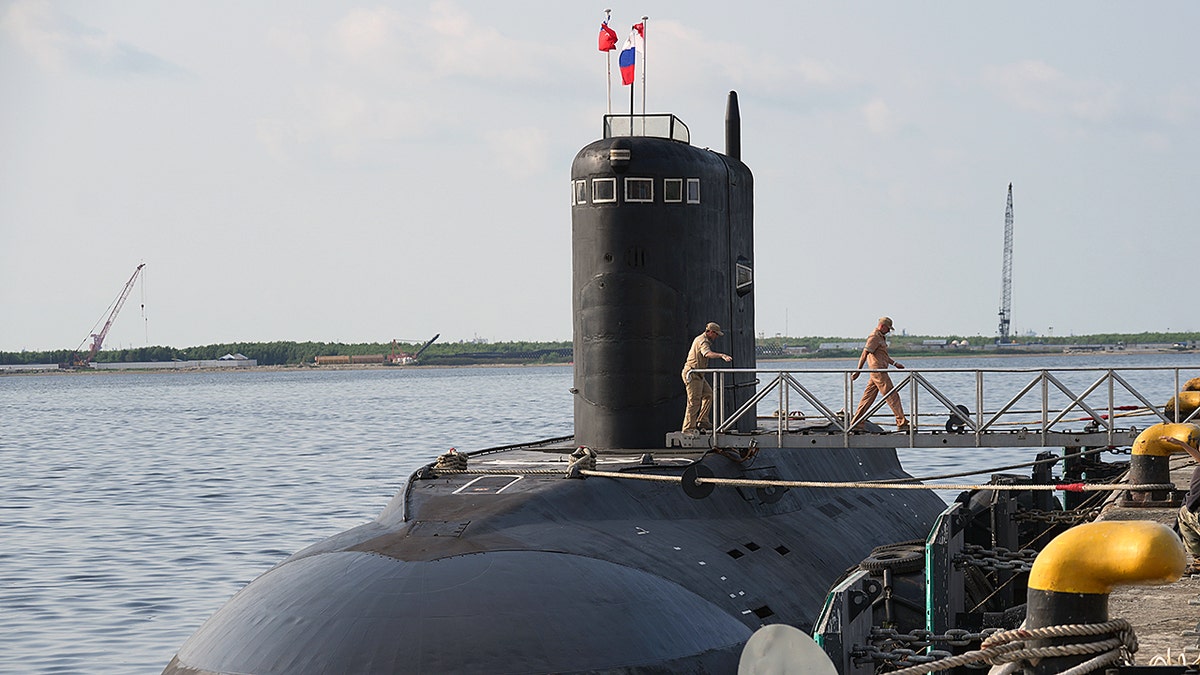
UK Defence Secretary John Healey has revealed that three Russian submarines conducted a covert operation over critical undersea cables and pipelines in the North Atlantic. According to Healey, Russia utilized an Akula-class submarine as a diversion while two specialized GUGI spy submarines—which report directly to the Russian president—carried out surveillance. The UK deployed the HMS St Albans, RFA Tidespring, and Merlin helicopters to track the vessels, signaling to Moscow that their movements were monitored and exposed. While the Russian embassy has denied these claims, the UK government warns that such 'hybrid warfare' is intended to map infrastructure for potential sabotage should hostilities break out.
The incident highlights the UK's extreme vulnerability, as over 90% of its internet traffic and 77% of its gas imports (primarily from Norway) rely on these undersea networks. Experts from the Royal United Services Institute (RUSI) suggest that while the Royal Navy tracked the ships, the Russian mini-subs may have still successfully gathered data. The revelation has sparked domestic political debate, with Conservative leader Kemi Badenoch calling for a clear Defence Investment Plan and Reform UK leader Nigel Farage questioning the operational capacity of the Royal Navy. Former military officials have expressed concern over the 'nadir of maritime security' facing the UK due to the decommissioning of essential naval assets.
Entities: John Healey, Vladimir Putin, Sir Keir Starmer, Kemi Badenoch, Nigel Farage • Tone: urgent • Sentiment: negative • Intent: inform
10-04-2026
The HMS Dragon, the United Kingdom's sole warship deployed to the eastern Mediterranean during the ongoing conflict with Iran, has been forced to dock due to technical issues involving its onboard water systems. This development has sidelined a critical component of Britain's regional military presence at a highly sensitive time, coinciding with a fragile U.S.-brokered ceasefire. The Ministry of Defence has characterized the stop as a 'routine logistics stop and short maintenance period,' asserting that the ship can sail at short notice and that the UK maintains a robust defensive presence via aircraft and drones.
The docking has intensified political pressure on Prime Minister Keir Starmer, who is facing mounting criticism from both domestic and international figures. U.S. President Donald Trump has compared Starmer's approach to the appeasement policies of Neville Chamberlain, particularly regarding Starmer's restrictions on the U.S. military conducting offensive missions from British bases. Additionally, U.S. Secretary of Defense Pete Hegseth has urged 'so-called allies' to learn from the military successes of the U.S. and Israel.
Domestically, the Conservative Party has also targeted Starmer. Shadow Housing Secretary James Cleverly criticized the Prime Minister for delaying the deployment of naval assets and for inconsistent decision-making regarding the use of British bases, arguing that these failures have damaged the United Kingdom's global credibility and left military personnel in the region insufficiently defended.
Entities: HMS Dragon, Keir Starmer, Donald Trump, Pete Hegseth, James Cleverly • Tone: positive • Sentiment: negative • Intent: inform
10-04-2026
UK Defense Minister John Healey has issued a stern warning to Russian President Vladimir Putin following a covert underwater military operation in the North Sea. Healey revealed that the UK, in coordination with Norway, conducted a weeks-long operation involving a Royal Navy frigate and Royal Air Force patrol planes to deter three Russian submarines detected near critical underwater cables and pipelines within Britain's economic exclusionary zone. The detected vessels included one nuclear-powered Akula-class submarine and two spy submarines from the GUGI (Main Directorate of Deep Sea Research), which Healey claims were directed by Putin to engage in 'hybrid warfare.'
While the submarines have since left UK waters and no damage to infrastructure was reported, Healey emphasized that any attempts to sabotage these assets will not be tolerated and will result in 'serious consequences.' The Defense Minister used this incident to justify the UK's decision not to deploy all its military assets to the Strait of Hormuz, asserting that Russia remains the primary threat to the UK and NATO. This occurs amidst broader geopolitical tension, as President Donald Trump has criticized NATO allies for their perceived lack of support in reopening the Strait of Hormuz. The article also notes the strained but evolving relationship between the US and UK, mentioning Prime Minister Keir Starmer's eventual decision to allow 'defensive strikes' against Iran from RAF bases following pressure from Trump.
Entities: John Healey, Vladimir Putin, Keir Starmer, Donald Trump, Tore O Sandvik • Tone: urgent • Sentiment: negative • Intent: inform