09-11-2026
US Secretary of State Marco Rubio defended President Donald Trump’s decision to go to war with Iran, describing the conflict as unpopular but necessary to address what he called a real threat from Tehran’s nuclear ambitions. Speaking to reporters in Florida, Rubio said Trump had acted to prevent Iran from pursuing a nuclear weapon. He acknowledged that diplomacy was not close to a breakthrough and characterized some Iranian demands as unacceptable and unrealistic, while saying Trump preferred a diplomatic solution.
Trump said he did not regret the decision to go to war, despite acknowledging that many people disliked comments by Vice President JD Vance linking the US-led war to the Republican Party’s defeat in the midterm elections. Trump described the war as potentially one of the best decisions the United States had made and warned that Iran would pose a grave danger if it obtained a nuclear weapon. He also told CNN that renewed US strikes were highly unlikely if negotiations showed progress and produced a strong agreement.
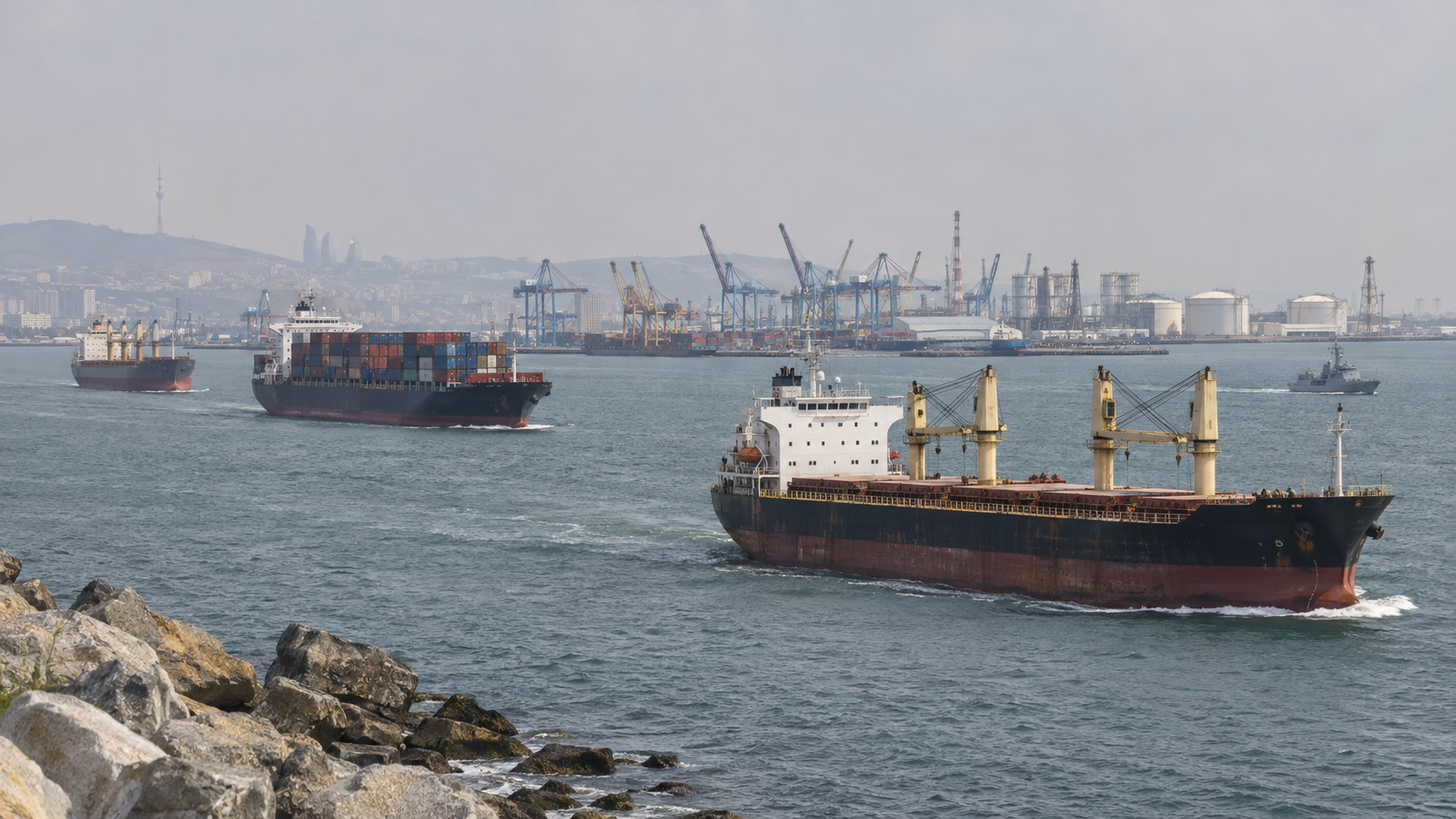
Iranian Foreign Minister Abbas Araghchi urged the White House to decide how it would proceed, pointing to the midterm results and saying Iran’s two-day proposal remained available. Under the proposal, Tehran would reopen the Strait of Hormuz to commercial shipping within two days if Washington met Iran’s conditions, including ending the war on all fronts. Araghchi warned that Iran was prepared to fight if the United States chose war instead.
The article also reports that Trump was scheduled to meet Qatar’s prime minister and foreign minister at the White House. Iran was reviewing proposals from Qatar intended to address differences with Washington. Separately, Rubio denied speculation that he would leave his post to pursue higher office in 2028.
Entities: Marco Rubio, Donald Trump, Abbas Araghchi, JD Vance, Sheikh Mohammed bin Abdulrahman bin Jassim Al Thani • Tone: analytical • Sentiment: neutral • Intent: inform
09-11-2026
The article tracks developments in the U.S.-Iran war and stalled efforts to end it. U.S. Central Command announced Task Force Iron Gate, intended to extend the naval blockade by disrupting overland trade routes and preventing military technology and illegal revenue from crossing Iran’s borders, including through the Caspian Sea. The precise role of military force was unclear, while Iran’s military dismissed the initiative as “word play.” President Trump later said the task force was fully operational and described the naval blockade as highly effective. The U.S. also offered up to $20 million and possible relocation for information about Iran’s nuclear program, and Trump confirmed U.S. “minor strikes” on Iran after reports of missile strikes on Qeshm island. Trump argued that history would ultimately judge the war favorably, saying he acted to prevent Iran from obtaining a nuclear weapon. He also said renewed attacks were highly unlikely if negotiations made progress, though that would depend on Iran accepting a strong agreement. Secretary of State Marco Rubio said the two countries were not close to a breakthrough, characterizing Iranian demands as unacceptable and unrealistic. Iran’s Foreign Minister Abbas Araghchi said mediator travel had stopped after the U.S. midterm elections, whose results he said had shocked participants. Regional mediators, including Qatar and Pakistan, have unsuccessfully sought an end to the conflict, while the Strait of Hormuz remains a point of contention: Iran has continued efforts to blockade it and the U.S. has maintained a counterblockade of Iranian ports. Separately, the UAE said it rescued 22 crew members from a cargo ship fire in the Sea of Oman. The incident’s cause and the vessel’s identity were not confirmed, and it was unclear whether it was the tanker reported on fire near Oman by a British maritime monitoring center. The update also notes that U.S. forces disabled a cargo ship accused of trying to breach the blockade and that Iran reported two tankers striking mines near the Strait of Hormuz.
Entities: Donald Trump, Marco Rubio, Abbas Araghchi, Ross Douthat, U.S. Central Command • Tone: analytical • Sentiment: neutral • Intent: inform
09-11-2026
The supplied page is a live-news landing page for The National, updated November 9, 2026, at 4:44 a.m. Its headline reports that former U.S. President Donald Trump played down the prospect of further strikes on Iran. The page does not include the underlying article text or detailed reporting, so it provides no explanation of what Trump said, when or where he said it, or how officials and other parties responded.
Instead, the available content consists mainly of a list of related regional developments and video links. The listed updates say that a drone attack on the Khor Mor gas field in Iraqi Kurdistan caused power outages; Iran said an attack on navigation systems it described as belonging to an “enemy” had halted oil shipments through the Strait of Hormuz; and Qatar’s prime minister was due to meet Trump at the White House while Iran negotiations stalled. Other headlines mention reported explosions on Iran’s Qeshm Island and Houthi claims of four attacks on Saudi sites and forces. These are presented as brief updates, without supporting detail or independent confirmation in the supplied text.
The page also links to videos and commentary about the conflict, including U.S. Defense Secretary Pete Hegseth defending the war, Trump describing U.S. pressure on Iran as an “occupation,” and analysts discussing possible political and regional consequences. Because the body of the live coverage is absent from the provided material, the summary can only describe the headline and listed teasers; it cannot establish the article’s full account of events or assess the accuracy of the claims.
Entities: Donald Trump, Iran, Iraqi Kurdistan, Khor Mor gas field, Strait of Hormuz • Tone: neutral • Sentiment: neutral • Intent: inform
09-11-2026
US President Donald Trump said that “Task Force Iron Gate” was operating against Iran and claimed that a US naval blockade had sharply limited goods entering and leaving the country. In a Truth Social post, he described the task force as being in “full force and effect” and said little was getting through the blockade. The announcement came as Trump also indicated that additional US strikes might not be needed if diplomatic talks advanced. He said a “very strong agreement” would need to address Iran’s nuclear programme and the reopening of the Strait of Hormuz. However, he warned that Washington had identified 38 Iranian bridges that could be destroyed within an hour if military strikes resumed, and said the US had already significantly weakened Iran’s military and economic capabilities.
The article explains that Iron Gate is a newly established inter-agency initiative, not a new combat deployment. Ordered by US Central Command chief Admiral Brad Cooper, the approximately 20-person team will be based in Tampa, Florida, and coordinate with other government agencies. Its purpose is to disrupt overland supply and trade routes, including routes across Iran’s land borders and the Caspian Sea. The task force is intended to restrict the movement of advanced weapons, dual-use technologies, sanctioned materials and illicit revenue.
Iron Gate extends Washington’s existing naval blockade, announced in July and focused on Iranian ports along the Arabian Gulf and Gulf of Oman. CENTCOM said that blockade had prevented Iran from exporting more than $25 billion in crude oil in recent months. Humanitarian aid is exempt from the restrictions. The article distinguishes the maritime blockade from Iron Gate’s focus on land-based networks and Caspian Sea routes, presenting the initiative alongside Trump’s comments about negotiations and possible renewed military action.
Entities: Donald Trump, Task Force Iron Gate, Iran, US Central Command (CENTCOM), Admiral Brad Cooper • Tone: analytical • Sentiment: neutral • Intent: inform
09-11-2026
Iran has abandoned its self-imposed 2,000-kilometer limit on ballistic missile range, according to Islamic Revolutionary Guard Corps spokesperson Brig. Gen. Hossein Mohebbi. The announcement came within hours of the U.S. military’s creation of Task Force Iron Gate, a Central Command initiative intended to disrupt the movement of Iranian weapons, dual-use materials and illicit revenue across Iran’s land borders and the Caspian Sea. CENTCOM commander Adm. Brad Cooper said the task force would work with U.S. government partners to constrain Iran’s ability to finance terrorism, rebuild weapons factories and replenish its military.
Behnam Taleblu of the Foundation for Defense of Democracies said the effort could enable targeted strikes against facilitators and increase political and economic pressure on countries and institutions involved in Iran’s illicit trade. Iran’s IRGC dismissed the task force as “wordplay,” saying Tehran had prepared for added pressure and coordinated with neighboring states.
Mohebbi also warned that Iran is developing new weapons that could be deployed in a future confrontation with the United States and Israel, saying they would “astonish the entire world.” He threatened that Iran’s next strikes would be more damaging if the U.S. or Israel miscalculated. The article notes that Iran’s former range cap already put much of the Middle East and parts of southeastern Europe within reach. In March, Iran unsuccessfully tried to strike the U.S.-British base on Diego Garcia, about 2,500 miles away.
Iran also says it plans to unveil underground missile facilities, which officials call “missile cities,” intended to protect weapons production during wartime. Mohebbi claimed Iran continued making missiles and drones during recent fighting using domestic expertise, and described its growing self-sufficiency as a major achievement. Taleblu highlighted the Caspian Sea basin as a sanctions-evasion route, but the supplied article ends mid-sentence before his point is completed.
Entities: Iran, Hossein Mohebbi, Task Force Iron Gate, U.S. Central Command (CENTCOM), Brad Cooper • Tone: analytical • Sentiment: negative • Intent: inform