08-07-2026
Belgium defeated the United States Men’s National Team 4-1 in a World Cup round-of-16 match in Seattle, eliminating the Americans from the tournament and ending their bid to reach the quarterfinals for the first time in 24 years. Belgium struck early through Charles De Ketelaere in the ninth minute, but the U.S. briefly equalized when Malik Tillman scored with a deflected free kick. The tie lasted only two minutes before De Ketelaere restored Belgium’s lead with a header, and the U.S. went into halftime trailing after coach Mauricio Pochettino visibly showed his frustration.
Belgium extended its lead in the second half when Hans Vanaken scored after goalkeeper Matt Freese ventured too far from his post. The Americans struggled to generate meaningful chances, and star forward Christian Pulisic left the match injured. Folarin Balogun, whose suspension had been lifted before the game, had a few opportunities but was largely contained by Belgium’s defense and goalkeeper Thibaut Courtois. Belgium added a final goal late to seal the 4-1 result.
After the loss, U.S. captain Tim Ream, Tyler Adams, and Chris Richards expressed disappointment and said they needed time to process the result. The article also places the loss in broader context, noting that Belgium had eliminated the U.S. in the 2014 round of 16 as well. It highlights the Americans’ poor recent record against European teams and reflects on the expectations placed on this U.S. generation, led by Pulisic, Weston McKennie, and Adams, which aimed to raise soccer’s profile in the United States. Balogun’s performance is noted as historically significant, despite the defeat, because he became the first U.S. player to score two goals in a World Cup match since 1930 and finished with three goals in the tournament.
Entities: Belgium, U.S. Men's National Team (USMNT), World Cup, Seattle, Charles De Ketelaere • Tone: analytical • Sentiment: negative • Intent: inform
08-07-2026
U.S. Men’s National Team defender Chris Richards addressed the controversy surrounding teammate Folarin Balogun’s red card suspension, saying he does not know how the appeal was handled but believes Balogun’s conduct after the sending-off may have helped influence FIFA’s decision to lift the suspension. Richards described the ruling as a major relief for Balogun and a confidence boost for the team ahead of a high-stakes Round of 16 World Cup knockout match against Belgium. He emphasized that the squad continued business as usual in training, with Balogun fully involved despite the uncertainty.
Richards also noted the importance of the match, calling it a knockout game against a strong opponent and saying it means everything to represent the U.S. in a tournament of this magnitude. The article further highlights Richards’ personal perspective: this is his first World Cup, and as a player for Crystal Palace, he reflects on how far his journey has come. Coming from Alabama, where professional soccer is less common, he said the dream once felt out of reach. He also expressed excitement that the World Cup on home soil has helped more Americans experience the soccer culture he has loved throughout his life.
Entities: Chris Richards, Folarin Balogun, FIFA, Tony Dokoupil, CBS Evening News • Tone: analytical • Sentiment: neutral • Intent: inform
08-07-2026
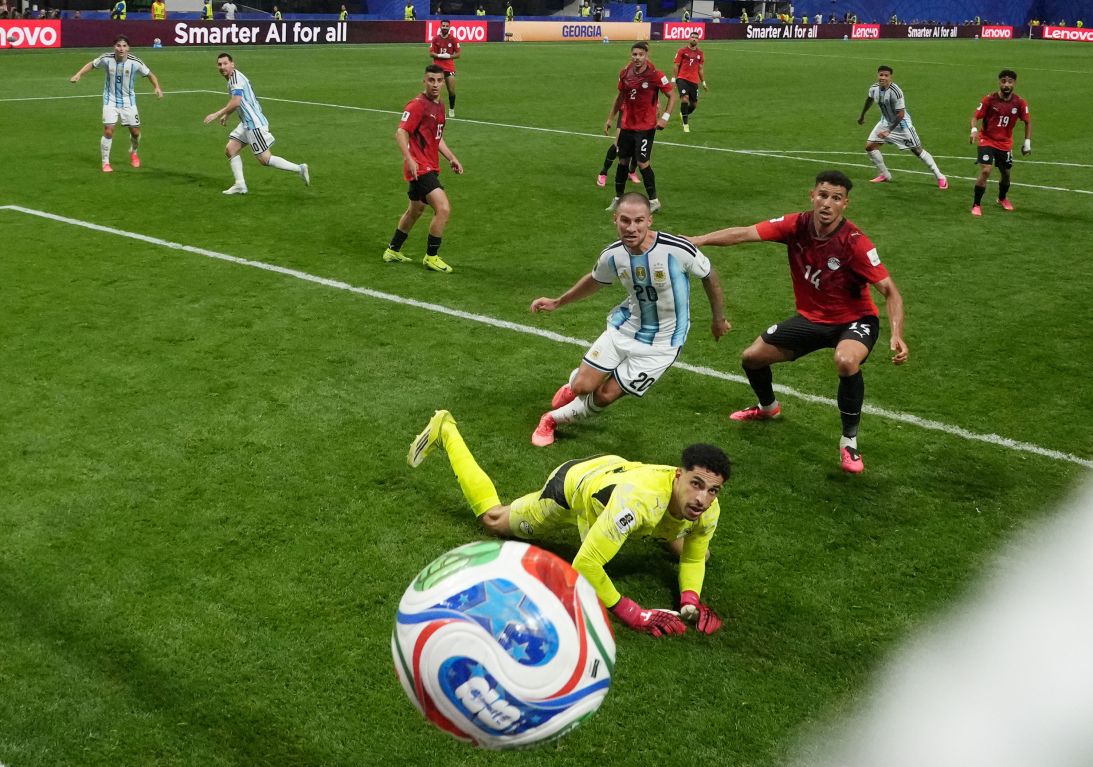
This article is an exuberant, cinematic analysis of Argentina’s dramatic 3-2 comeback win over Egypt at the World Cup in Atlanta. It frames the match as an extraordinary sporting moment that briefly transcended ordinary competition, emphasizing the emotional arc from early Argentine frustration to Egyptian belief and, finally, to Argentina’s late collapse of the deficit through Lionel Messi’s brilliance and Enzo Fernández’s decisive header. The piece highlights how Egypt, despite being the underdog, played with courage, discipline, and resilience, taking a surprising 2-0 lead and forcing Argentina into a desperate chase. It also discusses the controversy surrounding a disallowed Egyptian goal after a VAR review and criticism of the referee’s performance. Central to the article is Messi’s role as the orchestrator of Argentina’s comeback: his movement, vision, and finishing are described as the turning points that transformed the match. The conclusion elevates the match into a larger meditation on the emotional power of sports, describing the jubilant chaos among Argentine fans as a once-in-a-lifetime experience and portraying the World Cup as a stage where collective joy, drama, and human connection reach their peak.
Entities: Lionel Messi, Argentina, Egypt, Enzo Fernández, Lautaro Martínez • Tone: emotional • Sentiment: positive • Intent: inform