08-07-2026
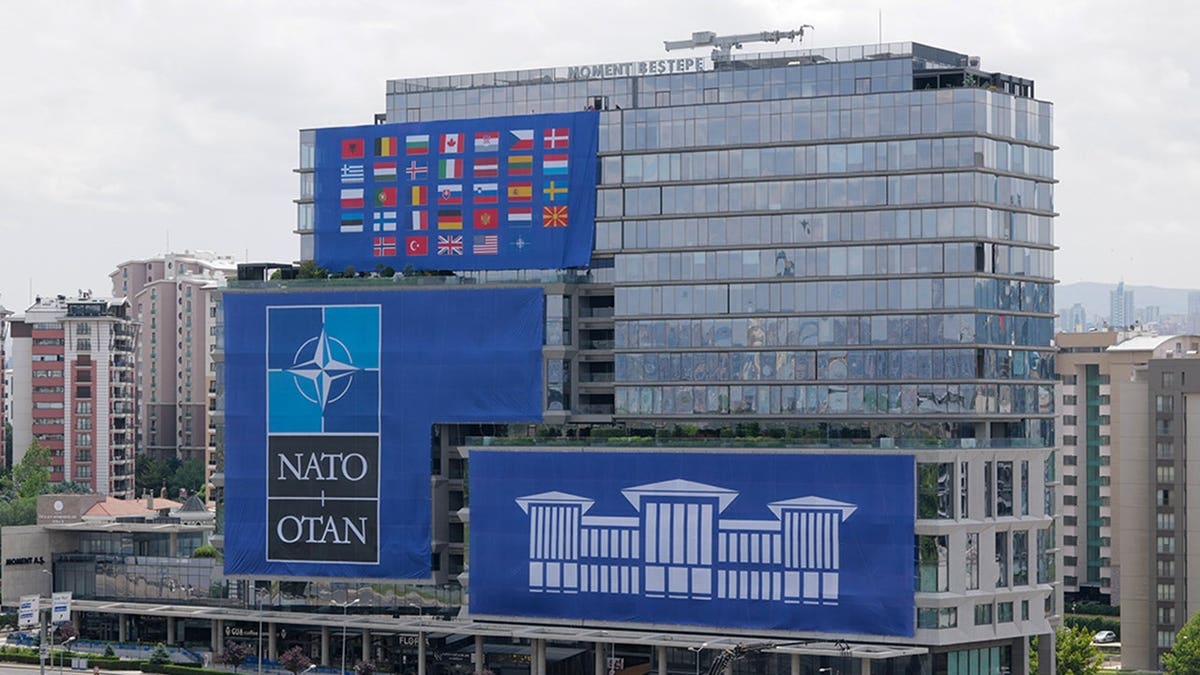
Twelve NATO allies, including the UK, are preparing to spend more than £37 billion over the next decade on a new long-range missile system called Deep Precision Strike, a UK-led project aimed at strengthening Europe’s deterrence and NATO’s ability to respond to future threats. The announcement comes as Sir Keir Starmer attends what is expected to be his final NATO summit as prime minister in Ankara, where he is likely to face pressure from US President Donald Trump over Britain and other allies’ defence spending commitments. The project is designed to hit targets nearly 200 miles away with high accuracy and could eventually reach up to 1,250 miles, though it is not expected to be operational until the 2030s. UK ministers say the initiative reflects a more dangerous security environment shaped by Russia’s war in Ukraine and growing Russian military activity near allied airspace and waters. Starmer and Foreign Secretary Yvette Cooper both framed the missile programme as part of a broader push for a stronger, more European NATO that can defend itself and support Ukraine. The summit also comes amid renewed debate over US troop deployments in Europe and Trump’s longstanding calls for greater allied defence spending. Russia, meanwhile, dismissed the summit’s rhetoric as confrontational and said it would continue its military campaign in Ukraine until its objectives were achieved.
Entities: NATO, United Kingdom, Sir Keir Starmer, Yvette Cooper, Donald Trump • Tone: analytical • Sentiment: neutral • Intent: inform
08-07-2026
The article examines worsening fuel shortages across Russia and asks whether the resulting public inconvenience and economic strain might pressure President Vladimir Putin to alter his course in the war in Ukraine. BBC correspondent James Landale describes long queues at Moscow petrol stations, regional rationing, price increases, and disruptions to services such as buses and rubbish collection. The shortages are linked in part to Ukrainian drone and missile strikes on Russian oil refineries, which have begun to affect even the capital and are making the war more visible to ordinary Russians.
Despite the hardship, the article argues that the shortages are unlikely to force a major political shift in the Kremlin. While some Russians express frustration, anxiety, and concern about the economy, many also show resignation, caution, or reluctance to openly blame Putin. The Kremlin has publicly acknowledged the problems while insisting they are manageable, and has responded with measures such as fuel imports, subsidies, and permission to sell lower-grade fuel. Polling data cited in the piece suggests Putin’s approval and public trust may be slipping, and economic pessimism is rising.
Analysts quoted in the article differ on the implications. One says the fuel crisis could damage Russia’s economic growth, but another argues Western hopes that economic pressure will force Putin to negotiate are unrealistic. The article concludes that Putin appears to be doubling down militarily rather than softening his stance, leaving Western capitals to wonder whether he may escalate the war further.
Entities: Vladimir Putin, Russia, Moscow, Ukraine, Kyiv • Tone: analytical • Sentiment: negative • Intent: analyze
08-07-2026
The article is a brief CNN politics video package explaining why President Donald Trump’s upcoming trip to the NATO summit is expected to be tense. It frames the visit against a backdrop of rising friction between Trump and the alliance over recent months. The central point is that Trump’s presence at the summit comes at a politically sensitive moment, with tensions already elevated and the relationship between the U.S. president and NATO under strain.
The piece is presented as a short on-air report by CNN’s Kristen Holmes, introduced by Briana Morales. Rather than offering a long-form written analysis, it functions as a news clip that sets up the summit as a potentially difficult diplomatic event. The article’s main emphasis is on the broader geopolitical and alliance dynamics, highlighting that Trump is attending despite the strained atmosphere.
Because the content provided is a video listing page rather than a full article transcript, the actual substantive reporting is limited to the headline and the brief description. Still, the message is clear: the NATO summit will likely be shaped by tension surrounding Trump’s relationship with the alliance, and his participation is notable precisely because those tensions have been growing in recent months.
Entities: Donald Trump, NATO, NATO summit, CNN, Kristen Holmes • Tone: analytical • Sentiment: neutral • Intent: inform
08-07-2026
The article explains how Turkish President Recep Tayyip Erdoğan has become a central figure at the upcoming NATO summit as President Donald Trump travels to Ankara and the U.S. approves a $700 million arms sale to Turkey. It argues that Erdoğan’s influence stems less from a fixed ideology than from political pragmatism and repeated reinvention. Over more than two decades in power, Erdoğan has shifted from an Islamist-leaning politician to a pro-European reformer, then to a nationalist strongman, and now to a key NATO power broker that Washington cannot easily ignore.
The article frames Erdoğan as one of NATO’s most complicated allies: once marginalized after Turkey bought Russia’s S-400 air-defense system in 2019, he is now increasingly important because of the war in Ukraine, instability in the Middle East, and rising strategic competition in the Black Sea. It highlights Trump’s favorable view of Erdoğan and suggests that their relationship could affect defense talks and Turkey’s long-standing attempt to rebuild deeper military cooperation with the United States.
Experts quoted in the piece describe Erdoğan as pragmatic, populist, and driven primarily by survival and the desire to remain in power. The article traces his political evolution through several phases: his Islamist roots, his early branding as a “conservative democrat” while seeking European Union ties and democratic reforms, and his later turn toward political Islam and anti-Western rhetoric after consolidating power. The article also notes criticism that Erdoğan has weakened Turkish democracy by jailing rivals, journalists, and activists, while supporters credit him with restoring Turkey’s global stature. Overall, the piece presents Erdoğan as a flexible and calculating leader whose ideological shifts reflect changing political needs and geopolitical opportunities.
Entities: Recep Tayyip Erdoğan, Donald Trump, Turkey, NATO, Ankara • Tone: analytical • Sentiment: neutral • Intent: inform
08-07-2026
Ukrainian President Volodymyr Zelenskyy is urging the United States and European allies to increase military aid, especially missile interceptors and air-defense systems, as Russia continues launching large-scale attacks on Ukrainian cities. In a Monday post on X, Zelenskyy said Kyiv had endured a major overnight barrage of 68 missiles and 351 attack drones and stressed that Ukrainian forces were able to intercept drones and cruise missiles but lacked enough interceptor missiles to stop Russian ballistic missiles. He argued that the U.S. and Europe have the capacity to supply more Patriot missiles and other defenses, and he wants NATO leaders meeting in Ankara, Turkey, to leave the summit with concrete decisions supporting Ukraine’s air defense and protecting civilians.
The article places Zelenskyy’s appeal in the context of the ongoing Russia-Ukraine war and notes that U.S. President Donald Trump is attending the NATO summit this week. It also mentions that Zelenskyy, South Korean President Lee Jae Myung, European Council President Antonio Costa, and European Commission President Ursula von der Leyen are expected to attend a dinner with NATO leaders. The piece frames Zelenskyy’s remarks as a push for stronger Western support at a moment of continued Russian strikes and limited Ukrainian defensive resources.
Entities: Volodymyr Zelenskyy, Ukraine, Kyiv, Russia, United States • Tone: urgent • Sentiment: negative • Intent: inform
08-07-2026
Ukraine has signed three new defence agreements with Denmark, Estonia and the Netherlands to expand cooperation on drones and battlefield-tested military technology, President Volodymyr Zelensky said on Tuesday. The deals are part of Kyiv’s broader effort to deepen defence ties with NATO allies while Russian missile attacks on Ukraine continue. Zelensky announced the agreements during the NATO summit in Ankara, saying the new accords bring Ukraine’s total to nine. The article explains that Ukraine has built a sophisticated drone industry during more than four years of war with Russia, turning wartime experience into a key export and cooperation asset. The agreement with Denmark is highlighted as especially significant: Zelensky said it opens opportunities for joint defence production, exchange of expertise, and transparency in weapons exports, and noted that Denmark was the first country to offer joint production in Ukraine. Zelensky also used the summit to argue that Ukraine belongs in NATO-related settings and that Kyiv’s priorities are securing more air defence and stronger diplomatic backing. The piece closes by underscoring Ukraine’s urgent need for improved missile defence after recent attacks on Kyiv, including one that killed 19 people.
Entities: Volodymyr Zelensky, Ukraine, Denmark, Estonia, Netherlands • Tone: analytical • Sentiment: negative • Intent: inform
08-07-2026
President Trump’s arrival in Ankara for a NATO summit is portrayed as turning the event into a spectacle centered on him, with Turkish President Recep Tayyip Erdogan staging an unusually elaborate welcome complete with horses, cannons, and fighter jets. The article frames Trump as dominating attention before and during the summit, both through his arrival and through a series of provocations and side controversies, including his intervention in a World Cup dispute and a personal feud with Italian Prime Minister Giorgia Meloni. At the summit, Trump continued to create friction by criticizing Denmark, revisiting his interest in Greenland, and faulting Britain, France, and Italy for insufficient support in the war against Iran. Despite the drama, some Republican allies defended Trump’s style as effective, citing increased NATO defense spending as evidence. The piece also emphasizes the awkwardness for pro-Trump attendees and the broader tension between Trump’s threat to NATO and the reality that Congress would have to approve any withdrawal. Overall, the article presents the summit as shaped by Trump’s personality, theatrics, and willingness to disrupt diplomatic norms, while contrasting that with institutional efforts to preserve alliance commitments.
Entities: Donald Trump, Recep Tayyip Erdogan, NATO summit, Ankara, Turkey • Tone: analytical • Sentiment: neutral • Intent: inform