02-08-2026
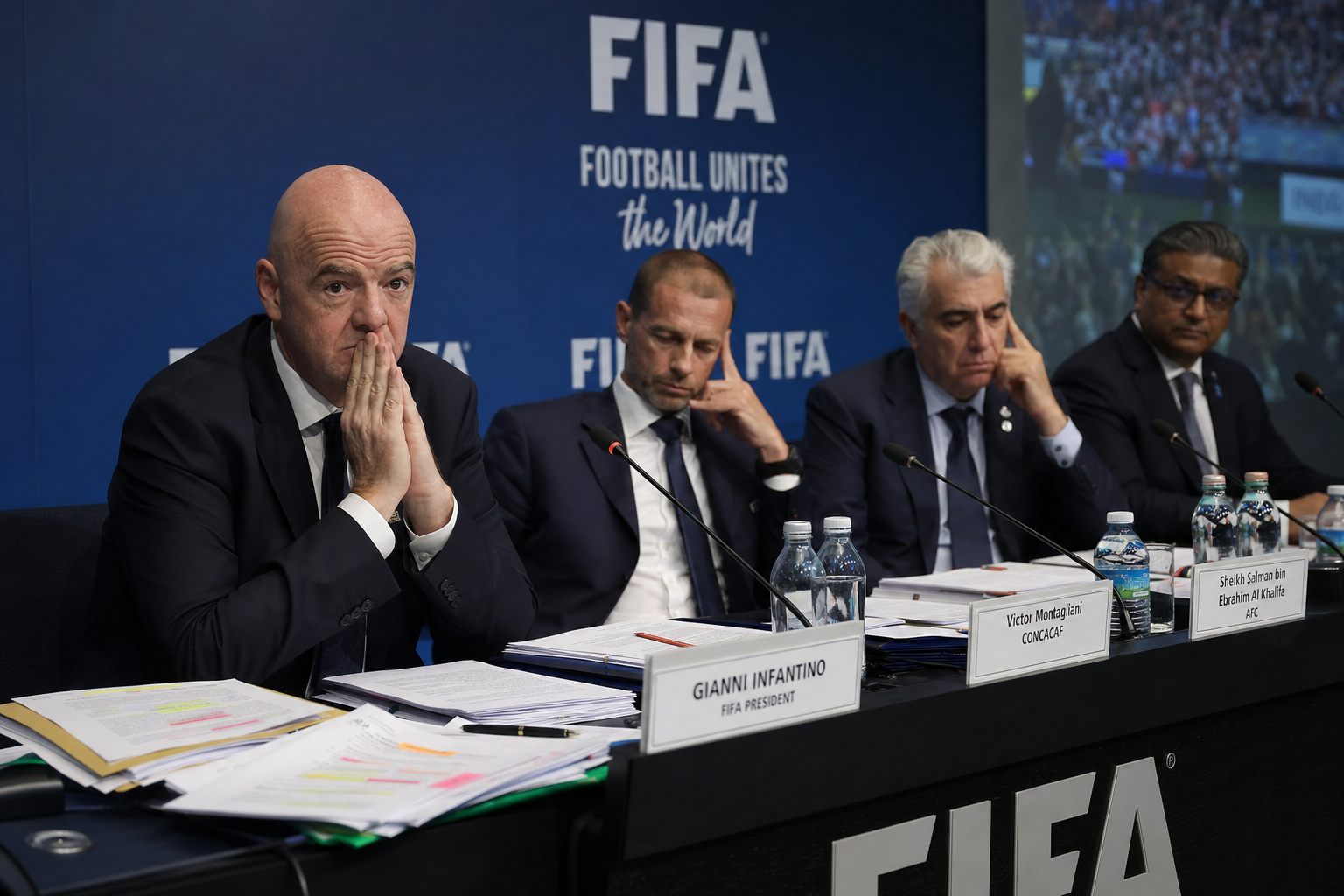
Pressure on FIFA president Gianni Infantino intensified sharply after UEFA and Concacaf publicly condemned his leadership in the wake of FIFA’s abandoned plan to sell stakes in its competitions to private investors. UEFA called the withdrawn proposal a victory for the game but accused Infantino of failing to deliver on the transparency and public-interest promises he made when elected in 2016. Concacaf went further in describing the plan as a sign of governance that no longer puts football first and called for a full review of FIFA’s leadership. The controversy comes as Infantino seeks re-election for a fourth term at the FIFA Congress in March, leaving him facing unprecedented criticism from major regional confederations. The Football Association and Norway’s football federation backed UEFA’s concerns, while Qatar’s football association was the first to publicly support Infantino, even as it welcomed the cancellation of the plan. The article also notes the political and reputational backdrop surrounding Infantino, including his previous defense of Qatar ahead of the 2022 World Cup and the broader debate over FIFA governance, transparency, and accountability.
Entities: Gianni Infantino, FIFA, UEFA, Concacaf, World Cup • Tone: analytical • Sentiment: negative • Intent: inform
02-08-2026
The article reports a major backlash against FIFA President Gianni Infantino after he proposed creating a $20 billion company to spin off and monetize FIFA’s World Cup and related commercial businesses with private investors. European soccer’s governing body, UEFA, says it has lost confidence in Infantino and is prepared to consider all options, including pushing for his removal. The plan unraveled quickly after strong opposition from UEFA, North America’s CONCACAF, and the Asian Football Confederation, plus internal dissent within FIFA itself. Infantino’s senior adviser Carlos Cordeiro resigned, and FIFA chief operating officer Kevin Lamour publicly criticized the project as the work of one person and said staff had been misled by the lack of openness.
The story places this episode in the context of Infantino’s repeated attempts to reshape global soccer in ways many leaders viewed as reckless or secretive. It notes previous controversial proposals, including a 2018 SoftBank-backed plan and a proposal to hold World Cups every two years, both of which were eventually abandoned. While Infantino was re-elected unopposed in 2019 and 2023, this time the opposition appears more serious, especially with UEFA signaling it may support a challenge to his leadership before the next FIFA presidential election. The article suggests the failed investment plan may have been a mechanism to extend Infantino’s influence beyond his current term and increase his compensation, intensifying criticism that the proposal served his interests more than the sport’s.
Entities: Gianni Infantino, UEFA, Aleksander Čeferin, FIFA, CONCACAF • Tone: analytical • Sentiment: negative • Intent: inform
02-08-2026
FIFA has abandoned a controversial plan to open the World Cup and related operations to private commercial investment after intense opposition from member federations and regional soccer bodies. The proposal, known as FIFA Forward Enterprise (FFE), would have created a commercial rights and event operations company in which private investors could buy a 20% stake, with FIFA retaining 80%. FIFA had presented the initiative as a way to raise funds for member associations, but the idea quickly drew backlash from major governing bodies, including UEFA and CONCACAF, which argued that the World Cup is not a product to be sold or treated like an investment vehicle. UEFA went so far as to threaten a boycott of FIFA competitions if the plan moved ahead.
FIFA President Gianni Infantino announced that the project was being shelved, saying the proposal had created divisions that were no longer in the organization’s interest. The controversy also sparked scrutiny of the reported involvement of Thrive Eternal, linked to Joshua Kushner, and renewed criticism of Infantino’s ties to former President Donald Trump. Trump denied speaking with Infantino about the plan. The article also notes that Carlos Cordeiro, one of Infantino’s senior advisers, resigned in protest, and that FIFA had previously faced criticism over its handling of a World Cup red-card suspension involving U.S. striker Folarin Balogun, which was later overturned. Overall, the story centers on governance conflict, commercial pressure, and resistance from soccer’s regional power brokers over the future direction of FIFA and the World Cup.
Entities: FIFA, Gianni Infantino, World Cup, UEFA, CONCACAF • Tone: analytical • Sentiment: negative • Intent: inform
02-08-2026
Pressure is mounting on FIFA President Gianni Infantino over a proposed plan to privatize part of the organization’s commercial operations through a new $20 billion enterprise backed by private investment. The plan, centered on the FIFA Forward Enterprise (FFE), has triggered strong opposition from major soccer governing bodies, including UEFA, CONCACAF, and now the Asian Football Confederation (AFC). Critics argue the proposal lacks transparency, bypasses proper governance procedures, and is unnecessary after what FIFA described as the most profitable World Cup in history.
The controversy deepened when Carlos Cordeiro, Infantino’s senior adviser and former U.S. Soccer Federation president, resigned in protest. Cordeiro said he had not been involved in the plan and called it “a bad deal for football,” insisting that he could not support FIFA considering selling a stake in the World Cup. His resignation intensifies scrutiny on Infantino, who has continued to defend the project and suggested that media coverage has distorted the facts.
The article highlights that the proposal would spin off FIFA’s commercial operations into a subsidiary that would be 20% owned by private investors, with a New York investment firm created by Joshua Kushner identified as the core investor. The backlash reflects broader concern across the global soccer community about the direction of FIFA leadership and the role of private capital in the sport’s most important competitions.
Entities: FIFA, Gianni Infantino, World Cup, Asian Football Confederation (AFC), UEFA • Tone: analytical • Sentiment: negative • Intent: inform