02-05-2026
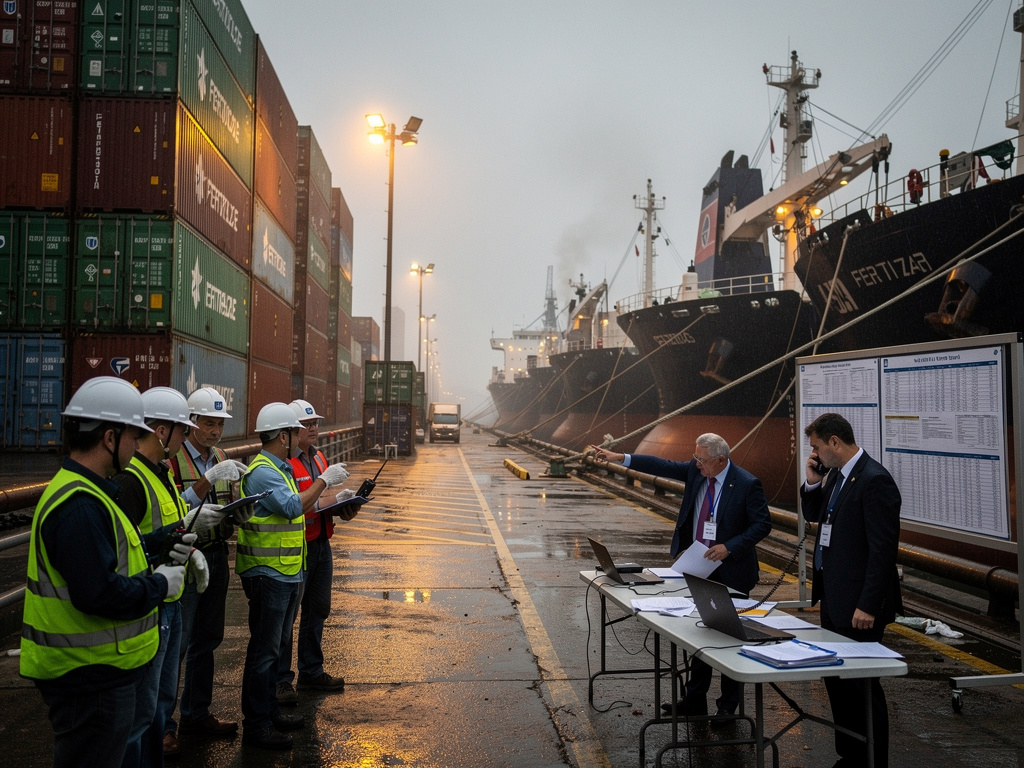
The war in Iran is disrupting global fertilizer supplies, potentially costing up to 10 billion meals a week worldwide, with the poorest countries being hit the hardest. Svein Tore Holsether, CEO of Yara, one of the world's largest fertilizer producers, warns that reduced crop yields could lead to a bidding war for food. The UK is unlikely to face food shortages, but increased costs will likely appear on weekly food bills in the coming months. Regions such as Asia, Southeast Asia, Africa, and Latin America will be most immediately affected. The UN World Food Programme estimates that the conflict could push 45 million additional people into acute hunger by 2026.
Entities: Svein Tore Holsether, Yara, Iran, Gulf, Strait of Hormuz • Tone: urgent • Sentiment: negative • Intent: inform
02-05-2026
The article discusses the current state of the oil market, which has been affected by the war in Iran and the closure of the Strait of Hormuz. Despite the significant supply shock, oil prices have been slow to react, and it wasn't until recent news of renewed fighting that prices spiked above $125 per barrel. The article argues that prices still have further to go, given the magnitude of the supply disruption.
Entities: Iran, Strait of Hormuz, Brent crude, oil market, energy experts • Tone: analytical • Sentiment: negative • Intent: inform
02-05-2026
The article argues that President Trump should take a three-pronged approach to dealing with the Iranian regime: sustaining a naval blockade and economic warfare, promoting American energy dominance, and restoring freedom of navigation through the Strait of Hormuz via a military operation dubbed 'Operation Epic Passage' or 'Blockade Plus'. The author contends that the current regime in Iran is on the brink of collapse due to economic strangulation caused by the blockade and that the US should take steps to expedite refinery expansion and modernization, as well as partner with other countries to form a new overland pipeline consortium to undercut Iran's threat to the Strait of Hormuz.
Entities: Iran, United States, President Trump, Tehran, Strait of Hormuz • Tone: analytical • Sentiment: negative • Intent: persuade