01-06-2026
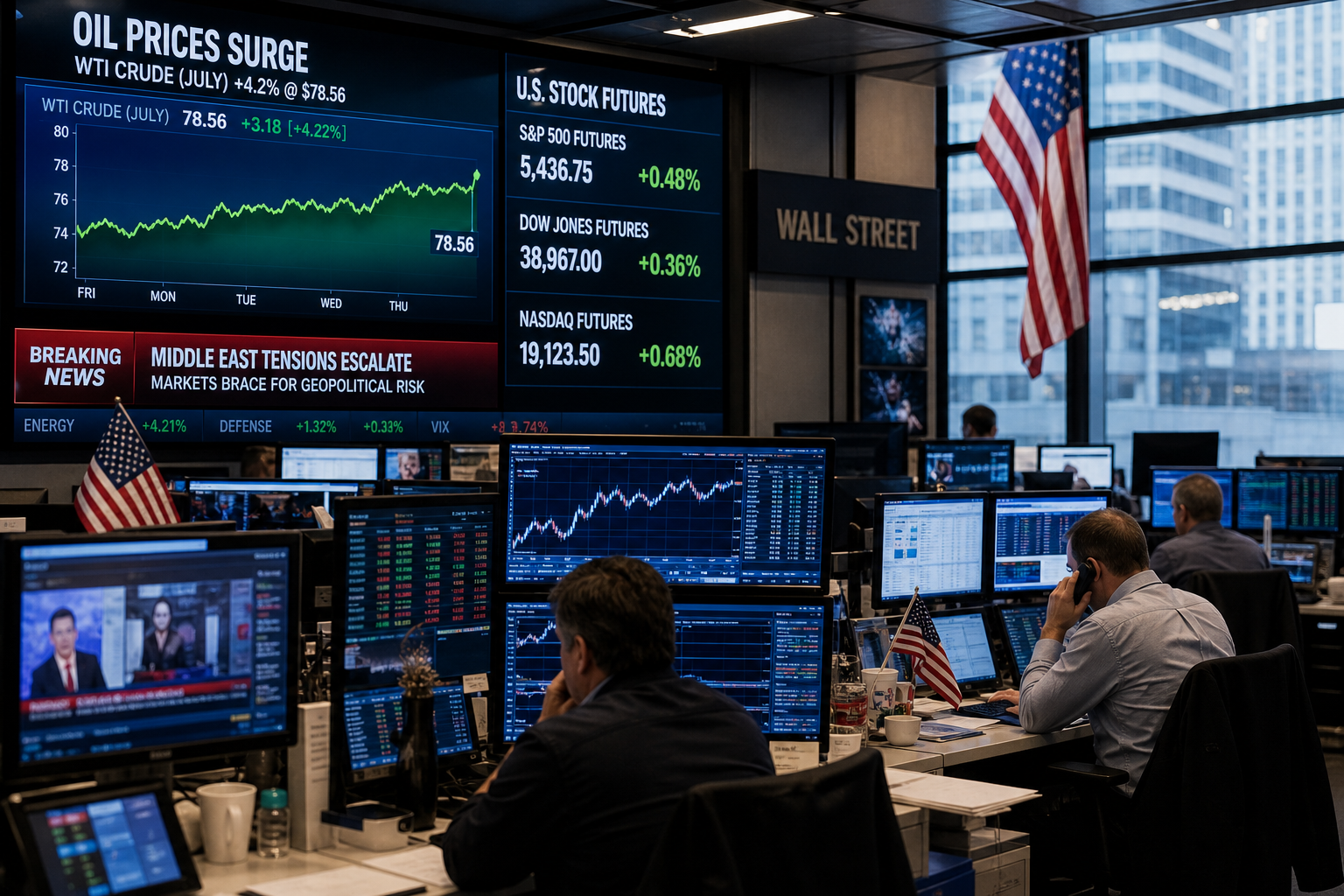
Oil prices rose on Monday after Israel ordered troops to push deeper into Lebanon, intensifying fears that renewed fighting with the Iran-backed Hezbollah group could destabilize an already fragile ceasefire and disrupt energy supplies. Brent crude climbed 2.43% to $93.33 a barrel, while West Texas Intermediate gained 2.76% to $89.77 a barrel. The move came despite a ceasefire declared in April and after U.S.-brokered Israeli-Lebanon talks in Washington on Friday, which had raised hopes that broader tensions between Washington and Tehran might ease or that a ceasefire arrangement could be extended. Instead, Israeli Prime Minister Benjamin Netanyahu said he had instructed the Israel Defense Forces, together with Defense Minister Yisrael Katz, to expand the military maneuver in Lebanon. The article frames the market reaction as driven by geopolitical risk, particularly the possibility that Middle East conflict could threaten supply. It also notes Goldman Sachs’ view that the outlook for crude remains uncertain in both directions: persistent disruptions in supply could push prices higher, but weakening demand—especially from China and Western Europe—could weigh on prices. Goldman estimated that weak April retail sales data in those regions implied about 2 million barrels per day of downside risk to its already subdued demand forecast.
Entities: Oil prices, Brent crude, West Texas Intermediate (WTI), Israel, Lebanon • Tone: analytical • Sentiment: negative • Intent: inform
01-06-2026
U.S. stock futures rose early Monday as Wall Street prepared to start June near record levels, building on a strong May rally across major indexes. The S&P 500, Nasdaq 100, and Dow futures all moved higher, while last week’s gains left the S&P 500 and Nasdaq at fresh closing highs and the Dow near record territory. The article ties the market strength to easing geopolitical anxiety after the U.S. and Iran agreed to a 60-day memorandum of understanding extending the ceasefire, though President Donald Trump signaled caution and said he was in no hurry to finalize a deal. Analysts suggested markets may already be pricing in continued de-escalation and could react negatively if a formal announcement triggers a “sell the news” response.
Oil markets moved higher Sunday after retreating late last week, with WTI and Brent both advancing, even as WTI remained down sharply for May, marking its steepest monthly decline since April 2025. The week ahead is shaped by the upcoming nonfarm payrolls report, which investors will watch for clues about labor market health and the Federal Reserve’s next policy moves.
The article also highlights broader global market context: South Korea’s Kospi hit a fresh record high, helped by a rally in Samsung Electronics, while other Asia-Pacific markets were mixed amid continued uncertainty over U.S.-Iran negotiations. Separately, SoftBank shares rose after the company announced a major AI infrastructure investment plan in France. Finally, the piece notes that earnings season has been exceptionally strong, with about 85% of S&P 500 companies beating estimates and average profit surprises running well above historical norms.
Entities: S&P 500, Nasdaq 100, Dow Jones Industrial Average, Nasdaq Composite, U.S.-Iran ceasefire • Tone: analytical • Sentiment: positive • Intent: inform
01-06-2026
CNN analysis argues that President Donald Trump’s second term is beginning to stall because several of his most visible priorities are running into political, legal, and strategic resistance at once. On the foreign policy front, Trump is under intense pressure to find an exit from the Iran war that can be framed as a victory, but no deal has yet materialized and the article suggests the conflict may have strengthened Iran’s leverage rather than weakened it. Domestically, a proposed $1.776 billion fund that could compensate January 6 defendants has triggered a rebellion among Senate Republicans, especially as the midterm elections approach. At the same time, Trump’s efforts to turn the country’s 250th anniversary celebrations into a highly personalized, politically charged spectacle are drawing criticism, with artists boycotting events and the president planning to stage a MAGA rally instead. A federal judge’s ruling that adding Trump’s name to the Kennedy Center was illegal adds another setback to his drive to leave a lasting personal imprint on national institutions. The article frames these episodes as part of a broader pattern: Trump is investing political capital in vanity projects and power assertions at a time when many Americans remain focused on economic anxiety and his approval ratings are near historic lows. Democrats, though still unpopular themselves, are trying to use this contrast in a midterm message centered on corruption, self-aggrandizement, and disregard for ordinary Americans’ struggles.
Entities: Donald Trump, Stephen Collinson, Iran, Tehran, January 6 Capitol riot • Tone: analytical • Sentiment: negative • Intent: analyze