01-06-2026
Health authorities in Brazil are monitoring two men in the country’s largest cities for possible Ebola infection, prompting concern about whether the disease could appear outside Africa as the latest outbreak continues in Central and East Africa. One patient is a 37-year-old man from the Democratic Republic of the Congo being treated in São Paulo after developing fever and testing positive for meningitis; the other is a Belgian man who arrived from Uganda and is under observation in Rio de Janeiro after showing symptoms including cough, chills and diarrhoea and testing positive for malaria. Officials say neither diagnosis rules out Ebola, and test results are expected next week.
The article places the Brazilian cases in the broader context of a worsening Ebola outbreak in the Democratic Republic of the Congo, where there are now more than 1,000 suspected cases and at least 246 deaths. Uganda has also reported confirmed cases and one death. The outbreak is caused by the Bundibugyo strain of Ebola, which has no proven vaccine and is fatal in roughly one-third of infections. The article explains how Ebola spreads, notes warnings from Médecins Sans Frontières about the speed and scale of the outbreak, and says WHO chief Tedros Adhanom Ghebreyesus is in DR Congo overseeing containment efforts. Despite the possible cases in Brazil, the WHO says global spread remains highly unlikely.
Entities: Ebola, Brazil, São Paulo, Rio de Janeiro, Democratic Republic of the Congo (DR Congo) • Tone: urgent • Sentiment: negative • Intent: inform
01-06-2026
Brazilian health authorities reported that one of two people being monitored for possible Ebola infection tested negative, easing immediate concern that the virus could spread into South America. In São Paulo, a 37-year-old man from the Democratic Republic of the Congo was isolated after showing fever and meeting the definition of a suspected Ebola case, but initial tests did not detect the virus. In Rio de Janeiro, a man from Uganda triggered safety protocols after showing viral symptoms, but he tested positive for malaria and later received negative Ebola results, though he remains in quarantine while the investigation continues. The article places these cases in the broader context of a continuing Ebola outbreak in central and eastern Africa, where the World Health Organization says five patients have recovered from Bundibugyo Ebola virus, a rare strain with no approved treatment or vaccine. WHO Director-General Tedros Adhanom Ghebreyesus used the opening of a new treatment center in Bunia, Congo, to stress that recovery is possible and that early treatment, community participation, and trust in health workers are essential. The report also describes the outbreak’s severity: hundreds of suspected cases, confirmed cases in Congo and Uganda, and growing obstacles to response efforts, including attacks on health centers, community resistance to burial protocols, insecurity from armed groups, and calls from Doctors Without Borders for more testing, more aid workers, and better supply access.
Entities: Ebola, Bundibugyo virus, Brazil, São Paulo, Rio de Janeiro • Tone: analytical • Sentiment: neutral • Intent: inform
01-06-2026
The article reports on a visit by World Health Organization Director-General Tedros Adhanom Ghebreyesus to Bunia in eastern Democratic Republic of Congo, the epicenter of a fast-moving Ebola outbreak caused by the rare Bundibugyo strain. Officials say the outbreak is spreading faster than the response, despite improving health-facility organization, new aid deliveries, and increased international support. The WHO has raised its risk assessment to “very high” at the national level, and official figures cited in the article show 906 suspected cases and 223 suspected deaths, though the true toll may be much higher. Neighboring Uganda has also reported cases and a death.
The story emphasizes that the current strain has no approved treatment or vaccine, making containment dependent on rapid testing, protective measures, contact tracing, and public cooperation. Tedros said Congo has experience dealing with Ebola and can bring this outbreak under control, but Doctors Without Borders warned that the response is still not keeping pace with one of the fastest-spreading outbreaks on record. The article also highlights major obstacles: attacks on health centers, resistance to medical burial protocols that conflict with local customs, and violence from armed groups in eastern Congo that complicates access and logistics.
International response efforts include aid from the European Union, a new $80 million U.S. aid package, and enhanced health screening at U.S. airports. At the same time, Tedros criticized border closures by Uganda and Rwanda as ineffective and said they may discourage transparency. The article closes with mention of a temporary Kenyan court block on a Trump administration plan to establish an Ebola quarantine facility, underscoring the wider regional and political implications of the outbreak.
Entities: Tedros Adhanom Ghebreyesus, World Health Organization (WHO), Bunia, Democratic Republic of Congo, Ebola • Tone: urgent • Sentiment: negative • Intent: inform
01-06-2026
The article reports encouraging developments in the Ebola outbreak in the Democratic Republic of Congo (DRC), where four nurses treated for Ebola caused by the Bundibugyo strain have been discharged after recovering, bringing the total number of recoveries to five when a laboratory worker who recovered earlier is included. The World Health Organization (WHO) says more recoveries are expected, especially when cases are detected early and patients can access care. WHO Director-General Tedros Adhanom Ghebreyesus, visiting Bunia in Ituri province, emphasized that while there is currently no licensed vaccine or treatment for Ebola caused by the Bundibugyo virus, the disease can still be survived with good medical care.
At the same time, the outbreak remains serious and is spreading beyond Congo’s borders in terms of concern and investigation. The article notes that suspected Ebola cases are being examined in Brazil and Italy among travelers linked to affected countries. In Brazil, one suspected case in São Paulo later tested positive for meningitis, and another in Rio de Janeiro tested positive for malaria, though officials said these results do not completely rule out Ebola. In Italy, a suspected case in Sardinia was ultimately tested negative, and the health ministry stressed that the risk there remains very low.
The piece also highlights the broader scale and urgency of the outbreak: the DRC has recorded 282 confirmed cases and 42 deaths, and the outbreak is described as the 17th in Congo and the third-largest since Ebola was discovered. WHO and Africa CDC officials warn that regional spread is already occurring and that more than 1,100 suspected cases are under investigation. Overall, the article balances a message of cautious hope through recoveries with concern about an outbreak that is still growing and testing the global response.
Entities: Ebola, Bundibugyo strain, Democratic Republic of Congo (DRC), Uganda, World Health Organization (WHO) • Tone: analytical • Sentiment: neutral • Intent: inform
01-06-2026
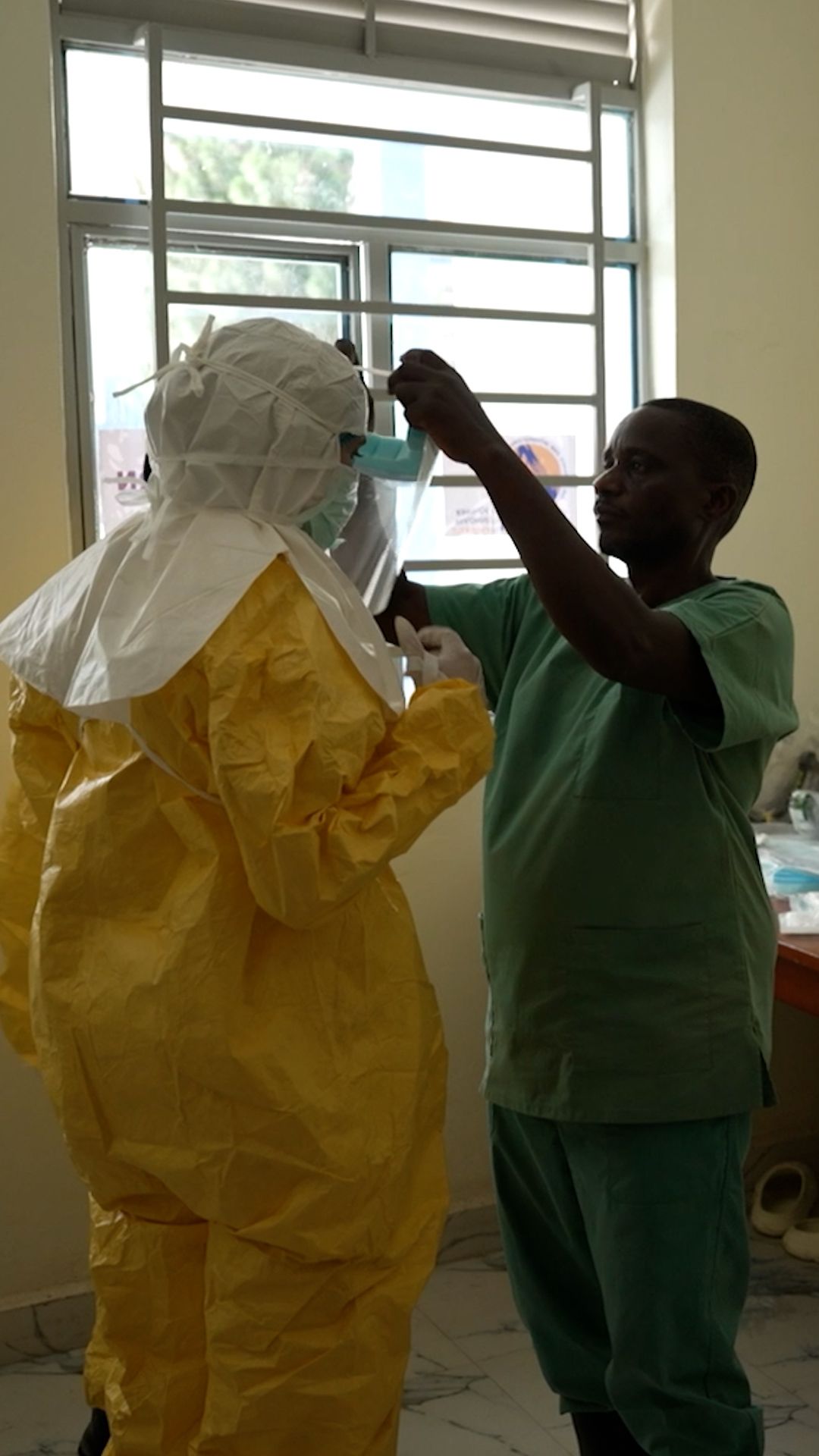
This CNN video article focuses on CNN correspondent Clarissa Ward preparing to enter the “red zone” Ebola ward at Bunia General Hospital in the Democratic Republic of the Congo (DRC). The piece is framed as a firsthand look at the high-risk environment where Ebola patients are treated and where strict protective procedures are required to limit exposure to the deadly virus. By centering on Ward’s preparation and the ward itself, the article emphasizes the seriousness of Ebola treatment, the danger faced by medical staff and journalists entering the area, and the continuing public-health challenges in the region.
Although the page contains multiple video items, the featured story is the Ebola ward visit. The article’s presentation suggests a documentary-style report rather than a written narrative, using the video format to immerse viewers in the conditions of the “red zone.” The focus is on access, observation, and visual reporting from inside a medically restricted area. The story also implicitly highlights the broader context of Ebola outbreaks in the DRC and the importance of controlled hospital zones, infection prevention, and frontline health response.
Overall, the article is an informative, observational news piece that aims to show viewers what it looks like to enter an Ebola treatment area and to convey the gravity of working in such a hazardous medical setting.
Entities: Clarissa Ward, Natalie Haytayan, CNN, Bunia General Hospital, Democratic Republic of the Congo • Tone: analytical • Sentiment: neutral • Intent: inform