14-10-2026
Ukrainian President Volodymyr Zelenskyy says Ukraine received no advance warning from partner nations before Russian ballistic missile strikes on Kyiv’s civilian and energy infrastructure. The Tuesday attacks killed two people in a high-rise apartment building, injured 21, and damaged a thermal power plant. A wider overnight missile and drone attack, primarily targeting Kyiv and Kharkiv, damaged 30 energy facilities and left at least 600,000 people without power, according to Zelenskyy. He described the lack of warnings as unfair and said Russian preparations for further launches suggested Moscow did not consider itself bound by US President Donald Trump’s announced energy ceasefire. Trump maintains that the United States is still sharing intelligence with Ukraine, while media reports say US officials have threatened to suspend intelligence sharing and weapons sales unless Kyiv stops attacking Russian refineries. Neither Russia nor Ukraine has confirmed that an energy ceasefire was agreed. Russia’s defence ministry said it struck power plants in the Kyiv area and Kharkiv.
The article also reports that SpaceX has limited some Starlink services in Ukraine, disrupting military drone missions. Ukrainian officials said they were not warned of the change, and reported intermittent connection losses at drone speeds of around 110–120 kilometres per hour. The 7th Rapid Reaction Corps said some missions had to be cancelled. Starlink terminals are important to Ukraine’s longer-range drone operations against Russian logistics in occupied areas, although drones targeting Russian oil facilities use other communications systems. The article notes that the reasons for the service limitation were unclear and that SpaceX had not immediately responded to a request for comment. Taken together, the reported missile-warning concerns and Starlink disruption highlight uncertainty around Ukraine’s access to partner support as attacks on energy infrastructure continue.
Entities: Volodymyr Zelenskyy, Donald Trump, Vladimir Putin, Serhiy Beskrestnov, Vitali Klitschko • Tone: analytical • Sentiment: negative • Intent: inform
14-10-2026
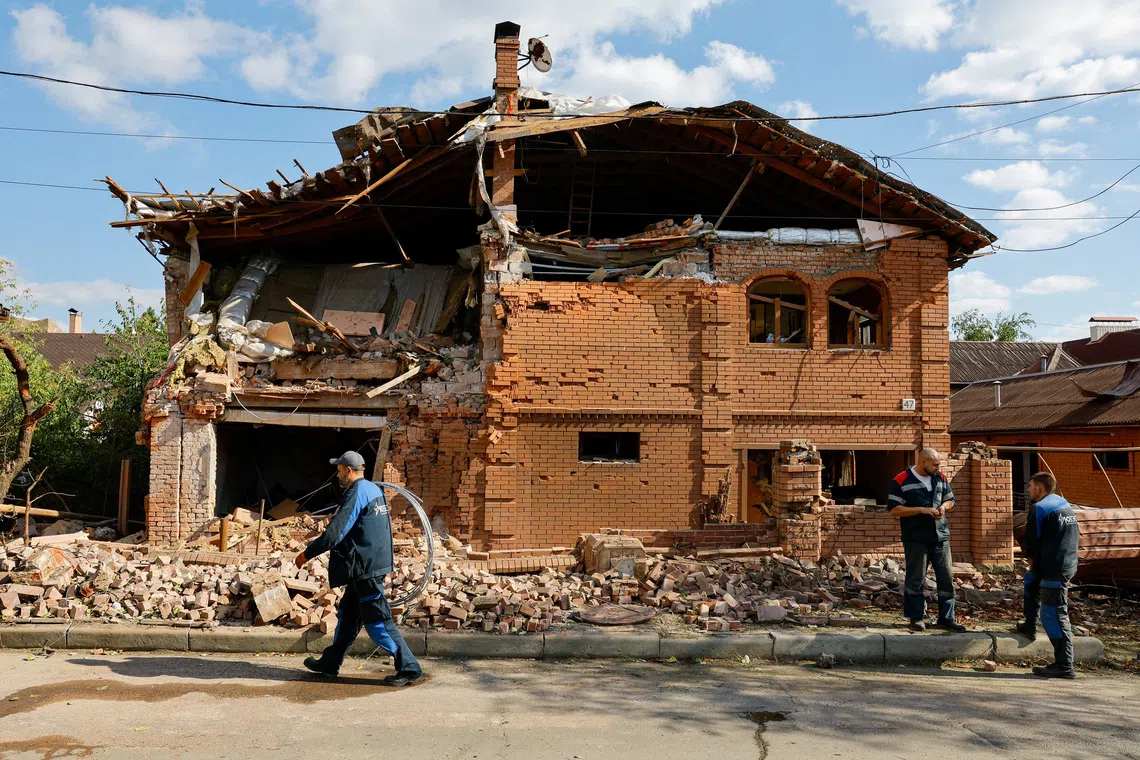
Russian missiles and drones struck Kyiv overnight, killing at least three people and injuring 22, according to the article. Rescue workers searched damaged buildings in the Ukrainian capital on Wednesday. The deadliest reported strike hit a nine-storey residential block in the Desnianskyi district, where two people were killed and 21 injured, including a child. Emergency crews rescued 16 residents and firefighters worked to extinguish a blaze covering 400 square metres. Sixteen injured people were taken to hospital, with four reported to be in serious condition. In the Holosiivskyi district, an attack on a non-residential building killed one person and injured another. Emergency-services psychologists provided assistance to 110 people at the affected sites.
The strikes also targeted Kyiv’s energy infrastructure. Ukrainian President Volodymyr Zelensky said a ballistic missile hit the CHP-4 heat and power plant. He also said Ukraine had received no warning from its partners before detecting the incoming missiles. Beyond Kyiv, overnight attacks on energy facilities left more than 600,000 people across Ukraine without power. The report describes the immediate human toll, damage to residential and non-residential buildings, emergency response efforts, and disruption to energy supplies. It does not provide further details about the missile launches, the affected partners, or the duration of the power outages.
Entities: Kyiv, Ukraine, Russia, Volodymyr Zelensky, Desnianskyi district • Tone: urgent • Sentiment: negative • Intent: inform
14-10-2026
The article reports that Russian ballistic missiles struck Kyiv for a second consecutive day, according to Ukrainian officials. They said the attacks came without advance warning from Ukraine’s Western partners. Ukrainian President Volodymyr Zelenskyy said Ukraine detected the missiles only when they were nearing Kyiv. The brief report does not provide details about casualties, damage, the missiles’ origin or trajectory, or the reasons no warning was issued. It focuses on the repeated strikes and the late detection, conveying the immediate security concern while attributing the claims to Ukrainian officials. The article was published on October 14, 2026.
Entities: Kyiv, Russia, Russian ballistic missiles, Ukraine, Ukraine’s Western partners • Tone: neutral • Sentiment: negative • Intent: inform
14-10-2026
A Russian ballistic missile attack hit Darnytska CHP-4, a major Kyiv energy facility that supplies heating and electricity, as well as a residential apartment building, Ukrainian President Volodymyr Zelensky said. Kyiv Mayor Vitali Klitschko reported that two people were killed and 21 injured in the apartment-block strike. He also said several energy facilities were hit, without providing further details.
Zelensky criticized the attack after US President Donald Trump had said two days earlier that Russia and Ukraine had agreed to an energy ceasefire. Zelensky said Ukraine had supported a pause in attacks on energy infrastructure, but accused Russia of striking another power plant. He also complained that Ukraine had received no early warning from its partners about ballistic missile launches and called on the United States and the wider world to respond to what was happening.
The attack was Kyiv’s second consecutive night under Russian missile fire. After the previous night’s strikes, reports speculated that the US had stopped sharing intelligence that could help Ukraine track incoming threats. Trump denied this, saying the US was sharing intelligence and working with both sides to end the war. Asked about attacks on energy sites, he said Ukraine had struck sites the day before, but did not say whether Russia had violated a ceasefire.
The article also describes disagreement over a possible broader ceasefire. Zelensky said a 60-day pause could allow Ukraine to hold presidential elections, after Trump suggested it was time for Ukraine to have a new president. Russian Foreign Minister Sergey Lavrov argued Ukraine did not deserve a ceasefire respite and said Europe could use one to supply Ukraine with more weapons.
CHPP-4 has been struck several times during the war. A separate Russian attack in February severely damaged it and forced it to shut down, leaving more than 1,000 homes and dozens of schools, kindergartens and medical institutions without heating and hot water.
Entities: Volodymyr Zelensky, Vitali Klitschko, Donald Trump, Sergey Lavrov, Kyiv • Tone: neutral • Sentiment: negative • Intent: inform
14-10-2026
Ukraine says new speed restrictions on some Starlink terminals have disrupted battlefield operations, including the use of drones. Serhiy Beskrestnov, an adviser to President Volodymyr Zelensky, said SpaceX introduced a limit overnight: terminals reportedly lose connectivity when a vehicle or other asset travels faster than 100mph (160km/h). Ukraine says it was not informed in advance. A defence ministry source said the cause was under investigation and that the restrictions hinder interceptor and strike-drone operations, as well as frontline logistics, reconnaissance and signal relaying. Starlink is described as a crucial tool for Ukrainian forces, particularly for guiding drones and helping intercept Russian drones. SpaceX has not commented, and Beskrestnov suggested the timing might be linked to the political situation. The report notes that Elon Musk’s company previously denied Russian forces access to Starlink, disrupting Russian command and operations.
The connectivity issue comes amid intensified Russian attacks. Zelensky said at least 600,000 people were without electricity after overnight missile and drone strikes hit energy infrastructure in Kyiv and the surrounding region, and in Kharkiv. Local officials reported three deaths in Kyiv. Ukraine said Russia launched 39 ballistic and cruise missiles and 128 drones; its air force said it shot down four missiles and 115 drones. The attacks were the second consecutive night of Russian missile strikes on Kyiv, with some missiles arriving before air-raid sirens could sound. Ukraine relies on US satellite systems to track missiles and issue alerts.
The attacks also complicate the debate over a proposed energy ceasefire. US President Donald Trump said the two sides had agreed to halt attacks on energy infrastructure, but Zelensky has said Ukraine would stop strikes on Russian energy facilities if Russia did the same. Russia’s Foreign Minister Sergey Lavrov rejected the prospect of giving Ukraine a ceasefire respite, arguing it could allow Europe to supply more weapons. Zelensky was due to meet UK Prime Minister Andy Burnham to discuss speeding up air-defence supplies. Russia, meanwhile, said it had shot down 902 Ukrainian drones over Russian regions, including Moscow and Crimea.
Entities: Volodymyr Zelensky, Serhiy Beskrestnov, Elon Musk, Donald Trump, Andy Burnham • Tone: analytical • Sentiment: negative • Intent: inform
14-10-2026
CBS News reports that the United States may have failed to provide Ukraine with advance warning of Russian missile strikes, though sources familiar with the matter describe the lapse as a specific incident rather than a general halt to intelligence sharing. Ukrainian President Volodymyr Zelenskyy said Ukraine received no warning before Tuesday’s attacks. U.S. officials reportedly attributed the failure to bad weather affecting a missile-launch detection system, but anonymous Ukrainian officials said they doubted that explanation and suspected the system had been deliberately manipulated. Sources said the warning system appeared to work again during a subsequent Russian missile wave early Wednesday.
Zelenskyy said the attacks involved more than 39 ballistic missiles and over 120 drones and loitering munitions. They primarily targeted energy and other critical infrastructure in Kyiv and Kharkiv, killed six people, and left approximately 600,000 without power. The article also notes a prior instance this year in which the United States reportedly withheld launch intelligence, citing a need to direct resources toward the Middle East. President Donald Trump denied that the United States had stopped sharing intelligence and said his administration was working toward ending the war.
The report describes additional pressure on Ukraine: U.S. officials reportedly threatened to stop intelligence sharing and halt a European weapons-purchasing arrangement if Ukraine did not stop deep strikes on Russian energy infrastructure. Separately, Ukrainian officials said SpaceX restricted some Starshield terminals while they were moving, disrupting drone missions, logistics, reconnaissance, and communications. Ukraine’s Ministry of Defense said it was working with the United States, SpaceX, and NATO partners and testing backup communications. Zelenskyy called the Russian attacks deliberate and urged the United States and others to respond forcefully.
Entities: Volodymyr Zelenskyy, Donald Trump, Mykhailo Fedorov, Andy Burnham, United States • Tone: analytical • Sentiment: negative • Intent: inform
14-10-2026
Ukraine says new limits on SpaceX’s Starlink satellite internet service are disrupting some military operations, at the same time as Russian attacks on energy infrastructure have left hundreds of thousands of people without power. Serhii Beskrestnov, President Volodymyr Zelenskyy’s adviser on defense technology, said SpaceX imposed a speed limit on Starlink terminals in motion without notifying Ukrainian defense forces. He said the restriction applies to the StarShield military service package and is set at 100 mph, or about 160 km/h. Beskrestnov suggested the measure was connected to the political situation and speculated that SpaceX acted at the Trump administration’s request; SpaceX and the White House were contacted for comment.
Zelenskyy also said Ukraine had, for the second time in a week, received no advance warning of Russian ballistic missile launches. A strike on Kyiv damaged a residential building, killing one person and injuring six, according to the president.
Separately, overnight Russian attacks damaged facilities in Ukraine’s energy system and oil and gas sector. Zelenskyy reported damage at 26 power-system facilities and four oil and gas facilities. At least 600,000 people in the Kyiv and Kharkiv regions were without power Wednesday morning. He described a ballistic missile strike on energy infrastructure as deliberate and said it should have been covered by President Donald Trump’s proposed “energy ceasefire.”
Ukraine had previously accused Russia of violating Trump’s proposal to stop attacks on each other’s energy facilities, which was intended to help reduce oil and diesel costs. The article says both sides initially denied knowing of an agreement. Ukraine later welcomed a ceasefire, while Russian officials said discussions were ongoing without confirming an agreement. Russian Foreign Minister Sergey Lavrov referred to Zelenskyy’s call for clarification and willingness to accept a ceasefire. The attacks and alleged Starlink restrictions leave questions about both the proposed truce and the impact of the service limits on Ukraine’s military operations.
Entities: Ukraine, Russia, Volodymyr Zelenskyy, Serhii Beskrestnov, Elon Musk • Tone: analytical • Sentiment: negative • Intent: inform
14-10-2026
Ukraine says SpaceX has restricted its military’s access to Starlink, disrupting some operations as the country continues to defend itself against Russia’s invasion. Presidential adviser Sergiy Beskrestnov said the company introduced a speed limit for Starlink terminals in motion without warning Ukraine’s defense forces. He said the change interrupted several missions and suggested it was connected to the political situation, though the article provides no evidence establishing SpaceX’s reason for imposing the restriction.
Beskrestnov said access to the military-grade service was cut off for terminals moving above 100 miles per hour (160 km/h). A representative of Ukraine’s 7th Rapid Reaction Corps told Reuters that connections could drop for 10–20 seconds when drones flew at speeds as low as 110–120 km/h, making them more difficult to control. The corps reportedly cancelled some missions, while a Ukrainian Defense Ministry source said the limitations complicated logistics and drone operations.
Starlink has become an important communications tool for Ukraine. Its terminals support ground communications, drone operations and long-distance strikes, and the network’s resistance to electronic jamming has made it useful for attack drones and supply-carrying hexacopters. The reported disruption followed Russian attacks, including a ballistic missile strike on a Kyiv power plant. Ukrainian officials said the outages coincided with overnight attacks.
The article places the dispute amid wider political tensions. US President Donald Trump has lifted sanctions on buying Russian oil and criticized Ukrainian President Volodymyr Zelenskyy. Trump has also claimed that Russia and Ukraine agreed to an “energy ceasefire,” but both governments have denied this. Elon Musk, a prominent Trump supporter, has repeatedly shifted his position on Ukraine. Zelenskyy said in August that Kyiv was working with a European country to develop an alternative to Starlink.
Entities: Ukraine, Kyiv, Elon Musk, SpaceX, Starlink satellite system • Tone: analytical • Sentiment: negative • Intent: inform
14-10-2026
Ukrainian President Volodymyr Zelenskyy said Ukraine received no advance warning from its Western partners about Russian ballistic missiles that struck Kyiv on Tuesday, despite the country’s dependence on allied intelligence to detect incoming attacks. The main target was the CHP-4 power plant, part of the capital’s energy infrastructure. Zelenskyy said Ukrainian systems detected the missiles only as they approached the city and called the lack of warning unjust. AFP journalists also reported hearing explosions in Kyiv.
The strike also hit a residential building in the Desnianskyi district. Kyiv Mayor Vitali Klitschko said at least two people were killed and around 20 were wounded. Residents had heard explosions before air raid sirens sounded overnight from Monday into Tuesday, a sequence officials said had occurred only rarely. Ukrainian officials attributed the late warning either to Russia’s use of hard-to-detect missiles or to possible technical problems.
The attack came amid confusion over US President Donald Trump’s announcement of an “energy ceasefire.” Trump said Russia and Ukraine had agreed to halt long-range strikes on power plants and oil refineries, but the Kyiv attack occurred despite that claimed arrangement. The article also notes Trump’s criticism of Zelenskyy over Ukrainian attacks on Russian oil refineries, including his recent suggestion that Ukraine should get a new president. The strikes underscore the vulnerability of Kyiv’s energy infrastructure and Ukraine’s reliance on Western intelligence.
Entities: Volodymyr Zelenskyy, Donald Trump, Vitali Klitschko, Kyiv, Ukraine • Tone: neutral • Sentiment: negative • Intent: inform
14-10-2026
A Russian ballistic missile struck Kyiv’s CHP-4 power plant on Tuesday evening, with Ukraine’s President Volodymyr Zelensky saying the country received no advance warning from Western partners. Ukraine’s systems detected the missiles only as they were nearing the city, he said, calling the lack of warning unjust while Russian forces targeted Ukrainian infrastructure. The attack also hit a residential building in Kyiv’s Desnianskyi district. Mayor Vitali Klitschko reported at least two people killed and around 20 wounded. AFP journalists in the capital heard several blasts.
The strike came amid intensified Russian drone and missile attacks on Kyiv, a city of about three million people, where energy infrastructure has become a major target. Ukraine depends heavily on Western, especially US, intelligence to detect incoming attacks and assist with identifying targets. In the days before the attack, residents had heard explosions before air-raid sirens sounded, a rare sequence that Ukrainian officials attributed to hard-to-detect Russian missiles or possible technical problems.
The attack also raised questions about a proposed pause in strikes on energy infrastructure. US President Donald Trump had announced an “energy ceasefire” between Russia and Ukraine, claiming the countries had agreed to stop long-range attacks on power plants and oil refineries. His announcement had caused confusion, and the Kyiv strike occurred only days later. Trump has criticized Zelensky over Ukrainian strikes on Russian oil refineries and recently suggested Ukraine should get a new president.
Entities: Volodymyr Zelensky, Vitali Klitschko, Donald Trump, Kyiv, Ukraine • Tone: neutral • Sentiment: negative • Intent: inform
14-10-2026
France 24’s video report, presented by Gulliver Cragg from Kyiv, describes a new dispute between Ukraine and SpaceX over Starlink access. According to the article’s brief description, Ukraine accused SpaceX on Wednesday of limiting Starlink services in ways that crippled Ukrainian drone missions. The supplied text does not specify which services were restricted, how the limitations operated, or what military missions were affected, so those details cannot be established from the available article content.
The report places the accusation amid worsening relations between Kyiv and Washington. It says US President Donald Trump had abruptly lifted sanctions on Russian diesel the previous week and had publicly turned on Ukrainian President Volodymyr Zelensky. Zelensky characterized Russian missile attacks that knocked out power stations as “ostentatious disrespect” to Trump. The excerpt does not clarify the precise referent of that phrase or provide further details about the attacks.
The headline and description therefore connect three developments: Ukraine’s claim that Starlink restrictions are impairing military activity, Russian strikes on Ukrainian power infrastructure, and a deterioration in Ukraine-US ties. The page identifies the item as a 3:47 France 24 video issued on October 14, 2026. It also lists a related headline saying Ukraine was asking the United States, SpaceX, and NATO to clarify Starlink limitations, but provides no reporting or responses from those parties in the supplied text. The summary is consequently limited to the video description and does not establish SpaceX’s position, the reasons for any service restrictions, or the broader consequences. The remaining page text consists largely of playback notices, other headlines, and an unavailable-content message rather than additional reporting.
Entities: Ukraine, SpaceX, Starlink, Elon Musk, Volodymyr Zelensky • Tone: analytical • Sentiment: negative • Intent: inform
14-10-2026
Ukraine says Russia continued attacking its energy infrastructure for a third consecutive night, despite U.S. President Donald Trump’s announcement of a pause in strikes and his claim that Russia and Ukraine had agreed not to target energy sites. Ukrainian President Volodymyr Zelenskyy condemned the attacks and called on the United States and other countries to respond forcefully. Russia’s Kremlin spokesman said details of the proposed energy ceasefire were still being worked out, leaving its terms and status uncertain. Zelenskyy, for his part, has agreed to pause Ukraine’s months-long campaign against Russian oil refineries; Ukraine last reported striking one the previous Friday.
The article also reports Ukraine’s claims of battlefield gains in the east. Brig. Gen. Andrii Biletskyi said Ukrainian forces had retaken 277 square kilometres since an operation began in the summer. The claim could not be independently verified, and Russia did not comment. Meanwhile, Ukrainian officials fear that U.S. support may weaken, particularly access to military intelligence and the Starlink satellite communications system. An adviser to Zelenskyy said SpaceX had imposed a speed limit on Ukrainian Starlink terminals mounted on drones, a development he linked to the political situation without providing further details.
The scale of the reported overnight assault was substantial: Zelenskyy said Russia fired 39 ballistic missiles and more than 120 drones at energy and other critical infrastructure in Kyiv, its surrounding region, and Kharkiv. He said at least 600,000 people lost power. Ukraine’s prime minister said all three of Kyiv’s combined heat and power plants were hit. Russia’s Defence Ministry acknowledged attacks on energy infrastructure and said six power plants were struck. Zelenskyy travelled to London for talks with British Prime Minister Andy Burnham, with a possible visit to Brussels for a European Union summit as Kyiv and its European supporters seek to reinforce Ukraine’s defences.
Entities: Volodymyr Zelenskyy, Donald Trump, Vladimir Putin, Dmitry Peskov, Andrii Biletskyi • Tone: analytical • Sentiment: negative • Intent: inform
14-10-2026
Russian missile and drone strikes killed three people in Kyiv and left at least 600,000 Ukrainians without electricity, according to Ukrainian authorities. The hours-long attack primarily targeted Kyiv and Kharkiv, damaged 30 energy facilities, and also hit railway facilities in five regions. President Volodymyr Zelensky described the strikes as deliberate and as “ostentatious disrespect” toward US President Donald Trump and his peace effort.
Trump has said Russia and Ukraine agreed to stop attacks on energy infrastructure, but neither country has confirmed such an agreement. The attack came after Trump lifted sanctions on Russian diesel, saying he wanted to reduce fuel costs. Russia’s Defence Ministry acknowledged strikes on four power plants in and around Kyiv and two in Kharkiv, as well as other targets.
Ukraine said it intercepted only four of 39 missiles, a low rate that reflects difficulties defending against fast-moving ballistic missiles and jet-powered drones amid weapons shortages. Russian attacks on Ukrainian cities have intensified ahead of winter, raising fears of widespread electricity and heating outages. Ukraine has also increased attacks on Russian oil refineries and logistics hubs, which it views as one of the few available responses to Russia’s prolonged bombardment.
The article links the dispute over energy attacks to rising fuel prices. Trump has blamed Ukrainian strikes on Russian refineries for higher diesel costs, which have reached record levels after his war against Iran disrupted global oil supplies. Reuters and other news organizations have reported that Washington threatened to stop sharing intelligence used to warn Ukraine of incoming missile strikes unless Kyiv halted refinery attacks. Zelensky had previously said Ukraine received no warning from Western partners before an earlier attack on Kyiv, while Trump said the United States was still sharing intelligence.
Entities: Volodymyr Zelensky, Donald Trump, Kyiv, Kharkiv, Russia • Tone: urgent • Sentiment: negative • Intent: inform
14-10-2026
British Prime Minister Andy Burnham said he would try to repair strained relations between US President Donald Trump and Ukrainian President Volodymyr Zelensky, as Zelensky visited London for talks at Downing Street. Burnham described bringing the two leaders back together and restoring support as part of his role. He said he would listen carefully to Zelensky and that the Ukrainian leader would not leave Britain “empty-handed.”
The visit follows several recent moves and statements by Trump that have heightened tensions. Trump announced a diesel-supply deal with heavily sanctioned Russia and an “energy ceasefire,” and criticized Zelensky over Ukrainian long-range attacks on Russian energy infrastructure. Trump also suggested Zelensky should be replaced as president.
Ukraine has meanwhile accused the United States of helping Russia. Zelensky said Washington did not warn Ukraine about incoming missile strikes and had slowed the Starlink satellite internet service used for battlefield communications and frontline logistics. Trump said on Oct. 13 that the United States was still helping Ukraine. A US official told AFP the following day that US policy had “not changed,” and the European Union said there were no indications that intelligence sharing had stopped.
Burnham was expected to tell Zelensky that Britain would accelerate deliveries of its lightweight multi-role missiles, which Ukraine has used against Russian jet-powered drones. He was also expected to announce additional sanctions targeting Russia. The article presents the meeting as a show of British support for Ukraine amid uncertainty and strained relations between Kyiv and Washington.
Entities: Andy Burnham, Donald Trump, Volodymyr Zelensky, Britain, United States • Tone: analytical • Sentiment: neutral • Intent: inform
14-10-2026
Ukraine says its forces have retaken 16 villages and 277 square kilometres (107 square miles) in a counteroffensive in the eastern Donetsk region. Brig. Gen. Andrii Biletskyi, a senior commander in Kyiv’s Third Army Corps, said Ukrainian troops had recently liberated three additional villages. The operation is being conducted roughly 30 kilometres (19 miles) north of Sloviansk, a strategic city and one of two key strongholds in Ukraine’s eastern defensive “fortress belt.” The corps announced the operation, dubbed “Vivaldi,” last month, with the stated aim of dislodging Russian forces in the area.
Biletskyi described the effort as a major frontline pushback and said the Kremlin’s goal of taking Donetsk and Luhansk would not be achieved in the foreseeable future. Russia, which almost entirely occupies both regions, has demanded that Ukraine give up the 20 per cent of Donetsk it still controls as a condition for ending the fighting. The two regions form the mineral-rich Donbas. Russia’s pace of battlefield gains has slowed this year, the article reports, while Russian forces continue to announce captures of frontline villages.
The operation comes as Ukraine seeks to regain the initiative in the fifth year of the war, including through new technology and tactics, while Russian air attacks have increased elsewhere. Reuters said it could not immediately verify the battlefield reports. The article also notes Ukraine’s accusation that Elon Musk’s SpaceX was limiting Starlink services, impairing Ukrainian drones, while Russian missile strikes knocked out power. President Volodymyr Zelenskiy characterized the situation as “ostentatious disrespect” to Donald Trump. The report presents these developments as claims and statements from the parties involved, rather than independently verified battlefield findings.
Entities: Ukraine, Russia, Donetsk region, Luhansk region, Donbas • Tone: neutral • Sentiment: neutral • Intent: inform